Museum of Mediterranean and Near Eastern Antiquities: Stockholm's Window onto the Ancient World
Housed in a striking 1905 neo-classical building near Gustav Adolfs Torg, the Museum of Mediterranean and Near Eastern Antiquities (Medelhavsmuseet) brings together one of Scandinavia's most significant collections of Egyptian, Cypriot, Greek, Roman, and Islamic art and artifacts. It is a serious museum for curious travelers, not a tourist spectacle, and it rewards those who give it proper time.
Quick Facts
- Location
- Fredsgatan 2, Norrmalm, Stockholm (Gustav Adolfs Torg)
- Getting There
- Kungsträdgården T-bana or T-Centralen; buses 62/65 to Gustav Adolfs Torg
- Time Needed
- 1.5 to 3 hours depending on depth of interest
- Cost
- 160 SEK adults, 140 SEK seniors; free for under-19s
- Best for
- History enthusiasts, archaeology fans, rainy-day culture seekers
- Official website
- www.medelhavsmuseet.se/en
What Is Medelhavsmuseet, and Why Does It Matter?
The Museum of Mediterranean and Near Eastern Antiquities, known locally as Medelhavsmuseet, holds one of northern Europe's most underappreciated collections of ancient objects. Spanning Egypt, Cyprus, ancient Greece and Rome, and the Islamic world, the museum traces thousands of years of human civilization across the cultures that shaped the modern West and much of the Middle East. Stockholm is not the first city you would associate with Egyptian mummies or Cypriot Bronze Age pottery, but this collection is genuinely world-class in depth.
The museum was formally established in 1954 through the merger of the Egyptian Museum, itself founded in 1928, and the Cyprus collections. It moved to its current home, Gustav Horn’s palace at Fredsgatan 2, in 1982. The building was originally constructed in 1905 and its neo-classical interior is considered unique within Scandinavian architectural history, making the physical space almost as interesting as the objects inside.
ℹ️ Good to know
Medelhavsmuseet is part of the Statens museer för världskultur group. A 200 SEK annual pass covers the World Culture museums in Stockholm — excellent value if you plan to visit more than one.
The Building: A Neo-Classical Interior Unlike Anything Nearby
Before you look at a single artifact, take a moment inside the entrance hall. The building retains the ornate banking-era interior from its 1905 construction: high ceilings, layered stonework, and a sense of deliberate grandeur that most Stockholm museums, which tend toward minimalist Scandinavian design, simply do not have. The contrast between the austere northern European exterior and the warm, classically styled interior becomes a visual joke of sorts once you are inside: the building is practically dressed for its contents.
The museum sits directly on Gustav Adolfs Torg, one of central Stockholm's more formally composed squares, with the Royal Opera House to the north and the Foreign Ministry nearby. Arriving from T-Centralen on foot takes about ten minutes along the waterfront, passing Strömparterren park. Arriving from Kungsträdgården T-bana station takes closer to five minutes.
Tickets & tours
Live prices and dates from our booking partner. If you book, we may earn a commission at no extra cost to you.
2-hour archipelago tour on a RIB speedboat
From 122 €Instant confirmationFree cancellationHaunted Stockholm exploration game and tour
From 12 €Instant confirmationFree cancellationFotografiska Stockholm entrance tickets
From 0 €Instant confirmationFree cancellationStockholm: Nature Reserve Hiking Tour with Campfire Lunch
From 102 €Instant confirmationFree cancellation
The Collections: What You Will Actually See
Egypt
The Egyptian galleries are the museum's strongest section and the reason many visitors come. The collection includes mummies, sarcophagi, shabtis, amulets, and daily life objects spanning the Old Kingdom through the Ptolemaic period. The presentation is considered and unhurried: cases are not overcrowded, labels are clear in both Swedish and English, and the lighting is calibrated to show surface detail on carved stone without washing out the color on painted wood. Egyptian collections in European museums can feel dusty and poorly contextualized, but this one has been updated to explain not just what objects are but what they meant within Egyptian funerary belief.
Cyprus
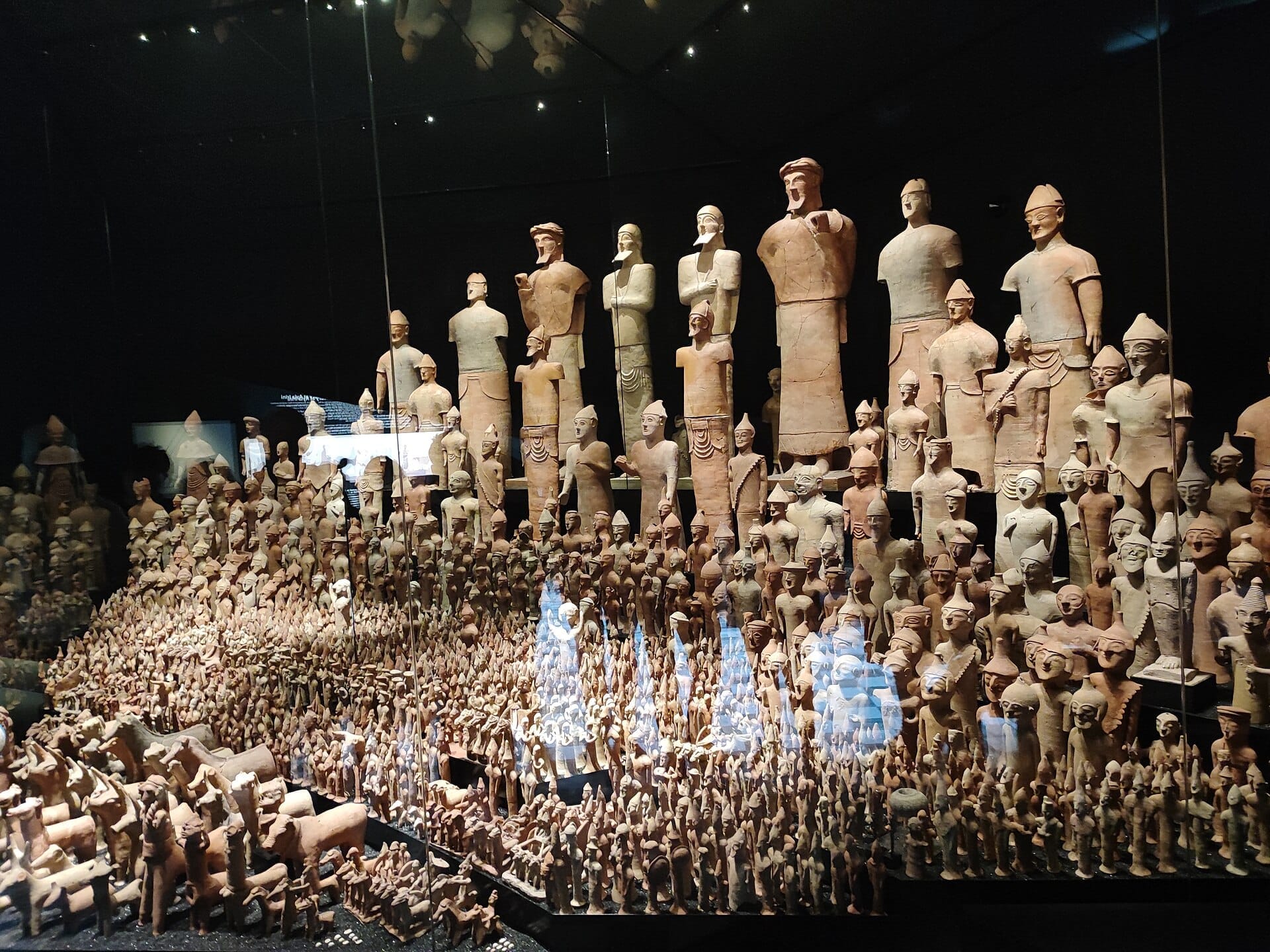
The Cyprus Collection is historically significant beyond what its size might suggest. It traces the island's cultures from the Early Bronze Age through to the medieval period, capturing the moment when Cyprus stood at the crossroads of Aegean, Near Eastern, and Egyptian influence. Ceramic vessels, terracotta figurines, and metalwork show how styles blended and shifted across centuries of trade and conquest. For visitors interested in the Bronze Age Mediterranean, this section is genuinely rare outside Cyprus itself.
Greece, Rome, and the Near East
Greek and Roman sections cover the expected range: painted pottery, coins, votive objects, and sculpture fragments. Nothing here competes with the British Museum or the Louvre in scale, but the collection is curated to show how Greek artistic conventions spread across the Mediterranean world rather than simply displaying trophy pieces. The Near East galleries extend the story east and southeast, covering Mesopotamian and Levantine cultures with objects that put Mediterranean civilization in its broader geographic context.
Islamic Art
The Islamic art section is perhaps the most visually striking part of the museum for visitors who arrive without particular expectations. Ceramics with cobalt and turquoise glazes, intricately geometric tilework, and textile fragments cover the period from the early Islamic centuries through the Ottoman era. The section includes objects from Spain to Central Asia, making the geographic breadth of Islamic culture legible in physical form.
How the Museum Feels at Different Times of Day
On many weekdays outside the summer season, the museum is open until 20:00; however, opening hours vary, so always confirm current times on the museum’s website before planning an evening visit. Arriving after 17:00 on a weekday means notably thinner crowds. The galleries, which are modestly sized to begin with, can feel almost private in the final hour before closing. The Egyptian rooms in particular, dimly lit by design, take on a different quality in the early evening: quieter, more contemplative, and easier to spend real time in front of individual objects.
Weekend afternoons, especially on Saturdays, bring more families and school-age visitors. The ground floor areas near the entrance see the most foot traffic. If you are coming on a Saturday or Sunday, arriving close to opening at 11:00 gives you the quietest windows before midday crowds build.
💡 Local tip
The museum is closed on Mondays. Plan accordingly — this is an easy mistake to make when building a Stockholm itinerary around nearby attractions.
Practical Details: Getting There, Tickets, and Accessibility
The address is Fredsgatan 2, 111 52 Stockholm. The most convenient public transit approach is the Tunnelbana to Kungsträdgården (Green line), followed by a short walk northwest across the square. Buses 62 and 65 stop at Gustav Adolfs Torg directly outside; buses 3 and 52 stop at nearby Tegelbacken. Parking is available at a garage on Regeringsgatan and a few spaces near the Opera House.
Admission is 160 SEK for adults and 140 SEK for seniors. Everyone under 19 enters free. Asylum seekers with a valid LMA or UT card are also admitted free. The annual pass at 200 SEK is worth calculating against your Stockholm plans: if you are also visiting other World Culture museums in Stockholm, it pays for itself quickly. The museum may be included in city pass programs, so holders should verify current inclusion before purchasing separately.
Accessibility details are not fully specified on the museum's public-facing pages. Visitors with specific mobility or sensory requirements are encouraged to contact the museum directly before visiting: switchboard +46 (0)10-456 12 00, reception +46 (0)10-456 12 98, or info@medelhavsmuseet.se. For a broader overview of getting around central Stockholm, the getting around Stockholm guide covers transit options across the city.
Photography, Practical Preparation, and Honest Limitations
Photography for personal use is generally permitted in the permanent galleries, though specific rules around temporary exhibitions may differ. The dim lighting in the Egyptian section, intentional and appropriate for preservation, means handheld shots require either a steadying technique or high ISO tolerance. The Islamic ceramics section has better ambient light and produces cleaner results.
On the question of scale: this is not a large museum. Visitors who arrive expecting a metropolitan encyclopedic institution may find it smaller than anticipated. That is not a flaw. The curation is focused and coherent in a way that exhaustive collections sometimes are not. Allow ninety minutes for a careful visit, two to three hours if you are reading every label, which the quality of the text justifies.
If your Stockholm itinerary is heavy on major institutions, Medelhavsmuseet sits comfortably alongside a visit to the Swedish History Museum or the Nationalmuseum, both of which take a different national or Nordic angle on art and material culture. Together they form a coherent day of serious museum-going.
⚠️ What to skip
The museum's café and shop operate on hours that may differ from gallery hours. If a sit-down break is part of your plan, confirm current café availability directly with the museum before your visit.
Who Will Get the Most from This Museum
Medelhavsmuseet rewards travelers who arrive with some pre-existing curiosity about the ancient Mediterranean, Egyptian civilization, or Islamic art history. It is not a passive experience. The lack of cinematic staging and immersive technology means that visitors who engage primarily through reading and observation will fare better than those expecting interactive installations. First-time Stockholm visitors with limited days and a long list of highlights may find that the Vasa Museum or Skansen better fits a compressed itinerary, simply because those institutions offer a more distinctly Swedish experience. Medelhavsmuseet is worth prioritizing for anyone with more than two days in Stockholm or a specific interest in the ancient world.
Families with children can find engagement here, particularly in the Egyptian section where mummies and sarcophagi hold attention, but the museum does not have the purpose-built family infrastructure of places like Junibacken. Older children with a school-level interest in ancient history will get more from it than toddlers.
Insider Tips
- Come on a Tuesday, Wednesday, or Thursday evening after 17:00. The museum stays open until 20:00 and attendance drops significantly after the after-work rush, leaving galleries uncrowded and quiet. The Egyptian rooms at this hour are notably atmospheric.
- The 200 SEK annual pass covering the World Culture museums in Stockholm is priced just 40 SEK above a single adult day ticket. If you are spending more than a weekend in Stockholm and have any interest in ethnography or Asian art, it is essentially a low-cost upgrade.
- The building's interior architecture is worth photographing independently of the collection. The 1905 banking-hall structure, particularly the main hall, reads as a subject in its own right. Arrive slightly before opening to photograph it before visitor traffic builds.
- Audio guides and guided tours are offered periodically. Check the museum's events calendar before visiting rather than after arrival, particularly if you are interested in the Islamic art section, which is occasionally covered in themed walk-throughs.
- Gustav Adolfs Torg directly outside is a pleasant open square. On clear days, the short walk west along the waterfront toward Riksbron offers views across to Gamla Stan and the Royal Palace, making a natural before-or-after extension to your visit.
Who Is Museum of Mediterranean and Near East Antiquities For?
- Archaeology and ancient history enthusiasts seeking a focused, well-curated collection outside the mega-museum circuit
- Travelers on their second or third Stockholm visit who have covered the main Djurgården institutions
- Rainy-day or cold-weather visits when an indoor, text-rich environment suits the conditions
- Adults and older children with a school or academic background in Egyptian, Greek, or Islamic history
- Museum-card holders and annual-pass travelers maximizing cultural depth per krona
Nearby Attractions
Other things to see while in Norrmalm:
- Kulturhuset Stadsteatern
Kulturhuset Stadsteatern is Stockholm's flagship cultural center, occupying a landmark modernist glass building on Sergels torg since 1974. It combines free public spaces, libraries, and galleries with a major city theatre, making it one of the few venues where you can walk in off the street and spend hours without buying a ticket.
Planning a trip? Discover personalized activities with the Nomado app.