Nationalmuseum Stockholm: Sweden's Museum of Art and Design
Nationalmuseum is Sweden's national gallery of fine arts, founded in 1792 and housed in a landmark 19th-century building on the Blasieholmen peninsula. Its collection spans painting, sculpture, decorative arts, and design across seven centuries. After a sweeping renovation completed in 2018, the museum is sharper, more accessible, and more rewarding than ever.
Quick Facts
- Location
- Södra Blasieholmshamnen 2, central Stockholm (Blasieholmen peninsula)
- Getting There
- Metro blue line to Kungsträdgården (nearest station); Bus 65 stops close by
- Time Needed
- 2 to 4 hours depending on depth of interest
- Cost
- 160 SEK regular; 80 SEK last 60 min; free under 20; free Thu 17:00–20:00 for all visitors
- Best for
- Art lovers, design enthusiasts, history seekers, budget visitors on Thursday evenings
- Official website
- www.nationalmuseum.se/en
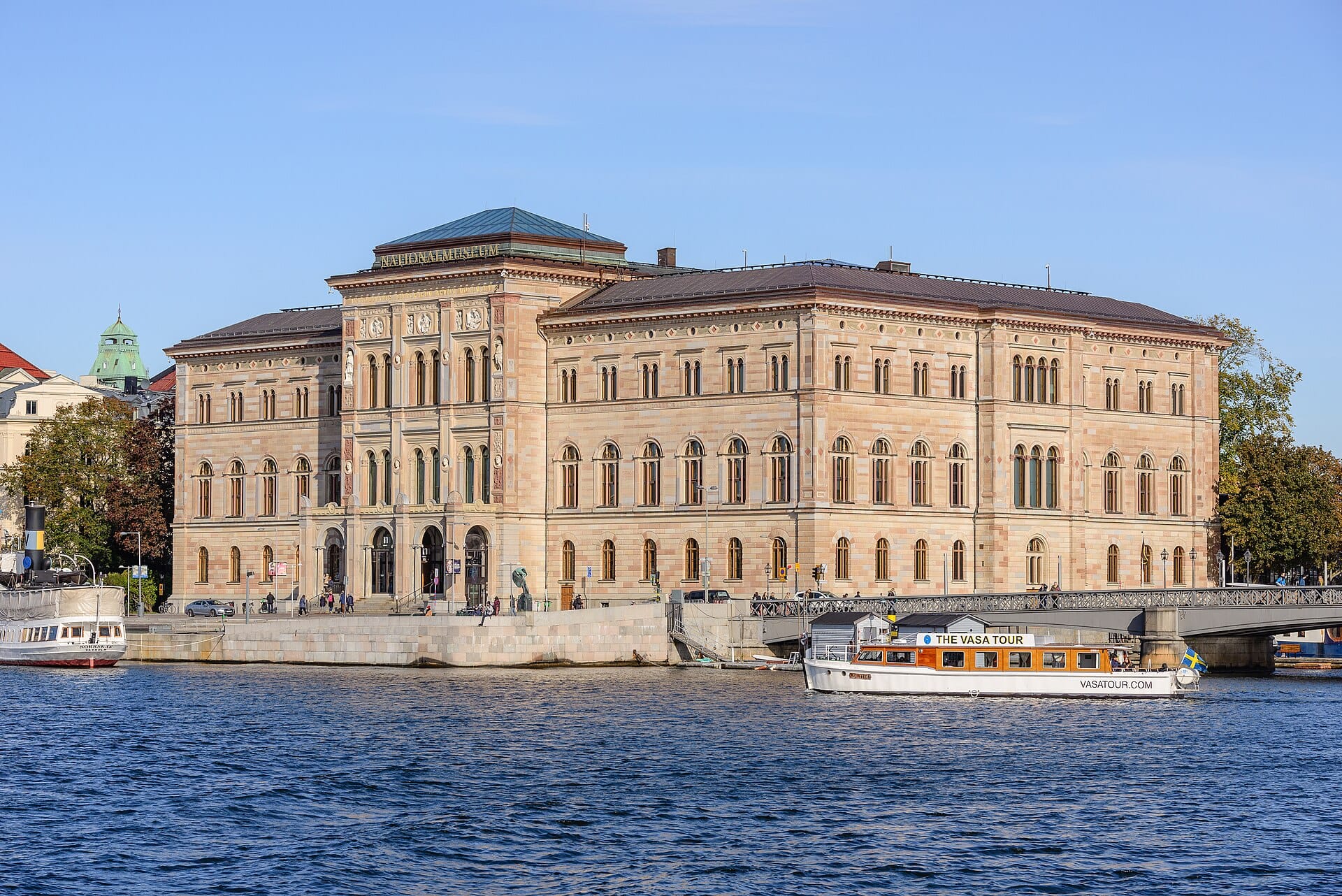
What Nationalmuseum Actually Is
Nationalmuseum is Sweden's national museum of art and design, and by collection size, the largest in Scandinavia. Its holdings number around 700,000 objects: paintings and drawings from the medieval period through the early 20th century, applied arts ranging from Renaissance silverware to modernist furniture, and a design collection that traces Swedish and international craft from the 16th century onward. If you want to understand how Swedes have made, used, and thought about beautiful objects over the past 700 years, this is the single most concentrated place to do it.
The institution was founded in 1792 as the Royal Museum, placing it among Europe's older national galleries of fine arts. For most of the 19th century the collection was spread across different royal properties before settling into the purpose-built building on Blasieholmen, designed by German architect Friedrich August Stüler and completed in the 1860s. Stüler's design is firmly in the Venetian Renaissance tradition: red brick, round arches, loggia-style arcading, and a central hall flooded with natural light from a glazed ceiling. Standing on the quay outside, with Gamla Stan's roofline across the narrow channel, the building has a kind of quiet authority that has nothing to prove.
ℹ️ Good to know
The museum closed for a major renovation in 2014 and reopened in 2018. The renovation modernized climate control, lighting, and visitor facilities without altering the historic interior. The result is a building that feels both old and very well maintained.
The Building and the Setting
Nationalmuseum sits on Blasieholmen, a small peninsula that juts into the water between Norrmalm and Gamla Stan. The address is Södra Blasieholmshamnen 2, and the approach from the Kungsträdgården metro exit takes roughly five minutes on foot along the waterfront. That walk matters: you get a clear view of the building's waterside facade and the Royal Palace directly across the water, which puts you in the right frame of mind before you've set foot inside.
In the morning, particularly on calm days, the light on the water around Blasieholmen is striking, and the queue at the entrance, if there is one, tends to be short. By midday in summer the waterfront promenade sees considerable foot traffic and the entrance area gets busy. The building's thick walls mean the interior remains cool even on warm days, making summer afternoons here genuinely comfortable.
Visitors combining Nationalmuseum with the rest of Blasieholmen often continue to Moderna Museet on nearby Skeppsholmen, which is a short walk across the bridge. The two museums are philosophically complementary: Nationalmuseum covers art history up to the early 20th century, Moderna Museet picks up roughly where Nationalmuseum stops.
Tickets & tours
Live prices and dates from our booking partner. If you book, we may earn a commission at no extra cost to you.
2-hour archipelago tour on a RIB speedboat
From 122 €Instant confirmationFree cancellationHaunted Stockholm exploration game and tour
From 12 €Instant confirmationFree cancellationFotografiska Stockholm entrance tickets
From 0 €Instant confirmationFree cancellationStockholm: Nature Reserve Hiking Tour with Campfire Lunch
From 102 €Instant confirmationFree cancellation
What You'll See Inside
The permanent collection is organized across several floors and divided broadly into fine art and applied arts. The fine art holdings include Dutch and Flemish masters, Italian Renaissance works, French 18th-century paintings, and a particularly strong collection of Swedish artists from the 17th through early 20th centuries. Carl Larsson's large-format paintings are among the most-visited works, and Rembrandt, Rubens, and Renoir all appear in the collection without the museum having to oversell their presence.
The applied arts and design floors are arguably where Nationalmuseum is most distinctive. Few European national museums give equal weight to furniture, ceramics, textiles, and metalwork, and Nationalmuseum's decision to treat a 17th-century silver ewer with the same curatorial seriousness as a large-format oil painting says something deliberate about Swedish cultural values. The design section traces the development of what became internationally recognized as Scandinavian design, from early craft guilds through the 1950s functionalist furniture that still influences Swedish interiors today.
If Swedish design history is specifically what interests you, the Nordiska Museet on Djurgården covers Swedish cultural and domestic history in complementary depth, and the two museums work well together on a two-day itinerary.
💡 Local tip
Pick up a free floor plan at the entrance desk. The museum is large enough that without one, it's easy to spend too long in the first few rooms and run short of time before the design floors.
When to Visit and Who Gets In Free
Nationalmuseum is closed on Mondays. Tuesday through Sunday it opens at 11:00. Standard closing time is 17:00, except on Thursdays when the museum stays open until 20:00. Thursday evenings from 17:00 to 20:00 are free for all visitors, which makes them the busiest of the week. Expect a noticeable crowd in the main galleries between 17:30 and 19:00 on Thursdays, tapering off in the final hour as people begin to leave. If you want the Thursday free admission but prefer fewer people, arriving at 19:00 gives you a quieter final hour.
Visitors under 20 years old enter free at all times. Regular admission is 160 SEK. If you arrive within the last 60 minutes before closing on any day, the ticket price drops to 80 SEK.
The Stockholm Pass includes entry to Nationalmuseum, which can make it good value if you're planning several major museums in one trip. Check the current pass inclusions before purchasing, as museum partnerships occasionally change.
For visitors on a tight budget, Nationalmuseum's Thursday free evenings pair well with other free things to do in Stockholm that don't require advance planning.
Getting There
The fastest public transport option is the blue metro line to Kungsträdgården, followed by a roughly five-minute walk southeast along the waterfront toward Blasieholmen. The walk is flat, unobstructed, and easy to navigate. Bus line 65 also stops near the museum for those coming from other parts of the city. By foot from Gamla Stan, the museum is about 10 minutes crossing the Strömbron bridge and continuing along the quay.
There is no dedicated car parking at the museum. Street parking in the Blasieholmen area is limited. Public transport is practical enough that driving adds no meaningful convenience.
Accessibility and Practical Details
The 2018 renovation included upgrades to accessibility throughout the building. Lifts connect all main floors, and the entrance level is step-free from street level. Visitors with specific mobility, hearing, or visual needs are advised to check the museum's official accessibility pages or contact the museum directly before visiting, as provisions and available assistance can change.
Photography for personal use is generally permitted in the permanent collection, though restrictions apply in temporary exhibitions. Check current guidelines at the information desk on arrival. The museum has a cafe and a restaurant on the ground floor, and a shop near the exit with a well-curated selection of art books, prints, and design objects.
⚠️ What to skip
Bag storage is available but lockers are limited in number. Arriving with a large bag or backpack during peak hours may mean a short wait. Large bags are generally not permitted in the galleries.
Is It Worth Your Time? An Honest Assessment
Nationalmuseum rewards visitors who have some existing interest in art history, applied arts, or design. The collection is genuinely significant, the building is beautiful, and the post-renovation presentation is clear and well-lit. If you are arriving with a general tourist mindset, expecting something immediately spectacular in the way that the Vasa Museum's shipwreck delivers a single overwhelming object, you may find Nationalmuseum requires more patience to appreciate. The payoff is real, but it asks something of you.
Families with young children may find Junibacken or the Vasa Museum more immediately engaging for mixed-age groups, though the museum does offer family-oriented programming. Check the official site for current family events before visiting.
Visitors with limited time in Stockholm and a choice between one major museum and another will find Nationalmuseum most rewarding if Swedish art and design history is on their priority list. For sheer spectacle, other Stockholm attractions compete more directly. For sustained intellectual engagement with how an entire nation made and thought about art over centuries, Nationalmuseum stands largely alone in the city.
Insider Tips
- Thursday free evenings (17:00–20:00) are genuinely busy from 17:30 onward. Arriving at 19:00 gives you a quieter final hour at no cost.
- The museum's top floor, where the large-format Swedish paintings hang, gets strong natural light from the clerestory windows in the morning and early afternoon. Late afternoon the light angle shifts and some works are harder to read clearly.
- The gift shop has one of the better art book selections in Stockholm, including out-of-print Swedish design publications that don't turn up elsewhere. Worth a browse even if you don't buy.
- If you're combining Nationalmuseum with Moderna Museet on the same day, start at Nationalmuseum when it opens at 11:00 and walk to Moderna Museet after lunch. Both museums share a waterfront route that takes under 10 minutes.
- The restaurant on the ground floor is a legitimate lunch option, not just a museum cafeteria afterthought. Reservations are recommended on weekends.
Who Is Nationalmuseum For?
- Art history enthusiasts interested in Nordic and European painting from the 16th to early 20th century
- Design-focused travelers who want to trace the origins of Scandinavian design in a curated context
- Budget visitors who can time a Thursday evening visit for free admission
- Travelers who want a full half-day of indoor, intellectually substantial engagement
- Anyone interested in how Swedish national identity is expressed through art and craft
Nearby Attractions
Combine your visit with:
- Birka Viking Town
Founded around AD 750 on a remote island in Lake Mälaren, Birka was one of Scandinavia's earliest true urban trading centers. Today it survives as part of the UNESCO World Heritage Site Birka and Hovgården, reached only by seasonal boat from Stockholm, where around 2,000 Viking-age graves still dot the surrounding landscape. It is one of the most historically significant half-day excursions available from the Swedish capital.
- Drottningholm Palace
Drottningholm Palace is Sweden's most complete royal domain, a UNESCO World Heritage Site on Lovön island just about 10 km west of Stockholm. The baroque complex includes the palace, a working 18th-century theatre, a Chinese Pavilion, and formal gardens that shift in character across every season.
- Royal National City Park (Ekoparken)
The Royal National City Park, known locally as Ekoparken, is the world's first national urban park and one of Stockholm's most remarkable features. Stretching around 27 km² from Djurgården in the south to Ulriksdal in the north, it wraps around the city in a continuous arc of ancient oak forests, royal palaces, museum islands, and open waterways. Entry is free and the park never closes.
- Hagaparken
Hagaparken is a 144-hectare English landscape park just north of central Stockholm, laid out for King Gustav III in the late 18th century. Free to enter year-round, it offers a rare combination of royal history, open meadows, and waterside walking paths within easy reach of the city. Individual attractions inside the park, including the Butterfly House and royal pavilions, charge their own fees.
Planning a trip? Discover personalized activities with the Nomado app.