Moderna Museet Stockholm: What to Expect, How to Visit, and Why It's Worth Your Time
Moderna Museet is Sweden's national museum of modern and contemporary art, occupying a landmark building on the island of Skeppsholmen in central Stockholm. With one of the strongest collections in Northern Europe — spanning Picasso and Dalí to leading Scandinavian artists — it rewards serious art lovers and curious first-timers alike.
Quick Facts
- Location
- Exercisplan 4, Skeppsholmen, Stockholm
- Getting There
- Bus 65 to Moderna Museet stop; 10-min walk from Kungsträdgården T-bana; Djurgården ferry stops at Skeppsholmen
- Time Needed
- 2 to 3 hours for a full visit; 90 minutes for a focused tour
- Cost
- 170 SEK (160 SEK online); reduced 140 SEK (130 SEK online); free for under-18s. Free Friday admission 18:00–20:00 outside summer season.
- Best for
- Art enthusiasts, architecture admirers, rainy-day culture seekers, families with older children
- Official website
- www.modernamuseet.se/en/stockholm
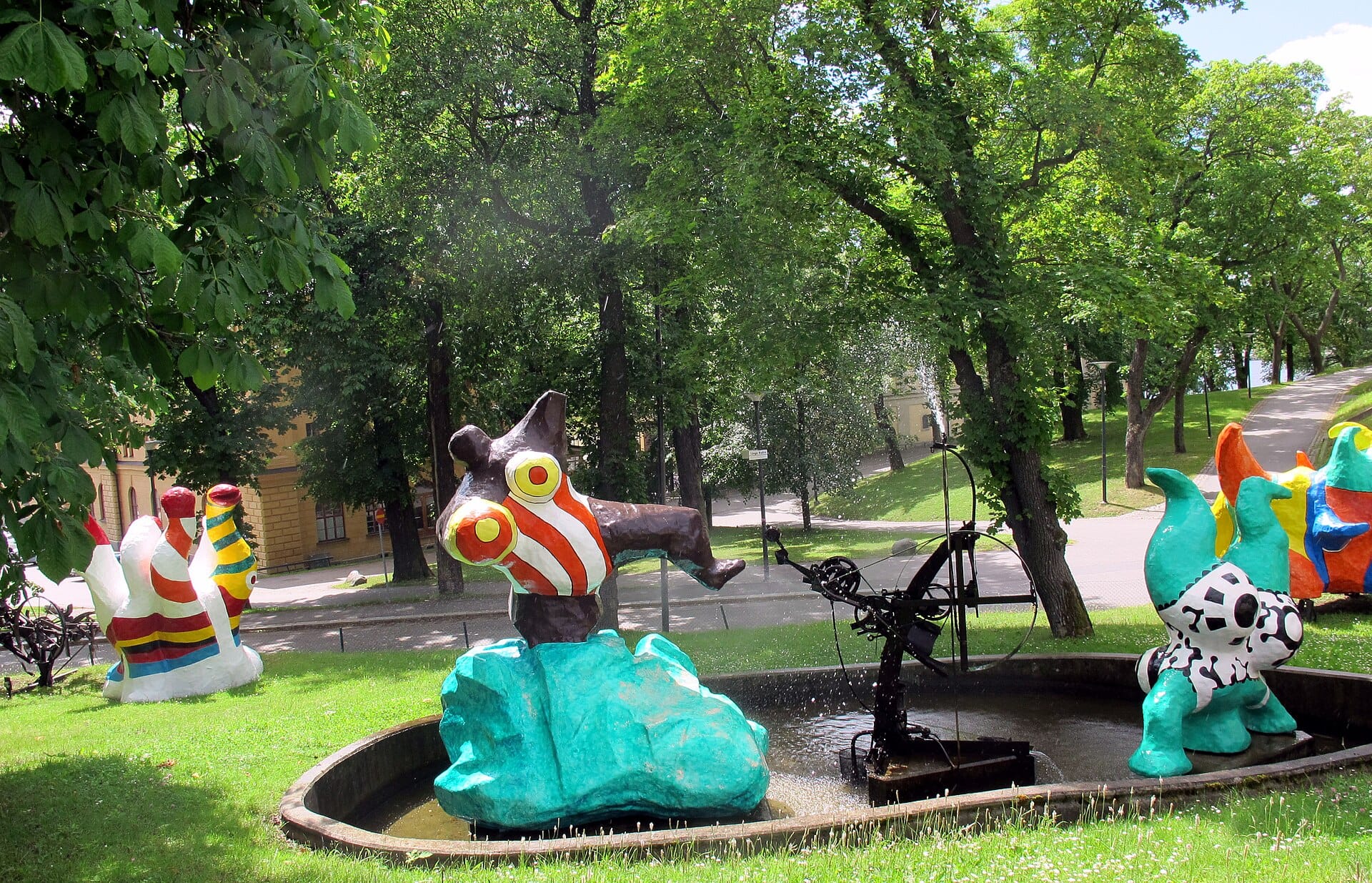
What Moderna Museet Actually Is
Moderna Museet is Sweden's national museum of modern and contemporary art, opened in 1958 and now housed in a purpose-built building designed by Spanish architect Rafael Moneo, which opened in 1998. The museum sits on Skeppsholmen, a small island between Gamla Stan and Djurgården that once served as a naval base. That maritime history is still palpable in the architecture around it, even as the building itself is all clean lines and controlled natural light.
The permanent collection holds works by Pablo Picasso, Salvador Dalí, Henri Matisse, Andy Warhol, and Robert Rauschenberg alongside a strong representation of Swedish and Nordic modernists. The breadth is genuine, not token: Moderna Museet consistently ranks among the top modern art institutions in Northern Europe, and its acquisition history includes some genuinely important works rather than second-tier examples of famous names.
💡 Local tip
Book tickets online to save 10 SEK per regular or reduced ticket and skip the front desk queue. During popular temporary exhibitions, the entrance hall can back up considerably, especially on Tuesday and Friday evenings when the museum stays open until 20:00.
The Setting: Skeppsholmen Island
Half the pleasure of visiting Moderna Museet is the approach. Coming on foot from Kungsträdgården (roughly 10 minutes), you cross the Skeppsholmsbron bridge and arrive on an island that feels conspicuously calm compared to the surrounding city. The naval buildings, the old af Chapman sailing ship moored nearby, and the wide water views toward Gamla Stan create a particular atmosphere that is hard to replicate elsewhere in Stockholm.
The island also shares space with the Nationalmuseum, which reopened in 2018 after an extensive renovation, and the Architecture and Design Center (ArkDes). If you're planning a full day of cultural institutions, these three sit close enough together to visit in sequence without significant walking.
In summer, the water views from the museum's exterior terrace are genuinely striking — Stockholm's inner waterways catch light in a way that shifts considerably through the day, from a flat silver in the morning to something warmer and more theatrical in the late afternoon. In winter, the island is quieter and the light is low and Nordic, which suits the museum's interiors particularly well.
Tickets & tours
Live prices and dates from our booking partner. If you book, we may earn a commission at no extra cost to you.
2-hour archipelago tour on a RIB speedboat
From 122 €Instant confirmationFree cancellationHaunted Stockholm exploration game and tour
From 12 €Instant confirmationFree cancellationFotografiska Stockholm entrance tickets
From 0 €Instant confirmationFree cancellationStockholm: Nature Reserve Hiking Tour with Campfire Lunch
From 102 €Instant confirmationFree cancellation
Inside the Collection: What You'll Actually See
Moneo's building is organized around a series of top-lit galleries that allow natural daylight to filter evenly across the works. The effect is notably different from artificially lit museum spaces: colors read more accurately, and the experience of standing in front of a large canvas feels less clinical. The galleries are wide enough to give major works breathing room, and the circulation routes are intuitive without being rigidly linear.
The permanent collection is displayed thematically and rotated periodically, so the specific arrangement you encounter will depend on when you visit. What remains consistent is the quality of the core holdings: major Surrealist works, significant Abstract Expressionist pieces, and a photographic collection that is often underappreciated by first-time visitors. The photography galleries, usually situated in a quieter wing, are worth seeking out specifically.
Temporary exhibitions are a major draw and are scheduled throughout the year. Check the official website before your visit, as blockbuster shows can significantly affect how crowded the permanent galleries feel. If you're organizing a broader Stockholm art itinerary, the best museums in Stockholm guide covers how Moderna Museet fits alongside other major institutions.
How the Experience Changes by Time of Day
Weekday mornings — particularly Wednesdays and Thursdays between 10:00 and noon — are the quietest windows. The permanent galleries have a stillness to them that is genuinely conducive to looking at art carefully. School groups occasionally arrive mid-morning, which can change the atmosphere in specific rooms, but the museum is large enough that you can usually move around them.
Tuesday and Friday evenings (open until 20:00) attract a different crowd: more locals, more people coming after work, and a noticeably more relaxed social energy. The museum café and the areas near the temporary exhibition entrance tend to be busier. If you prefer a social atmosphere and don't mind some background noise, these evenings work well. If you want focused gallery time, they are the worst windows.
Saturday afternoons are the most crowded period overall, particularly when a major temporary show is running. Sundays are somewhat calmer, especially in the morning. The museum is closed on Mondays, which catches some visitors off guard — plan accordingly.
⚠️ What to skip
Moderna Museet is closed every Monday. Free Friday admission is available 18:00–20:00 outside the summer season, resuming on 21 August. During summer, standard admission applies on Fridays.
Practical Walkthrough: Getting There and Getting Around
The most straightforward approach is bus 65, which stops directly at Moderna Museet. From the city center, the walk from Kungsträdgården takes about 10 minutes and is pleasant along the water. From T-Centralen or Gamla Stan T-bana stations, budget closer to 20 minutes on foot. The Djurgården ferry also calls at Skeppsholmen, which is a scenic option in warmer months.
Visitors with mobility considerations should note that there is disabled parking directly outside the main entrance and at the water-facing entrance, and taxis can stop outside. The building itself is accessible. For general orientation on getting around Stockholm's public transport system, the getting around Stockholm guide covers SL tickets, ferry routes, and transit passes in detail.
Inside the museum, the layout across two main levels is clear and well-signposted in both Swedish and English. The museum shop is near the entrance and worth browsing — the book selection on Scandinavian modernism is genuinely good, and the print reproductions are reasonably priced. The café serves food and coffee throughout opening hours and has terrace seating in good weather.
Photography and Practical Logistics
Photography for personal, non-commercial use is generally permitted in the permanent collection galleries, but restrictions apply to temporary exhibitions and to specific works where copyright agreements prohibit it. Signage at the entrance to each gallery will indicate what is allowed. Large camera bags may need to be checked at the cloakroom.
The exterior of the building and the island setting photograph well in the late afternoon, when the light comes from the west and the water behind the museum catches it. The view back toward Gamla Stan from the south side of Skeppsholmen is one of the better vantage points in the city for that particular skyline, and it costs nothing to access.
If photography and viewpoints are a priority for your Stockholm trip, the best views in Stockholm guide covers elevated and waterside perspectives across the city.
Is Moderna Museet Worth Your Time?
For visitors with a genuine interest in 20th-century art, this is one of the strongest reasons to come to Stockholm. The collection is not a curated-for-tourists greatest-hits selection: it reflects genuine institutional seriousness, and the building gives the works appropriate space and light. It is not an immersive experience or a spectacle — it is an art museum that takes itself seriously.
For visitors primarily focused on Stockholm's historical and cultural identity, the modern art context may feel less immediate than, say, Vasa Museum or the Historiska Museet. Those attractions offer experiences more directly tied to Swedish history and are harder to replicate elsewhere. Moderna Museet, while excellent, exists in a category with strong competitors in other European cities.
Travelers who want pure sightseeing efficiency, or who have no particular interest in modern art, will find the admission cost harder to justify. Families with younger children may find the environment less engaging than Stockholm's more interactive museums, though children under 18 enter free, which removes at least the financial barrier.
If budget is a consideration, check whether your visit falls during the free Friday season (available from 21 August outside the summer period). The free things to do in Stockholm guide lists other no-cost cultural options across the city.
Insider Tips
- The museum's sculpture terrace facing the water is accessible without a ticket. It is a legitimate vantage point for the Gamla Stan skyline and often quiet even when the museum itself is busy.
- Free Friday admission resumes on 21 August each year between 18:00 and 20:00. If your visit falls after that date, arrive within the first hour of opening (10:00) to beat the post-work crowd that builds from around 17:00.
- ArkDes, the Architecture and Design Center, shares the Skeppsholmen island and is free to enter the permanent exhibitions. It makes a natural pairing with Moderna Museet and adds depth to a half-day visit.
- The museum's photography collection is housed in a wing that many visitors move through quickly on their way to larger paintings. Budget time specifically for it — the Nordic documentary photography holdings are strong.
- Coat check is free and worth using in winter. The galleries are warm and navigating large coats through narrow spaces between canvases becomes awkward quickly.
Who Is Moderna Museet For?
- Art enthusiasts with specific interest in 20th-century European and American modernism
- Architecture admirers interested in Rafael Moneo's design approach and top-lit gallery spaces
- Visitors with a full day on Skeppsholmen combining multiple cultural institutions
- Travelers visiting Stockholm in winter or during rain who want a substantive indoor cultural experience
- Families where children are 12 and older — free entry for under-18s makes it low-risk financially
Nearby Attractions
Combine your visit with:
- Birka Viking Town
Founded around AD 750 on a remote island in Lake Mälaren, Birka was one of Scandinavia's earliest true urban trading centers. Today it survives as part of the UNESCO World Heritage Site Birka and Hovgården, reached only by seasonal boat from Stockholm, where around 2,000 Viking-age graves still dot the surrounding landscape. It is one of the most historically significant half-day excursions available from the Swedish capital.
- Drottningholm Palace
Drottningholm Palace is Sweden's most complete royal domain, a UNESCO World Heritage Site on Lovön island just about 10 km west of Stockholm. The baroque complex includes the palace, a working 18th-century theatre, a Chinese Pavilion, and formal gardens that shift in character across every season.
- Royal National City Park (Ekoparken)
The Royal National City Park, known locally as Ekoparken, is the world's first national urban park and one of Stockholm's most remarkable features. Stretching around 27 km² from Djurgården in the south to Ulriksdal in the north, it wraps around the city in a continuous arc of ancient oak forests, royal palaces, museum islands, and open waterways. Entry is free and the park never closes.
- Hagaparken
Hagaparken is a 144-hectare English landscape park just north of central Stockholm, laid out for King Gustav III in the late 18th century. Free to enter year-round, it offers a rare combination of royal history, open meadows, and waterside walking paths within easy reach of the city. Individual attractions inside the park, including the Butterfly House and royal pavilions, charge their own fees.
Planning a trip? Discover personalized activities with the Nomado app.