Hagaparken: Stockholm's Royal Park Worth an Afternoon
Hagaparken is a 144-hectare English landscape park just north of central Stockholm, laid out for King Gustav III in the late 18th century. Free to enter year-round, it offers a rare combination of royal history, open meadows, and waterside walking paths within easy reach of the city. Individual attractions inside the park, including the Butterfly House and royal pavilions, charge their own fees.
Quick Facts
- Location
- Hagalund, Solna, just north of central Stockholm
- Getting There
- Bus from Odenplan or Sergels torg to Haga Norra
- Time Needed
- 2 to 4 hours
- Cost
- Free entry to the park; individual venues charge separately
- Best for
- Picnics, history walks, families, photographers
- Official website
- www.sfv.se
What Hagaparken Actually Is
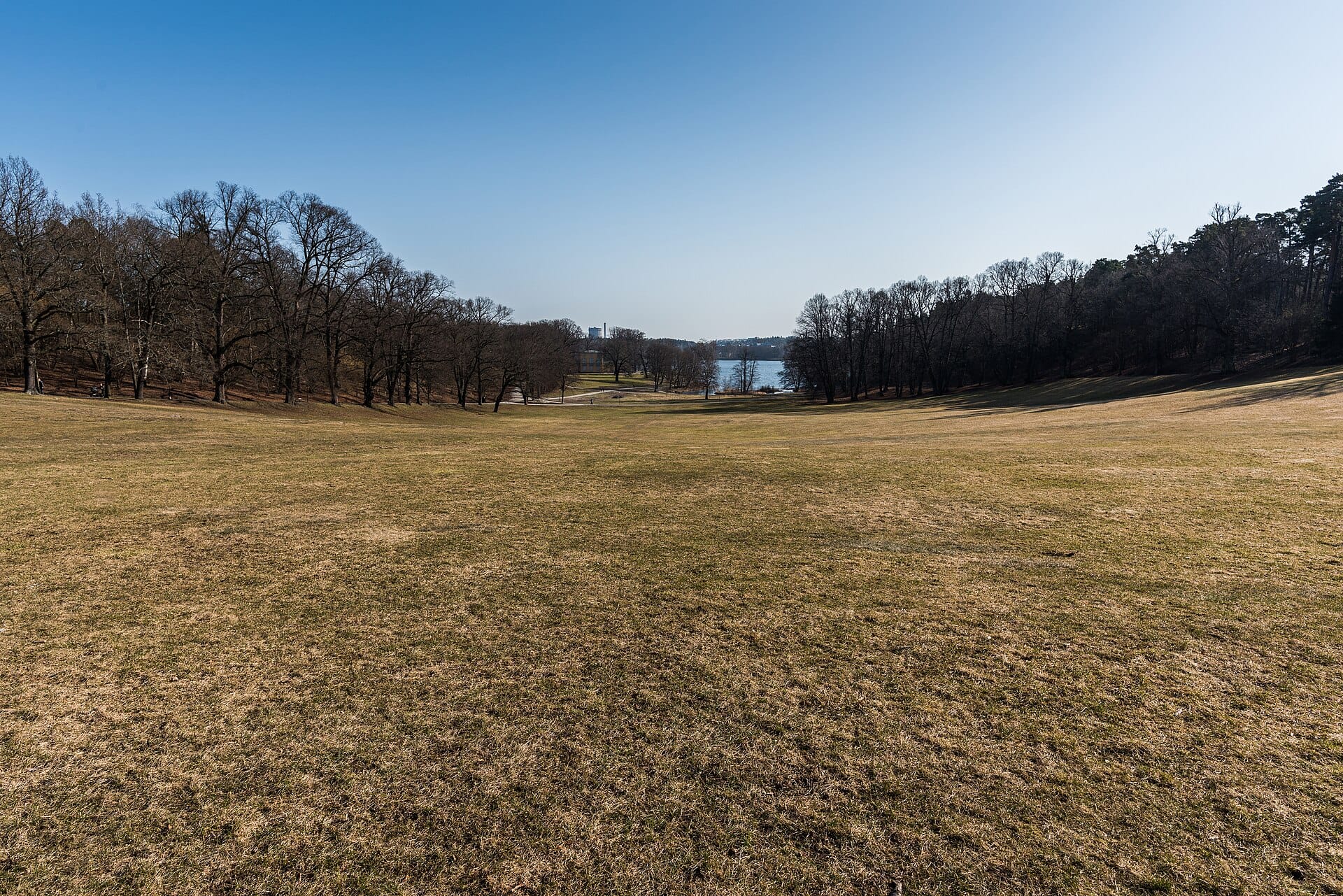
Hagaparken is a royal landscape park of about 144 hectares sitting on the western shore of Brunnsviken, the narrow lake that separates it from the inner northern districts of Stockholm. Administratively it falls within Solna municipality, though it functions as a northern extension of Stockholm's green spine. The park was conceived by King Gustav III from around 1780 and developed over the following two decades as a showpiece of English landscape design, with gently rolling meadows, strategically placed trees, and theatrical follies replacing the earlier formal gardens on the site.
In 1995, Hagaparken became part of the Royal National City Park, known in Swedish as Kungliga nationalstadsparken. This designation, the first of its kind in Sweden and one of the few genuine national urban parks in the world, protects the green corridor running from Hagaparken through Djurgården. The park is managed by Statens fastighetsverk, the Swedish state property board, and entry to the grounds themselves is free and unrestricted throughout the year.
💡 Local tip
The park has no gate or closing time, so early-morning visits in summer, when the meadows are clear and the light on Brunnsviken is at its softest, are entirely possible and surprisingly peaceful.
How the Park Feels at Different Times of Day
On a weekday morning in late spring, Hagaparken is quiet enough that you can hear birdsong clearly across the main meadow. Joggers use the perimeter paths from early on, and dog walkers claim the grassy slopes nearest the park entrance. The air carries a faint damp-earth smell from the lake, especially noticeable near the shoreline path along Brunnsviken.
By early afternoon on a summer weekend, the main open lawn near the copper tents fills with families. This is where the character of the park shifts: picnic blankets cover much of the central grass, children run toward the Butterfly House, and the kiosks see steady queues. The atmosphere is relaxed and genuinely Swedish in the warm-season sense, with groups of people staying for hours rather than moving through quickly.
Late afternoon brings a gradual thinning of crowds. The long Nordic light means the park stays bright and photogenic well into the evening during June and July. The wooded paths toward the northern end, near the Echo Temple, are almost empty by 6 p.m. on most days. Autumn changes the calculus entirely: the meadows turn amber, the lake surface reflects overcast skies, and the park takes on a more melancholic character that suits a solitary walk.
Tickets & tours
Live prices and dates from our booking partner. If you book, we may earn a commission at no extra cost to you.
2-hour archipelago tour on a RIB speedboat
From 122 €Instant confirmationFree cancellationHaunted Stockholm exploration game and tour
From 12 €Instant confirmationFree cancellationFotografiska Stockholm entrance tickets
From 0 €Instant confirmationFree cancellationStockholm: Nature Reserve Hiking Tour with Campfire Lunch
From 102 €Instant confirmationFree cancellation
The Architecture and Follies Worth Seeking Out
The most distinctive structures in Hagaparken are the copper tents, known in Swedish as koppartälten. These semicircular military-style canvas tent forms were originally built to house the royal guard and are now among the most photographed features of the park. Their patinated green roofs catch the eye from across the main meadow and are genuinely unusual in a European landscape context.
Gustav III's Pavilion, a neoclassical summer palace within the park, was designed by architect Olof Tempelman with decorative and interior contributions by Louis Jean Desprez and contains period interiors reflecting late 18th-century court taste. The pavilion operates as a museum with its own separate admission fee and seasonal hours, so confirm those in advance through the official channels before planning your visit around it.
Scattered across the grounds are several smaller romantic follies characteristic of English landscape design: the Echo Temple, the Chinese Pavilion area, and the ruins of the unfinished Haga Palace, a project abandoned after Gustav III's assassination in 1792. The palace ruins are perhaps the most historically charged spot in the park, a large stone shell surrounded by meadow grass with no explanatory fuss. They reward a short detour.
For visitors with a broader interest in Stockholm's royal and historical layer, the park pairs naturally with a visit to Drottningholm Palace, the main royal residence located further west, or with the Stockholm Royal Palace in Gamla Stan.
Getting There and Moving Around the Park
The most straightforward public transport approach is to take a bus from Odenplan or Sergels torg to a stop such as Haga Norra near the park. Odenplan has a metro station on the green line, making it an easy transfer point from central Stockholm. The walk from the bus stop into the heart of the park takes around five minutes. There is no metro station directly at the park.
The park itself is large enough that route choice matters. The most direct walk from the main entrance leads across the open meadow toward the copper tents and Gustav III's Pavilion. A longer loop following the Brunnsviken shoreline covers the Echo Temple and northern sections, and adds roughly 30 to 45 minutes. The terrain is mostly flat with gentle slopes, and the main paths are well-maintained gravel or packed earth. Wet weather makes some of the grass areas muddy; proper shoes rather than urban sneakers are practical in spring or after rain.
ℹ️ Good to know
The park has no single main gate or formal entrance. Most visitors approach from the south along Hagaparksvägen, near the copper tents. GPS maps sometimes route visitors to less obvious entry points from the Solna side.
Hagaparken sits at the northern edge of the Royal National City Park corridor that continues south through Djurgården. On foot or by bike along the lake shore, it is possible to connect the two areas, though the full route takes the better part of a day and is best suited to those already committed to an extended outdoor walk.
What to Do Inside the Park
The majority of visitors come to Hagaparken to walk, sit, and picnic. This is not a formal attraction in the museum sense. There are no admission checkpoints, no audio guides for the park itself, and no structured route. The value is in the quality of the space: a genuine landscape park that has been protected from development for over two centuries.
The Butterfly House, known as Fjärilshuset, is the most popular ticketed attraction within the grounds and houses tropical butterflies and birds in a climate-controlled greenhouse environment. It charges a separate admission fee. Families with children tend to make this a focal point of the visit. The on-site cafe near the copper tents is a reliable option for coffee and simple food.
Picnicking is by far the most common activity on warm days. Locals treat the main meadow as an extension of their neighborhood, and the atmosphere is informal and welcoming. If you prefer a more structured garden experience, Rosendals Trädgård on Djurgården offers a biodynamic garden with a bakery and cafe that operates on similar free-access principles.
Practical Notes for Your Visit
Photography in the park is straightforward. The copper tents are best photographed in the morning when the light hits them from the east. The Brunnsviken shoreline offers reflections at dusk that work well in low-contrast autumn conditions. There are no photography restrictions in the open park grounds.
Accessibility across the main paths is generally reasonable for visitors with mobility considerations, though the park's gravel and earth paths do not meet formal wheelchair accessibility standards across all routes. The flatter central meadow area and the paths near the copper tents are the most navigable. Detailed certified accessibility information is not published by the park managers, so visitors with specific mobility needs should contact Statens fastighetsverk or check visithaga.se before visiting.
Visitors planning a full day in this part of Stockholm can combine Hagaparken with the Naturhistoriska Riksmuseet, the national natural history museum, which is located immediately adjacent to the park's southern end. It is one of Stockholm's most underrated museums and can be visited without backtracking. The combined visit suits families particularly well.
⚠️ What to skip
Individual venues inside the park, including Gustav III's Pavilion and the Butterfly House, have their own opening hours and seasonal closures. Do not assume all attractions are open year-round simply because the park grounds are. Check visithaga.se before visiting.
Who Should Think Twice
Hagaparken is not the right choice for visitors with very limited time in Stockholm who are prioritizing landmark museums and inner-city sights. The park rewards slow exploration rather than quick ticking-off. Visitors expecting manicured formal gardens will also find the English landscape style understated to the point of austerity in the off-season, when the meadows are brown and the lake is grey. In those months, the park is more of a local retreat than a tourism destination.
Those primarily focused on maximizing Stockholm's concentrated museum offerings in a short trip are better served starting with the Vasa Museum or the Nordiska Museet before considering Hagaparken as a half-day addition.
Insider Tips
- The Haga Palace ruins near the northern part of the park are frequently overlooked by first-time visitors who stay near the copper tents. The shell of the unfinished palace, abandoned after Gustav III's death in 1792, is one of the most atmospheric spots in the park and usually has very few people around it.
- Buses from Odenplan run frequently and the journey takes around 10–15 minutes. The stop closest to the park's main area is typically labeled Haga Norra; confirm the current stop name on the SL journey planner before you go, as route adjustments do occur.
- If you visit in June or July, the long evening light makes a late-afternoon arrival particularly good for photography and picnicking without the midday crowds. The park is openly accessible and there is no pressure to leave at any set time.
- Bring your own food. The kiosk near the copper tents is adequate for drinks and snacks but limited for a full picnic. A supermarket stop before arriving gives you significantly more options and saves money.
- The shoreline path along Brunnsviken is quieter than the main meadow area and offers a genuinely different perspective of the park, with views across the water toward the forested opposite shore. It is worth completing as a loop rather than doubling back on the same central path.
Who Is Hagaparken For?
- Families looking for outdoor space with a nearby ticketed attraction (Butterfly House) to anchor the visit
- Travelers interested in Swedish royal history and 18th-century landscape design
- Photographers after open meadows, waterside reflections, and architectural follies in a single location
- Anyone wanting a genuine local-use park rather than a tourist-facing attraction
- Visitors combining the park with the adjacent Naturhistoriska Riksmuseet for a full day north of the centre
Nearby Attractions
Combine your visit with:
- Birka Viking Town
Founded around AD 750 on a remote island in Lake Mälaren, Birka was one of Scandinavia's earliest true urban trading centers. Today it survives as part of the UNESCO World Heritage Site Birka and Hovgården, reached only by seasonal boat from Stockholm, where around 2,000 Viking-age graves still dot the surrounding landscape. It is one of the most historically significant half-day excursions available from the Swedish capital.
- Drottningholm Palace
Drottningholm Palace is Sweden's most complete royal domain, a UNESCO World Heritage Site on Lovön island just about 10 km west of Stockholm. The baroque complex includes the palace, a working 18th-century theatre, a Chinese Pavilion, and formal gardens that shift in character across every season.
- Royal National City Park (Ekoparken)
The Royal National City Park, known locally as Ekoparken, is the world's first national urban park and one of Stockholm's most remarkable features. Stretching around 27 km² from Djurgården in the south to Ulriksdal in the north, it wraps around the city in a continuous arc of ancient oak forests, royal palaces, museum islands, and open waterways. Entry is free and the park never closes.
- Långholmen Island
Långholmen Island sits between Södermalm and Kungsholmen in central Stockholm, offering free access to beaches, walking trails, and green spaces year-round. Its most unusual feature: a functioning hotel and hostel built inside a former 19th-century prison. Entry to the island costs nothing, making it one of the most rewarding spots in the city for those who know it.
Planning a trip? Discover personalized activities with the Nomado app.