Nordiska Museet: Inside Sweden's Largest Cultural History Museum
Nordiska museet on Djurgården holds over 1.5 million objects spanning 500 years of Nordic life, from peasant folk costumes to mid-century design. The building alone, a neo-Renaissance palace completed in 1907, earns a look even if you only have an hour. This guide covers what to see, when to go, and how to make the most of the visit.
Quick Facts
- Location
- Djurgårdsvägen 6–16, Djurgården, Stockholm
- Getting There
- Tram 7 to Nordiska museet/Vasamuseet, or Djurgården ferry from Slussen or Nybroplan
- Time Needed
- 2–3 hours for highlights; 4+ hours for a thorough visit
- Cost
- 170 SEK adults; children 0–17 free. Verify before visiting.
- Best for
- Design lovers, history enthusiasts, families, rainy-day plans
- Official website
- www.nordiskamuseet.se/en
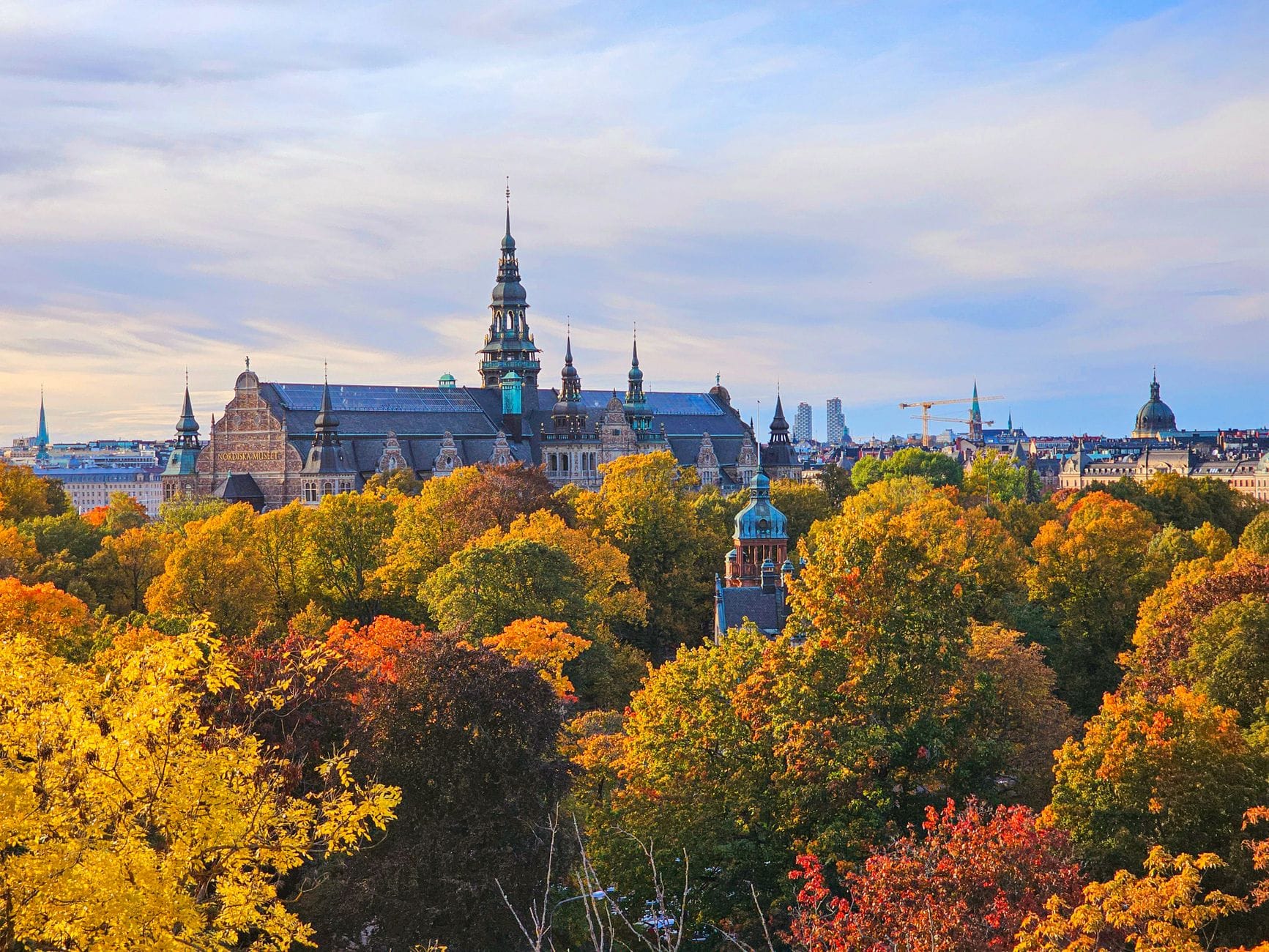
What Nordiska Museet Actually Is
Nordiska museet, the Nordic Museum, is Sweden's largest museum of cultural history. That title is not promotional language: the collection holds more than 1.5 million objects, documenting how people across Scandinavia have lived, dressed, eaten, and furnished their homes from the 1500s to the present day. It is not an art museum, and it is not a Viking museum. It is something harder to categorize and, for the right visitor, considerably more interesting: a sustained attempt to document everyday life across five centuries.
The museum was founded in the late 19th century and moved into its current building on Djurgården in 1907. The architect was Isak Gustaf Clason, and his design is unmistakable: a red-brick Nordic Renaissance palace with twin towers, elaborate stone carvings, and a scale that feels almost aggressive from the street. Construction ran from 1889 to 1907.
💡 Local tip
The museum is directly to the right after crossing Djurgårdsbron bridge, and faces the Vasa Museum. If you plan to visit both on the same day, check the current opening hours before going to avoid afternoon crowds at the Vasa.
The Building: More Than a Container for Exhibits
Before you reach any exhibit, the entrance hall stops you. The Great Hall is one of the most impressive interior spaces in Stockholm: a soaring atrium several stories tall, ringed by galleries, with a large oak statue of King Gustav Vasa presiding from a raised plinth at the far end. The statue, carved by Carl Milles and installed in the 1920s, is roughly four meters tall. The hall's proportions create an immediate sense of occasion that is completely at odds with how the museum is usually described in passing.
Visitors who come primarily for the collection sometimes forget to look up. The vaulted ceilings, the ironwork on the upper gallery railings, and the quality of light that shifts through the day depending on weather and season all reward attention. On overcast mornings the hall has a cool, gray solemnity. On bright summer afternoons, light angles in from the upper windows and the brickwork takes on a warmer tone.
Architecturally, Clason's building belongs to the same late-19th-century Nordic Romanticism that shaped several Stockholm landmarks from that era. If you find yourself drawn to this style, the Nationalmuseum on Blasieholmen offers a useful comparison: it is slightly earlier and more restrained, where Nordiska museet leans toward the theatrical.
Tickets & tours
Live prices and dates from our booking partner. If you book, we may earn a commission at no extra cost to you.
2-hour archipelago tour on a RIB speedboat
From 122 €Instant confirmationFree cancellationHaunted Stockholm exploration game and tour
From 12 €Instant confirmationFree cancellationFotografiska Stockholm entrance tickets
From 0 €Instant confirmationFree cancellationStockholm: Nature Reserve Hiking Tour with Campfire Lunch
From 102 €Instant confirmationFree cancellation
The Collection: What You Will Actually See
The permanent collection is organized thematically rather than chronologically. The museum covers folk art, Sami culture, Swedish design from the 20th century, table settings and dining culture, fashion and textiles, and domestic interiors across different periods and social classes. There are also dedicated sections on traditions around death, celebrations such as Midsommar and Christmas, and the history of Swedish cottages and summer house culture.
The Sami section deserves specific mention. It presents the culture, material life, and contemporary situation of the indigenous Sami people with more depth and care than most Swedish museums manage. For visitors unfamiliar with Sami history, this alone can reframe how you think about Nordic identity. If your interest in Swedish cultural history runs deeper, the Historiska museet on Östermalm covers prehistoric and medieval Sweden specifically, and the two museums complement each other well.
The fashion and textiles section is one of the strongest in the building. The collection spans several centuries of garments, and the curation focuses on regional variation and class distinction rather than just court dress. You see what a farmer's wife in Dalarna wore in the 1750s alongside what an urban middle-class family in Stockholm wore in the 1920s. The difference in fabric quality, color availability, and construction tells you more about social history than most text panels.
The interiors exhibits reconstruct or display furniture and objects arranged as room settings from different periods. Some visitors find this format dry; others find it the most absorbing thing in the museum. If you have any interest in Scandinavian design history, the 20th-century rooms trace the development from heavy bourgeois interiors through functionalism and into the cleaner mid-century aesthetic that Swedish design became known for internationally.
Time of Day and Crowd Patterns
Nordiska museet draws a different crowd from its neighbor the Vasa Museum. The Vasa sees very high foot traffic year-round; Nordiska museet is calmer. On weekday mornings, particularly outside summer, the galleries can feel nearly empty, which makes it easy to spend time with individual objects without pressure. Weekend afternoons in July and August are busiest, especially when the Vasa has long lines and visitors walk over looking for an alternative.
The museum is open daily 10:00 to 17:00 as a baseline, with extended Wednesday hours to 20:00 from September through May. Verify current hours on the official website before visiting, as seasonal schedules do change. Early morning visits in summer have an advantage: the Great Hall light is cleaner before midday, and the café tends to be quieter.
ℹ️ Good to know
The museum's archives and library operate separately from the main galleries and are closed for summer (18 June to 18 August, based on recent scheduling). If you need research access, plan accordingly and contact the museum in advance.
Getting There and Practical Logistics
Djurgården is easily reached from central Stockholm without a car. Tram 7 stops at Nordiska museet/Vasamuseet, directly outside the entrance. The Djurgården ferry connects from central Stockholm, and cycling from the city center is also straightforward.
Djurgården concentrates several of Stockholm's major attractions within walking distance of each other. On the same visit, you can combine Nordiska museet with the Vasa Museum, Skansen, or the gardens at Rosendals Trädgård. The island rewards a full day if the weather is reasonable.
Admission is 170 SEK for adults. Children aged 0 to 17 enter free. Verify current partner-pass coverage directly before purchasing any pass.
💡 Local tip
For accessibility arrangements including lift access and wheelchair facilities, contact the museum directly by email or phone before your visit. The official website lists current contact details and the museum staff can advise on specific requirements.
Photography and What to Bring
Photography for personal use is generally permitted in the permanent galleries. The Great Hall is the obvious subject, and the best light for interior shots is in the morning when the upper windows are less directly backlit. The textile and fashion galleries have lower light levels to protect the objects, which makes handheld photography difficult without a camera that handles low light well. A phone camera will struggle in some of these rooms.
The museum has a café and a museum shop. The shop stocks publications on Swedish design, folk art, and cultural history, some of which are hard to find elsewhere in Stockholm. If you are traveling with children under ten, the museum has specific family-oriented activities in parts of the building; check the website for current programming. Young children can find the scale of the Great Hall exciting on arrival and then struggle with the more object-focused gallery content, so calibrate your expectations.
Who Will Enjoy This Museum, and Who Might Not
Nordiska museet works best for visitors who are genuinely curious about how people lived rather than visitors looking for dramatic singular objects. If you are primarily interested in Swedish history at the national political level, Historiska museet covers the earlier periods more directly. If you want Scandinavian applied arts and design in a more focused format, the Nationalmuseum organizes its collection differently and may suit you better.
Visitors who are only in Stockholm for one day and prioritizing a short list of headline attractions may find Nordiska museet competes poorly against the Vasa Museum's immediate impact. The Vasa delivers a single overwhelming object; Nordiska museet asks for more patience and rewards different expectations. Neither is a substitute for the other.
Those traveling with children will find the free under-18 admission a genuine advantage. The museum is not primarily designed as an interactive children's space, but the scale of the Great Hall, the folk costumes, and the constructed room settings tend to hold children's attention better than gallery-format displays. Plan for 90 minutes to two hours with children rather than the full three.
Insider Tips
- The oak statue of Gustav Vasa in the Great Hall is easy to walk past without registering its scale. Stand at the far end of the hall and look back toward the entrance to get a proper sense of the room's proportions.
- Tram 7 is the most straightforward connection from the city center and runs frequently. The ferry from Nybroplan is slower but gives a better approach to the island and costs roughly the same with an SL ticket.
- The museum shop stocks serious publications on Swedish folk art, traditional textiles, and design history. If you have weight in your luggage, browse here before buying at airport shops.
- Temporary exhibitions at Nordiska museet are often more conceptually ambitious than the permanent collection suggests. Check the website for current programming before dismissing the visit as purely a permanent-collection experience.
- If you plan to visit both Nordiska museet and the Vasa Museum on the same day, start at Nordiska museet when it opens. Vasa crowds peak mid-morning and ease slightly after 14:00.
Who Is Nordiska Museet For?
- Design and interiors enthusiasts wanting context for Scandinavian style history
- Travelers with children under 18 (free entry, family programming)
- Anyone spending a full day on Djurgården combining multiple attractions
- Visitors interested in Sami culture and Nordic indigenous history
- Rainy-day itineraries when outdoor Djurgården activities are not viable
Nearby Attractions
Other things to see while in Djurgården:
- ABBA The Museum
ABBA The Museum is Stockholm's most popular music attraction, a permanent interactive exhibition dedicated to Sweden's most famous pop group. Located on Djurgården, it combines costumes, memorabilia, and hands-on experiences in a way that appeals well beyond die-hard fans.
- Gröna Lund
Gröna Lund has been drawing Stockholmers to Djurgården since 1883, packing around 30 rides, live concert stages, and seasonal events into just 3.8 hectares on the waterfront. This guide covers what the experience actually feels like across different times of day, who will love it, and who might want to skip it.
- Junibacken
Junibacken is a children's cultural centre on Djurgården dedicated to Astrid Lindgren's literary universe, featuring an indoor Story Train, immersive storybook scenes, live theatre, and a bookshop. Opened in 1996, it draws around 400,000 visitors a year and ranks consistently among Stockholm's most-visited attractions.
- Prins Eugens Waldemarsudde
Prins Eugens Waldemarsudde is the former waterside villa of Prince Eugene, Swedish royal and serious painter, now a museum combining early 20th-century Nordic art with landscaped gardens on Djurgården. It rewards visitors who appreciate art in context, housed where it was actually collected and lived with.
Planning a trip? Discover personalized activities with the Nomado app.