ABBA The Museum: What to Expect Before You Visit
ABBA The Museum is Stockholm's most popular music attraction, a permanent interactive exhibition dedicated to Sweden's most famous pop group. Located on Djurgården, it combines costumes, memorabilia, and hands-on experiences in a way that appeals well beyond die-hard fans.
Quick Facts
- Location
- Djurgårdsvägen 68, Djurgården, Stockholm
- Getting There
- Bus 69 or tram 7 to Liljevalchs/Gröna Lund stop, a short walk away
- Time Needed
- 2 to 3 hours
- Cost
- Adult tickets from approx. SEK 250; verify current prices at abbathemuseum.com
- Best for
- Music fans, pop culture enthusiasts, families with older children
- Official website
- abbathemuseum.com/en
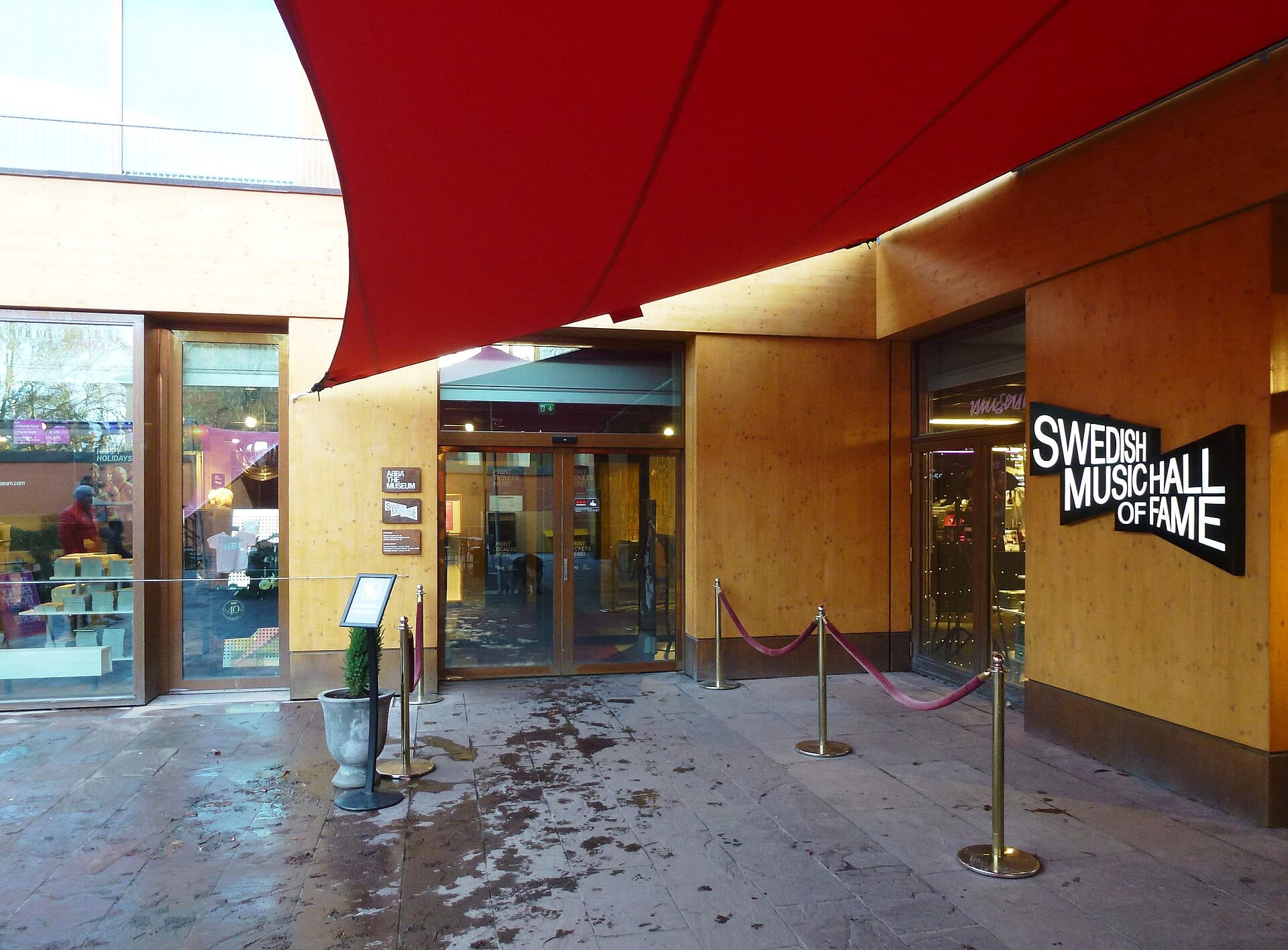
What Is ABBA The Museum?
ABBA The Museum opened on 7 May 2013 on the island of Djurgården and has since become one of Stockholm's most visited cultural attractions. It is not a conventional museum in the archival sense. There are no dim corridors of glass cases and faded labels. Instead, it is a permanent, privately owned interactive exhibition built around the story of Björn, Benny, Agnetha, and Anni-Frid, the four musicians who formed ABBA in Stockholm in 1972 and went on to dominate pop music globally for most of the decade that followed.
The museum sits within the Swedish Music Hall of Fame complex, positioned on the eastern stretch of Djurgårdsvägen between Gröna Lund and Liljevalchs. On one side, the smell of funfair food drifts over from the amusement park. On the other, the calm parkland of Djurgården stretches south. It is an unlikely setting for a temple to sequined jumpsuits and Eurovision-winning pop, but the contrast works in the museum's favor: it feels deliberately celebratory rather than stuffy.
Djurgården is one of Stockholm's most culturally dense areas. Within a ten-minute walk you will find the Vasa Museum, Skansen, and the Nordiska museet. ABBA The Museum fits naturally into a full day on the island.
The Exhibition: What You Actually See
The collection is extensive. Original stage costumes are displayed throughout, including the iconic blue satin suits from the 1979 North American tour, the white platform boots from Waterloo, and the more theatrical outfits from later years. Each is presented with context about where it was worn and who designed it. Alongside the clothing, there are gold and platinum records, original instruments, handwritten lyrics, and personal photographs from the band members' own archives.
The interactive elements are what separate this from a standard memorabilia display. Visitors can step into a replica of the Polar Music Studio in Stockholm where much of ABBA's work was recorded, sit in a recreation of the band's dressing room, and take their place in a holographic performance alongside animated versions of the four members. The technology behind the holographic stage is deliberately theatrical rather than cutting-edge cinema, but it creates exactly the kind of absurd, joyful moment the museum is designed to deliver.
One of the exhibition's better details is the telephone installed in the studio replica. It is connected to a real phone held by Benny Andersson himself. He can, in theory, call at any time. Most visitors will never receive that call, but the museum reports it has happened. Whether you find this charming or slightly gimmicky will tell you a lot about whether the overall experience is for you.
💡 Local tip
The museum recommends booking tickets in advance online, particularly during summer months and school holidays when queues at the door can be significant. Time-slot entry is used at peak periods.
Tickets & tours
Live prices and dates from our booking partner. If you book, we may earn a commission at no extra cost to you.
How the Experience Changes by Time of Day
Morning visits, particularly on weekdays, tend to be the quietest. The first hour after opening, typically from 10:00 in the cooler months and sometimes from 09:00 during peak summer, sees a steady trickle of visitors rather than crowds, and the interactive stations are almost always available without waiting. The light inside is consistent regardless of the hour since the exhibition is largely interior, but arriving early means more time at the popular holographic stage and recording booth without the press of other people.
By midday, particularly in summer, the museum fills noticeably. School groups, tour buses, and families who have spent the morning at Skansen or the Vasa Museum often converge in the early afternoon. If your primary interest is the interactive elements rather than the displays, a late afternoon visit from around 15:30 onward tends to thin out again as families with young children head home for the day.
Opening hours vary by season. The museum typically operates 10:00 to 18:00 from roughly September through April, with extended hours into the evening during late spring and summer, often up to 20:00 and sometimes opening from 09:00 in the peak period. Check the official website before visiting as specific dates and holiday periods have different schedules.
Getting There
From central Stockholm, bus 69 and tram 7 both serve Djurgårdsvägen and stop close to the museum at the Liljevalchs/Gröna Lund stop. The tram departs from near Djurgårdsbroen on Strandvägen and takes roughly ten minutes. During summer, a ferry service operates from Slussen and Nybroplan to Djurgården, which is a pleasant alternative and drops you within a short walk of the museum.
If you are arriving from Norrmalm or Gamla Stan on foot, the walk across Djurgårdsbron and along the main avenue takes around 20 to 25 minutes and passes several other major attractions. For full details on navigating the city's public transport network, see the guide to getting around Stockholm.
ℹ️ Good to know
The museum is listed in the Museum for All accessibility database. The venue at Djurgårdsvägen 68 is presented as accessible. For specific details on wheelchair access, lifts, and sensory accommodations, contact the museum directly via the official website.
Cultural Context: Why ABBA Still Matters to Sweden
ABBA won the Eurovision Song Contest in 1974 with Waterloo, representing Sweden in Brighton, and the victory marked the start of a commercial run that would make them, for a period, one of the highest-earning entities in Sweden. Their music publishing rights generated revenue comparable to major Swedish industrial exports. The fact that Stockholm has a dedicated museum to them reflects not nostalgia alone but a recognition that the band's cultural and economic footprint was genuinely significant.
The museum opened more than three decades after ABBA effectively ceased activity in 1982, and interest in the band has continued to grow rather than diminish. The 2008 Mamma Mia film and its 2018 sequel brought a new generation of fans to the catalogue. The museum benefits from that sustained cultural relevance, and the exhibitions are updated periodically to reflect new material, including content related to the 2021 Voyage album and the ABBA Voyage avatar concert project in London.
For travelers interested in the broader sweep of Swedish musical and popular culture, the Historiska museet and the Swedish Music Hall of Fame portion of this complex provide useful counterpoints that place ABBA in a longer cultural timeline.
Practical Walkthrough
Entry is via the ground floor where tickets are checked and audio guides can be collected. The exhibition flows across multiple levels. There is no strict one-way route enforced throughout, which means you can revisit sections, though peak periods see natural crowd flow that can make backtracking feel effortful.
Plan to spend at least two hours to move through the main displays at a reasonable pace. Visitors who engage with every interactive element, including the recording studio booth where you can add your voice to an ABBA track, and the karaoke and dance stations, will comfortably fill three hours. There is a shop on exit that stocks the full range of official ABBA merchandise, from sensible postcards to the more extravagant costume replicas.
Photography is permitted throughout most of the museum. The holographic stage in particular photographs well, though the lighting is optimized for the experience rather than your camera. A wide-angle lens or a modern smartphone in portrait mode will produce better results than long-lens zoom shots in the relatively compact spaces.
⚠️ What to skip
The museum is genuinely loud. ABBA's catalogue plays continuously throughout the space at a level that keeps the atmosphere energetic. Visitors who are sensitive to sustained high-volume music may find the experience tiring. There is a café area where the audio is somewhat reduced.
Who Should Skip This
If you have no particular interest in ABBA or pop music history and are primarily drawn by the idea of a 'Stockholm attraction', there are stronger options nearby for your time. The Vasa Museum is a world-class exhibition that tells a story specific to Stockholm's maritime and imperial history. Skansen is a genuinely unusual open-air museum that rewards several hours of exploration. ABBA The Museum asks for two to three hours and delivers them best to visitors who come with at least some affection for the material.
Families with very young children should also weigh the experience carefully. The interactive elements and the energy of the space work well for children from roughly eight or nine upward, but the museum is not primarily designed for early childhood engagement and the loud audio environment can be difficult for toddlers. Children up to 7 typically enter free, which reduces the financial risk of testing it.
Travelers on a tight budget might also consider that the Stockholm Pass can include ABBA The Museum entry, which may improve the value calculation if you are visiting multiple paid attractions in the same day.
Insider Tips
- Book a specific time slot online in advance during summer. Walk-up entry is possible on quieter days but the museum caps numbers and popular slots sell out by mid-morning in July and August.
- The recording studio booth, where you lay down your voice over an ABBA backing track, produces a file you can download or share later. Have your email address ready when you use it.
- Combine a Djurgården visit strategically: arrive at ABBA The Museum at opening, spend the late morning there, then walk five minutes to the Vasa Museum for the afternoon. Both are on the same street and together make an efficient full day.
- The museum's café shares the building with the Swedish Music Hall of Fame section, which is included in your ticket. Many visitors miss the Hall of Fame entirely by heading straight for the ABBA content. It is worth the fifteen minutes.
- If you visit in summer, the return journey by ferry from Allmänna gränd, a short walk from the museum, is a genuinely pleasant way to get back to Slussen or Nybroplan and avoids the afternoon bus crowds.
Who Is ABBA The Museum For?
- ABBA fans and pop music enthusiasts who want to see original costumes and instruments up close
- Families with children aged 8 and older who will engage with the interactive and performance elements
- Travelers combining a full day on Djurgården with the Vasa Museum and Skansen
- Music industry professionals and creatives interested in the songwriting and production history behind the catalogue
- Visitors looking for an energetic, participatory experience rather than a passive museum walk
Nearby Attractions
Other things to see while in Djurgården:
- Gröna Lund
Gröna Lund has been drawing Stockholmers to Djurgården since 1883, packing around 30 rides, live concert stages, and seasonal events into just 3.8 hectares on the waterfront. This guide covers what the experience actually feels like across different times of day, who will love it, and who might want to skip it.
- Junibacken
Junibacken is a children's cultural centre on Djurgården dedicated to Astrid Lindgren's literary universe, featuring an indoor Story Train, immersive storybook scenes, live theatre, and a bookshop. Opened in 1996, it draws around 400,000 visitors a year and ranks consistently among Stockholm's most-visited attractions.
- Nordiska Museet
Nordiska museet on Djurgården holds over 1.5 million objects spanning 500 years of Nordic life, from peasant folk costumes to mid-century design. The building alone, a neo-Renaissance palace completed in 1907, earns a look even if you only have an hour. This guide covers what to see, when to go, and how to make the most of the visit.
- Prins Eugens Waldemarsudde
Prins Eugens Waldemarsudde is the former waterside villa of Prince Eugene, Swedish royal and serious painter, now a museum combining early 20th-century Nordic art with landscaped gardens on Djurgården. It rewards visitors who appreciate art in context, housed where it was actually collected and lived with.
Planning a trip? Discover personalized activities with the Nomado app.