Prins Eugens Waldemarsudde: Art, Gardens, and a Royal Artist's Legacy on Djurgården
Prins Eugens Waldemarsudde is the former waterside villa of Prince Eugene, Swedish royal and serious painter, now a museum combining early 20th-century Nordic art with landscaped gardens on Djurgården. It rewards visitors who appreciate art in context, housed where it was actually collected and lived with.
Quick Facts
- Location
- Prins Eugens väg 6, Djurgården, Stockholm
- Getting There
- Tram 7 to Waldemarsudde stop, or ferry to Allmänna Gränd then walk. Bus 67 also serves Djurgården.
- Time Needed
- 2–3 hours for museum and gardens; longer if you linger outdoors
- Cost
- Adults SEK 170, seniors/students SEK 150, under-20 free. Card only (Visa/Mastercard).
- Best for
- Art lovers, architecture fans, garden walkers, and anyone wanting calm away from central Stockholm
- Official website
- waldemarsudde.se
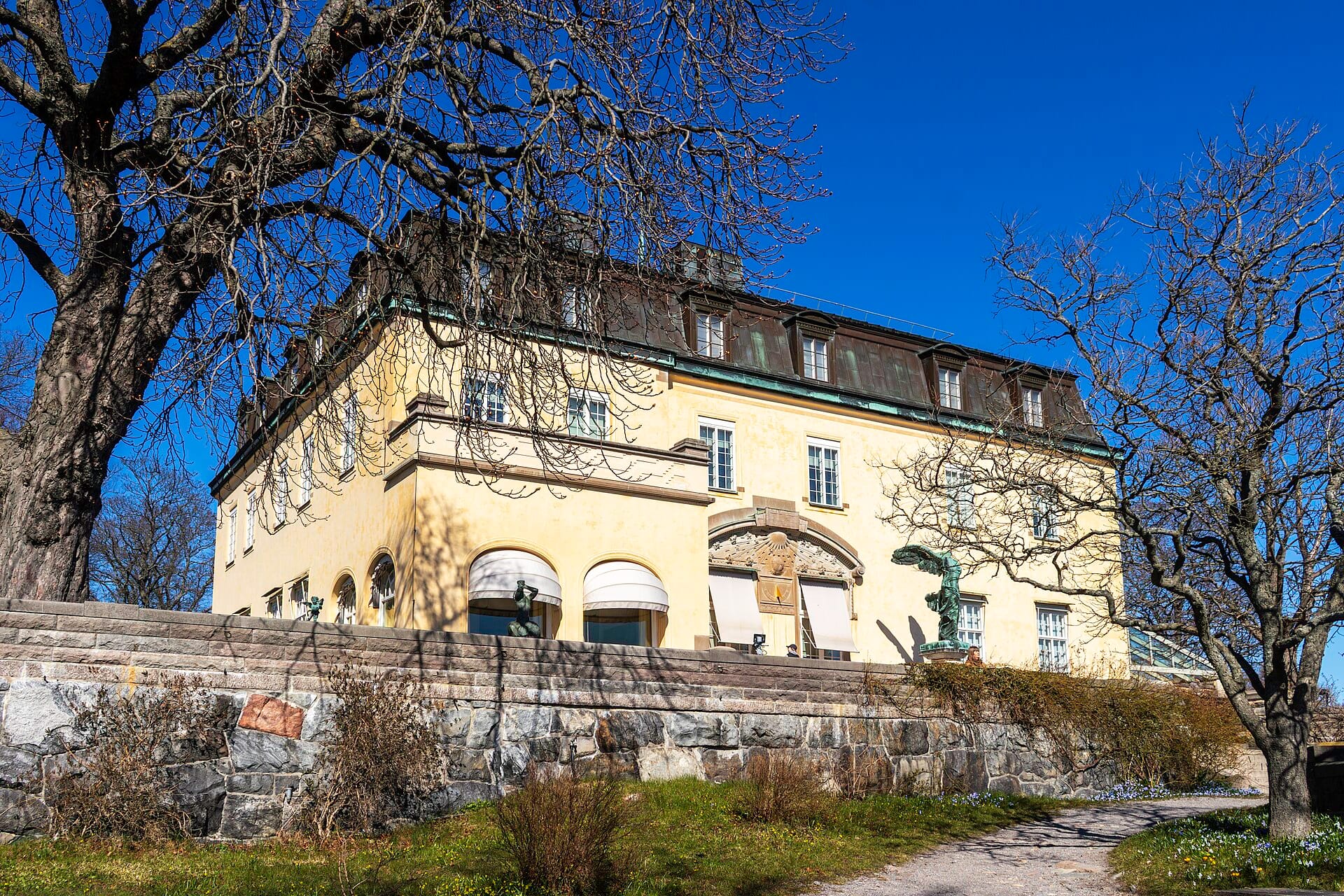
What Is Prins Eugens Waldemarsudde?
Prins Eugens Waldemarsudde is one of Stockholm's most distinctive museum experiences, part royal residence, part serious art institution, part landscaped waterside estate. Built between 1903 and 1905 for Prince Eugene (1865–1947), a son of King Oscar II who pursued painting as a vocation rather than a pastime, the property opened to the public in 1948 in accordance with the prince's own wishes. He wanted his collection seen, not stored.
The estate covers roughly 70,000 square metres and is surrounded by water on three sides, with views across the inlet toward the southern archipelago. That water presence is constant: you feel it at the end of nearly every garden path. Architect Ferdinand Boberg designed both the main mansion, completed in 1905, and the dedicated gallery building added in 1913 when Prince Eugene's collection outgrew the house. The result is a layered site where paintings hang in the rooms they were chosen for, sculptures punctuate garden terraces, and the overall atmosphere is closer to an inhabited estate than a formal museum.
ℹ️ Good to know
The museum is closed every Monday. Tuesday to Sunday hours are 11:00–17:00, with extended hours until 20:00 on Thursdays. Check the official site before visiting, as holiday hours vary.
The Art Collection: Nordic Modernism in Its Original Setting
Prince Eugene was not merely a collector. He was an active participant in the Nordic art world of the late 19th and early 20th centuries, and his friendships with many of the painters represented here give the collection an intimacy that institutional acquisitions rarely achieve. The holdings focus on Swedish and Nordic art from roughly 1880 to 1940, a period when Scandinavian painters were working through the influence of French naturalism and developing something distinctly their own.
Works by Carl Larsson, Anders Zorn, Ernst Josephson, and Eugène Jansson appear alongside the prince's own paintings. His landscapes, particularly scenes of Stockholm seen from the water, are handled with genuine competence. The Waldemarsudde collection is strong enough that it rotates: temporary exhibitions occupy the gallery building and sometimes spill into the mansion rooms, so even repeat visitors encounter something different. The permanent collection has around 3,000 works including paintings, drawings, and sculpture.
If you are building a broader picture of Swedish art history, Waldemarsudde pairs well with the Nationalmuseum and the Thielska Galleriet, another private collection from the same era, also on Djurgården. Together, these three give a thorough account of Nordic painting across the turn of the 20th century.
Tickets & tours
Live prices and dates from our booking partner. If you book, we may earn a commission at no extra cost to you.
2-hour archipelago tour on a RIB speedboat
From 122 €Instant confirmationFree cancellationHaunted Stockholm exploration game and tour
From 12 €Instant confirmationFree cancellationFotografiska Stockholm entrance tickets
From 0 €Instant confirmationFree cancellationStockholm: Nature Reserve Hiking Tour with Campfire Lunch
From 102 €Instant confirmationFree cancellation
The Buildings: Ferdinand Boberg's Restrained Elegance
Ferdinand Boberg was among Sweden's most significant architects at the turn of the 20th century, and Waldemarsudde shows him working in a relatively restrained register. The main mansion is a three-storey villa with a rendered facade, generous windows on the water-facing side, and a tower that gives the silhouette its most recognizable element. The interiors retain much of the original furniture and decoration from Prince Eugene's lifetime. Walking through the rooms, you can read how he actually lived: the studio on the upper floor, the dining room with paintings chosen to complement the table silver, the smaller sitting rooms with works by close friends.
The 1913 gallery building is plainer on the outside, a functional addition designed to hold large-format paintings without the domestic compromises of the house. Inside, the natural light is handled carefully, and the proportions suit the landscape canvases that dominate the collection. The two structures sit comfortably together, connected by a covered passage, and the shift from domestic to institutional feels considered rather than jarring.
The Gardens: Terraces, Sculptures, and Water Views
The gardens at Waldemarsudde are worth the visit on their own terms, particularly from late April through October when the planting is at its most expressive. The formal terraces immediately around the mansion give way to looser, more naturalistic planting as you move toward the water. Sculptures by Per Hasselberg and Auguste Rodin, among others, are placed throughout the grounds, and finding them in the open air rather than on plinths inside a gallery changes how you read them.
The lowest part of the grounds, closest to the water, is the best place to understand why Prince Eugene chose this specific headland. The view opens up across the inlet, and on a clear morning the light on the water has the quality that appears in many of his paintings. In summer, there is a small outdoor café in the garden. In autumn, the turning foliage frames the mansion in a way that photographers work hard to capture, usually from the lower terraces.
💡 Local tip
The garden is at its most photogenic on weekday mornings before 11:00, before tour groups arrive. In winter, the grounds are bleaker but the views are unobstructed and the light can be extraordinary on clear days.
Visiting by Time of Day and Season
Thursday evenings, when the museum stays open until 20:00, offer a noticeably quieter experience inside. The light changes through the gallery windows as evening falls, and the crowd thins sharply after 17:00. If the collection is your primary interest rather than the gardens, a Thursday evening visit removes most of the logistical pressure of a daytime slot.
Midday on summer weekends draws the largest crowds, primarily because Djurgården as a whole fills up and Waldemarsudde is one of the more prominent stops. If you're visiting in July or August, arriving right at 11:00 when the museum opens, or planning the garden walk first before the interior rooms, gives you a calmer entry. The museum is never overwhelmed in the way that the nearby Vasa Museum can be, but the mansion rooms do feel cramped when multiple groups arrive simultaneously.
Waldemarsudde sits within the Ekoparken area, the world's first national city park. For context on the broader green space that surrounds the estate, see our guide to Ekoparken. If you are planning a full day on the island, the Djurgården neighborhood page outlines how to combine several stops efficiently.
Winter visits have a specific appeal. The gardens are quiet, the collections feel more contemplative without summer noise, and the Thursday extended hours mean you can arrive after dark and still have time inside. The walk from the tram stop along the waterside path is cold but short, roughly 10 minutes from the Waldemarsudde tram stop. Bring layers.
Getting There and Practical Logistics
The most straightforward route from central Stockholm is Tram 7, which runs from Sergels Torg and Nybroplan along the northern edge of Djurgården and terminates at the Waldemarsudde stop, a short walk from the museum entrance. The tram runs frequently and is covered by standard SL tickets. Journey time from central Stockholm is around 20 minutes depending on traffic.
A ferry from Slussen or Nybroplan to Allmänna Gränd on Djurgården is the scenic alternative, particularly in good weather. From the ferry landing it is about a 15-minute walk south along the shoreline path to reach Waldemarsudde. Bus 67 also serves Djurgården and goes toward Blockhusudden, from which it is a short walk to Waldemarsudde. Cycling to the museum is straightforward; there is bike parking at the entrance.
⚠️ What to skip
Waldemarsudde is card-only. No cash accepted. Bring a Visa or Mastercard. Under-20 visitors enter free, which makes this a genuinely cost-effective option for families.
The admission price of SEK 170 for adults and SEK 150 for seniors and students is reasonable for what the museum offers. The Stockholm Pass covers entry. If you plan to visit frequently, the annual card at SEK 450 represents good value across two or three visits. For accessibility needs, contact the museum directly at +46 (0)8-545 837 00 before your visit, as the historic buildings have some physical constraints.
Who Should Skip Waldemarsudde
Visitors with limited time who want the single most concentrated museum experience on Djurgården will likely choose the Vasa Museum over Waldemarsudde. The Vasa is the larger-scale spectacle, and it delivers on that spectacle reliably. Waldemarsudde is quieter, more personal, and requires some appetite for early 20th-century Nordic painting to be fully satisfying. If that period and region leave you cold, the garden alone may not justify the full entry price.
Visitors primarily interested in Viking or medieval history will find nothing here that addresses those interests. This is a late 19th and early 20th-century estate, full stop. Families with very young children may find the mansion interior difficult, given the density of objects in domestic rooms, though the gardens are an entirely different situation and children generally move through them freely.
Insider Tips
- Thursday evening hours (until 20:00) are the best-kept scheduling advantage at Waldemarsudde. Crowds drop sharply after 17:00, and the shift in light through the gallery windows is worth experiencing.
- The lower garden terrace facing the water is where Prince Eugene's own landscape paintings start to make most sense. Standing there, looking at the inlet he painted repeatedly, reframes the collection significantly.
- The museum café inside the mansion is small and fills up quickly on weekends. If you want lunch or coffee, arrive early or plan to use the outdoor garden café in summer instead.
- Combine Waldemarsudde with Thielska Galleriet in a single afternoon: both are private collection museums from the same era, both are on Djurgården, and the walk between them along the southern shore is one of Stockholm's better quiet waterside routes.
- The annual card at SEK 450 covers unlimited entry for a year. If you're a Stockholm resident or planning a return trip, two visits cover the cost and the collection rewards multiple viewings as exhibitions rotate.
Who Is Prins Eugens Waldemarsudde For?
- Art lovers with a specific interest in Nordic and Swedish painting from the late 19th to early 20th century
- Architecture visitors who appreciate early 20th-century residential design in an intact setting
- Travelers who want a garden and outdoor walk combined with a serious indoor collection
- Families with children old enough to engage with art, given the free under-20 admission
- Anyone looking for a slower-paced, crowd-light alternative to the major Djurgården museums
Nearby Attractions
Other things to see while in Djurgården:
- ABBA The Museum
ABBA The Museum is Stockholm's most popular music attraction, a permanent interactive exhibition dedicated to Sweden's most famous pop group. Located on Djurgården, it combines costumes, memorabilia, and hands-on experiences in a way that appeals well beyond die-hard fans.
- Gröna Lund
Gröna Lund has been drawing Stockholmers to Djurgården since 1883, packing around 30 rides, live concert stages, and seasonal events into just 3.8 hectares on the waterfront. This guide covers what the experience actually feels like across different times of day, who will love it, and who might want to skip it.
- Junibacken
Junibacken is a children's cultural centre on Djurgården dedicated to Astrid Lindgren's literary universe, featuring an indoor Story Train, immersive storybook scenes, live theatre, and a bookshop. Opened in 1996, it draws around 400,000 visitors a year and ranks consistently among Stockholm's most-visited attractions.
- Nordiska Museet
Nordiska museet on Djurgården holds over 1.5 million objects spanning 500 years of Nordic life, from peasant folk costumes to mid-century design. The building alone, a neo-Renaissance palace completed in 1907, earns a look even if you only have an hour. This guide covers what to see, when to go, and how to make the most of the visit.
Planning a trip? Discover personalized activities with the Nomado app.