Gröna Lund: Stockholm's Waterfront Amusement Park, Honestly Reviewed
Gröna Lund has been drawing Stockholmers to Djurgården since 1883, packing around 30 rides, live concert stages, and seasonal events into just 3.8 hectares on the waterfront. This guide covers what the experience actually feels like across different times of day, who will love it, and who might want to skip it.
Quick Facts
- Location
- Lilla Allmänna gränd 9, Djurgården, Stockholm
- Getting There
- Tram 7 to Djurgården (Liljevalchs/Gröna Lund or Skansen stops) stops near the entrance; ferries from Slussen or Nybroplan (seasonal)
- Time Needed
- 3–5 hours for rides; full evening if attending a concert
- Cost
- Ticket prices vary by date and pass type; check official site for current SEK prices
- Best for
- Families, thrill-seekers, concert-goers, summer evenings in Stockholm
- Official website
- www.gronalund.com/en
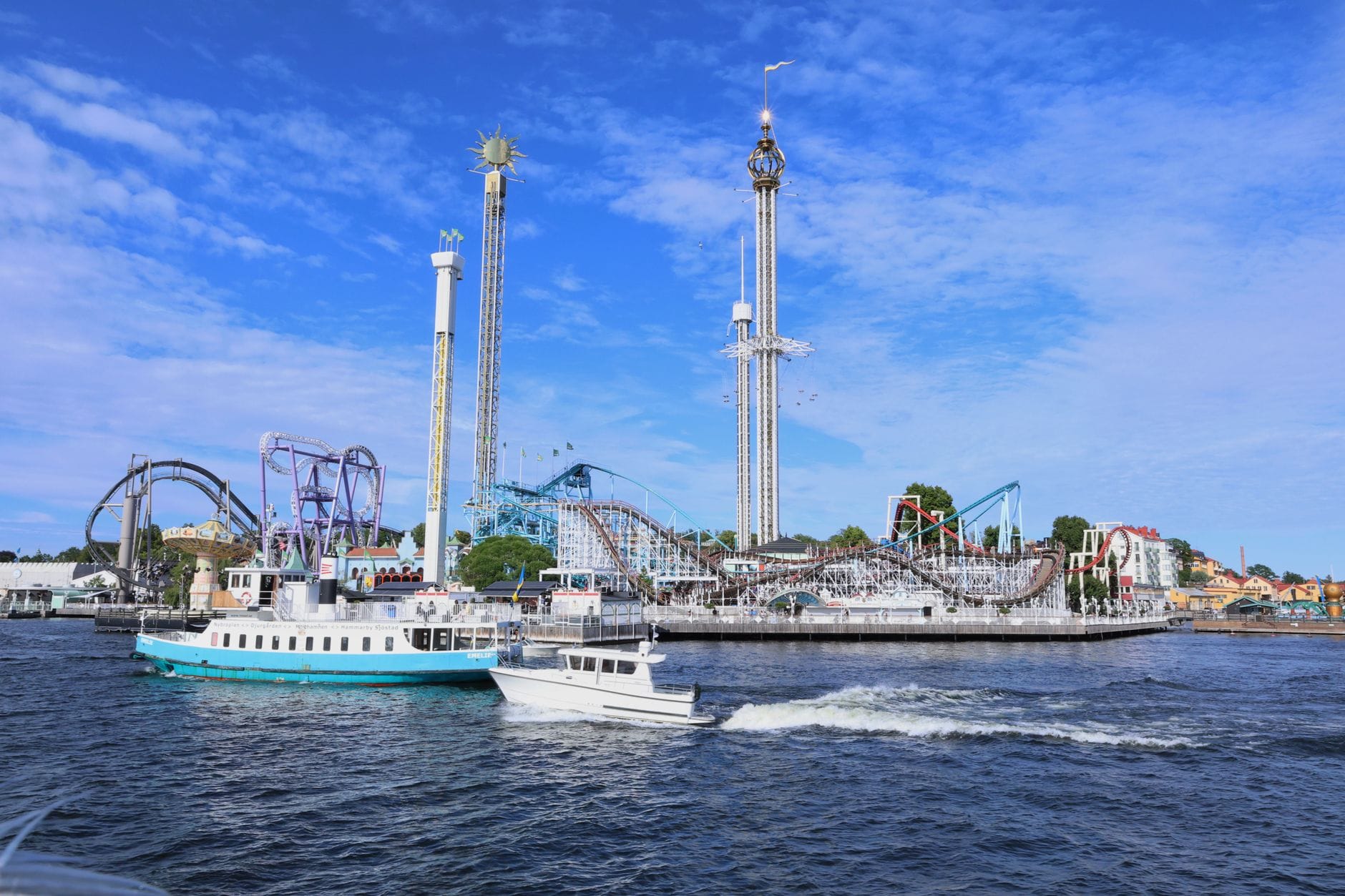
What Gröna Lund Actually Is
Gröna Lund is Sweden's oldest amusement park, open since 1883, and it occupies a narrow strip of Djurgården's waterfront that feels almost impossibly compact once you're inside. The park covers roughly 3.8 ha, which is small by any international comparison. That compression is part of its character: wooden roller coasters share space with concert stages, the smell of fried food mixes with sea air off Djurgårdsbrunnsviken, and on a clear summer evening the lights reflecting on the water create a scene that is genuinely striking.
The park sits on the seaward side of Djurgården Island, the same green island that holds the Vasa Museum, Skansen, and Nordiska museet. For many families, Gröna Lund is the exclamation point at the end of a full Djurgården day. For locals, it's more familiar territory: a place they return to for concerts, seasonal events, and summer tradition rather than novelty.
If you're planning a broader Djurgården day, the Vasa Museum and Skansen are both within easy walking distance and pair naturally with an afternoon or evening at Gröna Lund.
💡 Local tip
The park is seasonal, operating primarily from April through September, with a Halloween extension into October and November. Specific opening hours vary by date and are published on the official calendar each season. Always check gronalund.com/en before planning your visit.
The Park by Time of Day
Arriving in the late morning on a weekday, particularly outside school holiday periods, gives you the best access to popular rides with minimal queuing. The wooden roller coasters, which creak and rattle in the way only old timber structures do, tend to draw the first dedicated lines by midday. Families with young children tend to cluster around the more sheltered central sections of the park, while thrill-seekers head immediately to the perimeter rides that overhang or face the water.
By mid-afternoon on summer weekends, the park reaches its peak density. The pathways narrow between rides and food stalls, the noise level rises considerably, and wait times for headline attractions can stretch well past thirty minutes. If you're here specifically for rides and not concerts, earlier in the day on a weekday in May or early June is when the experience is most relaxed.
Evenings at Gröna Lund operate differently from the daytime experience. When the park hosts concerts, the main stage fills with a crowd that skews older and more local. The rides continue operating alongside the music, so you get an unusual combination: a live performance backdrop to a spinning amusement park. The lights come on as dusk falls, and the waterfront setting works in the park's favor. Temperatures can drop sharply after sunset even in July, so a light layer is worth carrying.
⚠️ What to skip
Concert nights often require specific ticket types beyond standard park entry, and popular shows regularly sell out weeks in advance. Check the official events calendar and ticket terms early if that's a primary reason for your visit.
Tickets & tours
Live prices and dates from our booking partner. If you book, we may earn a commission at no extra cost to you.
2-hour archipelago tour on a RIB speedboat
From 122 €Instant confirmationFree cancellationHaunted Stockholm exploration game and tour
From 12 €Instant confirmationFree cancellationFotografiska Stockholm entrance tickets
From 0 €Instant confirmationFree cancellationStockholm: Nature Reserve Hiking Tour with Campfire Lunch
From 102 €Instant confirmationFree cancellation
Rides and Attractions: What to Expect
The park operates around 30 rides across a range of intensity levels, from gentle carousels suitable for toddlers to drop towers and roller coasters designed for adults. The wooden coasters are among the most historically interesting: the oldest dates from 1923 and runs along tracks by the water's edge. The sensation of riding something that old, over water, at speed, is difficult to replicate at a modern park.
Height restrictions apply to the more intense rides, and parents with children of mixed ages should plan around this. The park's compact footprint means transitions between rides are quick, but it also means there is no quiet corner to decompress. Noise and stimulation are constant. For visitors who find that exhausting, the waterfront terrace areas offer brief respite with views across to the mainland.
The food and drink options inside the park are typical amusement park fare: hot dogs, fries, ice cream, and seasonal specials. Prices reflect the park setting. There is no meaningful reason to plan a food experience around Gröna Lund specifically, but the waterfront seating areas make snack breaks more pleasant than most parks manage.
ℹ️ Good to know
The park draws approximately 1.7 million visitors per season, making it one of Stockholm's most attended attractions. Weekends in July and August are the busiest period by a significant margin.
History and Cultural Context
Gröna Lund's opening in 1883 predates the modern concept of the amusement park. Its early decades were shaped by the Scandinavian tradition of outdoor pleasure gardens, a format popular across Northern Europe in the nineteenth century where music, dancing, and light entertainment mixed in a landscaped setting. The park evolved gradually through the twentieth century, adding mechanical rides as the technology became available while retaining a waterfront layout shaped by its original plot of land.
Its position on Djurgården is not incidental. Djurgården has been a place of public recreation and royal interest for centuries, and Gröna Lund's continued operation on this island places it alongside institutions like Skansen, which opened in 1891 just up the hill. The two are products of the same era of Swedish cultural investment in public leisure.
Djurgården as a whole rewards exploration beyond Gröna Lund's gates. The Nordiska museet sits within a few minutes' walk, and the Prins Eugens Waldemarsudde estate and gallery occupies the southern tip of the island, offering a quieter counterpoint to the park's energy.
Getting There and Around
Djurgården is well connected from central Stockholm. Tram line 7 runs from T-Centralen/Kungsträdgården through the city and out to Djurgården, stopping close to the park entrance. This is usually the most convenient option if you're coming from the city center. The journey itself passes through some distinctive parts of Stockholm and takes about 10 minutes from central stops.
Ferry services operate seasonally from Slussen and Nybroplan to Djurgården, and the short crossing offers a pleasant approach. Arriving by water gives you an immediate sense of the park's waterfront position before you're through the gates. Bus routes also serve the island. Cycling to Djurgården is a viable and popular option given the island's relatively flat terrain and good cycling infrastructure.
For a broader look at navigating Stockholm's public transport across neighborhoods, the guide to getting around Stockholm covers ticketing, transit maps, and practical options in detail.
💡 Local tip
If you plan to visit multiple paid attractions in Stockholm on the same trip, check whether the Stockholm Pass covers Gröna Lund entry during your dates. The value calculation depends on which other attractions you're combining.
Photography and Practical Notes
The most photographically rewarding moments at Gröna Lund come at the transition between daylight and artificial light, roughly the hour after sunset on a clear summer evening. The rides' LED lighting reflects in the water, and the surrounding darkness separates the park from its surroundings in a way that daytime photography doesn't achieve. A phone camera handles this reasonably well; a camera with manual exposure control will do better.
The park's compact layout means that wide shots from within are difficult. The best external views of the park come from the water (on a ferry approach) or from the higher ground on Djurgården to the south. Action shots of rides require fast shutter speeds and some patience with positioning.
On accessibility: the park operates on uneven terrain with a mix of paved and cobbled surfaces. The official site provides specific information on ride restrictions and facilities for visitors with mobility requirements. It is worth checking these details in advance rather than on arrival.
ℹ️ Good to know
Gröna Lund is operated by Parks and Resorts Scandinavia. The park does not open year-round; visits outside the April to November window require checking the official calendar, as closure dates vary by year.
Who Should Reconsider This Visit
Gröna Lund is not the right choice for every Stockholm visitor. Travelers with very limited time who are prioritizing cultural or historical depth will get more from the same afternoon spent at Skansen, the Vasa Museum, or exploring Gamla Stan on foot. The park's admission price, on top of Stockholm's general cost of living, represents a meaningful chunk of a day's budget. If amusement parks are not already part of your travel interests, the unique selling point here is primarily the setting rather than the rides themselves.
Visitors sensitive to crowds and noise should approach with caution during peak summer weekends. The park fills to a density that some people find uncomfortable, and there are limited quiet spaces within the gates. Solo travelers without an interest in concerts or rides will likely find the experience brief and not particularly rewarding.
For visitors focused on free or low-cost experiences in Stockholm, the guide to free things to do in Stockholm offers alternatives across the same neighborhoods, including several options on Djurgården itself.
Insider Tips
- Weekday mornings in May and early June offer the most ride access with the shortest queues. The park has usually just opened for the season, visitor numbers are lower, and the weather is often pleasant without the peak summer heat.
- The ferry from Slussen to Djurgården is one of the more enjoyable approaches to the park. It takes only a few minutes on the water but gives you a much better first impression of the park's waterfront position than arriving by tram or bus.
- Concert tickets are sold separately from park entry and regularly sell out well in advance. If a specific show is your primary motivation, secure tickets through the official site before buying any accommodation or flights.
- The rides that face the water, particularly those on the park's outer edge, offer views toward the Stockholm archipelago that are worth prioritizing for the scenery alone, not just the ride experience.
- Dress for evening temperature drops. Even in July, the waterfront location means it can feel noticeably colder by 9 or 10pm than the afternoon forecast suggests. A packable layer in your bag costs nothing and is frequently needed.
Who Is Gröna Lund For?
- Families with children aged 4 to 14 looking for a concentrated half-day activity on Djurgården
- Concert-goers visiting Stockholm in summer when major artists perform on the waterfront stage
- Visitors who want to experience a genuinely old amusement park with wooden coasters and historic character
- Stockholmers and repeat visitors who already know the major museums and want something different for an evening
- Travelers combining a full Djurgården day across multiple attractions who want to end with rides and atmosphere
Nearby Attractions
Other things to see while in Djurgården:
- ABBA The Museum
ABBA The Museum is Stockholm's most popular music attraction, a permanent interactive exhibition dedicated to Sweden's most famous pop group. Located on Djurgården, it combines costumes, memorabilia, and hands-on experiences in a way that appeals well beyond die-hard fans.
- Junibacken
Junibacken is a children's cultural centre on Djurgården dedicated to Astrid Lindgren's literary universe, featuring an indoor Story Train, immersive storybook scenes, live theatre, and a bookshop. Opened in 1996, it draws around 400,000 visitors a year and ranks consistently among Stockholm's most-visited attractions.
- Nordiska Museet
Nordiska museet on Djurgården holds over 1.5 million objects spanning 500 years of Nordic life, from peasant folk costumes to mid-century design. The building alone, a neo-Renaissance palace completed in 1907, earns a look even if you only have an hour. This guide covers what to see, when to go, and how to make the most of the visit.
- Prins Eugens Waldemarsudde
Prins Eugens Waldemarsudde is the former waterside villa of Prince Eugene, Swedish royal and serious painter, now a museum combining early 20th-century Nordic art with landscaped gardens on Djurgården. It rewards visitors who appreciate art in context, housed where it was actually collected and lived with.
Planning a trip? Discover personalized activities with the Nomado app.