Junibacken: Stockholm's Astrid Lindgren Experience for Children and Families
Junibacken is a children's cultural centre on Djurgården dedicated to Astrid Lindgren's literary universe, featuring an indoor Story Train, immersive storybook scenes, live theatre, and a bookshop. Opened in 1996, it draws around 400,000 visitors a year and ranks consistently among Stockholm's most-visited attractions.
Quick Facts
- Location
- Galärvarvsvägen 8, Djurgården, Stockholm
- Getting There
- Tram or bus to Djurgårdsvägen, then 5-min walk
- Time Needed
- 2–3 hours for families with young children
- Cost
- Approx. 140–185 SEK adults, 140–155 SEK children 2–15, under 2 free. Verify current prices at junibacken.se
- Best for
- Families with children aged 2–10, Astrid Lindgren fans, rainy-day visits
- Official website
- http://www.junibacken.se
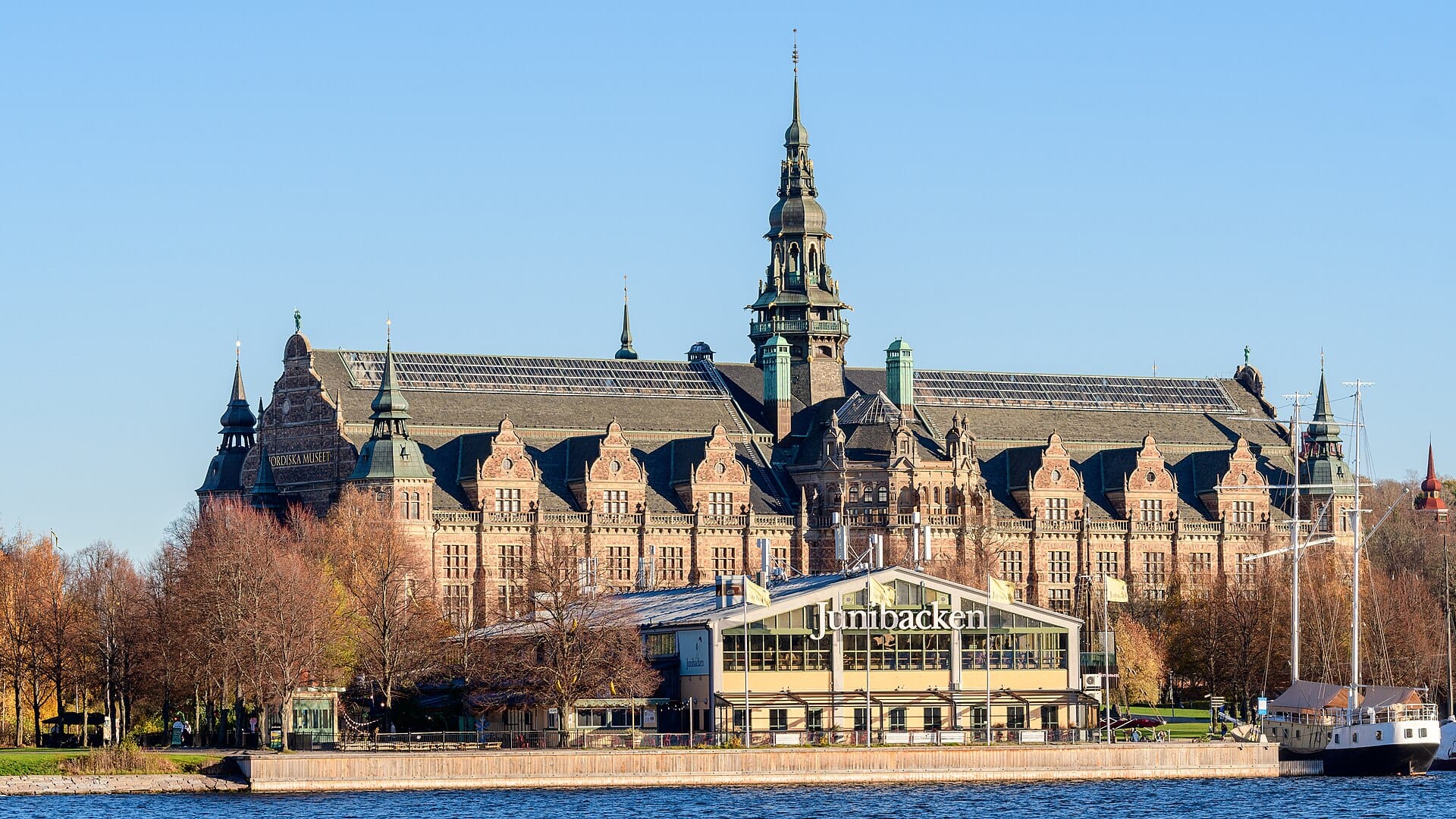
What Junibacken Actually Is
Junibacken is a children's cultural centre built around the literary world of Astrid Lindgren, the Swedish author behind Pippi Longstocking, Emil of Lönneberga, and dozens of other characters that have shaped childhoods across Scandinavia and well beyond. The centre sits on the island of Djurgården, Stockholm's park-and-museum island, and has welcomed around 400,000 visitors per year since its opening on 8 June 1996.
The name comes from the fictional farm where Lindgren's character Madicken lives. Founders Staffan Götestam, Fredrik Uhrström, and Peder Wallenberg designed the space not as a passive exhibition but as an experience. You move through it: riding a miniature train through dramatized scenes, walking into recreated storybook environments, and watching live performances. For children who know Pippi Longstocking, this is the closest thing to stepping inside the books. For children who don't know her yet, Junibacken is often the introduction.
💡 Local tip
If you're visiting during school holidays or on a Saturday morning, arrive right at opening time. The Story Train queue builds quickly and there is no separate booking for it.
The Story Train: The Main Event
The centrepiece of Junibacken is the Sagolek, or Story Train, a slow-moving indoor ride that carries visitors through a series of elaborately constructed scenes drawn from Lindgren's books. The carriages wind through darkened passages and then emerge into lit dioramas where characters from Pippi Longstocking, Ronja Rövardotter, and other stories appear in frozen tableaux. Sound design and lighting do real work here. The effect is theatrical rather than mechanical.
The ride takes roughly ten minutes and ends with a walk through a full-scale recreation of Pippi's Villa Villekulla, where children can climb, interact with props, and stay as long as they like. This area tends to become the most chaotic part of the visit as children fan out and refuse to leave. Budget extra time here.
For adults accompanying children who are too young to understand the stories, the train still works as a visual spectacle. For adults visiting without children, it's a more niche experience, clearly designed for small passengers at eye level with the scenes.
Tickets & tours
Live prices and dates from our booking partner. If you book, we may earn a commission at no extra cost to you.
2-hour archipelago tour on a RIB speedboat
From 122 €Instant confirmationFree cancellationHaunted Stockholm exploration game and tour
From 12 €Instant confirmationFree cancellationFotografiska Stockholm entrance tickets
From 0 €Instant confirmationFree cancellationStockholm: Nature Reserve Hiking Tour with Campfire Lunch
From 102 €Instant confirmationFree cancellation
How the Experience Changes Through the Day
Mornings, particularly from opening until around 11:00, are the quietest period. Stroller traffic is lighter, the Villa Villekulla play area is accessible without waiting, and the bookshop near the entrance can actually be browsed. The interior is bright and warm but enclosed, so weather outside has no effect on the visit.
Midday brings the largest crowds, especially on weekends and during Swedish school holidays. The sound level in the main hall rises significantly. If you have a child who is noise-sensitive or easily overstimulated, timing your visit for a weekday morning outside of school holidays makes a real difference.
The on-site restaurant serves lunch and offers vegan and gluten-free options, which is useful for families with dietary requirements. It functions as a practical meal stop, not a destination restaurant, but the food quality is considered solid for a museum setting.
ℹ️ Good to know
Junibacken is generally open Monday to Sunday, with typical hours of 10:00–17:00 on weekdays, 09:00–17:00 on Saturdays, and 10:00–17:00 on Sundays, with earlier opening and occasional later closing on selected summer dates. Confirm exact hours at junibacken.se before your visit as they shift seasonally and on certain closed days.
Getting There: Djurgården Transit
Junibacken sits on Djurgården, Stockholm's island dedicated to parks, museums, and outdoor recreation. The island is well-connected to central Stockholm but has no metro stop. The most practical options are the tram (line 7, Djurgårdslinjen) and the seasonal Djurgården Ferry from Slussen or Nybroplan. Both drop you within a short walk of the entrance. For a full picture of how to move around the island, the Djurgården neighbourhood guide covers all transit options in detail.
Buses also serve Djurgårdsvägen. The walk from the bus or tram stop to Junibacken takes around five minutes along a flat path. Parking on Djurgården is pay-and-display and genuinely limited. On busy weekend days, spaces fill before 10:00. If you're arriving by car, factor in significant extra time or walk from a nearby district.
From central Stockholm, cycling to Djurgården is a practical option in summer. Bike paths connect the island to Strandvägen and onwards into the city. Junibacken has bicycle parking outside the entrance.
💡 Local tip
Some Stockholm sightseeing passes may or may not include entry to Junibacken; check the latest inclusions carefully before assuming it is covered.
Astrid Lindgren's Cultural Weight in Sweden
To understand why a building on Djurgården is entirely dedicated to one author's work, it helps to understand Lindgren's standing in Sweden. Astrid Lindgren (1907–2002) is among the best-selling fiction writers of all time, with works translated into over 100 languages. In Sweden, she is not simply a beloved children's author: she shaped language, influenced child welfare legislation, and became a figure of genuine political and cultural significance.
Junibacken opened about six years before Lindgren's death and was created partly in collaboration with her. The institution is not a retrospective, it was built while she was alive and forms part of the official cultural landscape she helped shape. That context matters when you walk in: this is less a museum about someone than an ongoing celebration of a living literary tradition.
Visitors with an interest in the deeper history of Swedish storytelling and illustration may also want to pair Junibacken with a visit to the Nordiska museet, a short walk away, which holds broader Swedish cultural collections including objects from Lindgren's era.
Beyond Pippi: What Else Is Inside
Junibacken has a permanent bookshop stocked with Swedish and international children's literature, not only Lindgren titles. The selection is broad enough to be genuinely useful for parents looking to build a reading collection, and the staff are typically well-informed about age ranges and languages available.
The theatre at Junibacken runs children's performances, usually adapted from Lindgren texts. Performance times vary by season and are published on the official website. These shows are typically in Swedish, which limits their accessibility for non-Swedish-speaking children, though the visual storytelling compensates for some language gap depending on the production.
There is a dedicated soft-play area for the youngest visitors, separate from the main exhibition floor. This is particularly useful if you have a toddler who is too young for the Story Train but needs somewhere to expend energy while older siblings explore.
⚠️ What to skip
Theatre performances are usually conducted in Swedish. Non-Swedish-speaking children may still enjoy them depending on age and how visually led the production is, but check the description before booking.
Practical Notes: Accessibility, Photography, and What to Bring
The main exhibition areas are on one level and designed for pushchair accessibility. The Story Train accommodates strollers in some configurations, though you should confirm current arrangements at the ticket desk. For specific wheelchair and mobility aid queries, contact Junibacken directly via the official site before your visit as detailed accessibility configurations can change.
Photography is generally permitted in the common areas and Villa Villekulla. Inside the Story Train ride, the low light and movement make photography genuinely difficult. A phone camera will manage better than a large camera body in this context.
Djurgården offers a full half-day or full-day itinerary when combined with Junibacken. Nearby options include the Vasa Museum directly next door, the open-air Skansen further along the island, and the Gröna Lund amusement park a short walk south. Families who visit Junibacken in the morning and Skansen in the afternoon have a complete child-focused day without leaving the island.
If you're still planning your Djurgården day, the Stockholm with kids guide covers the full range of family-friendly options across the city, including how to sequence Djurgården attractions to avoid peak queues.
Insider Tips
- The Story Train is the bottleneck. Join the queue within the first 20 minutes of arrival, then return to other areas afterwards. Trying to see everything else first and then joining the queue at midday can mean a 40-minute wait.
- Children deeply familiar with Lindgren's books get significantly more from the Story Train scenes. A short read-aloud session from Pippi Longstocking the night before a visit noticeably changes how engaged children are with what they're seeing.
- The bookshop stocks Swedish-language editions of Lindgren's works at reasonable prices. If you want a Swedish copy as a souvenir or gift, this is a better selection than most city-centre bookshops.
- Junibacken connects directly to the Vasa Museum via a short outdoor path. If you plan to visit both, buy tickets separately rather than expecting a combined offer, and confirm at the Vasa Museum desk whether family pricing applies.
- On weekday mornings outside of Swedish school holidays, the Villa Villekulla play area is often nearly empty and children can spend as long as they like without any sense of pressure. This is a noticeably different experience from weekend visits.
Who Is Junibacken For?
- Families with children between 2 and 10 years old, especially those who know Astrid Lindgren's stories
- Rainy or cold days when outdoor Djurgården activities are not practical
- Parents looking to introduce Swedish children's literature to young readers
- Visitors combining Junibacken with the Vasa Museum and Skansen for a full Djurgården day
- Grandparents visiting Stockholm with grandchildren who need a lower-intensity indoor attraction
Nearby Attractions
Other things to see while in Djurgården:
- ABBA The Museum
ABBA The Museum is Stockholm's most popular music attraction, a permanent interactive exhibition dedicated to Sweden's most famous pop group. Located on Djurgården, it combines costumes, memorabilia, and hands-on experiences in a way that appeals well beyond die-hard fans.
- Gröna Lund
Gröna Lund has been drawing Stockholmers to Djurgården since 1883, packing around 30 rides, live concert stages, and seasonal events into just 3.8 hectares on the waterfront. This guide covers what the experience actually feels like across different times of day, who will love it, and who might want to skip it.
- Nordiska Museet
Nordiska museet on Djurgården holds over 1.5 million objects spanning 500 years of Nordic life, from peasant folk costumes to mid-century design. The building alone, a neo-Renaissance palace completed in 1907, earns a look even if you only have an hour. This guide covers what to see, when to go, and how to make the most of the visit.
- Prins Eugens Waldemarsudde
Prins Eugens Waldemarsudde is the former waterside villa of Prince Eugene, Swedish royal and serious painter, now a museum combining early 20th-century Nordic art with landscaped gardens on Djurgården. It rewards visitors who appreciate art in context, housed where it was actually collected and lived with.
Planning a trip? Discover personalized activities with the Nomado app.