Stockholm with Kids: The Complete Family Activity Guide
Stockholm is one of Europe's most genuinely family-friendly capitals, with stroller-accessible transport, free museum entry for under-18s, and an entire island dedicated to children's attractions. This guide covers the best activities, honest pricing, seasonal strategies, and practical logistics for families visiting Stockholm.

Tickets & tours
Live prices and dates from our booking partner. If you book, we may earn a commission at no extra cost to you.
TL;DR
- Djurgården island alone can fill 2-3 full family days with Skansen, Junibacken, the Vasa Museum, and Gröna Lund amusement park all within walking distance of each other.
- Children under 18 enter the Vasa Museum for free, and under-4s get into Skansen for free too — Stockholm is far more budget-friendly for families than its reputation suggests.
- Stockholm buses offer free travel with a stroller on certain routes where boarding is through the rear doors and the driver cannot easily check tickets — a small but meaningful benefit for parents of toddlers, though you should check SL’s current rules for your specific route.
- Summer (June-August) is peak season for outdoor activities, but winter visits have strong indoor alternatives including Tekniska Museet and Naturhistoriska Riksmuseet.
- Book timed-entry tickets for Junibacken in advance — it sells out on weekends and school holidays.
Why Stockholm Works So Well for Families

Stockholm with kids is less of a compromise and more of an advantage. The city's island geography keeps distances short, the public transport network run by Storstockholms Lokaltrafik (SL) is stroller-accessible across most metro stations and all buses, and Swedish cultural institutions have long operated on the principle that children should be welcomed rather than tolerated. The result is a city where the logistics of traveling with children are genuinely easier than in many comparable European capitals. For a full picture of how the city is structured, getting around Stockholm is worth reading before you plan your daily routes.
One practical point worth knowing upfront: on certain SL bus routes in Stockholm, travel is free when you board with a stroller through the designated doors where drivers are not responsible for ticket checks. You don't need a ticket in these cases, you simply board with the pushchair, but on other routes a valid ticket is still required. This removes one of the more tedious logistics of city travel with small children on eligible lines. For everything else, standard SL tickets or a travel card applies — and the metro's Tunnelbana covers most of the key family destinations.
ℹ️ Good to know
Sweden is part of the Schengen Area, so most EU citizens and visitors from many other countries enter visa-free. Sweden uses the Swedish krona (SEK), not the euro. Tap water is safe to drink throughout the city.
Djurgården: Stockholm's Family Island

Djurgården is the single most important destination for families in Stockholm. It is a large island — technically a royal park — that happens to contain more quality family attractions per square kilometer than almost anywhere in Scandinavia. The core cluster of Junibacken, the Vasa Museum, Skansen, Nordiska Museet, and Gröna Lund are all within a 15-minute walk of each other. You could spend three full days here and not run out of things to do with children of any age.
- Junibacken A story-world museum built around Astrid Lindgren's characters, including Pippi Longstocking and Emil. The Story Train ride through fairy-tale scenes is the highlight for ages 2-8. Uses dynamic date-specific pricing, so book timed-entry tickets online in advance — it sells out on weekends and during Swedish school holidays.
- Vasa Museum (Vasamuseet) Home to a near-intact 17th-century warship that sank on its maiden voyage in 1628. Children under 18 enter free; adults pay an entrance fee. The ship itself is staggering in scale and requires no historical knowledge to appreciate. One of the few museums that genuinely impresses children and adults equally.
- Skansen An open-air museum and zoo covering over 70 historical Swedish buildings relocated from across the country, plus a Nordic wildlife section with bears, wolves, and wolverines. Children under 4 enter free; ages 4-15 get a reduced ticket. Prices vary by season, so check Skansen's website before visiting. Allow at least half a day, ideally a full day.
- Gröna Lund A compact traditional amusement park operating mainly from May through late summer. Separate entrance and ride passes apply. Better suited to school-age children and teenagers than toddlers — some rides have height restrictions. The park's small footprint actually works in families' favor: no long walks between attractions.
- Nordiska Museet Sweden's largest museum of cultural history. Less obviously child-focused than its neighbors, but the building itself is dramatic, and the museum runs regular family programming and temporary exhibitions with younger visitors in mind.
💡 Local tip
Reach Djurgården by ferry from Slussen or Nybroplan for around 40–45 SEK per adult with a standard SL ticket (check current SL pricing). The boat ride itself is a minor attraction for children and avoids any parking headaches. Ferries run year-round, though frequency drops in winter.
Beyond Djurgården: Family-Friendly Activities Across the City
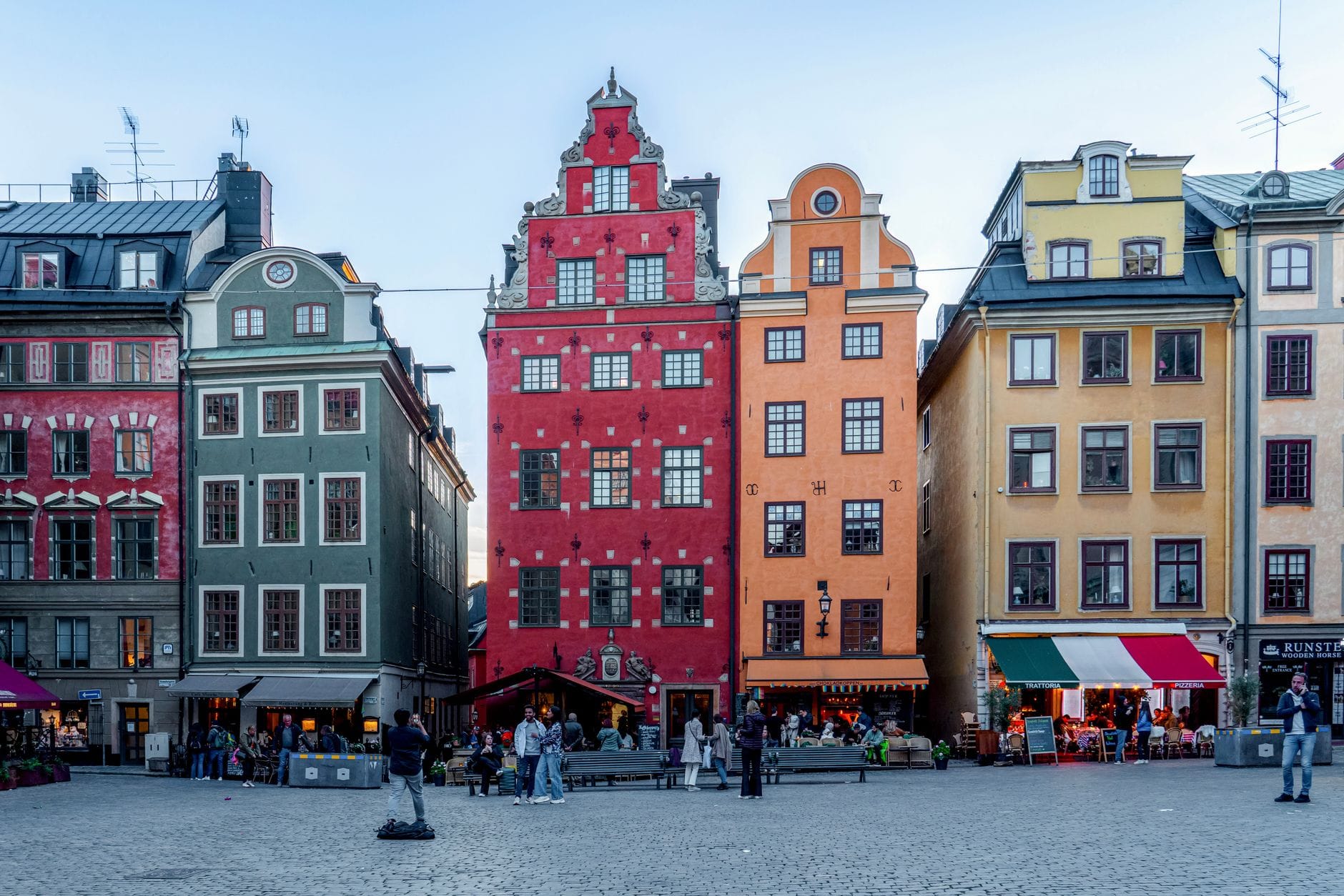
Djurgården gets most of the attention, but several other parts of Stockholm offer strong family experiences. Gamla Stan, the medieval Old Town, is a reliable crowd-pleaser with children because it looks like a film set. The narrow cobblestone alleys, colorful 17th and 18th-century buildings, and the sheer density of things to look at keep younger children engaged without requiring tickets or queues. The Royal Palace and its changing of the guard ceremony (check seasonal schedules on the Royal Court's website) is a free spectacle that reliably impresses.
For science-oriented older children, Tekniska Museet (Museum of Science and Technology) is one of the better science centers in Northern Europe, with hands-on exhibits covering engineering, computing, and Swedish industrial history. It sits near Djurgården and can be combined into the same day. Similarly, Naturhistoriska Riksmuseet (Swedish Museum of Natural History) has an IMAX-style Cosmonova dome theater and extensive natural history displays that work well for children aged 5 and up. Both are significantly less crowded than the Djurgården cluster.
For families who want to get outdoors without museum admission fees, Hagaparken north of the city center is a large royal park with open lawns, a butterfly house (seasonal), and easy walking paths suitable for pushchairs. In summer, the park's lakeside areas are popular with local families for picnics. It's free to enter, and the atmosphere is relaxed and genuinely local rather than tourist-oriented.
- Gamla Stan's Royal Palace: free to watch the changing of the guard, paid entry for palace interiors
- Hagaparken: free entry, great for picnics and pushchair-friendly walks
- Tekniska Museet: strong for ages 6+, less crowded than Djurgården options
- Naturhistoriska Riksmuseet: general entry to the permanent collection now requires a paid ticket; Cosmonova cinema is separately ticketed
- Eriksdalsbadet: large indoor swimming complex on Södermalm, useful on rainy days
- Stockholm's city playgrounds: numerous high-quality playgrounds throughout the city, free of charge
Pricing Realities: Is Stockholm Actually Expensive for Families?
Stockholm has a reputation as one of Europe's pricier capitals, and in terms of food and accommodation that reputation is largely earned. However, for families specifically, the cost picture is more complicated — and considerably more favorable than people expect.
The Vasa Museum charges nothing for visitors under 18, full stop. That means a family of two adults and two children pays for two adult tickets rather than four, which significantly reduces the entry cost of one of Stockholm's flagship attractions. Skansen charges nothing for children under 4, and reduced rates apply for ages 4-15. Naturhistoriska Riksmuseet now charges admission for its permanent collection, with standard tickets and reduced rates for children. Several other museums run free entry for under-18s on specific days or permanently. Public parks, playgrounds, and most outdoor spaces cost nothing.
✨ Pro tip
If you're visiting multiple paid attractions, check whether the Stockholm Pass makes financial sense for your family's specific itinerary. It covers entry to many Djurgården attractions. Run the numbers against individual ticket prices before buying — it pays off for high-volume sightseeing days but not for relaxed paced trips. See our breakdown of whether the Stockholm Pass is worth it for a detailed analysis.
Where families do spend more than expected is food. Stockholm restaurants are priced for adult budgets, and children's menus, while common, are not always generous. A practical workaround is to use the Swedish lunch tradition: most restaurants offer a 'dagens lunch' (lunch special) on weekdays that includes a main course, salad bar, bread, and sometimes a drink for around 100-130 SEK per person — a significantly better value than dinner pricing. For self-catering options, Stockholm's supermarkets (ICA, Coop, Hemköp) are well-stocked and straightforward to navigate. For more context on managing costs, the guide to Stockholm on a budget has useful strategies that apply equally to family travel.
Seasonal Guide: When to Visit Stockholm with Kids

The honest answer is that Stockholm works for families in any season, but the experience is quite different depending on when you go. Summer in Stockholm (June through August) is the obvious peak for families. Gröna Lund is open, outdoor swimming spots like Flaten lake are accessible, daylight extends past 10pm in June and July, and the city runs its full range of seasonal programming. The trade-off is higher accommodation prices and noticeably larger crowds at Djurgården attractions, particularly on weekends.
Spring (April to May) and early autumn (September) offer a middle ground: smaller crowds, lower prices, and weather that is cool but generally manageable for outdoor exploration. Gröna Lund typically opens in late April or May, so late spring families can often access it without summer-level queues. The Vasa Museum, Junibacken (aside from a short annual closure period), and Skansen operate most of the year, so the core Djurgården experience is not strongly seasonally dependent.
Winter visits require a realistic mindset adjustment. Temperatures from December through February typically sit between -3°C and +1°C, and daylight is limited to roughly 7-8 hours. Gröna Lund is closed. But indoor attractions are excellent: Junibacken, the Vasa Museum, Tekniska Museet, and Naturhistoriska Riksmuseet all operate normally, and Stockholm's Christmas markets in November and December add genuine seasonal appeal for families, particularly Skansen's Julmarknaden which transforms the open-air museum into a traditional Christmas fair. Ice skating rinks open at various locations across the city during winter months.
Practical Logistics for Traveling with Children in Stockholm

Stockholm's layout across multiple islands sounds complicated but works to families' advantage in practice: most of the tourist infrastructure is concentrated and walkable once you are in the right area. Djurgården, Gamla Stan, and the central Norrmalm area are all within a short distance of each other, and the ferry connections between them are scenic and fast.
The metro system (Tunnelbana) has elevators at most central stations, making pushchair travel manageable. Platform gaps can be inconsistent, so check before stepping — most station staff are helpful and the system is generally accessible. SL's official app shows real-time departures and route planning. For families arriving from Arlanda Airport, the Arlanda Express train to Stockholm Central takes about 18 minutes and is the fastest option; airport coaches take longer but cost less and are fine for families not in a hurry.
In terms of where to base yourselves, proximity to Djurgården is genuinely valuable for families with young children. Östermalm, the district immediately adjacent to Djurgården's western entrance, puts you within walking distance of the island's attractions. Södermalm is popular for its local feel and slightly lower accommodation prices. For neighborhood-by-neighborhood guidance, the where to stay in Stockholm guide breaks down each area's character and practicalities.
⚠️ What to skip
Junibacken is the attraction most likely to catch families out on capacity. It is a relatively small venue and uses timed-entry ticketing. Arriving without a pre-booked slot during Swedish school holidays, weekends in July, or the Christmas period often means missing entry entirely. Book online as soon as your travel dates are confirmed.
FAQ
What is the best area in Stockholm for families with young children?
Djurgården island is the most concentrated family destination, housing Junibacken, the Vasa Museum, Skansen, and Gröna Lund. Staying in Östermalm puts you within walking distance of Djurgården's main entrance. Gamla Stan is also excellent for short visits with children due to its visual impact and compact layout.
Are children free at Stockholm museums?
Many are. The Vasa Museum offers free entry for all visitors under 18. Naturhistoriska Riksmuseet's permanent collection now has paid admission, with reduced rates for children. Skansen charges nothing for children under 4 and reduced rates for ages 4-15. Junibacken requires tickets for all visitors aged 2 and over; children under 2 are free. Always check current pricing on the museum's official website before visiting.
Is Stockholm family-friendly for toddlers and babies?
Yes, more so than many European capitals. Some SL bus routes offer free travel when boarding with a stroller through designated doors where drivers do not check tickets, and the metro has elevators at most central stations, so the city's infrastructure broadly accommodates pushchairs. Junibacken is specifically designed for toddlers and young children. Skansen's outdoor zoo section works well even for very young children.
How many days do you need in Stockholm with kids?
A minimum of 3-4 days allows you to cover Djurgården properly (at least 2 days to do it without rushing), explore Gamla Stan, and fit in one or two additional museums. A 5-day visit gives you breathing room to include Tekniska Museet, Hagaparken, and a short boat trip without feeling overscheduled.
Is Stockholm safe to visit with children?
Stockholm is consistently rated among Europe's safest capital cities. Street crime targeting tourists is low, public spaces are clean and well-maintained, and the general infrastructure is designed with high levels of civic trust. Standard urban precautions apply — keep bags secure in crowded areas — but there is no need for specific child-safety concerns beyond normal travel awareness.
Tickets & tours
Live prices and dates from our booking partner. If you book, we may earn a commission at no extra cost to you.
Planning a trip? Discover personalized activities with the Nomado app.