Tekniska Museet: Stockholm's National Museum of Science and Technology
Tekniska Museet is Sweden's largest technology museum, housed in a 1936 functionalist building on Djurgården's museum strip. With 10,000 m² of exhibition space in the main building, a separate dome theatre, and exhibits spanning centuries of Swedish industrial innovation, it rewards both curious adults and hands-on younger visitors.
Quick Facts
- Location
- Museivägen 7, Norra Djurgården, Stockholm
- Getting There
- Bus 69 from Centralen to Museiparken, or tram to Djurgårdsbron + 15 min walk
- Time Needed
- 2.5–4 hours; add 1 hour for the dome theatre
- Cost
- From SEK 155 (adults); children under 7 free; dome theatre SEK 100 extra
- Best for
- Families with children, design and engineering enthusiasts, rainy-day visits
- Official website
- www.tekniskamuseet.se/en
What Is Tekniska Museet?
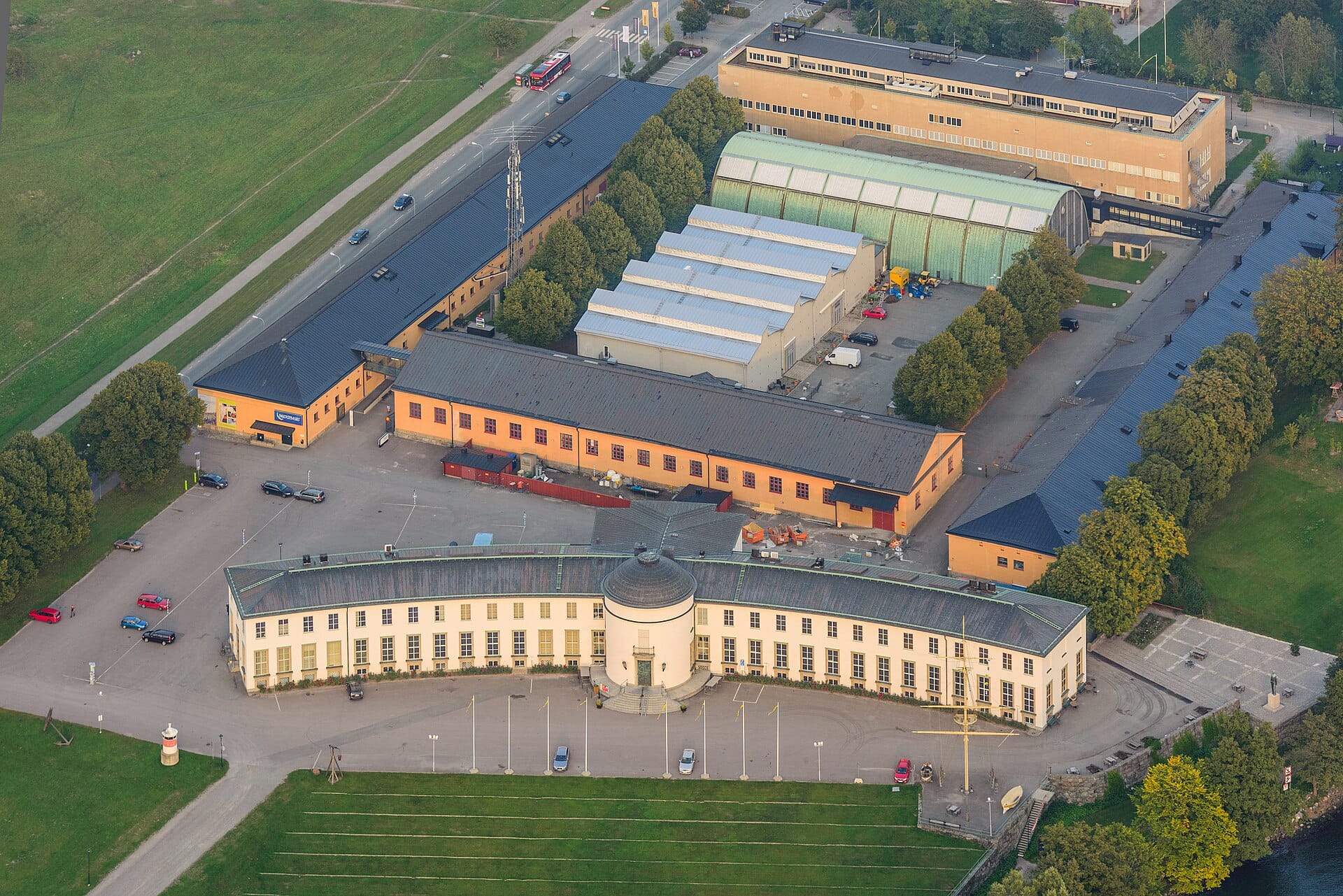
Tekniska Museet, formally the National Museum of Science and Technology, holds a national charter to collect, preserve, and communicate Swedish technological and industrial heritage. That sounds dry on paper. Inside, it is anything but. The museum occupies roughly 10,000 m² of exhibition space in a purpose-built functionalist building designed by architect Ragnar Hjort and opened in 1936. Sweden was mid-industrialisation when it opened; the building itself is a product of that optimism about machines and modernity, set within Stockholm’s Royal Djurgården rather than the main tourist strip.
The collections span telecommunications, mining, aerospace, energy, mathematics, and computing, with a strong thread of Swedish industrial identity running through everything. SAAB aircraft. Early Ericsson telephone exchanges. The heavy machinery of the Swedish forestry and steel industries. If you have any curiosity about how the modern world was physically built, this museum gives you tangible, three-dimensional answers.
ℹ️ Good to know
The museum is open every day 09:00–21:00, making it one of the few Stockholm attractions with evening hours. Confirm on the official site before visiting, as hours may vary on public holidays.
The Building and Its Setting
The museum sits in Museiparken on Gärdet, within the boundaries of the Royal National City Park, just northeast of the main Djurgården island. This part of Stockholm feels markedly quieter than the tourist cluster around the Vasa Museum and Skansen. The walk from Djurgårdsbron takes around 15 minutes along a leafy corridor of cultural institutions, and on weekday mornings you may have the path largely to yourself.
The 1936 functionalist exterior is restrained and rational, all clean lines and pale render, a deliberate architectural statement about Swedish modernity. It sits comfortably alongside the nearby Nordiska Museet and Historiska Museet as part of Stockholm's broader museum corridor, though it draws a different crowd: fewer history tourists, more engineers, parents with school-age children, and people with a professional interest in how things work.
Morning light hits the facade directly, which makes arriving early pleasant. By midday the building's entrance area can fill with school groups, particularly on weekdays during term time. If you want a quieter experience, aim for late afternoon or early evening when school groups have left and admission queues are short.
Tickets & tours
Live prices and dates from our booking partner. If you book, we may earn a commission at no extra cost to you.
Inside: What the Exhibitions Actually Cover
The scale of the collection is the first thing that registers. The ground floor anchor is MEG, the museum's flagship exhibition on energy and the environment, which uses large-scale installations and interactive stations to trace how Sweden has powered itself from water mills to nuclear reactors. It is not a lecture: it is a physical environment you walk through, with working models, original machinery, and genuinely good interpretive labelling in both Swedish and English.
The telecommunications section contains original switchboards, early computers, and Ericsson hardware that will mean something specific to anyone who works in that industry and feel fascinatingly alien to everyone else. The mathematics and computing areas include exhibits designed to make abstract concepts tactile, which works better than you might expect.
Across the upper floors, aviation and space exhibits include suspended aircraft and scale models with enough contextual information to explain why Swedish aerospace development took the particular path it did. The mining and heavy industry sections are less photogenic but arguably more historically significant, documenting the extractive industries that funded Sweden's twentieth-century prosperity.
💡 Local tip
Pick up a printed floor plan at the entrance. The layout is logical but not linear, and without a map it is easy to miss entire galleries on upper floors.
Wisdome Stockholm: The Dome Theatre
Wisdome Stockholm is the museum's digital dome theatre, a separate ticketed experience that costs SEK 100 per person on top of general admission. The dome projects full-sphere films covering topics like space, deep ocean environments, and scientific visualisations. The format is genuinely immersive in a way that flat-screen museums cannot replicate. For children especially, a well-chosen dome film can be the highlight of the visit.
Showtimes are scheduled throughout the day. It is worth checking the schedule on the museum's website before you arrive and booking the dome time you want, particularly on weekends and school holidays when specific shows sell out. Not every film will appeal equally to adults without children; the programming skews toward accessible science communication rather than specialist content.
Practical Walkthrough: Getting There and Moving Around
The most direct route from central Stockholm is bus 69 from Centralen to the Museiparken stop. The journey takes roughly 15 minutes and deposits you directly outside the museum. Alternatively, tram lines serving Djurgårdsbron get you to the island, from which it is a 15-minute walk through parkland. The walk is pleasant in good weather and gives you a sense of the Djurgården museum corridor before you arrive. In rain or cold, the bus is the better choice.
There is no metro station nearby. If you are travelling from Gamla Stan or Södermalm, bus 69 remains the simplest option. Cyclists will find the approach straightforward along Djurgården's well-maintained paths.
Inside, the museum is fully navigable on foot across multiple floors. Specific accessibility information, including details on lifts and wheelchair access, is best confirmed directly with the museum via their website, as the official pages do not fully document all services in English.
⚠️ What to skip
School groups visit heavily on weekday mornings during term time. If you are not visiting with children and prefer a calmer experience, arrive after 13:00 on weekdays or visit on weekend evenings.
Time of Day: How the Experience Changes
Early morning, from opening at 09:00 until around 10:30, the museum is genuinely quiet. Cafeteria noise is low, interactive stations are unoccupied, and you can spend as long as you want in front of individual exhibits. This is the best window for adults who want to read and absorb rather than navigate around children.
Midday is peak time on weekdays in term season. The cafeteria fills, the MEG exhibition gets noisy with excited children at the interactive stations, and the dome theatre shows popular sessions. On weekends, the pattern is similar but spread more evenly through the afternoon. The museum is large enough that you can always find a quieter gallery even during busy periods.
Evening visits, from around 17:00 onward, offer a different atmosphere entirely. The school groups are gone, the light through the upper-floor windows changes quality, and the museum becomes the kind of place where adults can wander slowly and talk. The extended hours until 21:00 make Tekniska Museet one of the few options in Stockholm for a post-dinner cultural visit on any day of the week.
Who This Museum Is For, and Who Should Look Elsewhere
Tekniska Museet works extremely well for families with children aged roughly 5 to 14, for anyone with professional or personal interest in engineering or industrial history, and for visitors who have already covered Stockholm's more famous attractions and want something with more depth. If you are combining it with nearby sites, the Vasa Museum is a 20-minute walk away and covers very different ground, making a full Djurgården museum day entirely feasible.
It is also worth noting that the Stockholm Pass covers entry to Tekniska Museet. If you are planning multiple museum visits, check whether the pass makes financial sense for your itinerary. The Stockholm Pass guide breaks down the numbers clearly.
Visitors looking primarily for art, design, or Scandinavian cultural history will find the museum less relevant to their interests. Similarly, anyone who finds large interactive science centres overwhelming or loud may struggle during busy periods, though the upper-floor galleries tend to be calmer throughout the day. If your focus is exclusively on Swedish history or Viking heritage, your time is probably better spent elsewhere in Djurgården or Gamla Stan.
Insider Tips
- The museum café is decent and significantly cheaper than the tourist-facing cafes near the Vasa Museum. If you are spending a half day here, eat on site rather than walking back toward the main Djurgården strip.
- The MEG energy exhibition is the most photographed and crowded section. Visit it first thing in the morning or last thing before closing for the best chance of interacting with exhibits without waiting.
- Wisdome dome shows are scheduled, not continuous. Check the day's programme at the main desk when you arrive and anchor your visit timing around the show you want to catch.
- If you are travelling with children under 7, note that entry for them is free, which meaningfully reduces the family ticket cost compared with other major Stockholm museums.
- The upper floors covering aviation and telecommunications are consistently less crowded than the ground floor, even during peak hours. If the ground floor feels overwhelming, head upstairs first and work your way down.
Who Is Tekniska Museet (Museum of Science and Technology) For?
- Families with school-age children who want hands-on, interactive exhibits
- Engineers, designers, and technology professionals with an interest in Swedish industrial history
- Rainy-day visits requiring several hours of indoor cover
- Evening visitors looking for a cultural option after dinner
- Stockholm Pass holders maximising their museum coverage on Djurgården
Nearby Attractions
Other things to see while in Djurgården:
- ABBA The Museum
ABBA The Museum is Stockholm's most popular music attraction, a permanent interactive exhibition dedicated to Sweden's most famous pop group. Located on Djurgården, it combines costumes, memorabilia, and hands-on experiences in a way that appeals well beyond die-hard fans.
- Gröna Lund
Gröna Lund has been drawing Stockholmers to Djurgården since 1883, packing around 30 rides, live concert stages, and seasonal events into just 3.8 hectares on the waterfront. This guide covers what the experience actually feels like across different times of day, who will love it, and who might want to skip it.
- Junibacken
Junibacken is a children's cultural centre on Djurgården dedicated to Astrid Lindgren's literary universe, featuring an indoor Story Train, immersive storybook scenes, live theatre, and a bookshop. Opened in 1996, it draws around 400,000 visitors a year and ranks consistently among Stockholm's most-visited attractions.
- Nordiska Museet
Nordiska museet on Djurgården holds over 1.5 million objects spanning 500 years of Nordic life, from peasant folk costumes to mid-century design. The building alone, a neo-Renaissance palace completed in 1907, earns a look even if you only have an hour. This guide covers what to see, when to go, and how to make the most of the visit.
Planning a trip? Discover personalized activities with the Nomado app.