Swedish History Museum: Stockholm's Window Into 10,000 Years of Nordic History
The Swedish History Museum (Historiska museet) in Östermalm holds one of Scandinavia's most significant collections, from prehistoric artifacts to Viking gold and medieval religious art. Housed in a striking 1930s building on Narvavägen, it rewards visitors who want more than surface-level history.
Quick Facts
- Location
- Narvavägen 13–17, Östermalm, Stockholm
- Getting There
- Östermalmstorg (Green line T-bana), approx. 5-min walk
- Time Needed
- 2–3 hours for a thorough visit
- Cost
- SEK 180 adults; free for ages 0–18.
- Best for
- History enthusiasts, Viking culture seekers, families with older children
- Official website
- historiska.se/en
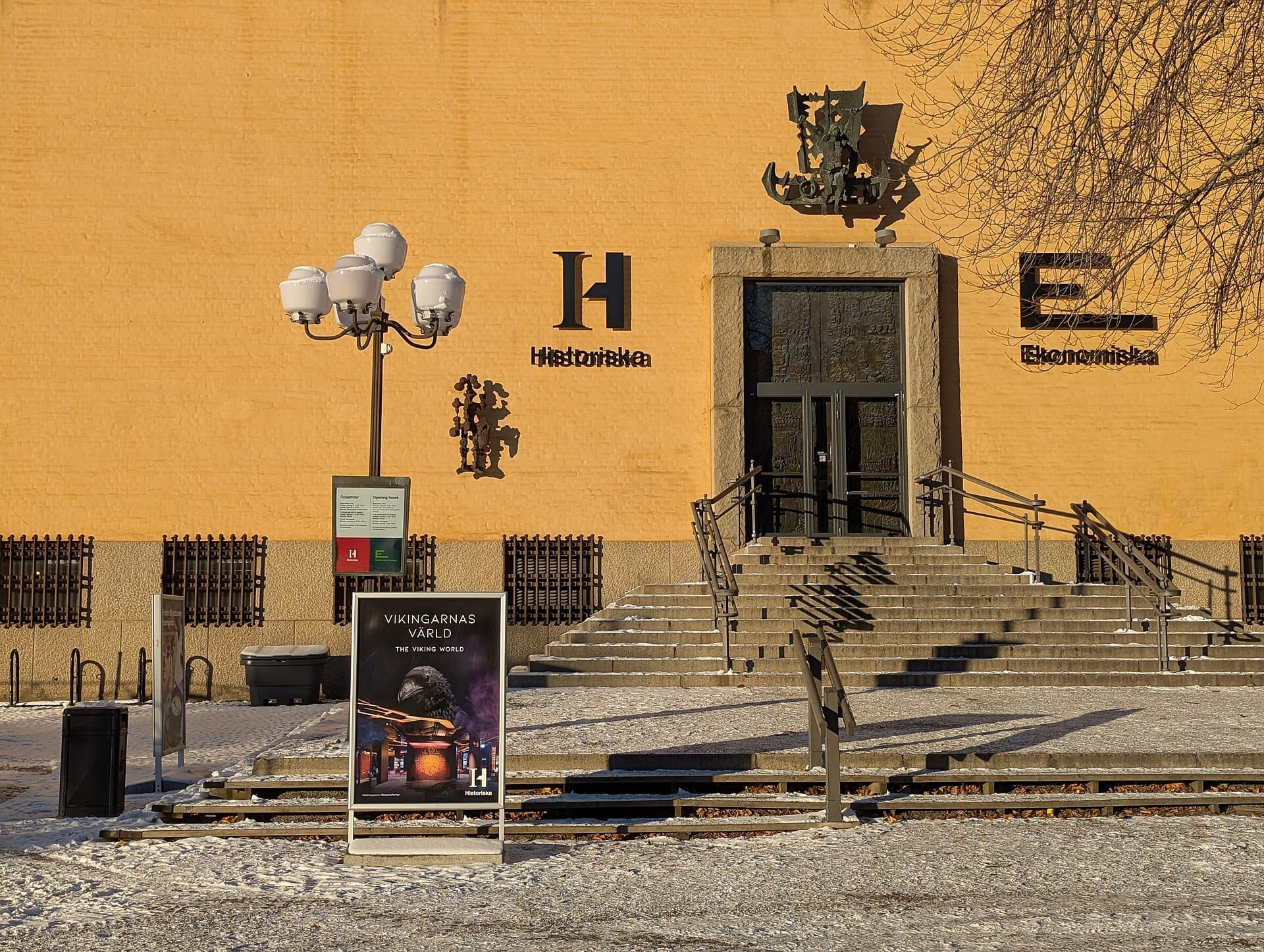
What Is the Swedish History Museum?
The Swedish History Museum, known in Swedish as Historiska museet or Statens historiska museum, is Sweden's national museum for cultural history and archaeology. Established as an institution in 1866, it moved into its purpose-built home on Narvavägen in Östermalm between 1934 and 1939. The building itself is a dignified example of Swedish functionalism, its bronze entrance doors and carved stone reliefs signaling that something serious is waiting inside.
The collection spans roughly 10,000 years of human activity on the Scandinavian peninsula, from Mesolithic flint tools to medieval ecclesiastical treasures. What makes this museum stand out from many European history collections is the sheer density of original objects: the Viking gold, the intact rune-inscribed artifacts, and an extraordinary cache of medieval church art salvaged from rural parishes across Sweden. These are not replicas or reconstructions. They are the actual objects.
If you are working through Stockholm's major cultural institutions, this pairs naturally with a visit to the Nordiska museet or the Vasa Museum on nearby Djurgården. But unlike those two, Historiska museet draws a more local crowd, which means fewer tour groups and more space to think.
💡 Local tip
The museum is closed on Mondays from September through December. If your Stockholm visit falls in autumn or winter, plan your day accordingly. On Wednesdays during that period, the museum stays open until 20:00, making it an excellent option for an evening visit after the main tourist rush.
The Gold Room: The Centrepiece You Should Not Rush Past
The Gold Room (Guldrummet) is the museum's most famous space, and it earns that reputation. Reached by a staircase that descends into what feels like a vault, the circular room holds around 3,000 objects in gold and silver, including pre-Viking Migration Period gold collars, Viking-age jewelry, and medieval silver hoards. The lighting is calibrated to make the metalwork glow without glare, and the effect on a quiet Tuesday morning is genuinely striking.
Among the highlights are the great gold collars, some weighing over 800 grams, discovered by farmers in fields across Sweden centuries after they were buried. No one knows exactly why they were buried or who owned them. That uncertainty, acknowledged honestly in the museum's labels, makes the objects feel even more significant. The curators resist the temptation to over-explain, which visitors with any archaeological instinct will appreciate.
Budget at least 30 to 40 minutes here. The Gold Room is also the most photographed space in the museum, so if you want quieter shots, arrive when the museum opens or visit after 15:00 on weekdays.
Tickets & tours
Live prices and dates from our booking partner. If you book, we may earn a commission at no extra cost to you.
Viking and Prehistoric Collections: More Than Helmets and Axes
The Viking Age galleries correct a lot of popular misconceptions. The objects here tell a more nuanced story: combs carved from antler bone, weighing scales used by traveling merchants, and jewelry that shows trade connections stretching to the Byzantine Empire and the Islamic world. The popular image of Vikings as purely warrior raiders is gently dismantled by the evidence on display.
Runestones and runic inscriptions appear throughout this section. Some are originals; others are high-quality casts of stones that remain in situ across Sweden. The accompanying text is clear and appropriately cautious about contested interpretations, which reflects the academic standards the museum applies across all its galleries.
For travelers who want to go deeper into Viking history beyond the museum walls, the Birka Viking site on Lake Mälaren is a half-day trip that complements what you'll see here. Birka was one of Scandinavia's earliest trading towns, and the museum holds objects excavated from its burial grounds.
The prehistoric galleries, covering the Stone, Bronze, and Iron Ages, are less immediately dramatic than the Gold Room but reward patient visitors. The Bronze Age lurs, curved horn-like instruments found in bogs, are among the rarest objects in the collection. Replicas have been played publicly and they produce a sound that is both eerie and unexpectedly musical.
Medieval Church Art: An Accidental National Collection
One of the museum's least-expected strengths is its medieval ecclesiastical collection. When the Swedish Reformation of the 16th century swept through rural parishes, thousands of Catholic church objects, altarpieces, crucifixes, reliquary chests, and painted wooden sculptures, were removed from use. Many ended up in storage, in barns, or simply abandoned. The Swedish History Museum systematically collected and preserved a large portion of these objects across the 19th and 20th centuries.
The result is one of the finest collections of medieval religious art outside major capitals, housed in a secular national museum rather than a church treasury. The carved wooden Madonnas, some dating to the 12th century and still retaining traces of original polychrome paint, are extraordinary. The gallery is cooler and dimmer than the rest of the museum, partly by conservation necessity, which gives it a hushed atmosphere that suits the material.
This section is often skipped by visitors focused on the Viking content, which is a genuine oversight. Allow at least 30 minutes here, particularly if you have any interest in medieval European art or craftsmanship.
Practical Walkthrough: How to Plan Your Visit
The museum is located at Narvavägen 13–17 in Östermalm, a quieter residential and embassy district on the eastern side of central Stockholm. The nearest metro station is Östermalmstorg on the Green line, roughly a 5-minute walk. Alternatively, several bus lines serve Karlaplan, which is even closer. The walk from Östermalmstorg takes you along calm, tree-lined streets, which is a pleasant contrast to the busier parts of the city.
From June through August, the museum is open daily from 10:00 to 17:00. From September through May, it closes on Mondays, opens Tuesday through Sunday from 11:00 to 17:00, and stays open until 20:00 on Wednesdays. Admission for adults is SEK 180, which also includes the Economy Museum located in the same building. Children and young people up to 18 years old enter free. Verify current prices and hours at historiska.se before your visit, as these can change seasonally.
ℹ️ Good to know
The museum complex at Narvavägen 13–17 also houses the Economy Museum (Ekonomiska museet), dedicated to the history of money and banking in Sweden. It is included in the same admission price and worth a quick detour, particularly the section on Swedish banknotes and currency history.
The museum is listed on the European Museum for All accessibility directory, indicating dedicated accessibility provisions. For specific accessibility needs, contact the museum directly at +46 8 519 556 20 or besoksservice@historiska.se before your visit. The building dates from the 1930s, so it is worth confirming specific access details in advance.
If you are considering a Stockholm museum pass, check the Stockholm Pass guide to see whether the Swedish History Museum is included in the current offer. For a broader sense of how to sequence Stockholm's major cultural sites, the best museums in Stockholm guide provides a useful overview.
How the Museum Changes Through the Day
Early mornings, particularly weekdays from opening until around 11:30, are the calmest period. The entrance hall is nearly silent, and the Gold Room can be explored without other visitors crowding the glass cases. The quality of natural light in the upper galleries is also better in the morning, particularly on clear days when it filters through the building's high windows.
By midday, school groups and tour parties begin arriving, especially during summer months. The Viking galleries and Gold Room become noticeably louder. If you arrive at this time, consider starting with the medieval church art section, which tends to stay quieter throughout the day, and working backward toward the Gold Room after 14:30.
The Wednesday evening opening until 20:00 is one of the least-used options in the museum's schedule. By 18:00, the building is almost entirely calm, the lighting in the Gold Room takes on a different quality against the dark exterior, and the museum's cafe is winding down, which means the building feels more like a private archive than a public institution. If your schedule allows, this is the best way to experience it.
⚠️ What to skip
Photography is generally permitted in the permanent galleries without flash, but policies can vary by exhibition. Check signage at each gallery entrance, and avoid using flash near fragile textile or painted objects even if photography is allowed.
Who Should Reconsider This Museum
Visitors hoping for an interactive, multimedia-heavy museum experience will find Historiska museet more traditional in its approach. The emphasis is on authentic objects with scholarly context rather than immersive digital installations. That is a deliberate choice and the right one for this collection, but it is not for everyone. Young children, in particular, may struggle to stay engaged for more than an hour unless they have specific interest in the material.
If your time in Stockholm is extremely limited and you must choose between museums, the Vasa Museum offers a single overwhelming object in a purpose-built space that is faster to process. Historiska museet rewards slower, more deliberate visitors. It is not a quick tick on a list; it is a place where the returns increase the more time you give it.
Insider Tips
- The Wednesday late opening until 20:00 (September through December) is consistently underused. You can often have entire gallery sections to yourself after 18:00, which is rare for any major city museum.
- The museum shop carries a serious selection of academic publications on Scandinavian archaeology and medieval history, including some titles not easily found elsewhere. Worth browsing even if you are not buying.
- Bring a light layer even in summer. The Gold Room and medieval galleries are kept cool for conservation reasons, and the temperature difference from a warm Stockholm day can be noticeable.
- The building's exterior bronze doors, installed when the museum opened in the late 1930s, feature detailed reliefs depicting scenes from Swedish prehistory. Most visitors walk straight past them. Spend two minutes studying them before entering.
- If you are visiting in summer, the surrounding Östermalm streets are calm and pleasant for a walk afterward toward Djurgårdsbron and the waterfront, which connects naturally to the Djurgården island attractions.
Who Is Swedish History Museum For?
- Travelers with a serious interest in Viking Age history and culture beyond the popular mythology
- Visitors who appreciate archaeological collections of genuine objects rather than reconstructions
- Families with older children or teenagers who have curriculum interest in Scandinavian or European medieval history
- Anyone wanting a quieter, less crowded alternative to Djurgården's major museums
- Evening visitors on Wednesdays looking for a calm, well-curated cultural experience
Nearby Attractions
Other things to see while in Östermalm:
- Östermalm Food Hall
Östermalm Food Hall (Östermalms Saluhall) is a landmark covered market on Östermalmstorg, operating since 1888 and reopened after a full renovation in March 2020. It combines heritage architecture with serious Swedish food, from fresh seafood counters to old-school delicatessens, and entry is free.
- Stureplan & Sturegallerian
Stureplan is the symbolic center of Stockholm's most affluent neighborhood, anchored by the concrete Svampen canopy and the Sturegallerian galleria. With 60-plus shops, historic Sturebadet spa, and some of the city's most popular nightlife, it draws everyone from lunch crowds to late-night revelers.
Planning a trip? Discover personalized activities with the Nomado app.