Stureplan & Sturegallerian: Stockholm's Upscale Heart of Östermalm
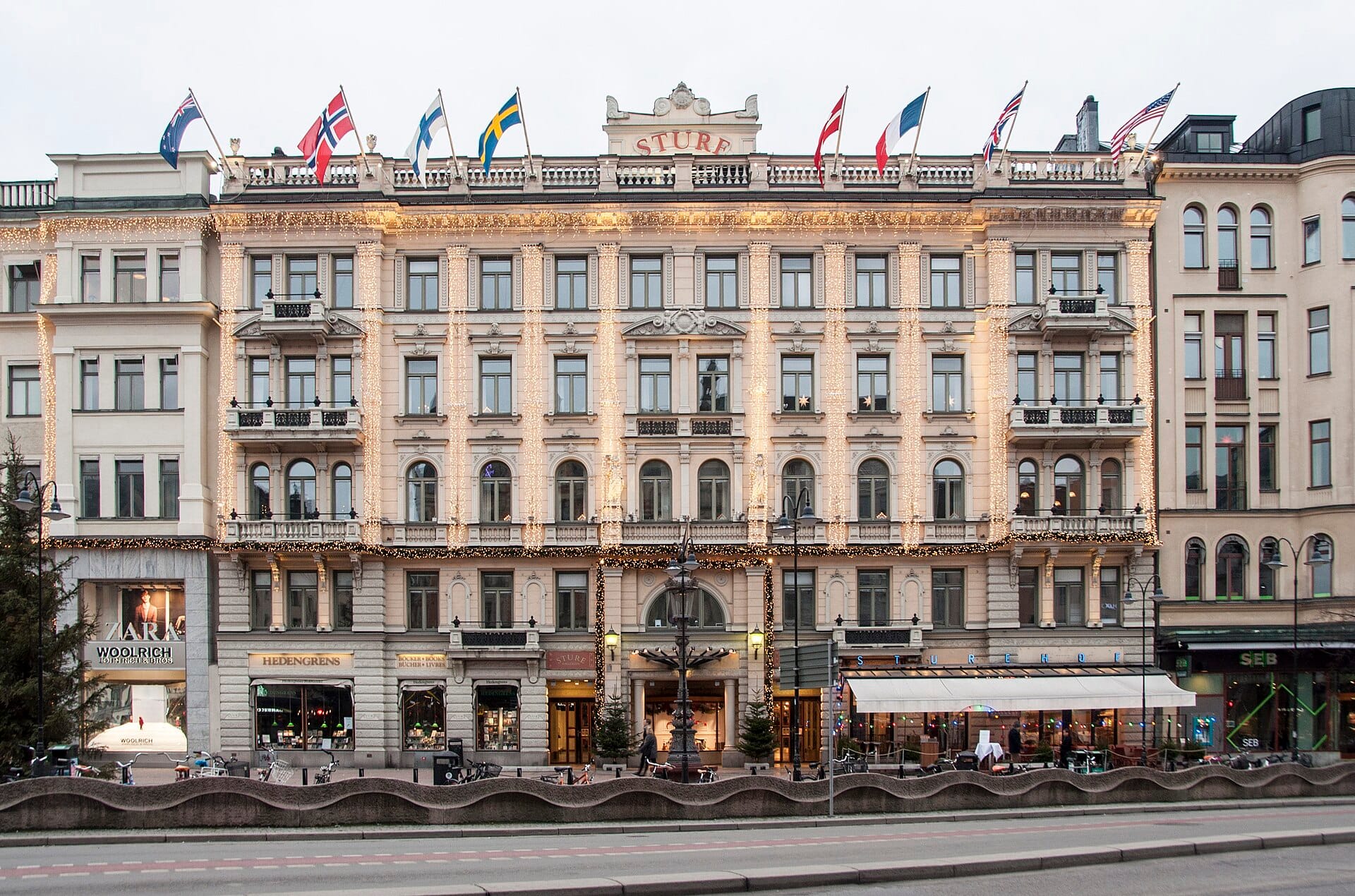
Stureplan is the symbolic center of Stockholm's most affluent neighborhood, anchored by the concrete Svampen canopy and the Sturegallerian galleria. With 60-plus shops, historic Sturebadet spa, and some of the city's most popular nightlife, it draws everyone from lunch crowds to late-night revelers.
Quick Facts
- Location
- Stureplan 4, 114 35 Stockholm (Östermalm)
- Getting There
- Östermalmstorg metro (2 min walk); Kungsträdgården metro (8 min walk)
- Time Needed
- 1–3 hours depending on shopping or dining
- Cost
- Free to enter square and galleria; individual shops and Sturebadet spa priced separately
- Best for
- Shopping, people-watching, upscale dining, nightlife, Scandinavian design
- Official website
- www.sturegallerian.se
What Is Stureplan, Exactly?
Stureplan is a public square in central Stockholm in the Östermalm district. It is not a grand plaza in the European sense: no fountains, no monuments, no sweeping symmetry. What defines it is a squat concrete canopy known as Svampen, Swedish for 'the Mushroom', which has stood on the square since the 1930s as a rain shelter and meeting point. Everything else, the bar terraces, the taxi queue, the gallery of well-dressed Stockholmers, has grown up around it.
Since the 1980s refurbishment that transformed the square and gave rise to Sturegallerian, Stureplan has carried a specific cultural weight in Sweden. It became shorthand for wealth, exclusivity, and a certain kind of Stockholm social ambition. That reputation still holds, though the reality today is more democratic: the square is open to everyone, the galleria charges no entry fee, and the coffee at the courtyard cafes costs roughly the same as anywhere else in the city center.
💡 Local tip
Svampen ('the Mushroom') is the classic meeting-point locals use. If someone in Stockholm says 'meet me at Svampen', they mean the concrete canopy in the middle of Stureplan square.
Inside Sturegallerian: The Galleria Itself
Sturegallerian was built between 1986 and 1990 by weaving a climate-protected shopping galleria through the courtyards and ground floors of several properties in the Sperlingens Backe block. The result is a 13,000-square-meter indoor complex that stretches from the Stureplan entrance to Grev Turegatan 11. Unlike a typical suburban mall, it feels like a series of connected passages rather than a single atrium, with natural light filtering in at angles depending on the time of day.
Around 60 shops, restaurants, cafes, and nightclubs occupy the space. The retail mix skews toward Scandinavian fashion labels, international cosmetics, and premium accessories, reflecting the neighborhood's income profile. The food options range from quick-service spots popular with nearby office workers at lunch to sit-down restaurants that draw evening diners from across the city.
The galleria is open Monday to Friday 10:00–19:00, Saturday 10:00–17:00, and Sunday 12:00–17:00, though individual tenants may keep their own hours. If you are visiting specifically for a restaurant or the Östermalm Food Hall nearby, check the venue directly, as hours shift seasonally.
Tickets & tours
Live prices and dates from our booking partner. If you book, we may earn a commission at no extra cost to you.
2-hour archipelago tour on a RIB speedboat
From 122 €Instant confirmationFree cancellationHaunted Stockholm exploration game and tour
From 12 €Instant confirmationFree cancellationFotografiska Stockholm entrance tickets
From 0 €Instant confirmationFree cancellationStockholm: Nature Reserve Hiking Tour with Campfire Lunch
From 102 €Instant confirmationFree cancellation
Sturebadet: The Hidden Layer Below
Tucked within the Sturegallerian complex is Sturebadet, a spa and gym that has operated in some form at this address since 1885. The original bathhouse predates the galleria by a century, and the current incarnation preserves ornate pool architecture from the late 19th century while adding modern spa facilities. Entry is priced separately and requires advance booking for many services.
For visitors interested in Stockholm's spa culture more broadly, the Stockholm spa guide covers Sturebadet alongside several other options across the city, including island-based alternatives that offer a very different atmosphere.
How Stureplan Changes Through the Day
In the morning, the square is quiet in a way that surprises first-time visitors. The outdoor terraces are still being set up, the taxis have mostly dispersed, and the light on the surrounding 19th-century facades is at its cleanest. This is a good time to photograph the Svampen and the square without crowds, and to notice the architectural mix: Jugendstil detailing on older buildings sits next to 20th-century commercial facades.
Lunchtime (roughly 11:30–13:30 on weekdays) brings a concentrated surge of office workers from Östermalm and the surrounding commercial streets. The galleria's cafes fill quickly, and the terraces outside get competitive for seats in good weather. If you plan to eat here, arriving before noon or after 13:00 makes a noticeable difference.
By early evening on weekends, Stureplan transforms into something closer to its cultural reputation. The bar and restaurant terraces along the square fill steadily from around 18:00, and by 22:00 the Sturecompagniet nightclub and other nearby venues draw queues that can stretch along the surrounding streets. The crowd at this hour is predominantly young and local, dressed with the low-key precision that characterizes Stockholm nightlife style.
ℹ️ Good to know
Stureplan is one of Stockholm's main nightlife hubs, with Sturecompagniet among the most prominent clubs in the city. Expect queues at popular venues on Friday and Saturday nights from around 22:00.
Getting There and Getting Around
The most direct metro connection is Östermalmstorg station on the red line, approximately two minutes on foot from the square. Exit toward Sturegatan and Stureplan is immediately ahead. Kungsträdgården station on the blue line is also walkable at around eight minutes, making this part of Östermalm straightforward to reach from almost any point on the metro network.
If you are walking from Gamla Stan or the central waterfront, the route north through Kungsträdgården park takes roughly 15 minutes and passes some of the city's most photogenic street frontages. The walk gives useful orientation to how Stockholm's central districts connect to each other.
Stockholm's public transport runs on SL tickets, which cover the metro, buses, and trams. The guide to getting around Stockholm covers ticket options including 24-hour and 72-hour passes, which make sense if you are moving around the city over multiple days.
The Surrounding Östermalm Context
Stureplan sits in one of Stockholm's most affluent residential and commercial areas. The streets radiating outward, Birger Jarlsgatan, Strandvägen, Östermalmstorg, are lined with fashion boutiques, high-end restaurants, and early 20th-century apartment buildings of a scale and solidity you do not find in many other Stockholm neighborhoods. Walking even a few blocks in any direction gives a clear sense of why this district has the profile it does.
Two minutes from Stureplan, the Östermalm Food Hall (Östermalmshallen) is worth a dedicated visit. The 19th-century market building houses high-quality Swedish produce vendors, fishmongers, delis, and lunch restaurants. It is a genuinely useful stop for food, not only a tourist attraction.
The wider Östermalm neighborhood rewards slow walking, particularly along Strandvägen toward Djurgårdsbrunnsviken. The apartment facades here, built in the 1890s boom years, are among the most consistently grand in the entire city.
Honest Assessment: What Stureplan Is and Is Not
Stureplan is not a conventional tourist attraction in the way that a museum or historic monument is. There is nothing to queue for, no single thing to see, and no transformative experience guaranteed. Its value is contextual: it is where a particular version of Stockholm life is most legible, and the combination of architecture, retail, food, and nightlife gives a concentrated cross-section of the neighborhood.
Visitors expecting something visually dramatic or architecturally extraordinary may be underwhelmed. The square itself is modest. Svampen is interesting as a piece of Stockholm urban folklore but not as a design object. The galleria is well-maintained and pleasant but not architecturally remarkable. What Stureplan offers is atmosphere and convenience, a dense concentration of things to do and places to eat within a short walk, in a neighborhood that feels distinctly and confidently Swedish.
⚠️ What to skip
Prices in Stureplan's bars and restaurants are at the upper end of Stockholm rates, which are already high by European standards. Budget travelers will find better value a few stops away on the metro.
Insider Tips
- The outdoor terraces at Stureplan face southwest and catch afternoon sun well into the evening in summer. If you want a seat in the sun after 16:00 on a warm day, arrive earlier or you will be waiting.
- Sturegallerian has multiple entrances that are not all obvious from the street. The Grev Turegatan entrance on the eastern side is consistently less crowded than the main Stureplan entrance and useful if you are coming from Östermalm's residential streets.
- Sturebadet requires advance booking for most spa treatments and pool sessions. Walk-in access is limited, especially on weekends. Check their website before planning a visit around it.
- On weekday lunchtimes, the galleria fills with local office workers and the wait for tables at popular spots can be 15–20 minutes. The side streets around Stureplan have several less-known lunch restaurants with shorter queues and comparable quality.
- If you are visiting for nightlife, note that Stockholm's bar and club culture starts late by most European standards. Showing up at Sturecompagniet before 23:00 on a weekend will mean a nearly empty venue or a shorter queue but no atmosphere.
Who Is Stureplan & Sturegallerian For?
- Shoppers interested in Scandinavian fashion and design labels
- Travelers who want to experience Stockholm's upscale urban culture firsthand
- Nightlife visitors looking for a concentrated hub of bars and clubs in one area
- Anyone combining a visit with the nearby Östermalm Food Hall or a spa afternoon at Sturebadet
- People-watchers and urban observers curious about how wealthy Stockholm looks and operates
Nearby Attractions
Other things to see while in Östermalm:
- Swedish History Museum
The Swedish History Museum (Historiska museet) in Östermalm holds one of Scandinavia's most significant collections, from prehistoric artifacts to Viking gold and medieval religious art. Housed in a striking 1930s building on Narvavägen, it rewards visitors who want more than surface-level history.
- Östermalm Food Hall
Östermalm Food Hall (Östermalms Saluhall) is a landmark covered market on Östermalmstorg, operating since 1888 and reopened after a full renovation in March 2020. It combines heritage architecture with serious Swedish food, from fresh seafood counters to old-school delicatessens, and entry is free.
Planning a trip? Discover personalized activities with the Nomado app.