Birka Viking Town: Step Inside Sweden's Most Important Viking Site
Founded around AD 750 on a remote island in Lake Mälaren, Birka was one of Scandinavia's earliest true urban trading centers. Today it survives as part of the UNESCO World Heritage Site Birka and Hovgården, reached only by seasonal boat from Stockholm, where around 2,000 Viking-age graves still dot the surrounding landscape. It is one of the most historically significant half-day excursions available from the Swedish capital.
Quick Facts
- Location
- Björkö island, Lake Mälaren, Ekerö Municipality — about 30 km west of central Stockholm
- Getting There
- Seasonal passenger tour boats and other boat services from central Stockholm (Klara Mälarstrand by City Hall or similar departure points) — the island is only accessible by boat. Verify current operators and departure piers before travel.
- Time Needed
- Allow a full half-day: roughly 3–4 hours on the island plus 1–2 hours each way on the boat
- Cost
- Ticket packages from boat operators typically include return boat journey and site entry. Prices updated annually — check the official site for current SEK rates
- Best for
- History enthusiasts, archaeology buffs, Scandinavian culture seekers, families with older children
- Official website
- www.birkavikingastaden.se/en
What Birka Actually Is — and Why It Matters
Birka Viking Town, formally known in Swedish as Birka – Vikingastaden på Björkö, is not a theme park or a reconstruction layered over an empty field. It is an active archaeological landscape on Björkö island in Lake Mälaren, where roughly 2,000 Viking-period graves remain visible as low mounds in the grass. The town was founded around AD 750 and operated as one of Scandinavia's first proper urban trading centers for more than two centuries before being abandoned around AD 975. Its residents traded furs, iron, glass beads, and silver across routes stretching from the British Isles to Central Asia.
UNESCO inscribed Birka and the neighboring royal estate of Hovgården on Adelsö island as a World Heritage Site in 1993, recognizing the site's exceptional ability to illuminate Viking Age urban life. What makes Birka unusual among Scandinavian heritage sites is how intact the setting remains: the island is small, mostly forested, and has never been built over by later development. Walking across the burial grounds at the edge of the fortification hill, with the lake visible in three directions, it is easy to understand why this remote location was once considered a strategic commercial gateway.
ℹ️ Good to know
Birka is a strictly seasonal attraction. It typically operates from late spring through early autumn. Exact opening dates, daily hours, and boat schedules change each year. Always confirm the current season's timetable on the official Birka website before booking travel.
Getting There: The Boat Journey is Part of the Experience
There is no road access to Björkö. The only way in is by boat, primarily seasonal passenger tours from central Stockholm and sometimes from the Ekerö side of the lake. The journey across Lake Mälaren takes roughly one and a half to two hours depending on the departure point, and the crossing itself is pleasant on calm days: the lake opens out wide, wooded islands pass on either side, and the density of Stockholm's inner city feels genuinely far away.
Boats typically depart from the waterfront at Klara Mälarstrand by Stockholm City Hall. If you are planning your wider Stockholm trip, the Stadshuskajen pier area is the standard reference point for Lake Mälaren boat services. Arrive at least 15 minutes before departure as the boat will not wait. Tickets are normally purchased in advance through the boat operator's website and include the return journey plus site entry — check the current booking links on the Birka official site since operators occasionally change.
The boat schedule effectively structures your day. Most excursions leave mid-morning and return in the late afternoon, giving visitors three to four hours on the island. There is rarely a way to extend that time, so arrive prepared: there is a restaurant and a small shop on site, but the island is otherwise self-contained. Visitors with reduced mobility should contact the specific boat operator in advance to confirm onboard accessibility, ramp availability, and facilities, as this varies by vessel.
Tickets & tours
Live prices and dates from our booking partner. If you book, we may earn a commission at no extra cost to you.
Private Viking history 3-hour tour
From 137 €Instant confirmationFree cancellationPrivate Viking history full-day tour
From 250 €Instant confirmationFree cancellationViking history 3-hour public tour
From 88 €Instant confirmationFree cancellationViking history half-day public tour
From 153 €Instant confirmationFree cancellation
On the Island: The Museum, the Graves, and the Viking Village
The boat docks at a small landing stage near the site entrance. From there, the experience divides into three overlapping zones: the Birka Museum, the reconstructed Viking village, and the open archaeological landscape that surrounds both.
The museum is the logical first stop. It holds original finds from the site: jewelry, tools, trade weights, textiles, and weapons excavated from the graves and the town area. The displays are well-organized and calibrated for visitors who arrive without specialist knowledge. The scale model of Birka at its peak population — often estimated at around 700 to 1,000 inhabitants — helps orient the space before you walk it. Labels are available in Swedish and English.
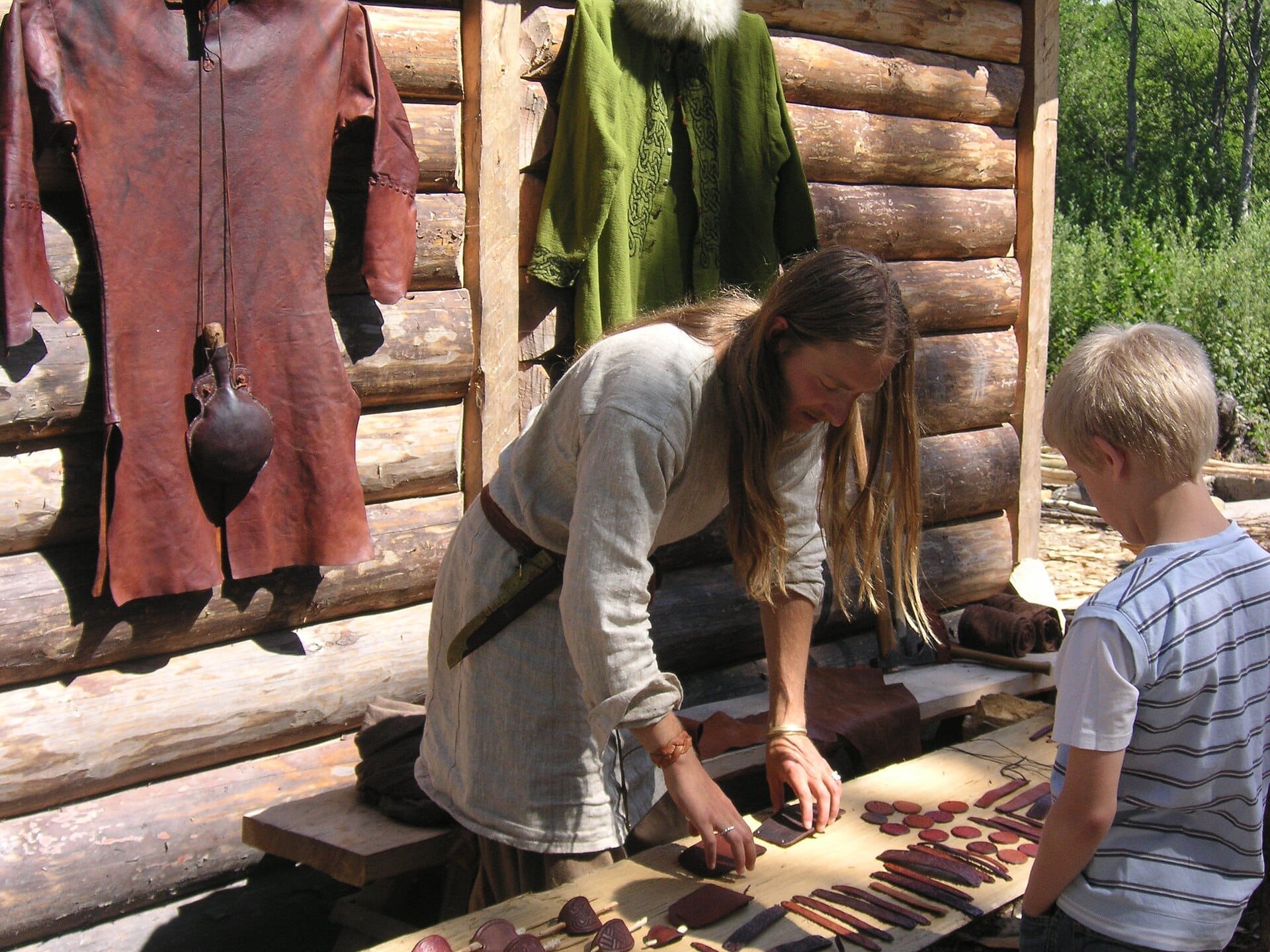
The reconstructed Viking village nearby is staffed by guides in period dress during the operating season. This element is more educational than theatrical: the focus is on how buildings were constructed, what daily work looked like, and how the town functioned economically rather than on dramatic reenactment. For families with children from around 8 upward, this component tends to hold attention well. Younger children may find the more open landscape sections harder to engage with.
The burial grounds are the part of Birka that is hardest to convey in photographs. The mounds stretch across a hillside above the lake, some barely knee-height after more than a thousand years of settling. The Borg, a fortified hill at the island's center, still carries the outline of its original defensive structure. Walking between the mounds in quiet conditions — early in the site's opening hours, before the full tour group arrives — is a genuinely affecting experience. The scale of the cemetery, combined with the silence of the surrounding water, makes the site feel less like a visitor attraction and more like a piece of landscape with a specific, legible past.
How the Site Changes Through the Day
Because most visitors arrive on the same boat, Birka is busy in a concentrated way. The period immediately after docking, when guided tours begin, sees the most foot traffic around the museum entrance and village. Visitors who split away from the main group early and walk directly to the burial mounds find relative quiet for the first hour. By early afternoon, the flow typically shifts: some visitors eat at the restaurant or explore the shoreline, and the archaeological landscape opens up again.
In June and July, the long Scandinavian daylight hours make the site feel open and luminous even in the afternoon. The lake reflects afternoon light well from the western shore near the Borg, making that area the better location for photography after midday. In late August and September, when the season approaches its end, the light is lower and warmer, the tour groups are somewhat smaller, and the atmosphere around the burial mounds is noticeably quieter. If you have flexibility in timing, late August is worth considering.
💡 Local tip
Wear sturdy, flat footwear. The paths over the burial grounds and around the fortification hill are grassy, uneven, and can be slippery after rain. A light waterproof layer is advisable regardless of the morning forecast — conditions on the lake can shift within a few hours.
Historical Context: What Made Birka Significant
Birka's importance in the Viking Age was commercial rather than military or royal. Its location on Björkö, an island in Lake Mälaren connected to Baltic Sea trade routes via a network of waterways, made it the logical intersection point between Scandinavian producers of furs and iron and the broader European and Eastern trade networks. Archaeological finds from the graves include imported glassware, Arab silver dirhams, and fine textiles, confirming that Birka was genuinely international in its connections.
The town was also notable as an early site of Christian missionary activity in Sweden. The Frankish monk Ansgar visited Birka twice in the ninth century in attempts to establish Christianity among the population, though the town remained predominantly pagan throughout its existence. The archaeological evidence suggests a multicultural, commercially pragmatic community — a place where traders tolerated religious and cultural difference because commerce required it.
Birka's abandonment around AD 975 is thought to reflect the opening of a competing trading town at Sigtuna, which offered better access to newly important inland routes as the regional political center shifted. If you want to follow that historical thread, Sigtuna is reachable as a separate day trip from Stockholm and provides a direct historical continuation of the same era.
For broader Viking Age context before or after visiting Birka, the Swedish History Museum in Stockholm holds one of the world's largest collections of Viking Age gold and silver, much of it from the Lake Mälaren region. It is a useful primer if you want to arrive at Birka with more background.
Photography, Practicalities, and Honest Limitations
Photography is unrestricted across the outdoor archaeological landscape. The burial mounds photograph well in low-angle morning or afternoon light rather than at midday when the sky is flat. The museum interior has lower lighting and glass-fronted cases, so a phone camera will struggle; a compact camera with good low-light performance handles it better. The lake views from the Borg hill are the most visually dramatic element of the site.
An honest note on expectations: Birka is not a spectacle in the conventional tourist sense. There are no standing structures from the Viking Age, no dramatic ruins, and no reconstructed longships in the harbor. What the site offers is archaeological integrity and interpretive depth. Visitors who arrive expecting something along the lines of Skansen's hands-on living history will find Birka more academic in tone, though the Viking village does provide some interactive elements during the main season. The experience rewards curiosity and patience more than it rewards a preference for visual drama.
The on-site restaurant serves lunch during the operating season, and there is a small shop near the museum entrance. Bring water and a snack regardless, as the restaurant can be busy during peak afternoon hours. There are public toilet facilities near the landing stage and museum.
⚠️ What to skip
Birka is not suitable for visitors with significant mobility limitations without prior planning. The paths across the burial grounds and around the Borg are unpaved and uneven. Wheelchair users or those with limited walking ability should contact the boat operator and site directly to understand current accessibility provisions before booking.
Fitting Birka Into a Stockholm Itinerary
Birka works best as a standalone half-day or full-day excursion rather than as one stop among several. The boat journey time means it cannot easily be combined with other Stockholm attractions on the same day unless you return to the city by early afternoon and have a specific plan ready. The day trips from Stockholm guide covers Birka alongside other lake and archipelago options, which is useful if you are weighing several excursion choices.
If Viking history is a specific interest rather than just one item on a broader list, the guide to Viking history in Stockholm maps out how Birka connects to other sites and museum collections in and around the city, and helps sequence a multi-day focus on the period.
Note also that the Stockholm Pass may cover or discount the Birka boat excursion depending on the current season's inclusions. Check the Stockholm Pass guide before booking separately.
Insider Tips
- Buy your boat tickets in advance, especially for June and July departures. The boats have a fixed capacity and popular weekend crossings sell out several days ahead with no on-the-day alternative.
- Pick up the site map at the museum entrance before heading out to the burial grounds. The mounds spread across a wider area than they appear to from the landing stage, and the map clarifies which sections are accessible on foot.
- If the guided tour moves too quickly for your pace, it is acceptable to leave the group and explore the archaeological landscape independently. The guide covers the main interpretive points in the first 30–40 minutes; after that, self-directed exploration of the outer burial areas often yields a more reflective experience.
- The western shoreline near the Borg hill is quieter than the main museum and village area for most of the afternoon and provides the clearest views across the lake toward Adelsö — worth the 10-minute walk even if archaeology is not your primary interest.
- Pack insect repellent for summer visits. The island's woodland edges and grassy mound areas can have significant mosquito activity in June and July, particularly in the hour after arrival when you are likely to be standing still for the guided tour introduction.
Who Is Birka Viking Town For?
- Travelers with a genuine interest in Scandinavian medieval or Viking Age history who want a site rather than just a museum
- Families with children aged 8 and up who are likely to engage with the Viking village and burial ground explanations
- Photographers seeking landscape shots that combine archaeological texture with open water and northern light
- Visitors on a multi-day Stockholm trip who have already covered the main city attractions and want a half-day with a different character
- Anyone who specifically wants to visit a UNESCO World Heritage Site as part of their itinerary
Nearby Attractions
Combine your visit with:
- Drottningholm Palace
Drottningholm Palace is Sweden's most complete royal domain, a UNESCO World Heritage Site on Lovön island just about 10 km west of Stockholm. The baroque complex includes the palace, a working 18th-century theatre, a Chinese Pavilion, and formal gardens that shift in character across every season.
- Royal National City Park (Ekoparken)
The Royal National City Park, known locally as Ekoparken, is the world's first national urban park and one of Stockholm's most remarkable features. Stretching around 27 km² from Djurgården in the south to Ulriksdal in the north, it wraps around the city in a continuous arc of ancient oak forests, royal palaces, museum islands, and open waterways. Entry is free and the park never closes.
- Hagaparken
Hagaparken is a 144-hectare English landscape park just north of central Stockholm, laid out for King Gustav III in the late 18th century. Free to enter year-round, it offers a rare combination of royal history, open meadows, and waterside walking paths within easy reach of the city. Individual attractions inside the park, including the Butterfly House and royal pavilions, charge their own fees.
- Långholmen Island
Långholmen Island sits between Södermalm and Kungsholmen in central Stockholm, offering free access to beaches, walking trails, and green spaces year-round. Its most unusual feature: a functioning hotel and hostel built inside a former 19th-century prison. Entry to the island costs nothing, making it one of the most rewarding spots in the city for those who know it.
Planning a trip? Discover personalized activities with the Nomado app.