Stadshuskajen: Stockholm's Lake Mälaren Waterfront and Cruise Quay
Stadshuskajen is the public quay along Klara Mälarstrand where Stockholm meets Lake Mälaren, offering panoramic water views, a serene promenade, and the city's main departure point for boat excursions to Drottningholm and Birka. Access is free and the waterfront rewards visitors at almost any hour.
Quick Facts
- Location
- Klara Mälarstrand, Kungsholmen/Norrmalm border, central Stockholm
- Getting There
- Stockholm Central Station (5–10 min walk along Tegelbacken toward City Hall)
- Time Needed
- 30–60 min for the waterfront walk; half-day or full day if joining a lake excursion
- Cost
- Free to access the quay and promenade; boat excursions ticketed (prices vary by operator and route)
- Best for
- Waterfront walks, Lake Mälaren boat trips, photography of City Hall, and quiet morning escapes
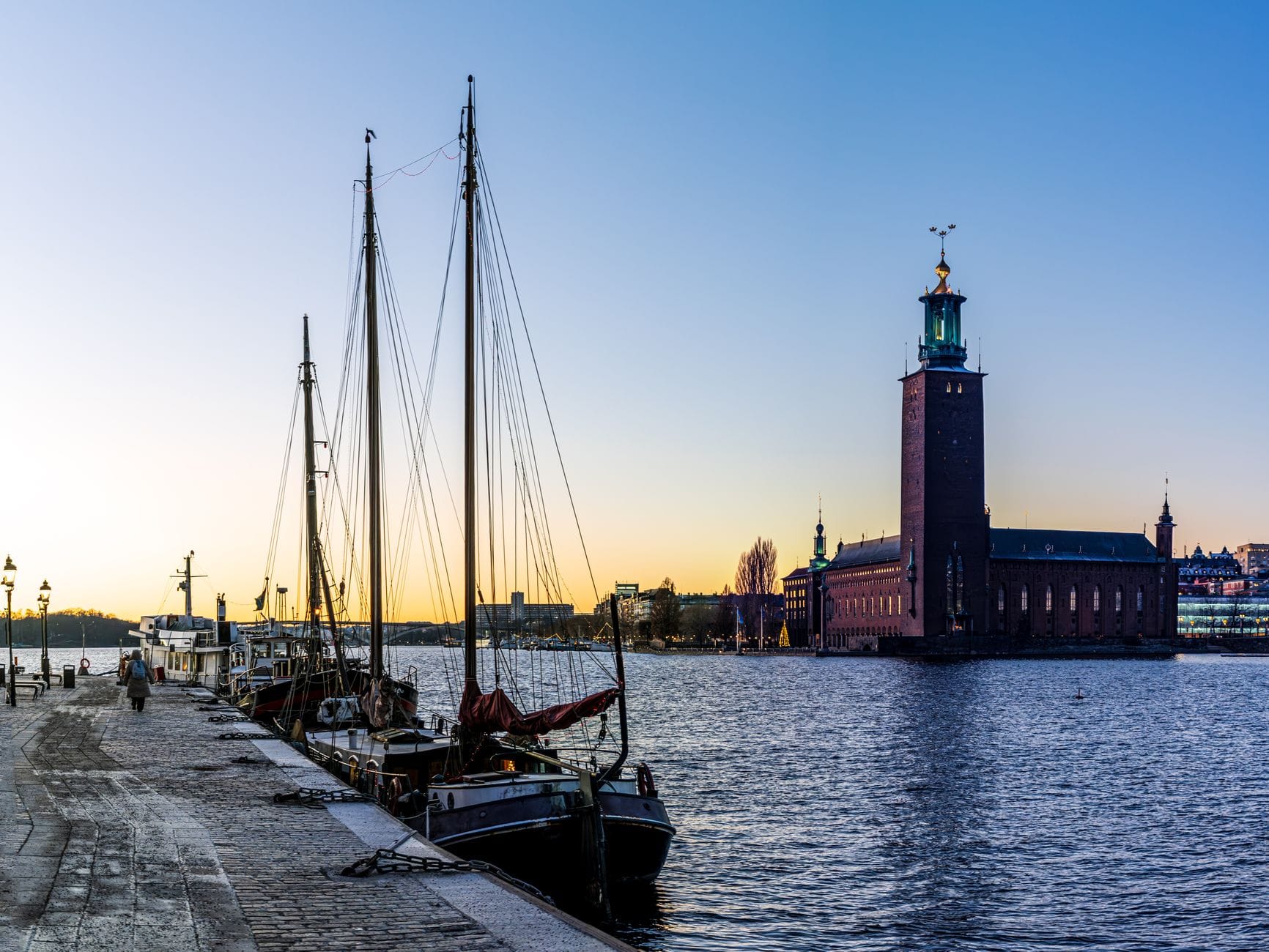
What Stadshuskajen Actually Is
Stadshuskajen, which translates roughly as City Hall Quay, forms the western end of Klara Mälarstrand, the long quayside promenade that stretches along Stockholm's Kungsholmen shoreline. The quay sits where the waters of Lake Mälaren open into Riddarfjärden, the bay that separates Kungsholmen from Gamla Stan, and it has served as the city's departure point for lake boat traffic for generations. The name Klara Mälarstrand was officially adopted in 1927, a reference to the adjacent Klarakvarteren district and the lake itself.
Lake Mälaren, which the quay faces, is Sweden's third-largest freshwater lake, covering roughly 1,140 km² and reaching a maximum depth of 64 metres. Stockholm's urban fabric grew up at the point where this lake drains into the Baltic Sea, so the water at Stadshuskajen is not incidental scenery: it is the geographic reason the city exists where it does.
The quay is best understood as two things at once: a working boat terminal and a public waterfront park. Ferries depart here for day excursions across Lake Mälaren to destinations including Birka Viking Site and Drottningholm Palace, while locals and visitors use the surrounding paths for walking, cycling, and sitting on the low stone benches that line the water's edge.
The View and the Atmosphere
Standing at the quay, the most dominant object in your field of vision is Stockholm City Hall (Stadshuset) directly to your left if you face the water. The building's brick tower, topped by three golden crowns, rises above the roofline at the junction of water and land, and the reflection it casts in Riddarfjärden on a calm morning is one of the more quietly striking urban views in Scandinavia. This is not a viewpoint that requires a climb or a ticket; it is simply there as you stand on public ground.
Across the water, the silhouette of Gamla Stan's medieval rooftops and the spire of Riddarholmen Church form the opposite bank. On clear days, the view extends westward along the lake surface, which gives the scene an unusual sense of openness for a capital city. The sound environment is mainly wind, water lapping against the quay walls, and the low hum of boats manoeuvring. Traffic noise from the nearby streets fades quickly once you reach the water's edge.
💡 Local tip
Arrive before 9am on a weekday for the cleanest light on City Hall and the fewest other people on the promenade. The morning sky over the lake often carries soft pink tones that disappear quickly once the sun rises fully.
Tickets & tours
Live prices and dates from our booking partner. If you book, we may earn a commission at no extra cost to you.
2-hour archipelago tour on a RIB speedboat
From 122 €Instant confirmationFree cancellationHaunted Stockholm exploration game and tour
From 12 €Instant confirmationFree cancellationFotografiska Stockholm entrance tickets
From 0 €Instant confirmationFree cancellationStockholm: Nature Reserve Hiking Tour with Campfire Lunch
From 102 €Instant confirmationFree cancellation
How the Waterfront Changes Through the Day
Early mornings at Stadshuskajen belong to commuting cyclists, joggers, and the occasional dog walker. The stone surface is damp from overnight humidity, the light is low and directional, and the lake is usually at its calmest. This is when the photographic potential is highest: the water acts as a mirror and there are no crowds disrupting the foreground.
By mid-morning, especially in summer, the first boat excursions depart and the quay takes on a different character. Families with luggage, groups in rain gear waiting for the Birka boat, and small queues form near the ticket counters and gangplanks. It is functional and organised, not chaotic, but the contemplative mood of early morning gives way to purposeful movement.
Afternoons bring the return boats, and the quay briefly fills again as passengers disembark. By late afternoon the promenade fills with people walking between the city centre and Kungsholmen's residential streets, particularly in warmer months when the outdoor benches along the water become informal gathering spots. Sunsets from this stretch of waterfront, when the light catches the tower of City Hall and the opposite shore, are worth timing a visit around.
In winter, the quay is significantly quieter. Boat services run on reduced schedules or pause entirely depending on the route. The stone paths can be icy and wind off the lake is sharp. That said, a grey winter afternoon with frost on the stone and low light over Riddarfjärden has its own appeal, and the absence of crowds is itself a reason to visit.
⚠️ What to skip
Winter conditions (November to March) can make the quayside slippery. Wear footwear with grip, and check in advance with boat operators if you are planning an excursion, as some routes are seasonal.
The Boat Excursions: What Departs from Here
Stadshuskajen is the main departure quay for several of Stockholm's best-known day excursions by water. The primary operator running scheduled services across Lake Mälaren from this quay is Strömma, whose boats have departed from Klara Mälarstrand for decades. Routes and schedules vary by season, so verify current timetables and ticket prices directly with the operator before your visit.
The most popular excursion is the boat trip to Birka, a UNESCO World Heritage Site on Björkö island about 30 km west of Stockholm across the lake. Birka was active from around 750 to 975 CE. The journey itself, crossing open lake water with forested islands visible on the horizon, adds genuine context to the destination. Read more in the guide to Birka Viking Site and the broader overview of Viking history in Stockholm.
Boat services to Drottningholm Palace, the Swedish royal family's primary residence and a UNESCO World Heritage Site, also operate from this area of the waterfront during the warmer months. Taking a boat rather than public transit adds a dimension to the visit that the underground or bus simply cannot match. More detail is available in the Drottningholm Palace guide.
ℹ️ Good to know
Boat excursion tickets are not included in the Stockholm Pass for all routes. Check the current pass terms before assuming a specific excursion is covered.
Getting There and Practical Logistics
The quay is reachable on foot from Stockholm Central Station in roughly ten minutes. Walk south from the station's main entrance toward Tegelbacken, then follow the water westward toward the City Hall tower, which is visible the entire way. The route is flat, paved, and straightforward.
Stockholm's metro (Tunnelbana) and bus network, run by Storstockholms Lokaltrafik (SL), serve the surrounding area well. The nearest metro stations are T-Centralen and Rådhuset; both require a short walk to reach the quay. For a broader guide to getting around the city, see getting around Stockholm.
The quay and promenade itself are paved and generally accessible for pushchairs and wheelchairs, though the surface can be uneven in places. Accessibility on board specific boat excursions varies by vessel; contact the relevant operator directly if this is a consideration.
Photography and the Surrounding Walk
The Stadshuskajen waterfront connects to a longer waterfront walk that extends in both directions. Heading west takes you closer to the City Hall building itself, where the gardens beside the water are worth exploring. Heading east, the promenade runs toward Strömgatan and eventually connects to the routes leading toward Gamla Stan and Norrmalm's central waterfront.
For photographers, the most productive compositions are looking east toward Gamla Stan from the quay, looking south across Riddarfjärden toward Södermalm's rooftops, and the classic City Hall reflection shot that works best in low-angled morning or evening light. If you are interested in Stockholm's best elevated vantage points, these work well in combination with spots listed in the guide to best views in Stockholm.
One detail many visitors miss: the western end of the quay, right beside the City Hall's waterside foundation, offers a close-up view of the building's brick texture and the stone arches at water level. This is one of the few points in Stockholm where you can see a major civic building nearly at the waterline, without separation by road or railing.
Honest Assessment: Strengths and Limitations
Stadshuskajen is not a destination attraction in itself. There is no exhibit, no entry fee, no guided experience waiting for you. What it offers is a well-positioned, photogenic public space with genuine utility: if you are taking a lake excursion, this is where you start and end. If you are walking between the city centre and Kungsholmen, this is a more pleasant route than the main roads. If you simply want to sit near water in central Stockholm without paying for anything, it works well for that too.
Travellers hoping for lively waterfront dining or a cluster of attractions will find the immediate quayside area relatively understated compared to, say, Strandvägen on the other side of the city. The appeal here is spatial and atmospheric rather than programmatic. If you are the kind of traveller who finds value in watching a city from its edge, on foot, without a schedule, Stadshuskajen rewards that approach consistently.
Insider Tips
- The Birka boat typically departs in the morning and returns by late afternoon; if you are on it, the outbound trip offers better views of City Hall receding into the Stockholm skyline than any static viewpoint on land.
- The low stone benches along the promenade are sheltered from wind on their south-facing side, which makes them usable in mild weather well into October.
- Afternoon light in late summer hits the west face of City Hall tower at a nearly horizontal angle, producing a deep amber glow on the brick that is difficult to photograph at any other time of year.
- If you are arriving from Stockholm Central Station and it is raining, the underpass near Tegelbacken provides partial cover for most of the walk to the quay.
- The city's free outdoor gym closest to this waterfront stretch is a few minutes west along Norr Mälarstrand, useful if you want to combine a morning walk with exercise before the day's sightseeing.
Who Is Stadshuskajen & Lake Mälaren Waterfront For?
- Day-trippers using the quay as a departure point for Birka or Drottningholm boat excursions
- Early-morning photographers seeking reflections of City Hall in Riddarfjärden
- Walkers wanting a quiet, flat waterfront route between central Stockholm and Kungsholmen
- Travellers looking for free outdoor space with strong views and minimal crowds outside peak summer
- Visitors combining a City Hall tour with a lakeside walk before or after
Nearby Attractions
Other things to see while in Kungsholmen:
- Stockholm City Hall
Stockholm City Hall stands on the eastern tip of Kungsholmen island, its 106-metre brick tower marking the skyline above Riddarfjärden. Built between 1911 and 1923 to a design by Ragnar Östberg, it serves as the seat of Stockholm Municipality and hosts the Nobel Prize banquet each December. Visits are by guided tour only, with the tower open seasonally for panoramic views across the Swedish capital.
Planning a trip? Discover personalized activities with the Nomado app.