Stockholm City Hall (Stadshuset): The Building That Hosts the Nobel Banquet
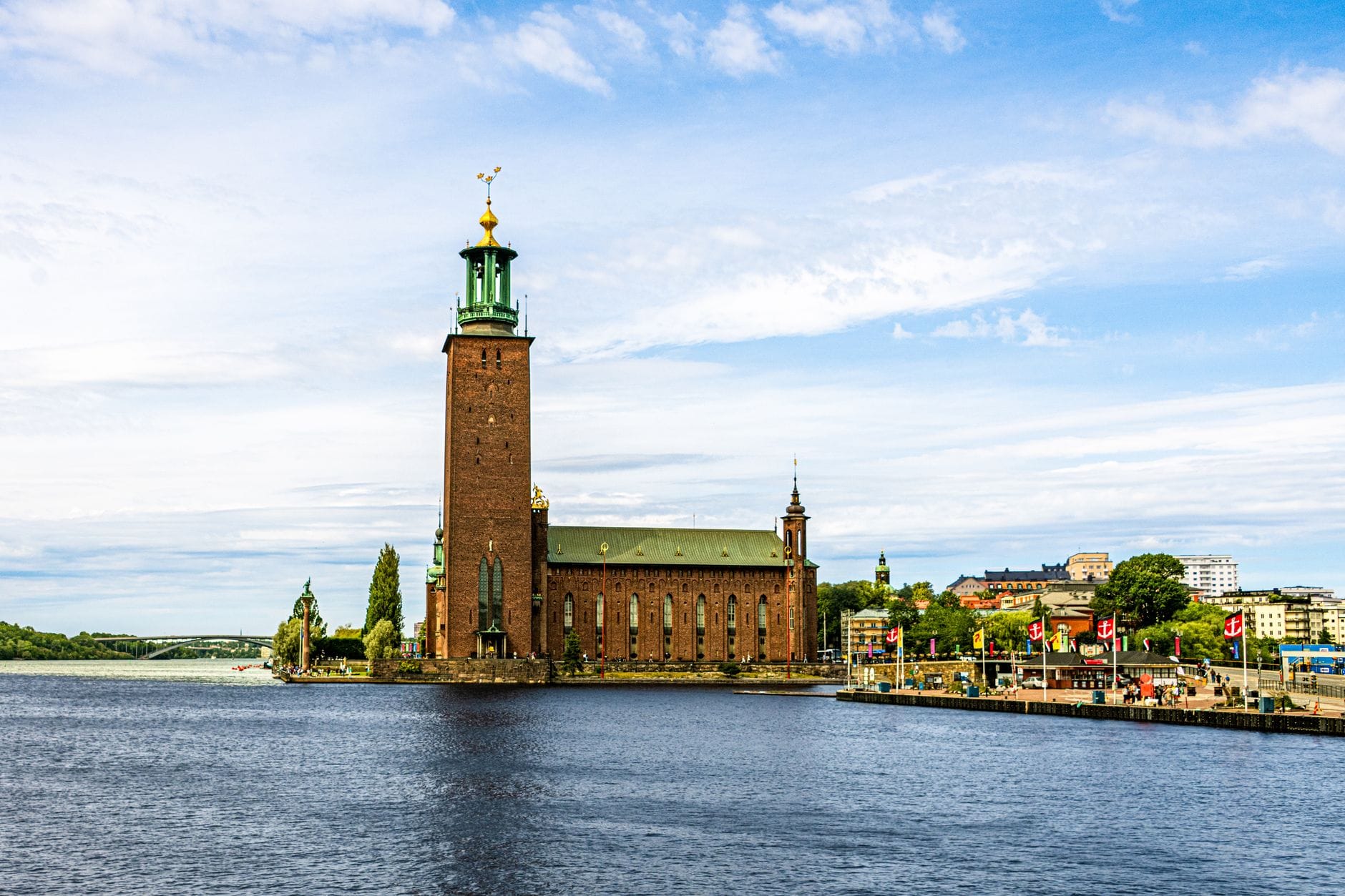
Stockholm City Hall stands on the eastern tip of Kungsholmen island, its 106-metre brick tower marking the skyline above Riddarfjärden. Built between 1911 and 1923 to a design by Ragnar Östberg, it serves as the seat of Stockholm Municipality and hosts the Nobel Prize banquet each December. Visits are by guided tour only, with the tower open seasonally for panoramic views across the Swedish capital.
Quick Facts
- Location
- Hantverkargatan 1, Kungsholmen, Stockholm
- Getting There
- Metro: Rådhuset (exit Hantverkargatan/Stadshuset) or T-centralen, then a 10-minute walk via Tegelbacken
- Time Needed
- 1.5–2 hours (guided tour plus optional tower climb)
- Cost
- Tower: 100 SEK adults, free for children under 12 (0–11 years old). Guided tour prices vary — check the official site for current rates.
- Best for
- Architecture lovers, Nobel Prize fans, panoramic city views, first-time visitors
- Official website
- stadshuset.stockholm/en
What Stockholm City Hall Actually Is
Stockholm City Hall, known in Swedish as Stockholms stadshus or simply Stadshuset, is far more than a municipal office building. It is the seat of Stockholm Municipality, a working civic building that has hosted the Nobel Prize banquet every December since 1930, and one of the most carefully crafted examples of National Romantic architecture in the world. Architect Ragnar Östberg spent over two decades on the design before construction began in 1911, and the building was completed in 1923 after twelve years of work.
The structure sits at the eastern tip of Kungsholmen island, directly on the waterfront of Riddarfjärden, with Södermalm and Riddarholmen visible across the water to the south. From almost anywhere along the waterfront between T-centralen and Gamla Stan, the 106-metre tower with its three golden crowns is impossible to miss. Those crowns, representing the Swedish national symbol Tre Kronor, sit at the very top and are visible from considerable distances across the city.
ℹ️ Good to know
The building is not freely open to walk through. All interior visits require a guided tour, which run daily in both Swedish and English at set times. Tours can be cancelled at short notice if a civic event is scheduled. Check availability on the official site before planning your day around this visit.
The Architecture: Eight Million Bricks and a Lot of Intention
Ragnar Östberg's design belongs to the National Romantic movement, a Scandinavian architectural current from the late 19th and early 20th centuries that drew on medieval Swedish building traditions rather than classical European models. The result at City Hall is something distinct: a building that feels rooted in its location without mimicking anything specific. Its red brick exterior, roughly eight million bricks in total, takes on different tones depending on the time of day. In morning light the facade is a warm terracotta. By late afternoon, facing west into the sun, it shifts closer to burnt sienna.
The tower anchors the composition but does not dominate it in the way a European cathedral spire might. Instead, the massing of the building is deliberately horizontal, drawing the eye along the waterfront. Two large interior halls form the centrepiece of any guided tour: the Blue Hall, where the Nobel banquet takes place, and the Golden Hall above it. Despite its name, the Blue Hall is entirely red brick inside. Östberg originally planned to cover the brick with blue paint or tile, but liked the raw material so much that he left it exposed. The Golden Hall is lined with approximately 18 million glass and gold mosaic tiles, depicting scenes from Swedish and Byzantine history.
For travellers interested in the broader story of Stockholm's architectural heritage, the building fits naturally into a wider itinerary. The medieval street plan of Gamla Stan is visible from the tower, and the contrast between the two periods says a great deal about how Stockholm has developed across the centuries.
Tickets & tours
Live prices and dates from our booking partner. If you book, we may earn a commission at no extra cost to you.
The Guided Tour: What You Actually See
Tours last approximately 45 minutes and cover the main public spaces. Guides are knowledgeable and typically speak to both the architectural choices and the political functions of the rooms. The Council Chamber, where Stockholm's city council meets, is included on most tours. The space has a distinctive open-timber ceiling modelled loosely on the roofing of Viking longhouses, which is a conscious nod to pre-medieval Scandinavian craft traditions.
The Blue Hall is the visual centrepiece for most visitors. Standing on the floor of this enormous space, looking up at the staircase where Nobel laureates descend each December, it is genuinely difficult to reconcile the room's scale with the modest exterior of the building. The hall doubles as a concert and event venue throughout the year, so the floor configuration changes. On some tour days you will see it set for an event; on others, the floor is clear.
The Golden Hall requires climbing a flight of stairs from the Blue Hall. The mosaics here were designed by artist Einar Forseth and installed in the 1920s. The central image on the north wall depicts the Queen of Lake Mälaren, a stylised figure representing Stockholm, flanked by historical and allegorical scenes. The gold tiles catch the light differently depending on the angle, and the overall effect is closer to a Byzantine church interior than anything typically associated with Scandinavian civic buildings.
💡 Local tip
Tours in English tend to fill up faster than Swedish-language tours, particularly in July and August. Book online in advance rather than turning up and hoping for space on the next available slot.
The Tower: Views Worth the Climb
The City Hall Tower opens seasonally, roughly from May through August, though exact dates vary by year and should be confirmed on the official website. The climb involves a combination of stairs and a lift, reaching a covered viewing gallery at 106 metres. Tickets cost 100 SEK for adults; children 0–11 accompanied by an adult enter free. Tower tickets are sold separately from guided tour tickets and are available online or at the City Hall ticket office, which opens at 08:30.
The views from the top are genuinely strong. To the south, Riddarholmen and the spire of Riddarholmen Church sit directly in the sightline, with Södermalm's ridge behind them. To the east, the roofscape of Gamla Stan is clear, and on a bright day you can see as far as Djurgården and the outline of the Gröna Lund ferris wheel. To the north, Kungsholmen spreads out in a residential grid, and to the west, the water of Lake Mälaren opens up. On a cloudless summer evening, this is one of the more photogenic positions in the city.
For comparison, the views from the tower sit in a different register to the ground-level waterfront perspectives at Monteliusvägen or the hilltop at Skinnarviksberget. Those are free and open year-round; the tower offers height and a wider sweep, but costs more and is seasonal. If you are building an itinerary around Stockholm's best viewpoints, the tower earns its place but is not the only option.
The Nobel Connection
The Nobel Prize banquet has taken place in the Blue Hall since 1930, and this single fact accounts for a large portion of the building's international reputation. Approximately 1,300 guests attend the dinner each December 10th, the anniversary of Alfred Nobel's death. The event is broadcast live on Swedish television and watched internationally. The staging, the descent of laureates down the Blue Hall staircase, and the specific table configurations are reproduced in detail each year.
For visitors who want to understand the Nobel Prize context more deeply, the Nobel Museum in Gamla Stan provides the historical and scientific background that the City Hall tour does not cover. The two work well as a paired visit on the same day.
Getting There and Practical Logistics
The nearest metro station is Rådhuset on the blue line. Exit following signs for Hantverkargatan/Stadshuset and walk east along Hantverkargatan for roughly five minutes. The building's entrance for visitors is on Ragnar Östbergs plan, facing the waterfront. Alternatively, from T-centralen, walk west along Vasagatan, cross under the railway bridge at Tegelbacken, and continue along the waterfront path; the walk takes about ten minutes and offers a good approach view of the building from the east.
Visitors arriving by special transportation service should use the address Hantverkargatan 1. For detailed step-free access information, including lift availability within the building, contact the City Hall directly or check the accessibility section of the official website before your visit.
Kungsholmen is a largely residential island with a handful of good cafes along Scheelegatan and around Fridhemsplan if you want to combine the visit with a meal. The island is not a major shopping or nightlife district. For those building a full day in this part of the city, a one-day Stockholm itinerary can help integrate City Hall with the nearby attractions efficiently.
⚠️ What to skip
Tours are cancelled without refund when the building is in use for official functions, which happens without much advance notice to the public. If your visit is time-sensitive, always check the official site the morning of your planned visit.
Honesty About the Experience
Stockholm City Hall is not a museum in the conventional sense. There are no permanent exhibits with objects to examine at length. The experience is architectural and ceremonial: you are walking through functional rooms, guided by a knowledgeable person, and the quality of that experience depends substantially on the quality of your guide. On a good tour, the context around the mosaic choices, the acoustics of the Blue Hall, and the political history of the Council Chamber makes the visit memorable. On a rushed or perfunctory tour, the rooms can feel large and slightly empty.
Visitors who are primarily interested in hands-on museum experiences, interactive displays, or extensive collections will find the City Hall less satisfying than, say, the Vasa Museum or Fotografiska. Visitors who respond to craftsmanship, civic history, and the texture of a genuinely used building will find it one of the more absorbing stops in Stockholm.
If your primary interest is Swedish history and material culture rather than architecture specifically, the Nordiska museet on Djurgården or the Historiska museet will likely reward your time more directly.
Insider Tips
- The exterior and waterfront terrace are freely accessible at any time. Even if you skip the guided tour, walking along Stadshusbron and looking back at the building from the Södermalm side of the water gives you the full silhouette, including the tower and the proportions that photographs rarely capture.
- Early morning visits, before the first tour of the day, give you the best light on the brick facade from the east. The shadow patterns shift significantly between 8am and 10am on a clear day, and the waterfront path is quiet enough to photograph without other visitors.
- Tower tickets sell out on peak summer days, particularly in July. If the tower is a priority, book the first available slot online the evening before rather than buying on arrival at 08:30.
- The ground-floor cafe facing the courtyard is a quieter option than the tourist-facing spots near T-centralen. It is a working building, so the coffee is priced for municipal employees, not tourists.
- If you visit in early December, the area around the building sees increased activity in the week before and after the Nobel ceremony on December 10th. The banquet itself is closed to the public, but the atmosphere around Kungsholmen waterfront is noticeably different from the rest of the year.
Who Is Stockholm City Hall For?
- Architecture and design travellers who want to understand Sweden's National Romantic movement in its most complete built form
- Nobel Prize followers and science enthusiasts who want to see the banquet hall in person
- First-time visitors to Stockholm looking for a landmark that genuinely delivers on its reputation
- Families with children who want a short, structured guided experience with a meaningful story attached
- Photographers working the Stockholm waterfront, especially in early morning or late summer evening light
Nearby Attractions
Other things to see while in Kungsholmen:
- Stadshuskajen & Lake Mälaren Waterfront
Stadshuskajen is the public quay along Klara Mälarstrand where Stockholm meets Lake Mälaren, offering panoramic water views, a serene promenade, and the city's main departure point for boat excursions to Drottningholm and Birka. Access is free and the waterfront rewards visitors at almost any hour.
Planning a trip? Discover personalized activities with the Nomado app.