Skinnarviksberget: Stockholm's Highest Inner-City Viewpoint
Perched 53 metres above sea level on Södermalm, Skinnarviksberget is Stockholm's highest natural point within the inner city. It costs nothing to visit, is freely accessible at all hours (with an alcohol ban in the park between midnight and 7am), and delivers one of the most unobstructed panoramas in the Swedish capital, taking in the City Hall tower, Lake Mälaren, and the rooftops of Gamla Stan.
Quick Facts
- Location
- Skinnarviksberget, Södermalm, Stockholm
- Getting There
- Zinkensdamm metro (T-bana, red line), ~5 min walk; Mariatorget metro also nearby
- Time Needed
- 30–60 minutes; longer if you bring a picnic
- Cost
- Free, no ticket required
- Best for
- Sunset views, photography, quiet moments, budget travellers
- Official website
- parker.stockholm/parker/skinnarviksparken
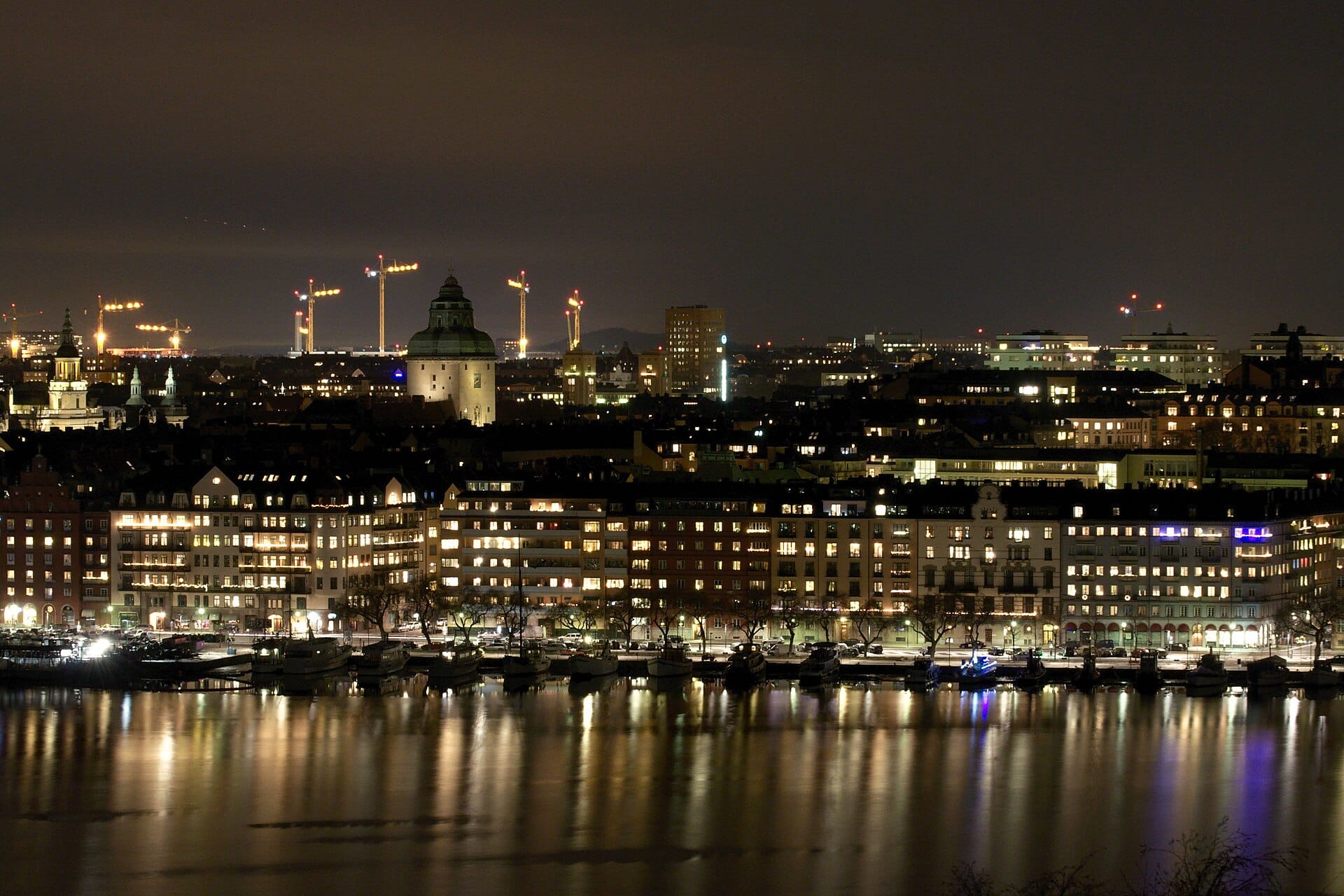
What Skinnarviksberget Actually Is
Skinnarviksberget is not a manicured tourist platform or a paid observation deck. It is a bare granite outcrop in Skinnarviksparken, rising 53 metres above sea level at the highest natural point inside Stockholm's inner city. The rock is wide and flat enough that a dozen people can sit comfortably at the top without crowding each other, and the view in every direction is largely uninterrupted by buildings.
The name dates to the 1600s, when this part of Södermalm was associated with tanners, a trade whose Swedish name 'skinnare' is embedded in the hill's identity. For centuries the elevated position served as a lookout over the city's western waterway. Today it functions as an informal gathering spot for locals who treat it as a living room with a very good view.
Skinnarviksberget sits within Södermalm, the large island south of Stockholm's central waterways. If you are trying to understand the broader neighbourhood before your visit, it helps to know that Södermalm is a mixed residential and creative district, not a tourist zone, which is precisely why this viewpoint feels authentic rather than staged.
💡 Local tip
There is no signage directing you to the top. From Zinkensdamm metro, head north-west through the park, follow the granite path uphill, and keep going until the city opens up in front of you. The whole walk from the metro takes roughly 10 minutes.
The View: What You Actually See
From the summit, the panorama swings across a wide arc of Stockholm. To the north-west, the green copper tower of Stockholm City Hall stands against the sky across the water of Riddarfjärden. On clear days you can trace the outline of Kungsholmen and, further out, Ekoparken's wooded ridges. To the east, the rooftops of Gamla Stan cluster at the waterline, and the spire of the German Church punctuates the skyline.
Below and to the north, Lake Mälaren stretches westward, carrying commuter ferries and the occasional sailboat. This particular combination of water, islands, and low-rise rooftops is exactly what people mean when they talk about Stockholm's geography, and Skinnarviksberget is one of the few places you can take it all in without paying an entrance fee or waiting in a queue. For a curated overview of the city's best panoramic spots, the best views in Stockholm guide is worth reading before you plan your route.
The foreground matters too. Directly below the rock, the streets of western Södermalm fan out in a grid of early 20th-century apartment blocks, their sand-coloured and ochre facades giving the scene a warmth that contrasts with the cool blue of the water beyond.
Tickets & tours
Live prices and dates from our booking partner. If you book, we may earn a commission at no extra cost to you.
2-hour archipelago tour on a RIB speedboat
From 122 €Instant confirmationFree cancellationHaunted Stockholm exploration game and tour
From 12 €Instant confirmationFree cancellationFotografiska Stockholm entrance tickets
From 0 €Instant confirmationFree cancellationStockholm: Nature Reserve Hiking Tour with Campfire Lunch
From 102 €Instant confirmationFree cancellation
How the Experience Changes Through the Day
Early mornings, particularly on weekdays before 9am, are the closest this place gets to solitude. The light from the east catches the water at a low angle and the city is quiet enough that you can hear birds and distant trams rather than conversation. This is the window for serious photography: soft shadows, no harsh midday glare, and usually nobody standing in your frame.
By midday the rock gets more traffic: local office workers eating lunch, tourists who have followed a recommendation on their phones, and parents with young children who have wandered up from the park below. The atmosphere is relaxed and unforced, nothing like the managed crowds at paid observation decks.
Sunset is the main event. On summer evenings Stockholm's northern latitude means the sun does not drop below the horizon until well past 9pm, and the light it produces in the hour before that is extraordinary. The City Hall tower turns deep gold, the water goes from grey-blue to amber, and every flat surface of granite on the hill fills with people who have brought wine, blankets, and thermoses. Arriving 45 minutes before actual sunset gives you enough time to settle and still get a good position on the rock.
⚠️ What to skip
In winter, the granite surface becomes genuinely slippery when wet or iced. Wear shoes with grip. The path up from the park has no handrail on the steeper sections.
Winter visits have their own logic. The crowds thin dramatically, the bare birches in the surrounding park add a skeletal texture to the landscape, and on a clear cold day you can see further than in summer because there is no atmospheric haze. Snow on the rooftops below transforms the scene entirely. Dress for standing still in wind; the hilltop is exposed from all sides.
Getting There: Transit and On-Foot Navigation
The nearest metro station is Zinkensdamm on the red T-bana line, roughly a 5-minute walk from the hilltop. From the station, head west along Ringvägen, then north into Skinnarviksparken when you reach the park entrance. Follow the granite paths uphill; the route is intuitive once you are in the park.
Mariatorget station is also walkable, adding perhaps 5 additional minutes but putting you through the neighbourhood streets if you prefer to get a feel for western Södermalm before ascending. Both stations use standard SL tickets valid on the T-bana network.
If you are combining this with other Södermalm stops, the hill fits naturally into a half-day route that includes the streets around SoFo, the city's design and independent retail district, or a visit to Fotografiska, Stockholm's photography museum, which is about 20 minutes on foot to the east.
ℹ️ Good to know
There is no parking area dedicated to Skinnarviksberget. If you are driving, Södermalm's street parking is metered and competitive. Public transit is strongly preferable.
Photography: Practical Advice
The viewpoint faces roughly north-west, which means the light is behind you in the morning and in front of you in the evening. For shots of the City Hall tower against a lit sky, come at sunset. For shots that show the full panorama with detail in the foreground granite and the water, morning provides cleaner separation between tones.
A wide-angle lens covers the panorama comfortably. A short telephoto in the 70–135mm range isolates the City Hall tower or the Gamla Stan skyline effectively. The granite surface itself, with its lichen patches and worn texture, makes a strong compositional foreground element at any focal length.
Tripods are physically possible but socially conspicuous on busy evenings when people are sitting all around the summit. Plan for handheld shooting in social hours, or arrive early in the morning when the rock is essentially empty.
Honest Assessment: Who Benefits and Who Might Not
Skinnarviksberget is genuinely worth the walk for anyone who wants an unmediated view of Stockholm without an entrance fee, a timed slot, or a gift shop. It is particularly satisfying for travellers who prefer experiencing a city the way residents do, since this hill is actively used by people who live a five-minute walk from it.
However, this is not the right choice for everyone. Travellers with limited mobility will find the final approach to the summit rocky and uneven; there is no step-free route to the top. If an accessible panoramic view is the priority, other options in the city, including the elevator at Katarina, may suit better. See the full free things to do in Stockholm for alternatives at different terrain levels.
Visitors who want an interpreted experience with historical commentary, audio guides, or structured programming will find none of that here. The hill is simply a hill with an exceptional view. If that sounds like the right balance, it will meet expectations easily. If you need context and narrative delivered alongside the view, consider pairing the visit with a nearby museum stop.
The view is also weather-dependent in a way that a museum is not. Low cloud or fog eliminates most of the panorama. Before visiting, a quick weather check is worthwhile. For Stockholm's seasonal patterns and what to expect month by month, the best time to visit Stockholm guide covers the main variables clearly.
Insider Tips
- Bring something to sit on. The granite is hard and often damp, especially in spring and autumn. A folded jacket or a small foam mat makes a 45-minute sunset session much more comfortable.
- The western edge of the rock gives a marginally better angle on the City Hall tower than the central plateau. Position yourself there early if you arrive at a busy sunset hour.
- The park below the summit has public toilets near the main entrance. There are none at the top, and the nearest cafes are a 10-minute walk back toward Mariatorget.
- On Midsummer Eve, the hill draws large local crowds from early evening. It is one of the best places in the city to watch people celebrate without any formal event structure, but arrive by 7pm if you want space on the rock itself.
- The granite retains heat in summer and cold in winter. After a warm afternoon, the rock surface can stay warm into the evening. After a cold night, it stays cold well into the morning even when the air has warmed up.
Who Is Skinnarviksberget For?
- Budget travellers who want a landmark Stockholm view without paying for it
- Photographers working golden hour in summer or looking for a non-commercial composition
- Travellers who prefer local, resident-used spaces over managed tourist attractions
- Couples looking for a low-key, atmospheric spot for a sunset picnic
- Anyone exploring Södermalm on foot and wanting a geographic anchor point for the neighbourhood
Nearby Attractions
Other things to see while in Södermalm:
- Fjällgatan
Perched on the Stigberget cliff in Södermalm, Fjällgatan is a cobbled 18th-century street that doubles as one of Stockholm's finest free viewpoints. The panorama sweeps across Gamla Stan, Skeppsholmen, and Djurgården — and the street itself, lined with preserved wooden houses, is worth the uphill walk on its own terms.
- Fotografiska
Housed in a 1910 red-brick customs building on Södermalm's waterfront, Fotografiska is one of Europe's most serious photography museums. With rotating major exhibitions, a respected restaurant, and museum doors open until 23:00 every day, it works equally well as an afternoon cultural stop or an evening out.
- Katarina Elevator
The Katarina Elevator (Katarinahissen) is a public passenger lift at Slussen that carries you 38 metres up to a walkway on the Södermalm cliff edge, with wide views over Gamla Stan, the Riddarfjärden inlet, and Stockholm's island geography. It reopened in October 2023 after years of renovation, is currently free to ride when operating, and the journey itself takes under 30 seconds.
- Monteliusvägen
Perched about 25 metres above Söder Mälarstrand on northern Södermalm, Monteliusvägen is a 416-metre pedestrian promenade delivering unobstructed panoramas across Lake Mälaren, Gamla Stan, and Stockholm City Hall. Entry is free, the path is open around the clock, and the views change dramatically with the light and the season.
Planning a trip? Discover personalized activities with the Nomado app.