Katarina Elevator: Stockholm's Free Ride to the Rooftops of Södermalm
The Katarina Elevator (Katarinahissen) is a public passenger lift at Slussen that carries you 38 metres up to a walkway on the Södermalm cliff edge, with wide views over Gamla Stan, the Riddarfjärden inlet, and Stockholm's island geography. It reopened in October 2023 after years of renovation, is currently free to ride when operating, and the journey itself takes under 30 seconds.
Quick Facts
- Location
- Katarinavägen 3, 116 45, Slussen, Södermalm, Stockholm
- Getting There
- Slussen T-bana (red & green lines, e.g. T13, T17–T19), then follow signs toward Katarinavägen; the elevator is adjacent to these exits
- Time Needed
- 20–45 minutes including the walk along the cliff-top path
- Cost
- Currently free when operating; a fee of around 20 SEK per ride has been discussed — verify before visiting
- Best for
- City views, quick orientation stop, evening light photography, architecture fans
What the Katarina Elevator Actually Is
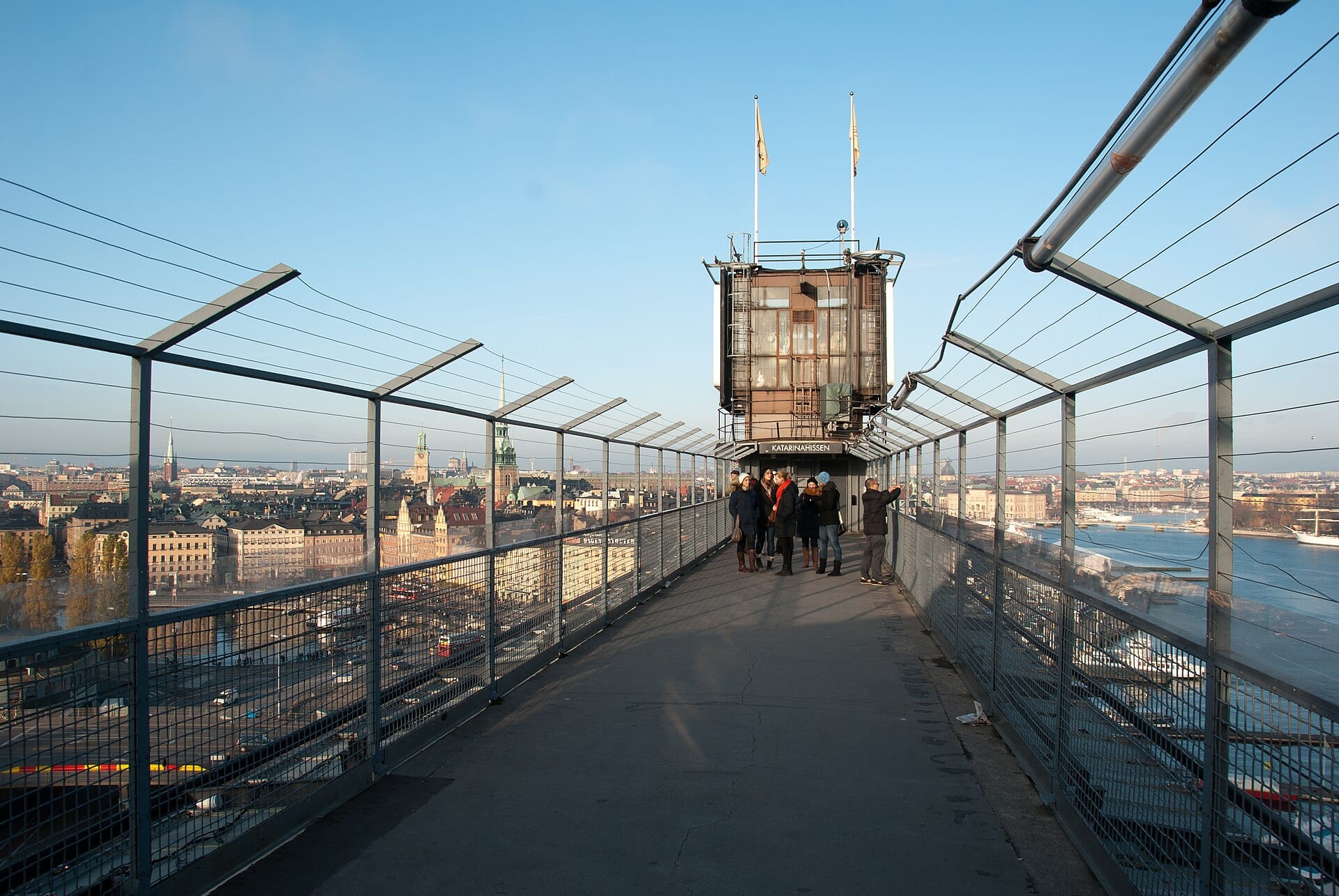
The Katarina Elevator, known locally as Katarinahissen, is not a tourist attraction in the conventional sense. It is a functioning piece of urban infrastructure: a public lift that connects the busy Slussen transport interchange at water level with the residential streets of upper Södermalm, roughly 38 metres above, in various incarnations since 1883, when the original steam-powered structure was completed. The elevator has served this practical purpose since 1883, when the original steam-powered structure was completed. What makes it worth a traveller's attention is the observation walkway at the top, which delivers one of the most unobstructed panoramas in central Stockholm at no cost and with almost no effort.
ℹ️ Good to know
The elevator reopened in October 2023 after a long-running renovation tied to the wider Slussen redevelopment project. Typical hours are reported as daily 08:00–22:00, but the Slussen area is still evolving and there have been intermittent closures. Confirm hours on-site or with the City of Stockholm before planning a specific trip.
The current steel structure dates from a 1935–1936 remodelling of the Slussen interchange, and the industrial aesthetic of the shaft and upper walkway reflects that mid-century engineering character rather than anything ornate. This is not a gilded Victorian lift. It is utilitarian, slightly worn at the edges, and honest about what it is — which is part of its appeal.
The View from the Top: What You Actually See
Step out of the cabin at the top and the view opens north over Riddarfjärden, the broad inlet that separates Södermalm from the rest of the city. Directly across the water you can see the distinctive tower of Stockholm City Hall on Kungsholmen, which is the building where the Nobel Prize banquet is held each December. The rooftops and narrow lanes of Gamla Stan spread out to your right, and on clear days the skyline extends east toward Djurgården and the museum island beyond.
The geography of Stockholm — its islands, bridges, and waterways — can be difficult to grasp at street level. Standing on the Katarinahissen walkway is one of the fastest ways to understand how the city is physically structured. For context on how these neighbourhoods relate to each other, the things to do in Stockholm guide gives a useful overview before you arrive.
The platform itself is a narrow walkway that runs along the building face, enclosed by a railing. There is no café, no ticket booth, and no souvenir stand. You look at the view, take your photographs, and move on. The whole visit, lift ride included, realistically takes 20 minutes unless you linger over the water.
💡 Local tip
For photography, the north-facing view means the light is best in early morning or around the long summer evenings when the sun comes around to the northwest. In winter, a clear midday session around noon gives the most direct light on Gamla Stan's rooftops.
Tickets & tours
Live prices and dates from our booking partner. If you book, we may earn a commission at no extra cost to you.
2-hour archipelago tour on a RIB speedboat
From 122 €Instant confirmationFree cancellationHaunted Stockholm exploration game and tour
From 12 €Instant confirmationFree cancellationFotografiska Stockholm entrance tickets
From 0 €Instant confirmationFree cancellationStockholm: Nature Reserve Hiking Tour with Campfire Lunch
From 102 €Instant confirmationFree cancellation
How the Experience Changes by Time of Day
Early morning, before 09:00, the lift is mostly used by Södermalm residents commuting down to Slussen rather than by visitors. The cabin smells faintly of damp concrete, the city is quiet below, and the light on the water is flat and silver. It is the least photogenic time but the most atmospheric if you want a sense of how ordinary Stockholmers use the structure.
Midday brings the widest mix: tourists heading up for the view, locals cutting through on errands, and cyclists who have locked their bikes at Slussen and are walking up to the plateau. The walkway becomes modestly busy but never crowded in the way that dedicated observation decks do. There is no queue system and no timed entry.
The most rewarding window is between 19:00 and 21:00 in summer. The 22:00 closing time means you can ride up well into the long Swedish evening. The low sun hits the City Hall tower from the west, the water turns copper-coloured, and the city goes quiet enough that you can hear boats on the inlet below. In winter the lift closes at the same hour, but darkness falls by mid-afternoon, so an early-evening visit around 16:00–17:00 catches whatever sunset light remains.
History and Engineering Context
The original Katarina Elevator opened in 1883, steam-powered and operated commercially as a paid lift between the waterfront and the cliff-top streets. It was converted to electric operation in 1915. The structure was substantially rebuilt as part of the major 1935–1936 Slussen interchange project, which transformed this junction into one of the most ambitious traffic engineering schemes of 1930s Sweden. The current lift shaft and the surrounding walkway infrastructure are part of that modernist rebuild.
The Slussen interchange itself has been under comprehensive reconstruction for most of the 2010s and early 2020s, and the Katarinahissen was closed for renovation as part of that project. Its return in October 2023 was welcomed by locals who had missed it as both a practical shortcut and a neighbourhood landmark. The wider Södermalm district continues to develop around this northern edge, with new public spaces gradually replacing the old elevated roadways.
At approximately 38 metres from base to walkway and a reported cabin capacity of 33 people and 2,500 kg, the elevator is a serious piece of infrastructure rather than a heritage novelty. The ride takes under 30 seconds at a speed of around 1.6 metres per second.
Getting There and Getting Around Afterward
The elevator base is at Katarinavägen 3, immediately adjacent to the Slussen T-bana station exits. Slussen is served by both the red line (T13) and green lines (T17, T18, T19), making it one of the most connected points on the metro network. If you are walking from Gamla Stan, cross the Centralbron bridge or the pedestrian route through Slussen — it is a 5 to 10 minute walk. From Södermalm's upper streets, the walkway connects directly to Katarinavägen without descending to street level.
After the elevator, most visitors walk east along the cliff edge toward Monteliusvägen, the long promenade on Södermalm's northern escarpment, which extends the same panoramic view over several hundred metres. It is one of the better urban walks in the city and adds very little time to the same outing. Alternatively, heading south into Södermalm's commercial streets takes you toward the neighbourhood's cafés and design shops.
💡 Local tip
The Stockholm Pass does not include the Katarina Elevator, but since the ride is currently free when operating, this is irrelevant. If a fare is introduced, it is expected to be nominal. Verify current pricing before visiting.
Practical Details: Accessibility, Weather, and What to Bring
As a public passenger lift, the Katarinahissen is structurally suited to visitors with limited mobility: it is an elevator rather than a staircase, with a large cabin. However, the specific step-free access routes at Slussen and the door widths at the upper level walkway are not documented in publicly available sources. Anyone with specific mobility requirements should contact the City of Stockholm before visiting.
Weather affects the experience significantly. On grey or overcast days, the view loses depth and colour, and the City Hall tower across the water blends into a flat backdrop. Rain makes the open walkway unpleasant, and there is no sheltered waiting area at the top. The view on a clear winter day, with snow on the rooftops of Gamla Stan and low-angle light, can be striking, but check forecasts before making it a priority stop.
Dress for the season: the walkway is exposed to wind from the north, and even in summer the breeze off the water can feel sharp. There is nothing to buy at the top, so bring water if you are also planning to walk the cliff path afterward. For a broader look at the best times to be in Stockholm overall, the best time to visit Stockholm guide covers seasonal differences in detail.
Honest Assessment: Who This Is and Is Not For
The Katarina Elevator is not a destination in itself. It is a three-minute experience — two rides and the view in between — that works best as part of a Södermalm afternoon or as a quick orientation stop when you first arrive in the city. Visitors who have already spent time on Monteliusvägen or who have seen Stockholm from a boat will find little here that is new.
Travellers who enjoy engineering history, urban infrastructure, or the specific pleasure of seeing a working city from above will find it worthwhile. It pairs naturally with a walk through Gamla Stan on the same afternoon. For families, the ride itself is novel and quick, though children with anxiety about enclosed spaces may find the small cabin uncomfortable. Anyone primarily interested in museums or cultural programming should note that this is a viewpoint and a transport link, nothing more.
For those building a fuller picture of Stockholm's viewpoints, the best views in Stockholm guide compares this with alternatives including Skinnarviksberget and Fjällgatan — both of which are on Södermalm and involve no queue or lift.
Insider Tips
- The walkway at the top connects directly to Katarinavägen, so you can exit onto upper Södermalm without descending again. Use the lift one way if you are heading uphill.
- On summer evenings after 20:00, the platform is almost always quieter than during the afternoon tourist peak, despite being open until 22:00.
- The cabin fits 33 people but feels intimate at around 10. Mornings on weekdays are the easiest time to get an uncrowded ride when the elevator is operating.
- Bring a wide-angle lens or use your phone's ultrawide mode: the view spans roughly 180 degrees from the City Hall in the west to the bridges of Gamla Stan in the east, and a standard focal length crops it significantly.
- The fee question is genuinely unresolved. As of 2024–2025 reports, the ride remains free when operating but a 20 SEK fare has been repeatedly discussed. Ask at Slussen or check recent visitor reviews before assuming it is still free.
Who Is Katarina Elevator For?
- First-time visitors wanting a quick geographic orientation of the city
- Photographers working in the golden hour or blue hour
- Architecture and engineering enthusiasts interested in 1930s Scandinavian infrastructure
- Travellers exploring Södermalm on foot who want to avoid the uphill climb from Slussen
- Anyone combining a Gamla Stan walk with a Södermalm afternoon
Nearby Attractions
Other things to see while in Södermalm:
- Fjällgatan
Perched on the Stigberget cliff in Södermalm, Fjällgatan is a cobbled 18th-century street that doubles as one of Stockholm's finest free viewpoints. The panorama sweeps across Gamla Stan, Skeppsholmen, and Djurgården — and the street itself, lined with preserved wooden houses, is worth the uphill walk on its own terms.
- Fotografiska
Housed in a 1910 red-brick customs building on Södermalm's waterfront, Fotografiska is one of Europe's most serious photography museums. With rotating major exhibitions, a respected restaurant, and museum doors open until 23:00 every day, it works equally well as an afternoon cultural stop or an evening out.
- Monteliusvägen
Perched about 25 metres above Söder Mälarstrand on northern Södermalm, Monteliusvägen is a 416-metre pedestrian promenade delivering unobstructed panoramas across Lake Mälaren, Gamla Stan, and Stockholm City Hall. Entry is free, the path is open around the clock, and the views change dramatically with the light and the season.
- Skinnarviksberget
Perched 53 metres above sea level on Södermalm, Skinnarviksberget is Stockholm's highest natural point within the inner city. It costs nothing to visit, is freely accessible at all hours (with an alcohol ban in the park between midnight and 7am), and delivers one of the most unobstructed panoramas in the Swedish capital, taking in the City Hall tower, Lake Mälaren, and the rooftops of Gamla Stan.
Planning a trip? Discover personalized activities with the Nomado app.