Nobel Prize Museum: Inside Stockholm's Temple of Ideas
Housed in Gamla Stan's 18th-century Stock Exchange Building, the Nobel Prize Museum brings over a century of human achievement to life through exhibits on laureates, Alfred Nobel's life, and the prize itself. It is thoughtful, compact, and genuinely moving for curious visitors.
Quick Facts
- Location
- Stortorget 2, Gamla Stan, Stockholm
- Getting There
- Gamla Stan metro (red & green lines); buses 3, 53, 57, 76 to Slottsbacken or Riddarhustorget
- Time Needed
- 1.5 to 2.5 hours
- Cost
- Paid entry (check current prices in SEK at official website); Stockholm Pass accepted
- Best for
- History lovers, science enthusiasts, literary minds, curious travelers of all ages
- Official website
- nobelprizemuseum.se
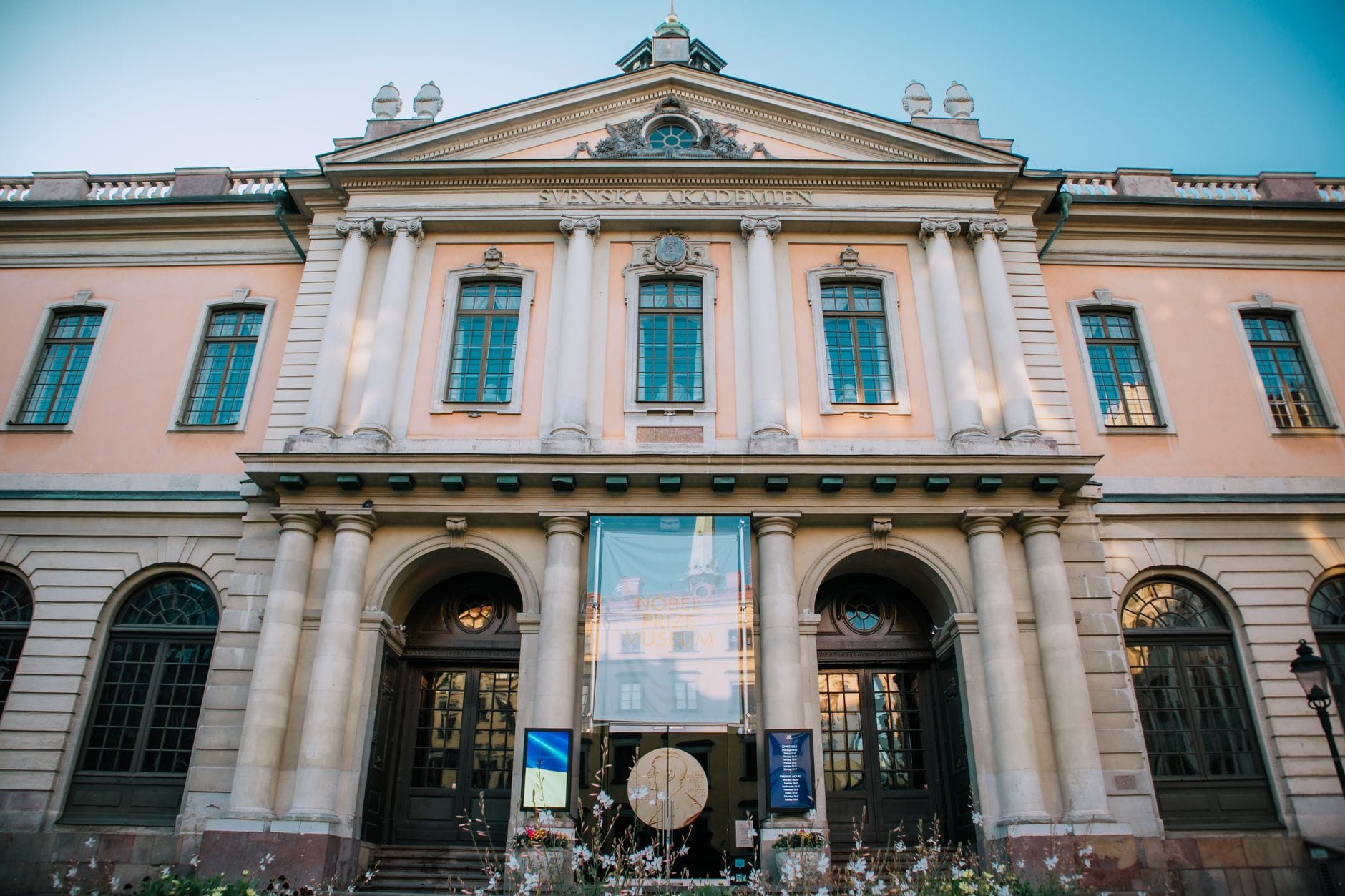
What the Nobel Prize Museum Actually Is
The Nobel Prize Museum, known in Swedish as Nobelprismuseet, occupies one of the most storied rooms in all of Stockholm: the former Stock Exchange Building on the north side of Stortorget, the oldest square in the city. The museum opened in 2001 to mark the centenary of the Nobel Prize, first awarded in 1901 according to the will of Alfred Nobel, the Swedish chemist, inventor, and industrialist who transformed the proceeds of his explosives patents into history's most recognized intellectual prize. In 2019 the institution was renamed from Nobelmuseet to Nobel Prize Museum, a change that better reflects its international character.
The museum is not a conventional science or history museum. It is closer in spirit to a portrait gallery of ideas: a place dedicated to understanding what drives exceptional human achievement across physics, chemistry, medicine, literature, peace, and economics. Exhibits rotate regularly, but the permanent framework traces Alfred Nobel's biography, the prize's intellectual history, and the stories of individual laureates through objects, films, and installations. Some of those objects are genuinely surprising. Laureates donate a personal item to the collection, and you can see everything from a worn notebook to a fishing fly.
💡 Local tip
Friday evenings are often a good window most visitors miss: the museum is open until 21:00 on Fridays, and the amber light inside the Börshuset feels particularly atmospheric. Worth planning around if you're in Gamla Stan that evening.
The Building: A Setting That Earns Its Place
Before you think about the exhibits, consider the container. The Stock Exchange Building (Börshuset) was completed in 1776 and designed by Erik Palmstedt in the Gustavian neoclassical style. For over two centuries it served as the commercial and civic heart of Stockholm, housing the Swedish Academy, the city's stock exchange, and eventually, from 2001, the Nobel Prize Museum. The Swedish Academy still meets in the building, making it the very room where Nobel Literature laureates are selected each year.
The façade faces Stortorget, a square that dates to medieval Stockholm and is one of the most recognizable spaces in Gamla Stan. If you arrive from the Gamla Stan metro station, you approach through a warren of narrow cobbled lanes, and the square opens unexpectedly in front of you. The contrast between the tight medieval streetscape and the elegant 18th-century building is part of the experience before you've even bought a ticket.
Architecturally, the museum exists within a broader conversation about Gamla Stan's layered history. This is the oldest part of Stockholm, founded in the 13th century, and walking its streets before or after your visit adds significant context to the ideas about human history and discovery that the museum explores.
Tickets & tours
Live prices and dates from our booking partner. If you book, we may earn a commission at no extra cost to you.
What You'll Experience Inside
The museum's interior is smaller than many visitors expect, which is either a limitation or a relief depending on your temperament. It is not the sprawling, exhausting kind of institution that requires a whole day. Two focused hours is enough to absorb the permanent collection and whatever temporary exhibition is showing.
The permanent installations include a conveyor belt-style system that slowly rotates objects from the laureate collection above visitors' heads, a design choice that sounds gimmicky but works well in practice. It rewards patience: stay long enough and you'll see items connected to figures ranging from Marie Curie to Toni Morrison. Films and audio installations let laureates speak in their own words, which grounds the experience in human personality rather than hagiography.
A dedicated section on Alfred Nobel himself tends to be underestimated by visitors focused on the prize. Nobel was a complex figure who held 355 patents, spoke five languages fluently, and carried deep ambivalence about the military applications of dynamite, his most commercially successful invention. The biographical material here gives meaningful weight to why the prize exists at all. The café in the basement, Bistro Nobel, serves sandwiches and coffee and reportedly offers Nobel laureates' favorite dishes on the menu, a detail that sounds like marketing but is in fact documented.
ℹ️ Good to know
Temporary exhibitions change throughout the year and can substantially alter the museum's feel. Check the official website before visiting to see what's currently showing. Some temporary shows have been critically acclaimed; others are modest. The permanent collection alone justifies the visit, but knowing what's on helps you calibrate expectations.
Visiting by Time of Day: How the Experience Shifts
Mornings are the clearest option for a calm visit. The museum opens its doors and the first hour or so before the midday tourist tide arrives in Gamla Stan gives you room to read the exhibit texts at your own pace. Stortorget itself is quiet in the early morning, and the approach through the old town feels less like navigating a crowd and more like genuine exploration.
Midday through mid-afternoon is peak time, when tour groups move through in concentrated waves. The museum is not huge, and a group of forty people in the main hall changes the acoustic quality noticeably: voices bounce off the plaster ceiling and the sense of contemplation becomes harder to sustain. If you arrive between noon and 3pm in summer, expect to share the space closely.
Late afternoon and the Friday evening window are genuine alternatives. As the square outside empties of its warmest-hours crowds and the light through the high windows turns golden, the museum is at its most atmospheric. The café downstairs is a reasonable place to settle after your walk-through rather than rushing immediately back into the lanes of Gamla Stan.
Getting There and Getting Around
The Gamla Stan metro station is a four-minute walk from the museum entrance at Stortorget 2. Both the red and green lines stop there, making it straightforward to reach from virtually any part of central Stockholm. Bus lines 2, 3, 53, 55, 57, and 76 stop at Slottsbacken or Riddarhustorget, both within easy walking distance. If you're coming from Djurgården by ferry, the Djurgårdsfärjan year-round service connects to Slussen, from which the museum is a ten-minute walk through the old town.
The Nobel Prize Museum pairs naturally with a broader day in Gamla Stan. The Royal Palace, Storkyrkan (Stockholm Cathedral), and Riddarholmen Church are all within comfortable walking range. A well-planned half-day can cover the museum and two or three of these sites without feeling rushed.
For visitors with reduced mobility, the museum has an accessible entrance at the corner of Källargränd 1 and Slottsbacken. Two reserved parking spaces for disabled visitors are available at this entrance. The historic nature of the building means some interior areas may have limitations; checking directly with the museum before your visit is advisable if this is a concern.
⚠️ What to skip
The cobblestones around Stortorget and throughout Gamla Stan are uneven and can be slippery when wet. Flat, sturdy shoes are a practical necessity, not a suggestion, especially in wet or icy conditions during autumn and winter.
Is It Worth Your Time? Honest Assessment
For travelers with intellectual curiosity across any discipline, the Nobel Prize Museum is genuinely worthwhile. It is not a spectacle museum and it does not try to be. It rewards slow looking and reading over quick photo-taking. The quality of the curation is high, the building is beautiful, and the subject matter is substantive enough to stay with you after you leave.
Visitors who find museums too passive, or who are primarily in Stockholm for outdoor experiences, may find their time better spent at Skansen or walking Monteliusvagen for the city's famous views. The Nobel Prize Museum is specifically for people who enjoy the company of ideas.
If cost is a factor, note that the museum is included in the Stockholm Pass, which may make the entrance fee easier to justify as part of a broader day of sightseeing. Verify current pricing on the museum's official website before you go, as admission fees in Swedish kronor are subject to change.
Planning a full itinerary around Gamla Stan? The one-day Stockholm itinerary covers how to combine the museum with the neighborhood's other major sites efficiently.
Photography and Practical Details
Photography for personal, non-commercial use is generally permitted in the permanent galleries, though specific rules around temporary exhibitions vary. Flash photography is not appropriate in the historic interior. The ceiling and architectural details of the Börshuset are worth photographing in their own right: the plasterwork and proportions of the main hall are a reminder that this building was designed to impress long before Nobel laureates were part of the equation.
The museum has an audio guide available, and the quality of the English-language content is solid. Given that exhibit labels are thorough, the audio guide is more enhancement than necessity, but it does add biographical depth on specific laureates that the panel text doesn't always cover. The museum shop carries books across all Nobel categories, including literary fiction by prize-winning authors, making it one of the more interesting museum shops in Stockholm if you're a reader.
Insider Tips
- Visit on a Friday evening: the museum stays open until 21:00, crowds drop significantly after 6pm, and the ambient light inside the historic Börshuset becomes far more atmospheric than during the midday rush.
- Spend time looking up at the rotating laureate object installation. Most visitors glance at it briefly and move on, but if you linger for ten minutes, the variety and oddity of the objects tell you more about individual laureates than many of the panel texts.
- The Swedish Academy meets in the same building and selects the Nobel Literature laureate here each October. The convergence of ongoing institutional purpose and museum exhibition in a single historic space is unusual and worth knowing as you walk around.
- The basement café, Bistro Nobel, serves coffee and light food and is a good alternative to the crowds in Stortorget's outdoor cafes. It is calmer, warmer in cooler months, and the connection to the museum makes the atmosphere quietly distinctive.
- Combine your visit with Storkyrkan (Stockholm Cathedral), a three-minute walk away: the contrast between one of Sweden's oldest churches and a museum dedicated to contemporary human achievement makes for an unexpectedly rich half-day thematic pairing.
Who Is Nobel Museum For?
- Readers and literature lovers curious about Nobel Prize-winning authors and their work
- Science-minded travelers interested in physics, chemistry, and medicine breakthroughs across a century
- Families with older children (roughly 10 and up) who engage well with biographical storytelling
- First-time Stockholm visitors who want intellectual depth alongside the city's visual highlights
- Travelers visiting in winter or rainy weather who want a substantive indoor experience in a central location
Nearby Attractions
Other things to see while in Gamla Stan:
- German Church (Tyska Kyrkan)
Tucked into the medieval street grid of Gamla Stan, Tyska Kyrkan (the German Church, officially Saint Gertrude's Church) is one of Stockholm's most architecturally striking religious buildings. Built between 1638 and 1642 for the city's German-speaking merchant community, it rises 96 metres above the Old Town rooftops and rewards visitors who seek it out with elaborate Baroque interiors elaborate Baroque interiors in a quieter corner of Gamla Stan.
- Gamla Stan: Stortorget & the Medieval Streets
Gamla Stan is the historic island at the heart of Stockholm, where the city was founded in the 13th century. Its central square, Stortorget, is the oldest in Stockholm and carries a weighty past. The entire district is free to explore and open at all hours, making it one of the most rewarding walks in Scandinavia.
- Riddarholmen Church
Riddarholmskyrkan is one of Stockholm's oldest preserved churches and the burial place of many Swedish monarchs from the medieval era through the 20th century. Standing on its own small island just west of Gamla Stan, it is one of the most historically significant buildings in Sweden.
- Stockholm Royal Palace
The Royal Palace of Stockholm is one of the largest working royal palaces in the world, a colossal Baroque structure sitting at the heart of Gamla Stan. With over 600 rooms spread across multiple museums and state apartments, it rewards visitors who know what to prioritize and when to show up.
Planning a trip? Discover personalized activities with the Nomado app.