Tyska Kyrkan: Stockholm's German Church in the Heart of Gamla Stan
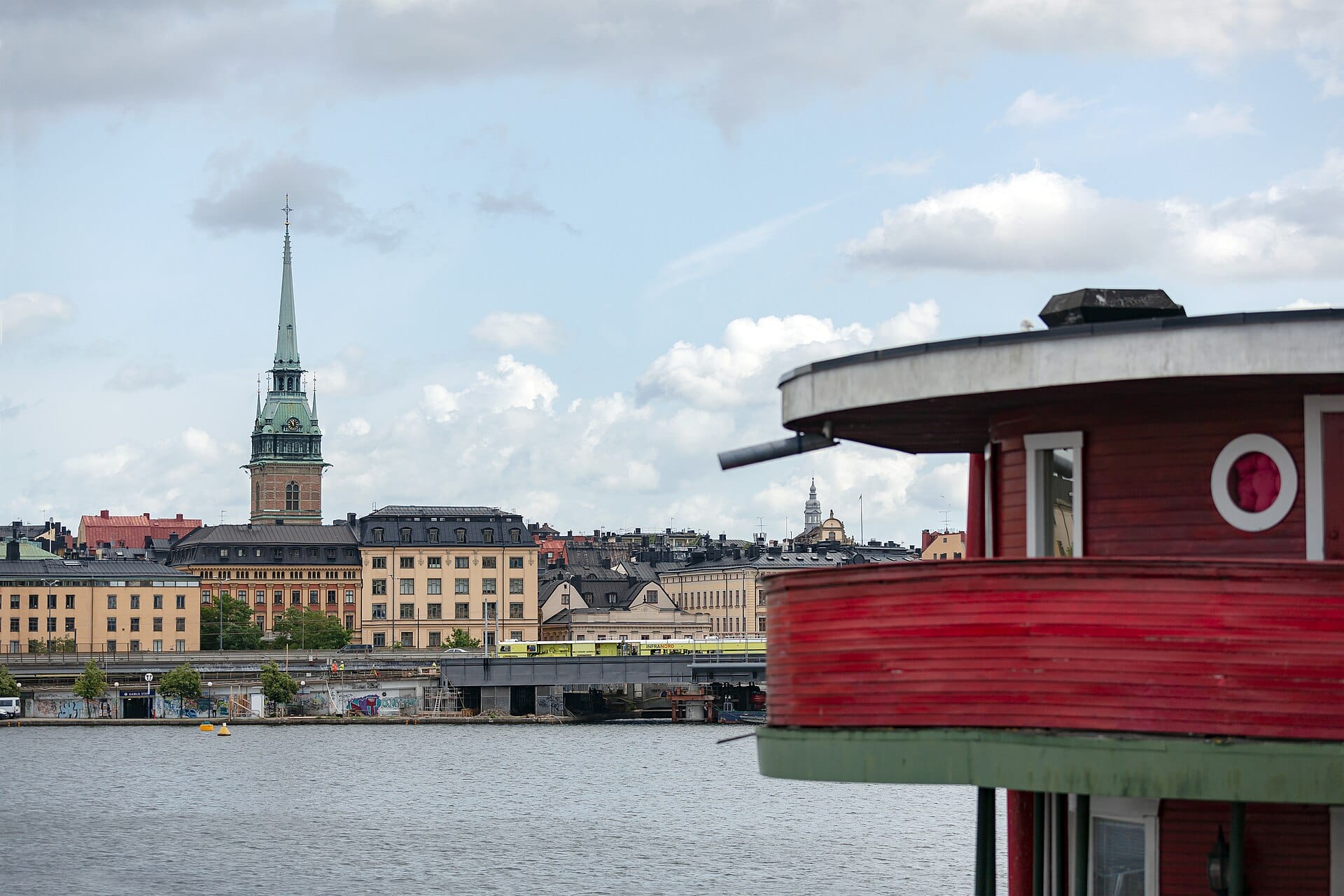
Tucked into the medieval street grid of Gamla Stan, Tyska Kyrkan (the German Church, officially Saint Gertrude's Church) is one of Stockholm's most architecturally striking religious buildings. Built between 1638 and 1642 for the city's German-speaking merchant community, it rises 96 metres above the Old Town rooftops and rewards visitors who seek it out with elaborate Baroque interiors elaborate Baroque interiors in a quieter corner of Gamla Stan.
Quick Facts
- Location
- Svartmangatan 16, Gamla Stan, Stockholm
- Getting There
- Gamla Stan metro station (red and green lines), then a short walk
- Time Needed
- 30–60 minutes
- Cost
- Free entry (verify before visiting; donations welcome)
- Best for
- History lovers, architecture fans, quiet reflection away from Gamla Stan crowds
- Official website
- www.svenskakyrkan.se/deutschegemeinde
What Is Tyska Kyrkan?
Tyska Kyrkan, or the German Church, is the formal name for what is officially called Sankta Gertruds kyrka (Saint Gertrude's Church). It stands at Svartmangatan 16 in Gamla Stan, Stockholm's Old Town island, occupying a block bounded by Tyska Brinken, Svartmangatan, Kindstugatan, and Prästgatan. It has served Stockholm's German-speaking community continuously since the 17th century and remains an active congregation today under the Church of Sweden umbrella.
The church is easy to miss if you're following the typical Gamla Stan tourist circuit from the Royal Palace down to Stortorget. That relative obscurity is part of its appeal. Once you locate it, the scale surprises: a 96-metre tower dominates the surrounding medieval rooftops in a way that photographs rarely convey. For more context on the neighbourhood it sits within, see our guide to Gamla Stan's Old Town.
💡 Local tip
Visitor access is seasonal and hours vary. Entry is free, but always verify current hours on the official website before visiting, especially in shoulder seasons.
History: A Church Built for Merchants, Not Monarchs
Stockholm in the early 17th century was a city where German-speaking merchants, craftsmen, and tradespeople formed a substantial and economically powerful community. They had their own commercial networks stretching back to the Hanseatic League, and they needed a place of worship in their own language. Construction of Tyska Kyrkan began in 1638 and was completed in 1642, making the building almost four centuries old.
The church was not built as a royal showpiece or a civic monument in the way that Stockholm's cathedral (Storkyrkan) was. It was a community institution, funded and governed by a congregation that maintained strong ties to German-speaking Europe throughout the Baroque period. That origin explains why the interior decoration reflects Continental European taste more than Swedish Lutheran restraint: the fittings were commissioned from craftsmen familiar with the elaborate woodwork and gilded altarpieces common in Germany and the Netherlands at the time.
If you want to understand how this German merchant community fit into Stockholm's broader medieval and early-modern story, the Historiska Museet provides excellent context, and the Viking history in Stockholm guide traces the city's even older commercial and cultural roots.
Tickets & tours
Live prices and dates from our booking partner. If you book, we may earn a commission at no extra cost to you.
Stockholm city tour with private driver and Vasa Museum
From 172 €Instant confirmationFree cancellationStockholm Old Town private walking tour
From 31 €Instant confirmationFree cancellationSwedish royal castle public tour
From 264 €Instant confirmationFree cancellationStockholm City Daytime Kayak Tour
From 83 €Instant confirmationFree cancellation
The Architecture: Baroque Scale in a Medieval Street Grid
From the outside, Tyska Kyrkan's most commanding feature is the tower. At 96 metres it is one of the tallest structures in Gamla Stan, and its dark copper spire is visible above the surrounding medieval rooftops. The body of the church is built in brick, with a restrained northern European Baroque exterior that does not immediately signal the richness inside.
The streets immediately around the church are narrow, which means you rarely get a clean long view of the facade. Tyska Brinken, the sloped lane on the north side, gives perhaps the best impression of the tower's height relative to the surrounding rooflines. The acoustics on that street on a quiet morning, with the tower looming overhead and the stone cobbles underfoot, create a particular stillness that contrasts sharply with the foot traffic two streets away on Västerlånggatan.
The tower lookout is reported to be closed to the public, so confirm current access on the official website before you plan around it.
Inside the Church: What You Actually See
Stepping inside Tyska Kyrkan, your eyes adjust and then settle on one of the most ornate interiors in Stockholm. The altarpiece is elaborately carved and gilded, with figures and decorative elements that reflect the high Baroque style fashionable in German-speaking Europe during the mid-17th century. The pulpit is similarly detailed: carved wood, painted panels, and a canopy that reaches upward with the kind of ambition you associate with craftsmen who wanted to demonstrate both piety and skill.
The pew boxes and gallery seating reflect the original congregation's social hierarchy. Wealthier members of the German community held enclosed box pews on the ground floor; the galleries above provided additional seating and were often allocated by status or guild membership. This layering of social organisation into the physical fabric of the building is one of the most historically legible aspects of the interior.
Natural light enters through relatively small windows, which gives the interior a dim, chapel-like quality even on bright summer afternoons. Bring time for your eyes to adjust before you try to read the carved details or the memorial tablets on the walls. The smell is characteristic of old stone churches: faintly cool, with traces of candle wax and aged wood. It is a quieter, more contemplative space than the larger Storkyrkan a few minutes' walk away.
For comparison, Storkyrkan, Stockholm's cathedral next to the Royal Palace, is larger and draws considerably more foot traffic, which makes Tyska Kyrkan's relative quiet a genuine advantage for anyone seeking time to look carefully at the details.
When to Visit and What the Experience Is Like at Different Times
The summer opening window (1 May to 30 September, 11:00–17:00 daily) is when the church is most reliably accessible for casual visitors. Arriving between 11:00 and 12:00 on a weekday gives you the best chance of a quiet interior. By early afternoon on summer weekends, Gamla Stan generally fills with visitors, and even less-publicised sites like this one see a noticeable uptick in foot traffic, though it never reaches the density of the main square or the Nobel Museum.
Outside summer, the church is open at weekends and during services. If you are visiting Stockholm in winter and specifically want to see the interior, check the official website for service times. Attending or arriving just before a service on a winter Sunday morning, with light coming obliquely through the windows and the heating taking the edge off the cold, is a very different experience from a summer afternoon visit, and not necessarily a worse one.
⚠️ What to skip
During services the church is not available for general tourist visits. Plan around service times if your goal is to examine the architecture and fittings at your own pace. Check the official website (svenskakyrkan.se/deutschegemeinde) for the current service schedule.
Tyska Kyrkan fits naturally into a half-day walking loop through Gamla Stan. The Riddarholmen Church, another historically significant Stockholm church, is a short walk to the west and makes a worthwhile second stop for anyone interested in ecclesiastical architecture.
Practical Information: Getting There and Getting In
Gamla Stan metro station (T-bana, red and green lines) deposits you at the southern edge of the Old Town island. From there, walk north through the medieval street grid: Prästgatan or Österlånggatan are both reasonable routes. The church is roughly a five-minute walk from the metro exit. Alternatively, T-Centralen station is not much further if you are walking from the central city.
Entry to the church interior is reported to be free of charge, though this should be verified before your visit as policies can change. The address is Svartmangatan 16, 111 29 Stockholm. The streets in this part of Gamla Stan are narrow, cobbled, and uneven, which is worth knowing if you are travelling with a pushchair or have mobility considerations. No verified accessibility statement was available at time of writing; contact the church directly if this is a deciding factor for your visit.
Photography is generally tolerated in many Stockholm churches but always worth confirming inside. The dim interior lighting means a phone camera without a stabilised lens will struggle; a compact camera or patience with slower shutter speeds will produce better results. Flash photography is inappropriate in an active place of worship.
If you are planning a broader Old Town visit, the one-day Stockholm itinerary shows how to combine Tyska Kyrkan with the nearby Royal Palace and Nobel Museum without overloading a single day.
Honest Assessment: Is It Worth Your Time?
Tyska Kyrkan is not a world-famous attraction in the way that the Vasa Museum or Skansen are. If you are in Stockholm for two days and pressed for time, there are cases for prioritising those. But if you have any interest in Baroque religious architecture, 17th-century social history, or simply want a moment of genuine quiet in the middle of Gamla Stan's most visited island, this church consistently delivers something the bigger attractions cannot: the feeling that you have arrived somewhere real, still functioning, and not primarily designed around visitor processing.
The main limitation is the seasonal access window. Visitors arriving outside summer without checking ahead may find the doors closed. The interior is also genuinely dark, which affects both the visual experience and photography. Neither of these is a dealbreaker, but both are worth knowing.
Insider Tips
- The best exterior view of the tower is from Tyska Brinken, the sloped lane on the church's north side. Standing at the lower end of the street in the morning gives you the tower framed against the sky with very little else competing for attention.
- If you want the interior to yourself, aim for a Tuesday or Wednesday morning in June, when summer tourism is building but not yet at peak volume and the 11:00 opening hour means you may be among the first visitors of the day.
- The church is an active congregation with services in German. If you speak German and are visiting on a Sunday, attending part of a service is a culturally distinct experience from a standard tourist visit and entirely open to respectful non-members.
- The carved memorial tablets on the interior walls are among the most historically legible parts of the building. Take time to look at the names and dates: they map Stockholm's German merchant community across several generations and include some of the city's most commercially significant 17th-century families.
- Gamla Stan's narrow streets mean that sound travels oddly. The area immediately around the church on Svartmangatan is noticeably quieter than Västerlånggatan one block west, which makes the approach feel more contemplative than the main tourist spine.
Who Is German Church (Tyska Kyrkan) For?
- Travellers with an interest in Baroque architecture who want to see a well-preserved example outside the standard museum circuit
- History enthusiasts curious about the role of German merchant communities in early-modern Stockholm
- Visitors who want to experience Gamla Stan's atmosphere without the peak-hour crowds at Stortorget
- Those looking for a brief, free cultural stop that fits naturally into a broader Old Town walking route
- Anyone seeking a quiet, reflective interior space in the middle of a busy sightseeing day
Nearby Attractions
Other things to see while in Gamla Stan:
- Gamla Stan: Stortorget & the Medieval Streets
Gamla Stan is the historic island at the heart of Stockholm, where the city was founded in the 13th century. Its central square, Stortorget, is the oldest in Stockholm and carries a weighty past. The entire district is free to explore and open at all hours, making it one of the most rewarding walks in Scandinavia.
- Nobel Museum
Housed in Gamla Stan's 18th-century Stock Exchange Building, the Nobel Prize Museum brings over a century of human achievement to life through exhibits on laureates, Alfred Nobel's life, and the prize itself. It is thoughtful, compact, and genuinely moving for curious visitors.
- Riddarholmen Church
Riddarholmskyrkan is one of Stockholm's oldest preserved churches and the burial place of many Swedish monarchs from the medieval era through the 20th century. Standing on its own small island just west of Gamla Stan, it is one of the most historically significant buildings in Sweden.
- Stockholm Royal Palace
The Royal Palace of Stockholm is one of the largest working royal palaces in the world, a colossal Baroque structure sitting at the heart of Gamla Stan. With over 600 rooms spread across multiple museums and state apartments, it rewards visitors who know what to prioritize and when to show up.
Planning a trip? Discover personalized activities with the Nomado app.