Stockholm Cathedral (Storkyrkan): Stockholm's Oldest Church in the Heart of Gamla Stan
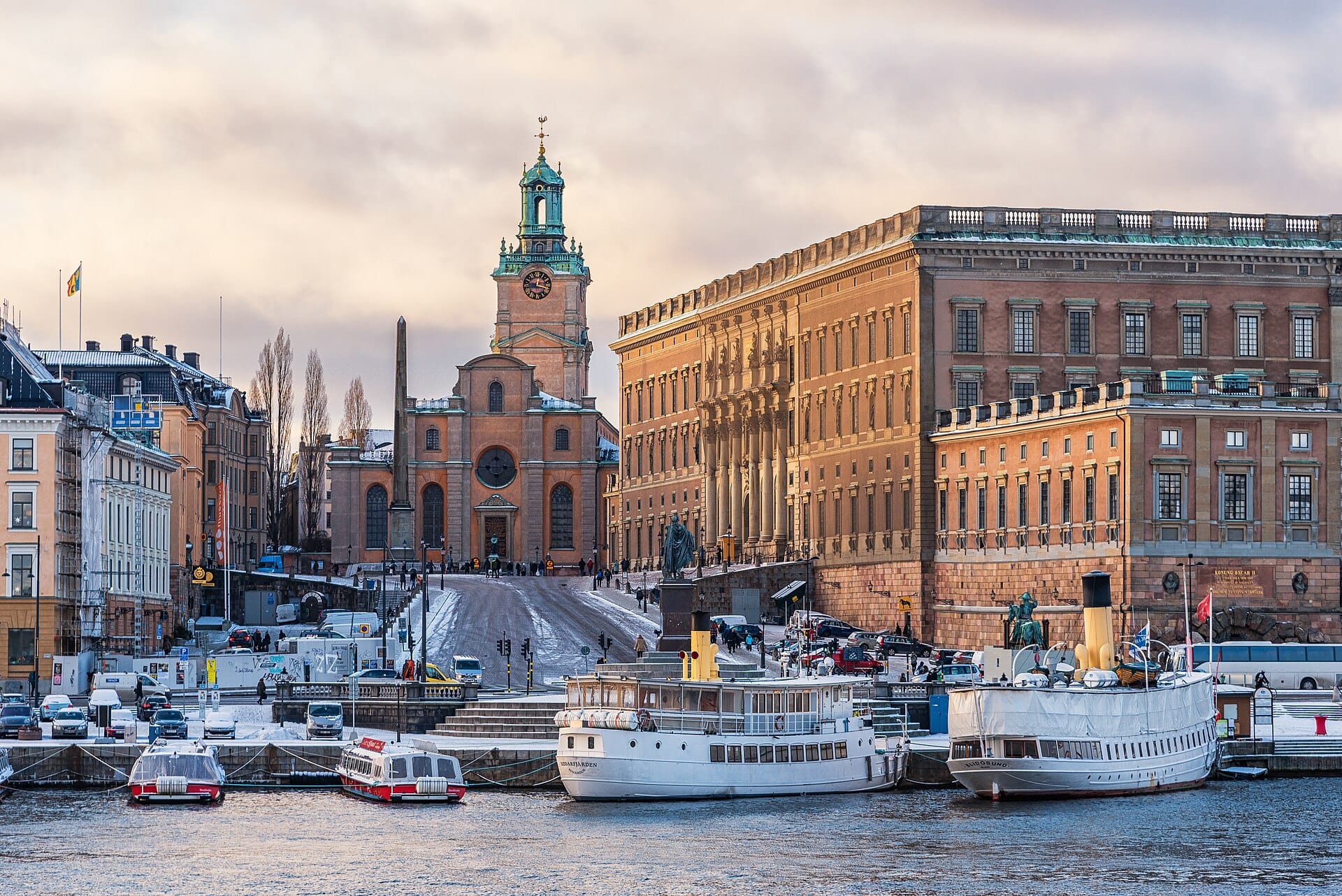
Standing beside the Royal Palace in Gamla Stan, Stockholm Cathedral (Storkyrkan) is one of the oldest surviving churches in Stockholm, with roots stretching back to at least 1279. Known formally as Sankt Nikolai kyrka, it offers Brick Gothic architecture, royal burial monuments, and one of Sweden's most unusual medieval artworks, all within a living Lutheran congregation.
Quick Facts
- Location
- Trångsund 1, Gamla Stan, Stockholm (main entrance)
- Getting There
- Tunnelbana: Gamla stan (red/green line). Bus 2, 57, 76 to Slottsbacken
- Time Needed
- 45–75 minutes
- Cost
- Adults 120 SEK, Seniors 90 SEK, Under 18 free. Audio guide available for visitors.
- Best for
- History enthusiasts, architecture lovers, visitors with limited time in Gamla Stan
- Official website
- www.svenskakyrkan.se/stockholmsdomkyrkoforsamling/visiting
What Is Storkyrkan?
Stockholm Cathedral, known in Swedish as Storkyrkan (literally 'the Great Church') or by its formal name Sankt Nikolai kyrka, is the cathedral church of the Diocese of Stockholm and the oldest surviving church in the city. The earliest written record of the building dates to 1279, though the site almost certainly had a place of worship before that. It sits on the eastern flank of Gamla Stan, the medieval island at the core of Stockholm, pressed up against the outer wall of the Royal Palace and overlooking the cobbled square of Stortorget. For more context on the surrounding neighbourhood, see our guide to Gamla Stan.
The cathedral is the principal church of the Diocese of Stockholm and one of the few buildings in central Stockholm where seven centuries of continuous religious use are still visible in the fabric of the walls. Royal coronations, royal weddings, and state funerals have been held here. It is not a ruin or a museum piece. Services are held regularly, and the smell of candle wax and cool stone greets you the moment you step inside.
💡 Local tip
The audio guide is available to visitors and is well worth picking up at the desk, adding real depth to the visit, especially for the older monuments where the inscriptions are in Latin or old Swedish.
Architecture and Age: What You Are Actually Looking At
The exterior of Storkyrkan can be deceiving at first glance. The ochre-coloured Baroque facade facing Slottsbacken was added in the 1740s to match the newly completed Royal Palace next door, and it gives the building a more formal 18th-century appearance than its medieval bones would suggest. Step around to Trångsund, where the main visitor entrance is, and the building feels older, more uneven, more honest.
Inside, the structure is Gothic: a five-aisled Brick Gothic hall church, vaulted in the Scandinavian medieval tradition. The brick vaulting overhead is original medieval work, and the proportions of the nave, wide rather than soaring, are characteristic of the Baltic Brick Gothic style that spread across northern Germany, Poland, and Scandinavia in the 13th and 14th centuries. If you have visited Lübeck or Tallinn, you will recognise the family resemblance immediately.
The interior is painted in a warm terracotta-red that feels slightly unexpected for a Nordic Lutheran church. This dates from restoration work and represents the medieval polychrome decoration that once covered the walls more extensively. The overall effect is warmer and more intimate than the severity you might expect.
Tickets & tours
Live prices and dates from our booking partner. If you book, we may earn a commission at no extra cost to you.
2-hour archipelago tour on a RIB speedboat
From 122 €Instant confirmationFree cancellationHaunted Stockholm exploration game and tour
From 12 €Instant confirmationFree cancellationFotografiska Stockholm entrance tickets
From 0 €Instant confirmationFree cancellationStockholm: Nature Reserve Hiking Tour with Campfire Lunch
From 102 €Instant confirmationFree cancellation
The Two Things You Must Seek Out Inside
Two objects inside Storkyrkan justify the entrance fee on their own.
The first is the statue of Saint George and the Dragon, carved in oak and elk antler by the Lübeck sculptor Bernt Notke in 1489. It was commissioned by the Swedish regent Sten Sture the Elder to commemorate his victory over Danish forces at the Battle of Brunkeberg in 1471. The dragon is enormous, and the detail of the scales, the princess standing calmly to one side, and the anatomy of the horse are extraordinary for wood carving of any period. It remains one of the finest examples of late Gothic sculpture in northern Europe. Stand close enough to see the texture of the antler used for the dragon's body, then step back to appreciate the whole composition.
The second is a painting called Vädersolstavlan, the 'Sun Dog Painting', from 1535. It depicts an atmospheric optical phenomenon called a sun dog (parhelion) observed over Stockholm on 20 April 1535: multiple suns appearing in the sky simultaneously above the city's rooflines. It is considered the oldest known colour depiction of Stockholm and a rare historical document as well as a work of art. The painted sky is luminous even now, and the city visible below gives a sense of what medieval Stockholm looked like before the Royal Palace was rebuilt in stone.
ℹ️ Good to know
The Vädersolstavlan is displayed in a dedicated space within the cathedral. The audio guide explains the atmospheric science behind the sun dog phenomenon, which makes the painting considerably more interesting.
How the Visit Changes Through the Day
Storkyrkan opens at 09:30 (09:00 in summer), and the first 45 minutes of the day are noticeably quieter. School groups and organised tours typically arrive mid-morning from around 10:30 onwards. If you want the Saint George statue and the Vädersolstavlan to yourself, even briefly, aim to arrive at opening time.
By midday, the cathedral fills with a mix of tourists, occasional worshippers lighting candles at side chapels, and school visits. The ambient sound shifts from near-silence to a low murmur of multiple languages. The building handles crowds reasonably well because of its width, but the area around the Saint George statue can feel congested when two tour groups converge on it simultaneously.
Late afternoon, roughly from 15:00 to 30 minutes before closing, is a second window of relative quiet. The light through the tall windows at this hour is softer and easier for photography. The candles lit in the side chapels are more visible in the reduced ambient light, and the atmosphere shifts towards something more contemplative.
⚠️ What to skip
The cathedral is a functioning church. Services are held regularly, including on Sunday mornings. During services, tourist access to parts of the interior may be restricted or suspended entirely. Check the schedule on the official website before visiting on a Sunday.
Historical and Cultural Context
The oldest surviving written mention of the church dates to 1279, but the building as it stands today is the result of multiple construction and renovation phases spread across five centuries. The Reformation reached Sweden in 1527, and Storkyrkan subsequently became a Lutheran church, ending its Roman Catholic period. The cathedral has been the site of Swedish royal coronations for centuries, and the royal connection remains tangible: the chancel contains royal pews, and monuments to Swedish monarchs and nobles line the walls.
The location between the Royal Palace and the Nobel Museum is not coincidental. This corner of Gamla Stan was the civic and ceremonial heart of medieval Stockholm, and the cathedral was at the centre of it. Visiting Storkyrkan alongside the Stockholm Royal Palace and the Nobel Museum on the same morning is an efficient and coherent itinerary, since all three are within a few minutes' walk of each other.
For travellers spending only one day in Stockholm, Storkyrkan offers genuine historical weight in a compact visit. It is one of the anchors on any well-structured one-day Stockholm itinerary.
Getting There and Practical Notes
The most straightforward approach is the Tunnelbana to Gamla stan station, served by both the red and green lines. From the station exit, it is a five to seven minute walk through the medieval street grid. Follow signs toward Stortorget (the main square) and then look for Trångsund, the narrow street running along the south side of the cathedral, where the visitor entrance is located. Taxis should be directed to Slottsbacken 2, the taxi address for the adapted entrance.
Buses 2, 57, and 76 stop at Slottsbacken, which deposits you directly in front of the Baroque facade. This approach gives you the exterior facing the Royal Palace first, which is worth pausing over before going in.
Visitors who need mobility assistance are advised to call ahead: +46 (0)8 723 30 16. The building is old and not entirely step-free, so confirming the current accessibility arrangements in advance is worthwhile.
The Stockholm Pass covers a wide range of attractions and may be worth calculating against your planned visits. For specifics on whether it applies here, consult our breakdown of the Stockholm Pass.
Opening Hours
- 1 January to 31 May: daily 09:30–17:00 (9:30 AM–5:00 PM)
- 1 June to 13 September: daily 09:00–18:00 (9:00 AM–6:00 PM)
- 14 September to 31 December: daily 09:30–17:00 (9:30 AM–5:00 PM)
Hours are subject to change, particularly around major religious holidays and state ceremonies. The official website (Svenska kyrkan) publishes current schedules and any closures.
Is Storkyrkan Worth Your Time?
The honest answer depends on what you are looking for. If medieval sculpture, early Renaissance painting, and Brick Gothic architecture are things you actively seek out, Storkyrkan ranks among the most significant single rooms in Stockholm. The Saint George statue alone would justify a major detour in any other European city. At 120 SEK for adults, with an audio guide available, the price is reasonable.
If, however, you are primarily interested in contemporary art, design culture, or the natural landscape, the cathedral may feel like an obligation rather than a pleasure. Visitors in that category will likely find more satisfaction at Fotografiska or spending time in the Djurgården museum district.
The cathedral is also not a place to linger for two hours unless you are deeply engaged with the subject matter. The physical space is compact, and most visitors will see everything they want to see within 45 to 75 minutes. Plan accordingly and pair it with nearby attractions rather than treating it as a standalone half-day.
Insider Tips
- The entrance on Trångsund is the main visitor entrance; the door on Slottsbacken facing the Royal Palace is primarily used for ceremonies and for the adapted entrance and may not be open for regular visitors.
- Look up at the vaulting as you move through the nave. The painted brick ribs and keystones retain medieval decoration that is easy to miss if you spend all your time looking at the famous monuments at eye level.
- The side chapels along the aisles contain smaller monuments and epitaphs to Swedish nobles from the 16th and 17th centuries. The Latin inscriptions and heraldic carvings are a quiet counterpoint to the main attractions and usually completely crowd-free.
- If you are visiting in summer (June to mid-September), the extended opening hours until 18:00 mean you can visit after the main Gamla Stan crowds have thinned in the late afternoon. The light inside is also better for the Vädersolstavlan at that hour.
- Photography without flash is generally permitted, but tripods are not allowed inside. A wide-angle lens or a phone with a good low-light mode works well for the interior given the relatively dim ambient lighting.
Who Is Stockholm Cathedral (Storkyrkan) For?
- History and medieval art enthusiasts wanting to see one of northern Europe's finest Gothic sculptures
- Architecture travellers interested in Baltic Brick Gothic and its spread across Scandinavia
- Visitors doing a Gamla Stan walking tour who want more than cobblestone atmosphere
- Families with older children interested in the dramatic Saint George and Dragon sculpture
- Travellers on a tight schedule who want significant historical depth in under an hour
Nearby Attractions
Other things to see while in Gamla Stan:
- German Church (Tyska Kyrkan)
Tucked into the medieval street grid of Gamla Stan, Tyska Kyrkan (the German Church, officially Saint Gertrude's Church) is one of Stockholm's most architecturally striking religious buildings. Built between 1638 and 1642 for the city's German-speaking merchant community, it rises 96 metres above the Old Town rooftops and rewards visitors who seek it out with elaborate Baroque interiors elaborate Baroque interiors in a quieter corner of Gamla Stan.
- Gamla Stan: Stortorget & the Medieval Streets
Gamla Stan is the historic island at the heart of Stockholm, where the city was founded in the 13th century. Its central square, Stortorget, is the oldest in Stockholm and carries a weighty past. The entire district is free to explore and open at all hours, making it one of the most rewarding walks in Scandinavia.
- Nobel Museum
Housed in Gamla Stan's 18th-century Stock Exchange Building, the Nobel Prize Museum brings over a century of human achievement to life through exhibits on laureates, Alfred Nobel's life, and the prize itself. It is thoughtful, compact, and genuinely moving for curious visitors.
- Riddarholmen Church
Riddarholmskyrkan is one of Stockholm's oldest preserved churches and the burial place of many Swedish monarchs from the medieval era through the 20th century. Standing on its own small island just west of Gamla Stan, it is one of the most historically significant buildings in Sweden.
Planning a trip? Discover personalized activities with the Nomado app.