Riddarholmen Church: Stockholm's Royal Mausoleum in Stone
Riddarholmskyrkan is one of Stockholm's oldest preserved churches and the burial place of many Swedish monarchs from the medieval era through the 20th century. Standing on its own small island just west of Gamla Stan, it is one of the most historically significant buildings in Sweden.
Quick Facts
- Location
- Birger Jarls torg 2, Riddarholmen island, 111 28 Stockholm
- Getting There
- Gamla Stan T-bana station (Green lines 17/18/19 and Red lines 13/14), then a short walk across Riddarholmsbron bridge
- Time Needed
- 45–90 minutes
- Cost
- Verify current admission with the Royal Palaces (Kungliga slotten) before visiting; typical summer-season opening hours are 10:00–17:00 from May to September.
- Best for
- History enthusiasts, architecture lovers, and travelers interested in Swedish royal heritage
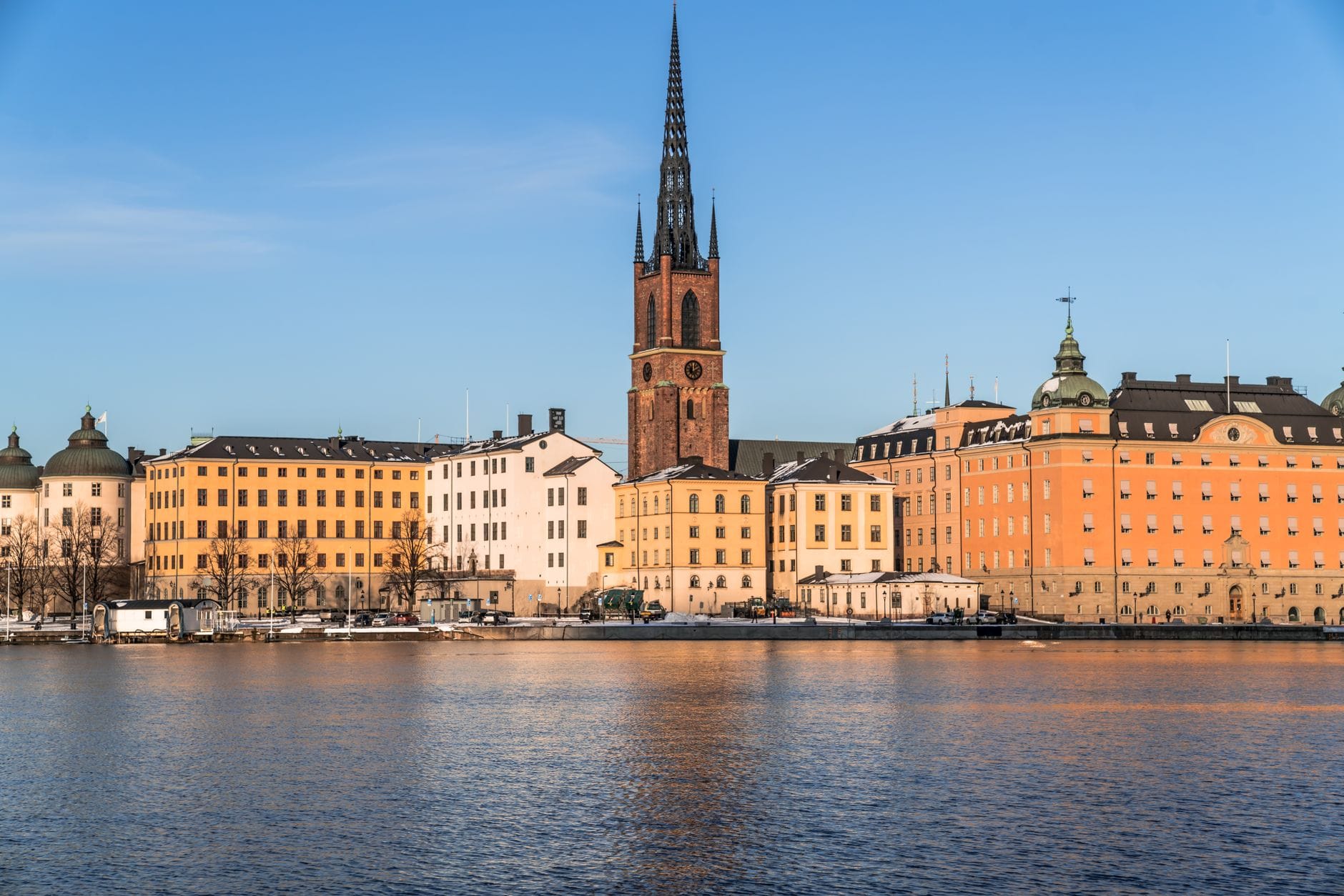
What Is Riddarholmen Church?
Riddarholmskyrkan, known in English as Riddarholmen Church, is one of Stockholm's only preserved medieval abbeys and one of the most important historic monuments in Sweden. Founded by Franciscan friars in the late 1200s, it stands on Riddarholmen, a small island separated from Gamla Stan by a narrow waterway. For roughly seven centuries it served as the royal necropolis of Sweden, receiving the remains of kings and queens from Magnus Ladulås, who died in 1290, all the way through to Gustaf V, who was interred here in 1950.
Unlike the city's busier attractions, Riddarholmen Church does not perform the function it once held in living Swedish religious life. It is now managed by the Royal Palaces (Kungliga slotten) and opens to the public mainly between May and September, with occasional additional opening days in the shoulder seasons. Outside that window, it can occasionally be visited during concerts or Order of the Seraphim bell-ringing ceremonies. That narrower accessibility is worth knowing in advance, because the exterior alone, glimpsed from the surrounding cobblestones, gives only a partial picture of what lies inside.
⚠️ What to skip
Riddarholmen Church is open to the public mainly in the May–September season (typically 10:00–17:00). Confirm current seasonal dates and any admission fee directly with Kungliga slotten before your visit, as hours can change year to year.
The Building: Architecture and First Impressions
The church's silhouette is immediately striking. Its cast-iron openwork spire, installed in the 19th century to replace an earlier tower lost to lightning, rises above the roofline in a lacework of dark metal that looks almost industrial against a grey Stockholm sky. The contrast with the brick and stone body of the church is unusual and memorable. Most visitors notice it from a distance before they cross the bridge onto the island.
Up close, the exterior walls display the layered history of the building directly. The original Franciscan grey-brick structure from the late 13th century is still visible, augmented and modified across the following centuries as Swedish monarchs added chapels, armorial decorations, and burial wings. These additions created an irregular plan that reads almost like an architectural timeline in brick and mortar.
The interior is darker and more austere than many Swedish churches. High vaulted ceilings, worn stone floors, and rows of armorial shields belonging to Sweden's royal orders line the walls. The shields of the Order of the Seraphim, Sweden's oldest and most senior chivalric order, are particularly prominent. The light through the windows is filtered and cool even on a bright summer day, which gives the space a quality of genuine antiquity that is harder to find in more heavily restored historic buildings.
Tickets & tours
Live prices and dates from our booking partner. If you book, we may earn a commission at no extra cost to you.
Guided tour of Vallentuna church and rune stones
From 26 €Instant confirmationFree cancellation2-hour archipelago tour on a RIB speedboat
From 122 €Instant confirmationFree cancellationHaunted Stockholm exploration game and tour
From 12 €Instant confirmationFree cancellationFotografiska Stockholm entrance tickets
From 0 €Instant confirmationFree cancellation
A Royal Burial Place: The Historical Significance
The church's role as a royal necropolis sets it apart from any other place of worship in Stockholm. Monarchs spanning multiple dynasties, from the Folkung dynasty of the medieval period through the Vasa kings and into the modern Bernadotte line, are interred here in tombs and sarcophagi distributed throughout the chapels. Each burial chapel was often constructed or expanded by the dynasty it serves, meaning the interior effectively maps the succession of Swedish royal families in stone and metal.
Notable among the royal remains is Gustav II Adolf, the king who transformed Sweden into a major European power during the Thirty Years' War and was killed at the Battle of Lützen in 1632. His tomb chapel is among the most visited sections of the church. The presence of so many named, historically consequential figures in a single room gives the interior a density of meaning that photographs do not quite convey.
For travelers already planning to explore the Stockholm Royal Palace nearby, Riddarholmen Church provides essential context. The palace is where Swedish monarchs lived and governed; this church is where they were laid to rest. Visiting both in a single morning creates a coherent portrait of Swedish royal history.
Visiting the Island: What to Expect on Arrival
Riddarholmen itself is a quiet island. The approach from Gamla Stan across Riddarholmsbron is short, but crossing the bridge marks a noticeable shift in atmosphere. The tourist crowds of the old town thin out almost immediately. The square in front of the church, Birger Jarls torg, is flanked by older administrative buildings and has a formal, almost parliamentary stillness to it, particularly on weekday mornings.
In the early morning, before the church opens, the island is largely empty. The iron spire catches the light differently depending on the hour: pale and silvery in the low summer sun around 8am, darker and more shadowed by midday. Photographers working in good light tend to find the exterior most compelling in the hour after opening, when direct sunlight still hits the south face of the building without the harsh flattening of high noon.
💡 Local tip
For photography, arrive just after the church opens on a clear summer morning. The eastern light falls directly on the main facade, and the island square is still quiet enough to compose shots without other visitors in the frame.
The surrounding waterways are visible from the island's edges. Views open toward Lake Mälaren to the west and back toward Gamla Stan to the east. The island itself has benches along the water, and it is worth circling the church entirely before going inside, both to see the exterior chapels and to take in the broader setting.
How This Fits Into a Gamla Stan Visit
Riddarholmen Church is geographically close to the main sights of Gamla Stan, but it draws a fraction of those visitors. The church is best combined with an exploration of the old town rather than treated as a standalone excursion. From Gamla Stan, the walk to the church takes under ten minutes.
If you are following a tight one-day itinerary, a one-day Stockholm plan can accommodate a 45-minute visit to the church in the morning before the main rush of visitors arrives at the Royal Palace and Stortorget. The church's summer hours (10:00–17:00) make an early start practical.
The Nobel Museum and Storkyrkan (the Stockholm Cathedral) are both within easy walking distance and share Gamla Stan's dense concentration of historically significant buildings. Together they form a compact circuit for anyone focused on Swedish history and civic architecture.
Practical Details and Who Should Know Before Going
Because the church is only regularly open in summer, travelers visiting Stockholm in autumn, winter, or early spring will likely see only the exterior unless a special event coincides with their trip. The exterior is visible year-round and is worth a brief detour on a walk through the area, but the interior is the main draw, and visiting without access is a noticeably diminished experience.
The island and church entrance involve some uneven cobblestone surfaces. Anyone with significant mobility limitations should check in advance with Kungliga slotten regarding interior accessibility, as older ecclesiastical buildings of this type frequently have steps and narrow passages that may not be fully accessible.
Travelers focused primarily on contemporary culture, food, or nightlife will likely find limited appeal here. Those interests are better served in Södermalm or the Östermalm food scene. Riddarholmen Church rewards visitors who come with some historical context and a willingness to move slowly through the space.
ℹ️ Good to know
The church is managed by Kungliga slotten (the Royal Palaces of Sweden). Check their official website for updated admission prices, seasonal opening dates, and any scheduled concerts or ceremonial events that may provide access outside normal summer hours.
If your interest in Swedish royal and Viking-era history runs deeper, consider pairing a visit here with a trip to the Swedish History Museum (Historiska museet), which covers the broader arc of Swedish history from prehistoric times through the modern era.
Insider Tips
- Arrive as close to opening time as possible. The island square stays quiet for about the first hour after 10:00, making both photography and reflective interior visits far more rewarding than mid-afternoon visits when tour groups pass through.
- Walk the full perimeter of the church before entering. The exterior chapels on the north and west sides reveal the additive, dynasty-by-dynasty construction history of the building in ways that are not obvious from the front entrance.
- Check the Kungliga slotten events calendar before your trip. Concerts and Order of the Seraphim ceremonies occasionally grant access during shoulder and off seasons, which can be a genuinely atmospheric alternative to a standard summer visit.
- Bring a layer regardless of the summer weather outside. The interior of the church is consistently cool and somewhat damp, as you would expect from a medieval stone building, and the temperature contrast with a warm Stockholm afternoon can be significant.
- The island's western waterfront offers a quiet view toward Lake Mälaren that most visitors skip entirely. It takes under five minutes to walk there from the church entrance and provides a completely different perspective on central Stockholm's island geography.
Who Is Riddarholmen Church For?
- History travelers with a specific interest in Swedish royal dynasties and medieval Scandinavian architecture
- Architecture enthusiasts drawn to Gothic brick construction, royal funerary art, and the church's distinctive 19th-century iron spire
- Photographers looking for a quieter, less-crowded Gamla Stan location with strong vertical lines and morning light
- Visitors following a broader royal Stockholm itinerary that includes the Royal Palace and City Hall
- Travelers who prefer depth over breadth and are willing to spend time with a single historically layered site
Nearby Attractions
Other things to see while in Gamla Stan:
- German Church (Tyska Kyrkan)
Tucked into the medieval street grid of Gamla Stan, Tyska Kyrkan (the German Church, officially Saint Gertrude's Church) is one of Stockholm's most architecturally striking religious buildings. Built between 1638 and 1642 for the city's German-speaking merchant community, it rises 96 metres above the Old Town rooftops and rewards visitors who seek it out with elaborate Baroque interiors elaborate Baroque interiors in a quieter corner of Gamla Stan.
- Gamla Stan: Stortorget & the Medieval Streets
Gamla Stan is the historic island at the heart of Stockholm, where the city was founded in the 13th century. Its central square, Stortorget, is the oldest in Stockholm and carries a weighty past. The entire district is free to explore and open at all hours, making it one of the most rewarding walks in Scandinavia.
- Nobel Museum
Housed in Gamla Stan's 18th-century Stock Exchange Building, the Nobel Prize Museum brings over a century of human achievement to life through exhibits on laureates, Alfred Nobel's life, and the prize itself. It is thoughtful, compact, and genuinely moving for curious visitors.
- Stockholm Royal Palace
The Royal Palace of Stockholm is one of the largest working royal palaces in the world, a colossal Baroque structure sitting at the heart of Gamla Stan. With over 600 rooms spread across multiple museums and state apartments, it rewards visitors who know what to prioritize and when to show up.
Planning a trip? Discover personalized activities with the Nomado app.