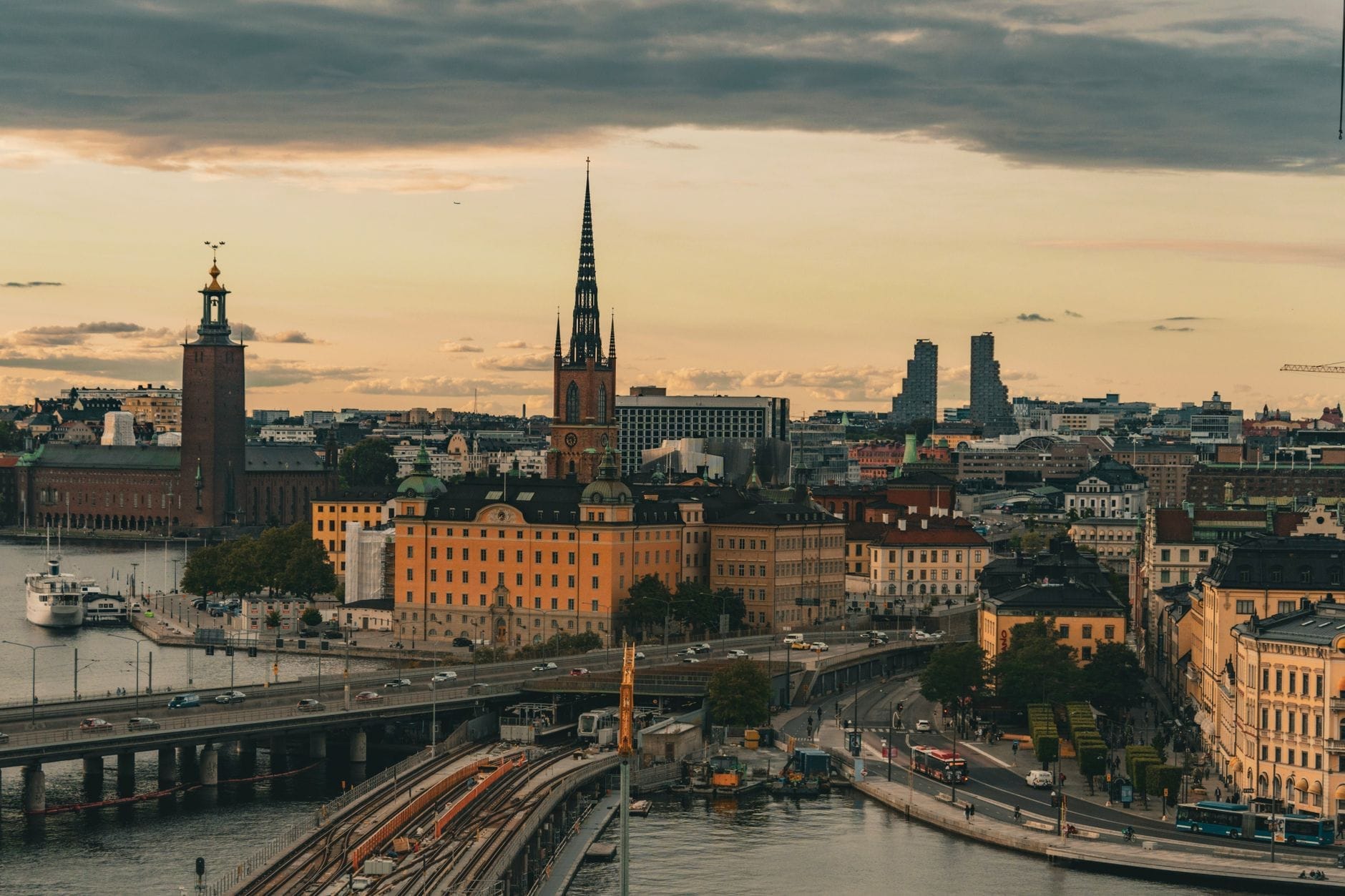
Kungsholmen is a central Stockholm island that sits west of the inner city, separated from the mainland by narrow waterways and connected to the rest of the city by a ring of bridges. It is home to Stockholm City Hall, long stretches of waterfront parkland, and a dense café and restaurant scene that draws more locals than tourists. For travelers who want to experience how Stockholm actually lives, rather than how it performs for visitors, Kungsholmen earns serious consideration.
Kungsholmen is the island Stockholm forgets to put on postcards, and that is precisely its appeal. A few minutes west of Central Station, it trades medieval lanes and museum queues for waterfront parks, neighborhood cafés, and the kind of low-key daily rhythm that tells you more about the city than any guided tour.
Orientation
Kungsholmen sits in the western part of Stockholm's inner city, occupying an island of roughly 3.9 square kilometers in Lake Mälaren. To the south, the island faces Riddarfjärden, the broad bay that connects the lake to the Baltic. To the north, a series of narrow water bodies, Karlbergskanalen, Karlbergssjön, and Barnhusviken, separate it from the Vasastan and Norrmalm districts on the mainland. To the east, a short bridge crossing brings you directly into Norrmalm and the area around Central Station.
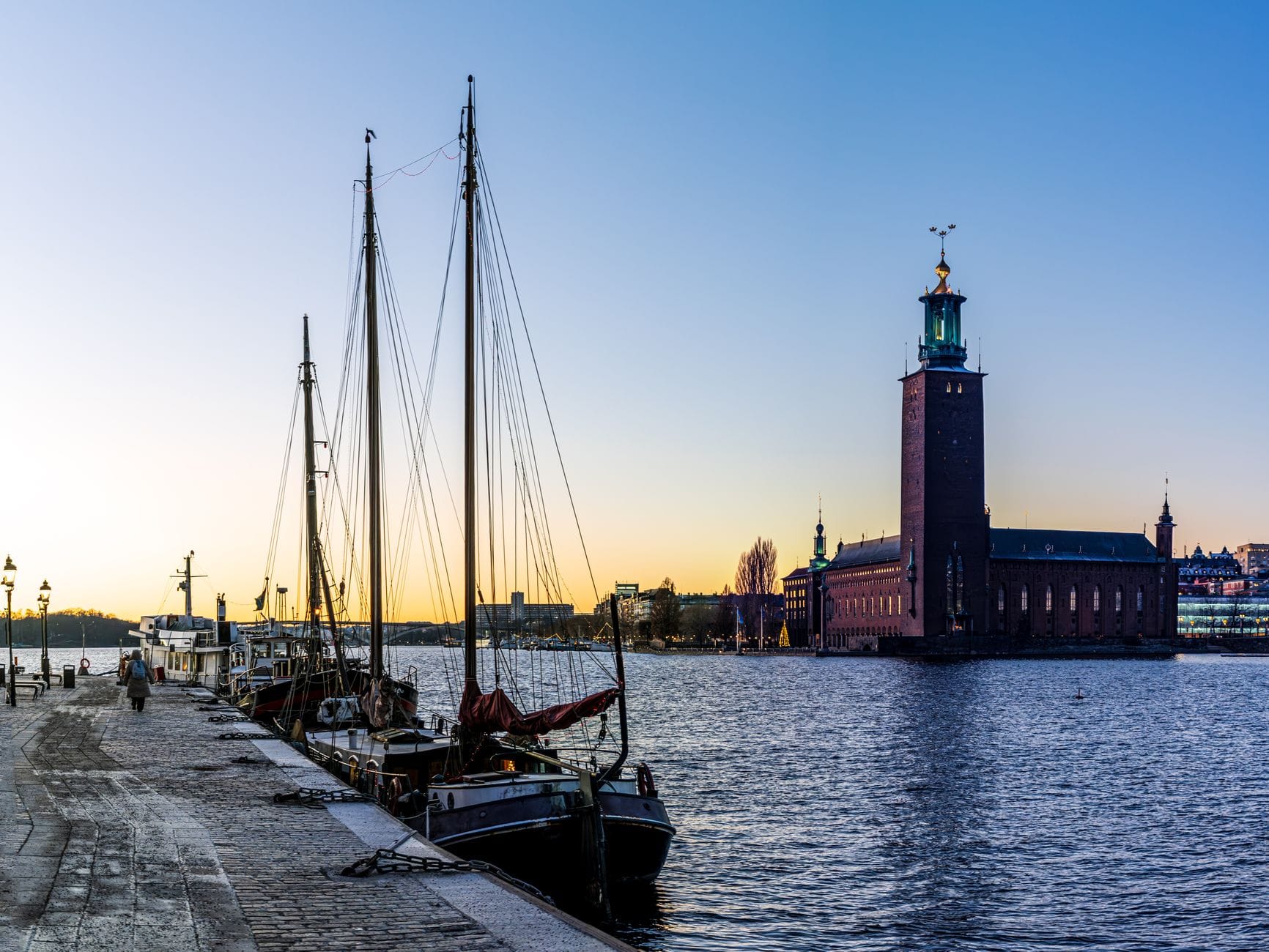
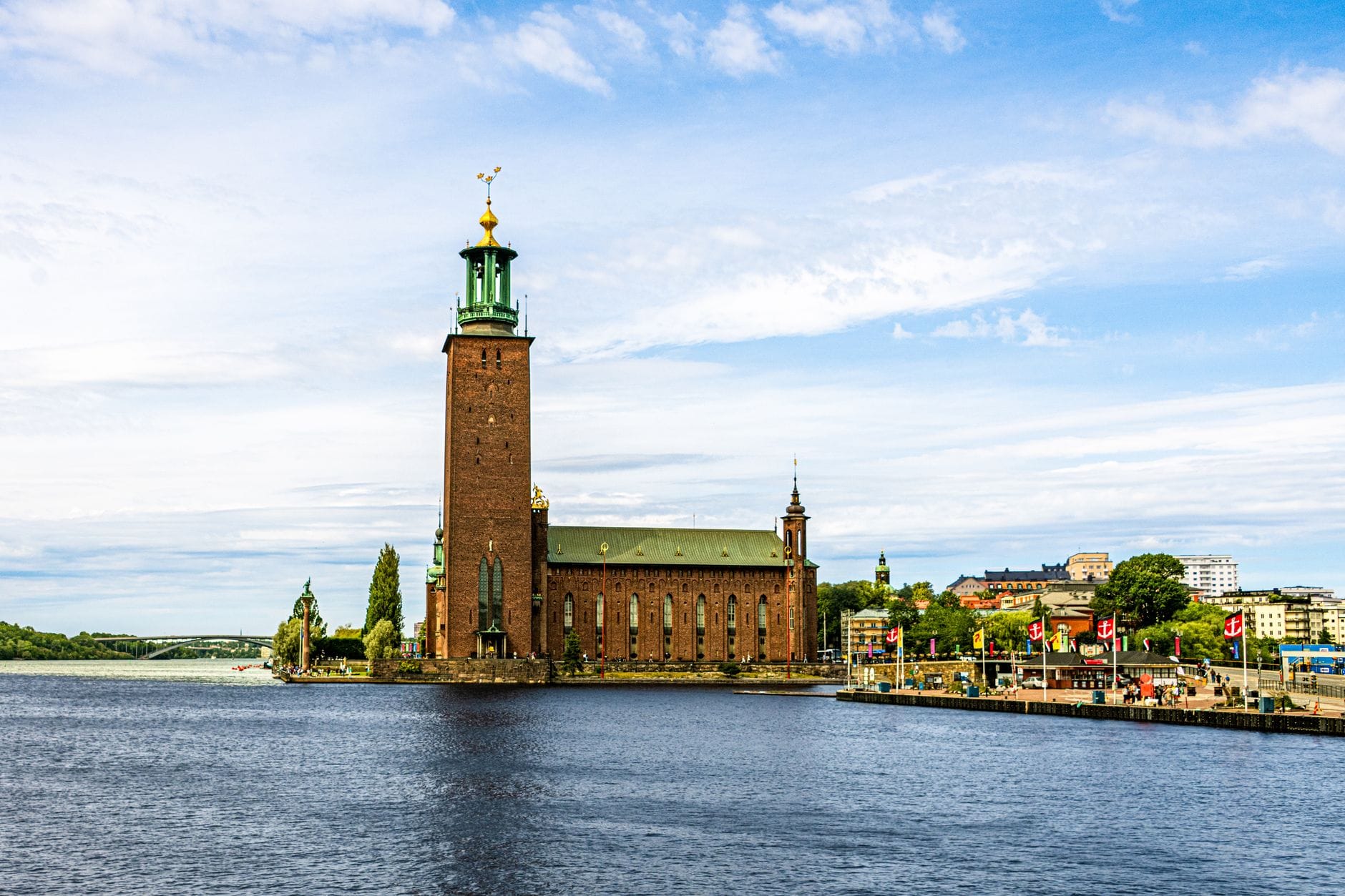
The island's most recognizable boundary marker is its southwestern tip, where Stockholm City Hall rises from the waterfront with its distinctive brick tower. From here, the shoreline curves east into Riddarfjärden, offering clear sightlines across the water toward Gamla Stan and Riddarholmen. The island is compact enough that you can walk its full length in under half an hour.
Within the broader Kungsholmen district, the name also applies to several sub-neighborhoods: Marieberg occupies the southwestern waterfront, Fredhäll and Kristineberg push toward the western tip, and Stadshagen fills the central-northern interior. For practical purposes, the area most travelers engage with runs along the southern and eastern edges of the island, where the cafés, bars, and parks concentrate.
Character & Atmosphere
The first thing you notice walking onto Kungsholmen from the east is that the streets feel scaled for residents, not sightseers. Hantverkargatan, the island's main east-west artery, is lined with apartment buildings, pharmacies, corner grocery stores, and the kind of coffee shops where people actually work on laptops. There are no souvenir stalls. The street stays busy but never overwhelmed, and on a weekday morning the rhythm is entirely local: parents with strollers, office workers cutting through, delivery cyclists navigating the bike lanes.
By afternoon, the energy shifts toward the waterfront. In summer, Rålambshovsparken, a broad green park along the southern shore, fills with people swimming, playing pétanque, or simply sitting on the grass watching the boat traffic on Riddarfjärden. The light in late afternoon falls across the water at a low angle, and City Hall's tower catches it in a way that makes the whole southern shoreline look like a stage set. It is genuinely one of Stockholm's better views, and it is largely free of crowds because most tourists are busy photographing City Hall from the Gamla Stan side.
After dark, Fridhemsplan, the main square and metro interchange on the northern side of the island, becomes a nightlife hub. The bars here draw a younger, local crowd and the atmosphere is relaxed but can turn rowdy on weekends. This is not the polished cocktail-bar scene you find in Östermalm; it is louder, cheaper, and more unpredictable. Hornsbergs strand, the northern waterfront promenade, is a different kind of evening destination, quieter but very popular in summer when it becomes one of the city's most crowded outdoor gathering spots.
💡 Local tip
For the best views of City Hall and the Riddarfjärden waterfront, walk west along the southern shore path rather than stopping at the front entrance. The perspective from Rålambshovsparken looking back east toward the tower and the Old Town beyond is considerably more dramatic.
What to See & Do
Stockholm City Hall is the neighborhood's anchor attraction and genuinely worth your time, not just as a backdrop but as a building to enter. The interior includes the Golden Hall, whose mosaic-covered walls were designed for the Nobel Prize banquet dinner, and guided tours run regularly through the main ceremonial rooms. The tower opens seasonally (roughly May through August) and offers one of the better elevated views in central Stockholm. Check the Nobel Prize Stockholm guide for context on the annual banquet that takes place here each December.
Beyond City Hall, the waterfront is the main draw. Rålambshovsparken stretches along the southern shore west of City Hall and functions as a proper neighborhood park: there is a small beach area, an outdoor theater used in summer, and paths that continue west toward Fredhäll and eventually reach Smedsuddsbadet, a swimming spot with a jetty and open water. On warm days these spots see genuine local use, which makes them far more interesting to walk through than another museum courtyard.
Hornsbergs strand, on the northern waterfront, is a more recently developed promenade with a different character. The housing here is newer and the design more deliberate, but the long quayside path is excellent for an evening walk, and in summer it becomes one of the city's most popular outdoor swimming areas. The crowds can be intense on hot weekends, which is worth knowing before you go.
Stockholm City Hall: guided tours of the interior and seasonal tower access
Rålambshovsparken: waterfront park with beach access, pétanque, and summer theater
Smedsuddsbadet: open-water swimming and jetty at the western tip of the southern shore
Hornsbergs strand: northern waterfront promenade, popular swimming spot in summer
Fleminggatan and Hantverkargatan: the main commercial streets for cafés, restaurants, and local shopping
ℹ️ Good to know
Kungsholmen has no large museums of its own. Travelers looking for major cultural institutions should plan excursions to nearby Djurgården, where the Vasa Museum, Nordiska museet, and ABBA Museum are clustered, or to Norrmalm and Östermalm. Kungsholmen's appeal is its everyday urban character, not concentrated attractions.
Eating & Drinking
Kungsholmen has a genuinely good food scene, and because it is not a tourist destination in the conventional sense, the quality-to-price ratio tends to be better than in Gamla Stan or the most visited parts of Norrmalm. Hantverkargatan and Fleminggatan together form the backbone of the eating and drinking offer, with a concentration of cafés, mid-range restaurants, and bars that cater primarily to the people who live and work here.
The café culture on the island is strong. Kungsholmen takes fika seriously, and you will find well-stocked bakeries and coffee shops throughout the day. For context on what fika actually means in Stockholm's daily life, the Stockholm fika guide covers the ritual in detail. The cafés here tend to be neighborhood institutions rather than chains, with regulars who arrive at the same time every morning and stay for an hour.
The restaurant range covers everything from quick lunch spots serving the classic Swedish dagens rätt (a set lunch with a main, salad, bread, and coffee at a fixed price) to more considered evening dining. Italian, Middle Eastern, and modern Nordic options all appear along the main streets. For dinner, the island's restaurants tend to fill up with locals rather than groups of tourists, which changes the atmosphere considerably.
Bars cluster around Fridhemsplan and along Fleminggatan. The atmosphere is convivial and unpretentious, with prices that reflect a local rather than tourist market. Weekends around Fridhemsplan can get loud and crowded by midnight, which is worth factoring in if you are staying nearby and value quiet nights.
💡 Local tip
Look for restaurants offering dagens rätt between roughly 11:00 and 14:00. This is how Stockholm office workers eat lunch, and it represents some of the best value dining in the city: typically 100 to 140 SEK for a full meal including a drink. Many Kungsholmen restaurants offer this and it is rarely advertised to tourists.
Getting There & Around
Kungsholmen is well connected to Stockholm's central transport network. The most useful metro station is Fridhemsplan on the T1 (blue) line, which provides direct connections to Norrmalm's T-Centralen (Stockholm Central Station) in one stop to the east, and continues west to suburban stations. T-Centralen is itself a major interchange for all three metro lines, regional trains, and the Arlanda Express airport link.
Rådhuset station, one stop west of Fridhemsplan on the same blue line, serves the central and western parts of the island and is closer to City Hall. Thorildsplan is the next stop west, reaching the Kristineberg area. For most visitors, Fridhemsplan remains the main arrival point, with walking distances of around ten to fifteen minutes to the waterfront parks and City Hall.
Multiple bus routes serve the island's main arteries. Fleminggatan and Hantverkargatan both carry regular bus services connecting Kungsholmen to Norrmalm, Vasastan, and Södermalm. The SL public transport system covers all of these; a single SL ticket is valid across metro, bus, and tram for 75 minutes from first use. For comprehensive guidance on navigating Stockholm's transport network, the getting around Stockholm guide covers all options.
Walking into Kungsholmen from Central Station takes roughly twelve to fifteen minutes on foot, most directly via Stadshusbron toward City Hall; Kungsbron leads toward the adjacent mainland north of the island. Cycling is practical here, and the island has well-maintained bike lanes along its main streets. Stockholm's city bike scheme has docking stations in the area.
Where to Stay
Kungsholmen is an underrated choice for accommodation, particularly for travelers who want a central location without paying the premium of Östermalm or dealing with the tourist density of Gamla Stan. Hotels on the island tend to be mid-range to upper-mid-range, and rates are generally more competitive than equivalent properties a few streets east in Norrmalm. For a broader overview of Stockholm neighborhoods for accommodation, the where to stay in Stockholm guide covers all the main options.
The eastern side of the island, within walking distance of Fridhemsplan and the bridges to Central Station, is the most practical base. You are within fifteen minutes on foot of the central transport hub, and a direct metro ride reaches Gamla Stan in under ten minutes. The neighborhood is quiet enough at night that sleeping is not generally an issue, with the exception of the Fridhemsplan immediate vicinity on weekends.
Kungsholmen suits independent travelers, couples, and anyone who prefers a residential neighborhood feel over a hotel district. Families with children will find the waterfront parks and open spaces useful. It is a less obvious choice for travelers whose entire itinerary is museum-focused, since all the major cultural institutions require commuting out of the neighborhood.
⚠️ What to skip
If you are staying near Fridhemsplan, be aware that the square functions as a nightlife hub on Thursday through Saturday evenings. The noise from bars and the surrounding streets can carry until after midnight. If you are a light sleeper, ask for a room facing an interior courtyard or check the specific hotel's position relative to the square before booking.
Safety & Practical Notes
Kungsholmen is considered one of Stockholm's safer central areas. The presence of the national police headquarters in the southeastern part of the island is sometimes cited, though in practical terms the neighborhood simply lacks the concentrations of opportunistic activity that affect some higher-traffic tourist zones. Normal city precautions apply.
The main areas worth being aware of are Fridhemsplan on weekend nights, where alcohol-fueled confrontations occasionally occur among bar-goers, and Hornsbergs strand in peak summer, where very large crowds gather for swimming and outdoor socializing. The latter is not dangerous but can feel disorganized and uncomfortable in the heat of July. Both areas are fine during the day.
Stockholm as a whole is a safe city by European standards, and Kungsholmen reflects that. For broader context on visiting the Swedish capital, including what to expect across different seasons, the best time to visit Stockholm guide covers climate, crowds, and seasonal considerations across all neighborhoods.
TL;DR
Kungsholmen is Stockholm's most liveable central island: residential in character, short on tourist attractions beyond City Hall, and strong on waterfront parks, local cafés, and an honest food and bar scene.
Best for: independent travelers, those wanting a local neighborhood feel, anyone who values walkable daily life over concentrated sightseeing.
The island suits both summer visitors (for the waterfront parks and swimming) and year-round stays (for transit access and accommodation value).
Key practical notes: Fridhemsplan is the main metro hub (blue line, one stop from Central Station); Fridhemsplan can be loud on weekend nights; Hornsbergs strand gets very crowded in summer.
Skip Kungsholmen if: your trip is entirely museum-focused or you want to be within walking distance of Gamla Stan and Djurgården without taking transit.
Three days is the sweet spot for a first visit to Stockholm. This itinerary covers Gamla Stan, Djurgården's world-class museums, Södermalm viewpoints, and a day-three excursion to the archipelago or Drottningholm Palace, with practical transport and budget advice throughout.
Stockholm has well over 100 museums, and the range is genuinely extraordinary. This guide cuts through the options to bring you the best across art, history, science, and culture, whether you have one afternoon or a full week to explore.
Stockholm rewards visitors in every season, but the experience changes dramatically depending on when you go. This guide breaks down weather, crowds, hotel prices, and key events month by month so you can choose the timing that fits your priorities.
Stockholm's geography, built across islands where Lake Mälaren meets the Baltic, creates extraordinary viewpoints at every turn. This guide covers the city's finest panoramas, from free clifftop walks on Södermalm to ticketed towers, waterfront promenades, and elevated galleries with views to match the art inside.
Stockholm's surroundings pack in Viking history, royal palaces, and thousands of Baltic islands within an hour of the city center. These are the best day trips from Stockholm, whether you travel by scenic boat, regional train, or local bus.
Stockholm is one of Europe's most rewarding cities to explore on a tight budget. From UNESCO-listed cemeteries and free permanent museum collections to clifftop viewpoints and underground art, here are the best free things to do in Stockholm.
Stockholm's public transport network is one of Europe's most integrated, covering metro, buses, trams, commuter rail, and ferries under a single fare system. This guide breaks down exactly how to navigate the city, get in from the airport, and avoid the most common ticketing mistakes.
Stockholm rewards those who look beyond Gamla Stan and the Vasa Museum. From a clifftop promenade with jaw-dropping harbor views to a UNESCO-listed forest cemetery and an underground art gallery spanning the entire metro system, these are the places Stockholmers actually spend their time.
Stockholm is Sweden's capital, built across 14 islands where Lake Mälaren meets the Baltic Sea. This guide breaks down what the city genuinely offers, who it suits best, and what the honest drawbacks are, so you can decide whether it belongs on your itinerary.
Stockholm is Scandinavia's most sophisticated capital, where waterfront palaces sit beside Michelin-starred restaurants and boutique design hotels. This guide covers everything you need to plan a genuinely high-end trip: where to stay, what to eat, how to move around, and which luxury experiences are worth the premium.
Midsommar is Sweden's most beloved celebration, and Stockholm offers everything from Skansen's traditional maypole to archipelago parties. This guide covers where to go, what to bring, what shuts down, and how to avoid the most common mistakes.
The Nobel Prize ceremony in Stockholm is one of the world's most prestigious annual events, but the award ceremony itself is closed to the public. This guide explains what actually happens during Nobel Week, which events you can attend as a visitor, and how to make the most of being in Stockholm in early December.
Stockholm rewards even the shortest visit. Built across 14 islands where Lake Mälaren meets the Baltic Sea, the Swedish capital packs medieval history, world-class museums, and striking waterfront scenery into a surprisingly walkable core. This guide shows you exactly how to spend one day in Stockholm — with a practical hour-by-hour structure, honest cost breakdowns, and advice on what to skip.
The Stockholm Archipelago stretches across roughly 30,000 islands, islets, and skerries east of the city. This guide breaks down how to reach the islands, which ones are worth your time, how much to budget, and when to go — whether you have two hours or two days.
Stockholm Arlanda Airport (ARN) is Sweden's main international hub, sitting roughly 42 km north of the city center. This guide breaks down every transfer option, current prices, journey times, and the common mistakes travelers make, so you can get into Stockholm without overpaying or wasting time.
Stockholm transforms in late November and December into one of Scandinavia's most atmospheric Christmas destinations. This guide covers the city's best Christmas markets, what to expect at each, how much you'll pay, and how to make the most of the short winter days.
Stockholm is the living capital of Scandinavian design, where minimalism, natural materials, and functional craft shape everything from flagship store interiors to everyday café furniture. This guide covers the best design districts, essential shops, museums, and practical advice for navigating the city's design scene across every budget.
Fika is Sweden's most beloved daily ritual: a proper pause for coffee and something sweet, shared with others. This guide covers the best cafés in Stockholm for fika, what to order, how much to pay, and how to do it like a local rather than a tourist.
Stockholm in summer is a genuine high point for the city: long days, mild temperatures, and the full range of outdoor experiences from archipelago hopping to rooftop dining. This guide covers the weather honestly, breaks down the best activities by month, and flags where the crowds and prices bite hardest.
Winter in Stockholm is a study in contrasts: candlelit Christmas markets set against medieval stone, short days that fade by 3pm, and a city that genuinely knows how to make cold weather feel worth it. This guide covers everything from the Stortorget market to surviving the dark season with your sanity intact.
Stockholm nightlife runs deeper than its expensive reputation suggests. This guide breaks down every major district, venue type, cover charge reality, and seasonal shift — so you spend your nights well, not wandering the wrong street at midnight.
Stockholm has a reputation as one of Europe's pricier capitals, but that reputation is only half the story. With the right approach to accommodation, food, transport, and sightseeing, you can experience one of the world's most beautiful cities on 500-949 SEK per person per day. This guide breaks down exactly how.
The Stockholm Pass promises free entry to 60+ attractions plus hop-on hop-off buses and boat tours. But does the math actually work in your favor? This guide breaks down the real costs, the best-value itineraries, and the cases where you're better off skipping it entirely.
Stockholm has a remarkably varied shopping scene, from the flagship luxury corridor along Biblioteksgatan to the independent vintage stores of Södermalm's SoFo district. This guide breaks down where to shop, what to buy, and how to get the most out of your budget in Sweden's capital.
Stockholm takes wellness seriously, blending century-old bathhouse traditions with modern urban spas and wild archipelago sauna experiences. This guide covers the best spas in Stockholm across every budget and travel style, from Centralbadet's 1909 Art Nouveau interiors to wood-fired saunas on the Baltic coast.
Stockholm and Copenhagen are roughly 522 km apart, connected by direct trains, flights, and buses. This guide breaks down journey times, realistic costs, and which option makes sense depending on your priorities, budget, and travel style.
The overnight ferry from Stockholm to Helsinki is one of Scandinavia's classic travel experiences, covering 214 nautical miles across the Baltic Sea in around 16 hours. This guide covers operators, pricing, cabin choices, departure logistics, and how to get the most from the crossing.
The Stockholm to Oslo route covers roughly 416 km and can be done by high-speed train, overnight bus, or short-haul flight. This guide breaks down every option honestly, including what each mode actually costs, how long it takes door-to-door, and when to book for the best fares.
Stockholm is one of Europe's most genuinely family-friendly capitals, with stroller-accessible transport, free museum entry for under-18s, and an entire island dedicated to children's attractions. This guide covers the best activities, honest pricing, seasonal strategies, and practical logistics for families visiting Stockholm.
Stockholm is one of Europe's most rewarding capitals, spread across 14 islands where Lake Mälaren meets the Baltic Sea. This guide covers the best things to do in Stockholm, from world-class museums and medieval streets to boat tours and local neighborhoods, with honest advice on what's worth your time and what to skip.
Stockholm sits at the heart of Viking-Age Scandinavia, and the city's museums and surrounding landscape hold some of the most significant Norse artifacts and burial sites in the world. This guide covers every serious option, from the immersive Viking Museum on Djurgården to the archaeological treasures at Historiska Museet, plus the best day trips for those who want to stand on actual Viking ground.
Stockholm's food scene runs far deeper than meatballs and Michelin stars. This guide covers the classic Swedish dishes worth seeking out, where to find them by neighborhood, how to eat well without overspending, and the food halls and lunch deals locals actually use.
Stockholm's accommodation scene splits sharply by neighborhood, budget, and travel style. This guide breaks down every major area, what you'll actually pay, and which districts are worth the price premium versus the ones that only look good on a map.