Drottningholm Palace: The Royal Residence Worth the Journey
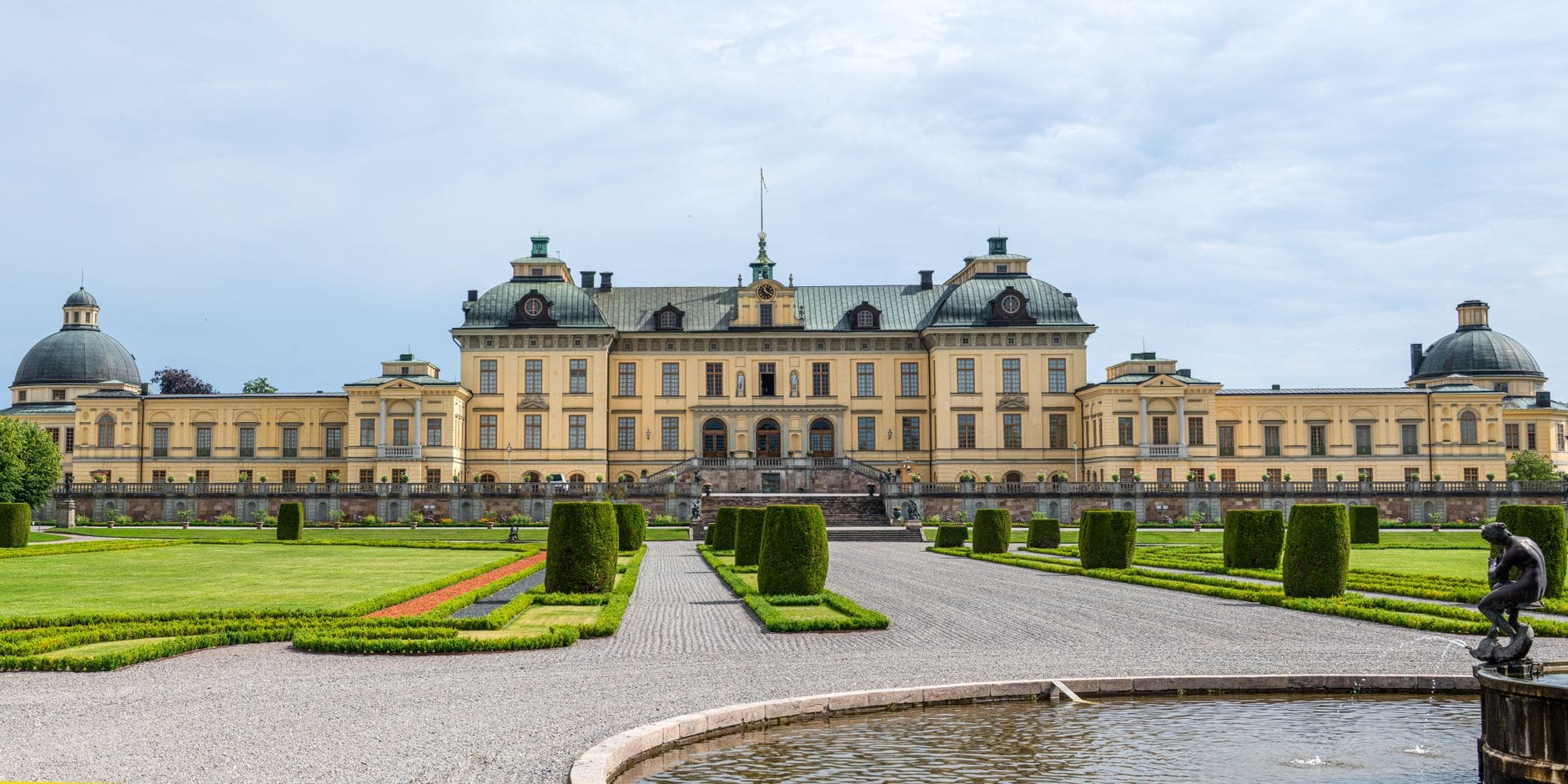
Drottningholm Palace is Sweden's most complete royal domain, a UNESCO World Heritage Site on Lovön island just about 10 km west of Stockholm. The baroque complex includes the palace, a working 18th-century theatre, a Chinese Pavilion, and formal gardens that shift in character across every season.
Quick Facts
- Location
- Lovön island, Ekerö Municipality, ~10 km west of central Stockholm
- Getting There
- Boat from Stadshuskajen (seasonal) or metro to Brommaplan then bus to Drottningholm; ~35–45 min from city centre depending on mode
- Time Needed
- 3–5 hours for palace, theatre, gardens and Chinese Pavilion
- Cost
- Ticketed entry in SEK; guided tour of Reception Halls included; check kungligaslotten.se for current prices
- Best for
- History lovers, architecture enthusiasts, families, and anyone wanting a half-day away from the city
What Drottningholm Actually Is
Drottningholm Palace, known in Swedish as Drottningholms slott, is not just a museum or a tourist set piece. It is the private residence of the Swedish royal family, used as their permanent home since 1981, and simultaneously one of the most visited heritage sites in Scandinavia. That combination of living palace and public monument creates an atmosphere unlike most European royal properties: parts of the building are genuinely off-limits because someone actually lives there, which gives the whole estate a subtle sense of occasion.
The Royal Domain of Drottningholm was inscribed as a UNESCO World Heritage Site in 1991, covering the palace itself, the 18th-century court theatre, the Chinese Pavilion, and the formal gardens. UNESCO cited it as one of the best-preserved royal complexes in Europe from the 17th and 18th centuries. That description is accurate: the baroque interiors and the theatre in particular feel less like restorations and more like rooms that have simply continued to be used.
ℹ️ Good to know
The palace is an active royal residence. Some rooms or areas may close without notice during official royal functions. Check the official site before you visit, especially on Swedish public holidays or during state visits.
A Brief History of the Site
The story of Drottningholm begins in the late 16th century, when King Johan III built the first palace on this site for Queen Katarina Jagellonica. That structure was destroyed by fire, and the current baroque palace complex was developed primarily in the latter half of the 17th century. The architect Nicodemus Tessin the Elder, and later his son Nicodemus Tessin the Younger, shaped much of what stands today, taking obvious cues from Versailles while adapting the design to Swedish tastes and the particular light of Lake Mälaren.
The 18th century was the palace's social and political peak. Swedish royalty used it as a regular summer residence, and Queen Lovisa Ulrika transformed the court theatre into a centre of European-level opera and drama. The theatre she established survives today as Drottningholm Court Theatre, still staging performances and still equipped with much of its original 18th-century stage machinery, which is exceptionally rare on a global scale.
For travellers with a particular interest in Sweden's deeper past, a visit here pairs naturally with the Swedish History Museum in the city, or with a day trip to Sigtuna, one of Sweden's oldest towns, to build a fuller picture of Swedish history across different eras.
Tickets & tours
Live prices and dates from our booking partner. If you book, we may earn a commission at no extra cost to you.
2-hour archipelago tour on a RIB speedboat
From 122 €Instant confirmationFree cancellationHaunted Stockholm exploration game and tour
From 12 €Instant confirmationFree cancellationFotografiska Stockholm entrance tickets
From 0 €Instant confirmationFree cancellationStockholm: Nature Reserve Hiking Tour with Campfire Lunch
From 102 €Instant confirmationFree cancellation
Getting There: Boat vs. Bus
There are two sensible ways to reach Drottningholm from Stockholm, and the choice between them genuinely affects the quality of the visit. The more atmospheric option, when the season allows, is the passenger boat that departs from Stadshuskajen, the quay beside Stockholm City Hall on Kungsholmen. The journey across Lake Mälaren takes about 50–60 minutes and arrives directly at the palace's waterside landing. Approaching Drottningholm by water, with the baroque facade rising above the shoreline, is one of those arrivals that earns its extra time.
The boat service is seasonal, typically operating between May and September. Outside that window, or if you want a faster connection, take the Tunnelbana to Brommaplan and then a bus onward to the palace. The journey from central Stockholm typically takes around 30–40 minutes by public transport via Drottningholmsvägen. If you're already planning to visit Stockholm City Hall, combining it with a boat departure to Drottningholm on the same morning makes efficient use of time.
💡 Local tip
Take the boat out and the bus back, or vice versa. Doing both journeys the same way means you miss half the experience.
Inside the Palace: What You Will See
Entry to the palace is ticketed, with current prices published in SEK on the official Kungliga Slotten website. The ticket includes a guided tour of the Reception Halls, which runs approximately 45 minutes. These state rooms are the highlight of the interior visit: the Karl X Gustav Gallery, the Hedvig Eleonora State Bedroom with its painted ceiling, and the Green Salon with its carefully preserved 17th-century furnishings. The light inside shifts considerably by time of day. Morning visits, particularly in summer when sunlight hits the east-facing windows, give the gilded surfaces a warmth that feels almost domestic despite the scale.
The palace interiors will satisfy visitors who are serious about decorative arts and Swedish baroque architecture, but those expecting something on the scale of Versailles may find the rooms more intimate than anticipated. That intimacy is partly the point. Drottningholm was designed for habitation as much as display, and even in the state rooms there is a human quality to the proportions that grander palaces often sacrifice.
Photography inside the palace follows standard heritage-site rules. Flash photography is typically restricted to protect the textiles and painted surfaces. Natural light in summer is generally sufficient for interiors, but the rooms can be dim during autumn and winter opening hours.
The Court Theatre, Chinese Pavilion, and Gardens
Drottningholm Court Theatre is one of the most significant theatrical heritage sites in the world. The 18th-century stage machinery, including the original wing-and-groove system that moves painted backdrops and wave machines, is largely intact and still in working order. The theatre runs a summer opera season, and attending a performance here, in a house that seats around 400 people, is a qualitatively different experience from any modern opera venue. Tickets for performances sell out well in advance, so book before you travel if this is a priority.
The Chinese Pavilion, a short walk through the gardens from the main palace, was a gift from King Adolf Fredrik to Queen Lovisa Ulrika in 1753. It was fashionable across 18th-century Europe to build chinoiserie structures in royal gardens, but few have survived in this condition. The interior combines European craftsmanship with Chinese-inspired decoration in a way that reflects both the reach of global trade in that period and the limits of what Europeans then understood about Chinese aesthetics. It is a more intellectually interesting building than it first appears.
The formal baroque gardens between the palace and the theatre are well-maintained and free to walk. They follow the French-influenced layout of geometric hedges, fountains, and sight lines designed to be read from the palace windows above. Early morning, before the first tour groups arrive, is the most rewarding time in the gardens: the fountains are running, the gravel paths are quiet, and the proportions of the whole composition read clearly. If formal gardens interest you more broadly, Rosendals Trädgård on Djurgården offers a very different but equally rewarding garden experience within the city itself.
Opening Hours, Seasons, and the Weather Factor
The palace interior is open daily from 10:00 to 17:00 between May and September. From October through April, opening is restricted to weekends, Saturday and Sunday from 10:00 to 16:00, with specific December dates also open (1, 7, 8, and 31 December, 10:00 to 16:00). Always verify current hours on the official Kungliga Slotten website before visiting, as royal events can cause partial or full closures.
Weather matters here more than at most Stockholm attractions. The gardens, boat journey, and outdoor structures are all significantly better in reasonable conditions. A grey November afternoon will still deliver an interesting palace visit, but the overall experience is substantially diminished compared to a clear day in June or early September when the light on the water and the garden colours are at their best. For planning around Stockholm's climate, late May through early September is the most reliable window.
If you're planning a multi-day Stockholm itinerary and wondering when to fit this in, the guide on the best time to visit Stockholm covers seasonal trade-offs in detail, including how summer daylight and winter atmosphere each affect different types of attractions.
⚠️ What to skip
Winter visits (October–April) are limited to weekends only for the palace interior (10:00–16:00). The boat service to Drottningholm typically operates only in the summer season, mainly May–September. Plan accordingly.
Who Should Skip It (or Temper Expectations)
Drottningholm is genuinely worth the time for anyone with an interest in European royal history, baroque architecture, theatre history, or Swedish heritage. But it is not the right choice for every visitor. Travellers with only one day in Stockholm are better served by concentrating on the city's more accessible sites. The round trip alone, even by boat, takes up a meaningful portion of a limited itinerary. Those who find European palace interiors repetitive will not find Drottningholm transformative enough to break that pattern.
Visitors travelling with young children who are not yet engaged by interiors will get more from the estate's outdoor areas than the guided palace tour. Families looking for Stockholm attractions built around children should also consider Junibacken or Skansen as either alternatives or complements to a Drottningholm visit.
Insider Tips
- Arrive on the first boat of the day during summer. The palace grounds are at their quietest in the first hour after opening, before tour groups from the city arrive mid-morning.
- The Court Theatre museum is worth paying for separately, even if you cannot attend a performance. The 18th-century stage machinery demonstration, showing how the original wave and cloud effects worked, is one of the most specific and unexpected things you can see anywhere in Stockholm.
- Bring a layer regardless of the season. The formal gardens are open and exposed, and the lake creates its own microclimate. Even in July, the wind off the water in the afternoon can be sharp.
- The Stockholm Pass has at times covered entry to the palace, which can help offset the cost if you are also visiting several other paid attractions. Check the current pass inclusions before relying on this.
- If you want good photographs of the palace facade, position yourself early in the morning with the sun behind you to the east. By midday in summer, the main facade is in partial shadow from its own roofline, and the light becomes flat.
Who Is Drottningholm Palace For?
- European history and baroque architecture enthusiasts who want depth beyond the city centre
- Opera and theatre history travellers, especially those who can time a visit with the Court Theatre summer season
- Photographers seeking a classical Swedish royal composition with water and gardens
- Families on a longer Stockholm trip who want a half-day excursion with outdoor space
- Visitors using the Stockholm Pass who want to maximise value on a longer city stay
Nearby Attractions
Combine your visit with:
- Birka Viking Town
Founded around AD 750 on a remote island in Lake Mälaren, Birka was one of Scandinavia's earliest true urban trading centers. Today it survives as part of the UNESCO World Heritage Site Birka and Hovgården, reached only by seasonal boat from Stockholm, where around 2,000 Viking-age graves still dot the surrounding landscape. It is one of the most historically significant half-day excursions available from the Swedish capital.
- Royal National City Park (Ekoparken)
The Royal National City Park, known locally as Ekoparken, is the world's first national urban park and one of Stockholm's most remarkable features. Stretching around 27 km² from Djurgården in the south to Ulriksdal in the north, it wraps around the city in a continuous arc of ancient oak forests, royal palaces, museum islands, and open waterways. Entry is free and the park never closes.
- Hagaparken
Hagaparken is a 144-hectare English landscape park just north of central Stockholm, laid out for King Gustav III in the late 18th century. Free to enter year-round, it offers a rare combination of royal history, open meadows, and waterside walking paths within easy reach of the city. Individual attractions inside the park, including the Butterfly House and royal pavilions, charge their own fees.
- Långholmen Island
Långholmen Island sits between Södermalm and Kungsholmen in central Stockholm, offering free access to beaches, walking trails, and green spaces year-round. Its most unusual feature: a functioning hotel and hostel built inside a former 19th-century prison. Entry to the island costs nothing, making it one of the most rewarding spots in the city for those who know it.
Planning a trip? Discover personalized activities with the Nomado app.