Sigtuna: A Day Trip to Sweden's Oldest Town
Founded around AD 980 by King Erik the Victorious, Sigtuna is often described as Sweden's oldest town and a remarkably well-preserved medieval settlement. Just under 50 km north of Stockholm, it offers free access to runestones, church ruins, and a main street that has followed the same route for over a thousand years.
Quick Facts
- Location
- Sigtuna, just under 50 km north of Stockholm, on Lake Mälaren
- Getting There
- Train to Märsta (SL commuter rail), then bus to Sigtuna. Also reachable by car via E4 towards Uppsala.
- Time Needed
- 3–5 hours for a comfortable day trip
- Cost
- Free to walk (streets, ruins, runestones). Individual venues (museum, guided tours) charge separately.
- Best for
- History enthusiasts, slow-travel days, photography, families
- Official website
- www.destinationsigtuna.se/en
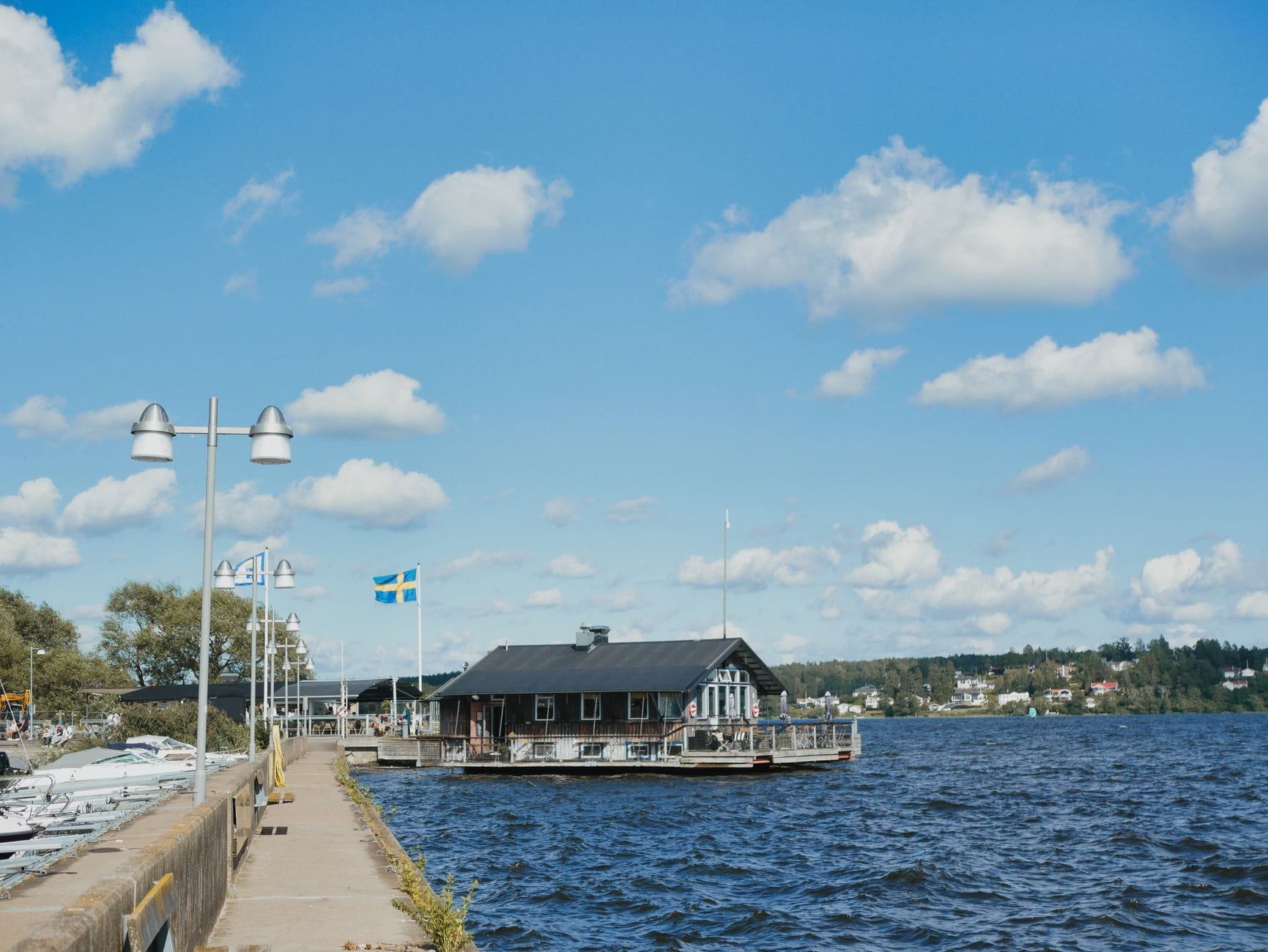
What Sigtuna Actually Is
Sigtuna is not a museum or a ticketed heritage park. It is a living town of roughly 9,700 people, built on a settlement that dates to around AD 980, making it widely regarded as Sweden's oldest town. The medieval layout is still legible in the street plan today: Stora Gatan, the main street, runs along the same route it did in the 10th century. You walk it freely, with no entrance fee, no turnstile, no tour group required.
What you get is an unusually rare combination: genuine historical depth without the artificial polish of a reconstructed heritage site. The church ruins are real, weathered, and standing in open grass fields. The runestones are embedded in walls and scattered along paths, many of them still in or near their original locations. The town is compact enough to cover on foot in a few hours, but rich enough to reward a full day if you slow down.
ℹ️ Good to know
Destination Sigtuna tourist information is available via the Sigtuna Museum at Stora Gatan 55, which has seasonal opening hours (typically around 12:00–16:00). This is your best starting point for maps, current event information, and guided tour bookings—check current hours on the Destination Sigtuna website before you go.
A Town Founded by a Viking King
Sigtuna was founded around AD 980 by King Erik Segersäll, known in English as Erik the Victorious. His decision to establish a planned settlement here, on the northern shore of Lake Mälaren, was deliberate: the lake provided access to trade routes that connected inland Sweden to the Baltic, and the site had strategic depth from the open sea. For roughly two centuries, between 980 and around 1200, Sigtuna functioned as one of Sweden's most important political and ecclesiastical centres.
The town produced Sweden's first coins, minted here in the late 10th century. It was home to early Christian churches at a time when Scandinavia was still largely pagan. The ruins you see today, particularly the stone towers of St Olof's and St Per's churches, date from the 11th and 12th centuries, representing some of the oldest surviving urban church architecture in the country. By the 13th century, Stockholm had emerged as the dominant settlement on Lake Mälaren, and Sigtuna receded from political significance, which is partly why so much of it survived intact.
If you want to understand how this fits into Sweden's broader Viking and medieval heritage, the Viking history guide for Stockholm provides useful context before you travel.
Tickets & tours
Live prices and dates from our booking partner. If you book, we may earn a commission at no extra cost to you.
2-hour archipelago tour on a RIB speedboat
From 122 €Instant confirmationFree cancellationHaunted Stockholm exploration game and tour
From 12 €Instant confirmationFree cancellationFotografiska Stockholm entrance tickets
From 0 €Instant confirmationFree cancellationStockholm: Nature Reserve Hiking Tour with Campfire Lunch
From 102 €Instant confirmationFree cancellation
Walking Stora Gatan: What You'll Actually See
Stora Gatan is the spine of the visit. It is a narrow, low-traffic street lined with wooden buildings painted in yellows, reds, and ochres, with cafes, craft shops, and bakeries filling the ground floors. In the morning, before 10:00, it is almost entirely quiet: the smell of coffee from opening cafes, light glancing off the lake at the street's lower end, and almost no other visitors. By midday it is livelier, and in summer it fills considerably by early afternoon.
Off the main street, the real draws are the church ruins. St Olof's ruin and St Per's ruin stand within walking distance of each other, their roofless stone walls rising from mown grass. There are no barriers around most of them. You can walk directly to the stones, touch the mortar, and look up through what was once a vaulted ceiling at open Swedish sky. St Mary's Church (Mariakyrkan) is the only medieval church still in active use, and it is worth stepping inside: the Dominican brick construction dates from the 13th century and the interior preserves fragments of original frescoes.
Runestones appear throughout the town, some in walls, some on open ground. The area around Sigtuna is one of the densest concentrations of runestones in Sweden, and several are located within a short walk of Stora Gatan. They are not roped off or interpreted with heavy signage, which makes the experience feel more like discovery than exhibition.
How the Experience Changes Through the Day
Morning arrivals before 11:00 get the town largely to themselves. The light on the lake is at its best in early summer mornings, and the stone ruins cast long shadows that make photography more interesting. The tourist information office does not open until noon, so pick up a map in advance or download one from the Destination Sigtuna website before you leave Stockholm.
Midday and early afternoon is when the main street peaks in activity, particularly in July and August. Summer weekends bring day-trippers from Stockholm and visitors transiting through Arlanda Airport, which is only a short drive away. The town handles this relatively gracefully given its small scale, but if you prefer quiet, stick to the waterfront path and the church ruins, which thin out noticeably from the main street crowds.
Late afternoon, especially in June and July when Sweden's long evenings stretch past 9:00 PM, is when Sigtuna is at its most atmospheric. The golden light on the lake, the empty church ruins, the wooden facades of Stora Gatan lit warm from the west: this is the version of Sigtuna that rewards travelers who stay later rather than catching the first bus back.
💡 Local tip
Winter visits are feasible and genuinely beautiful if snow has fallen, but several cafes and some shops reduce hours or close entirely between October and April. The church ruins are accessible year-round. Check Destination Sigtuna's website for seasonal closures before planning a winter day trip.
Getting There from Stockholm
By public transport, the standard route is an SL commuter train (pendeltåg) from Stockholm Central Station to Märsta, followed by a local bus to Sigtuna. The train journey takes around 40 minutes and buses connect regularly. The full trip takes roughly 60 to 75 minutes each way. SL tickets cover both legs within the Stockholm region fare zones, so no separate purchase is needed if you already have an SL travel card or have loaded the app.
By car, the drive from central Stockholm takes 35 to 50 minutes via the E4 motorway north toward Uppsala, then following signs to Sigtuna. Parking in the town centre is limited but manageable outside peak summer weekends. Arriving by car also gives you flexibility to combine Sigtuna with nearby sites in Uppland without being tied to bus schedules.
Sigtuna is also unusually close to Arlanda Airport, roughly 15 km by road. If you have a long layover or are flying in or out of Arlanda on the same day, a visit to Sigtuna is logistically realistic in a way it would not be from most airports near other major European cities.
For a full overview of how to move around the Stockholm region by public transport, the guide to getting around Stockholm covers SL zones, ticket options, and transit tips.
Practical Notes Before You Go
Footwear matters. The town's medieval core has uneven cobblestones on parts of Stora Gatan, and the church ruins sit on grass and gravel that can be muddy after rain. Trainers or walking shoes are appropriate; formal footwear or heels will be uncomfortable. For wheelchair users, the waterfront path along the lake is accessible, but parts of the historic street and the ruins themselves involve uneven terrain. It is worth contacting Destination Sigtuna directly about specific accessibility before visiting.
There are several cafes along Stora Gatan serving fika, the Swedish coffee-and-cake ritual that fits perfectly with Sigtuna's unhurried pace. The town is not set up for large lunch crowds, so peak summer weekend middays can see queues at the more popular spots. The Sigtuna Town Hall (Rådhuset), one of the smallest town halls in Sweden, is open in summer, typically June through August, daily around 12:00 to 16:00, though hours should be confirmed locally.
Sigtuna pairs well with other day trips in the Stockholm region. For a comparison of options and how to structure multi-destination days, see the day trips from Stockholm guide.
Who Might Want to Skip It
Sigtuna is not the right choice if you are looking for a high-density, content-packed attraction with indoor exhibitions and curated interpretation. The experience is primarily outdoor, self-guided, and unstructured. Travelers who need to tick off a clear list of exhibits or who are uncomfortable with ruins that lack explanatory panels may find it underwhelming. It is also a genuine travel commitment from Stockholm: two hours of transit round-trip for a town you can cover on foot in two to three hours. For visitors with only one or two days in Stockholm, there are richer concentrations of historical content closer to the city centre.
If you prefer to concentrate Stockholm's history within the city itself, Gamla Stan and the Swedish History Museum cover much of the same medieval and Viking period with more interpretive depth in a tighter geographic area.
Insider Tips
- Arrive before 10:00 AM in summer to walk Stora Gatan before the day-trip crowds arrive from Stockholm. The street feels completely different when it is quiet, and the morning light on the lake is worth the early start.
- Download a map from the Destination Sigtuna website before leaving Stockholm. The tourist office only opens at noon, and without a map it is easy to miss several runestones and the less obvious church ruins set back from the main street.
- St Mary's Church (Mariakyrkan) holds services and is not always open for casual visitors during those times. Check the church's schedule if interior access matters to your visit.
- The waterfront path along Lake Mälaren, running below and parallel to the main street, is where locals walk in the evenings. In late June and July, the light on the water after 7:00 PM is exceptional and the path is usually almost empty.
- If you are combining Sigtuna with a trip through or from Arlanda Airport, the 15 km road connection makes a stopover genuinely practical. Car rental desks at Arlanda can be useful for exactly this kind of regional side trip.
Who Is Sigtuna For?
- Travelers with a strong interest in Viking and early medieval Scandinavian history
- Photographers looking for quiet, photogenic streets and lake views with minimal crowds in early morning
- Slow-travel days when the aim is atmosphere rather than attraction density
- Families with older children who are engaged by outdoor ruins and open historical spaces
- Visitors transiting through Arlanda Airport with time to fill
Nearby Attractions
Combine your visit with:
- Birka Viking Town
Founded around AD 750 on a remote island in Lake Mälaren, Birka was one of Scandinavia's earliest true urban trading centers. Today it survives as part of the UNESCO World Heritage Site Birka and Hovgården, reached only by seasonal boat from Stockholm, where around 2,000 Viking-age graves still dot the surrounding landscape. It is one of the most historically significant half-day excursions available from the Swedish capital.
- Drottningholm Palace
Drottningholm Palace is Sweden's most complete royal domain, a UNESCO World Heritage Site on Lovön island just about 10 km west of Stockholm. The baroque complex includes the palace, a working 18th-century theatre, a Chinese Pavilion, and formal gardens that shift in character across every season.
- Royal National City Park (Ekoparken)
The Royal National City Park, known locally as Ekoparken, is the world's first national urban park and one of Stockholm's most remarkable features. Stretching around 27 km² from Djurgården in the south to Ulriksdal in the north, it wraps around the city in a continuous arc of ancient oak forests, royal palaces, museum islands, and open waterways. Entry is free and the park never closes.
- Hagaparken
Hagaparken is a 144-hectare English landscape park just north of central Stockholm, laid out for King Gustav III in the late 18th century. Free to enter year-round, it offers a rare combination of royal history, open meadows, and waterside walking paths within easy reach of the city. Individual attractions inside the park, including the Butterfly House and royal pavilions, charge their own fees.
Planning a trip? Discover personalized activities with the Nomado app.