Thielska Galleriet: The Art Villa That Stockholm's Crowds Miss
Built in 1907 for banker and collector Ernest Thiel, Thielska Galleriet is one of Stockholm's most personal art experiences. Perched at the quiet tip of Djurgården, this early 20th-century villa holds works by Edvard Munch, Anders Zorn, Bruno Liljefors, and other Scandinavian masters in rooms that still feel more like a private home than a public institution.
Quick Facts
- Location
- Sjötullsbacken 8, Blockhusudden, Djurgården, Stockholm
- Getting There
- Bus 69 to Blockhusudden (stop: Thielska Galleriet); tram 7 toward Djurgården then walk
- Time Needed
- 1.5 to 2.5 hours for the gallery; add 30 min for the waterfront walk
- Cost
- Entrance fee applies; free under 18; discounts for students and seniors (65+). Check current prices at the official site.
- Best for
- Scandinavian art lovers, architecture enthusiasts, and anyone who prefers atmosphere over crowds
- Official website
- www.thielskagalleriet.se/en
What Thielska Galleriet Actually Is
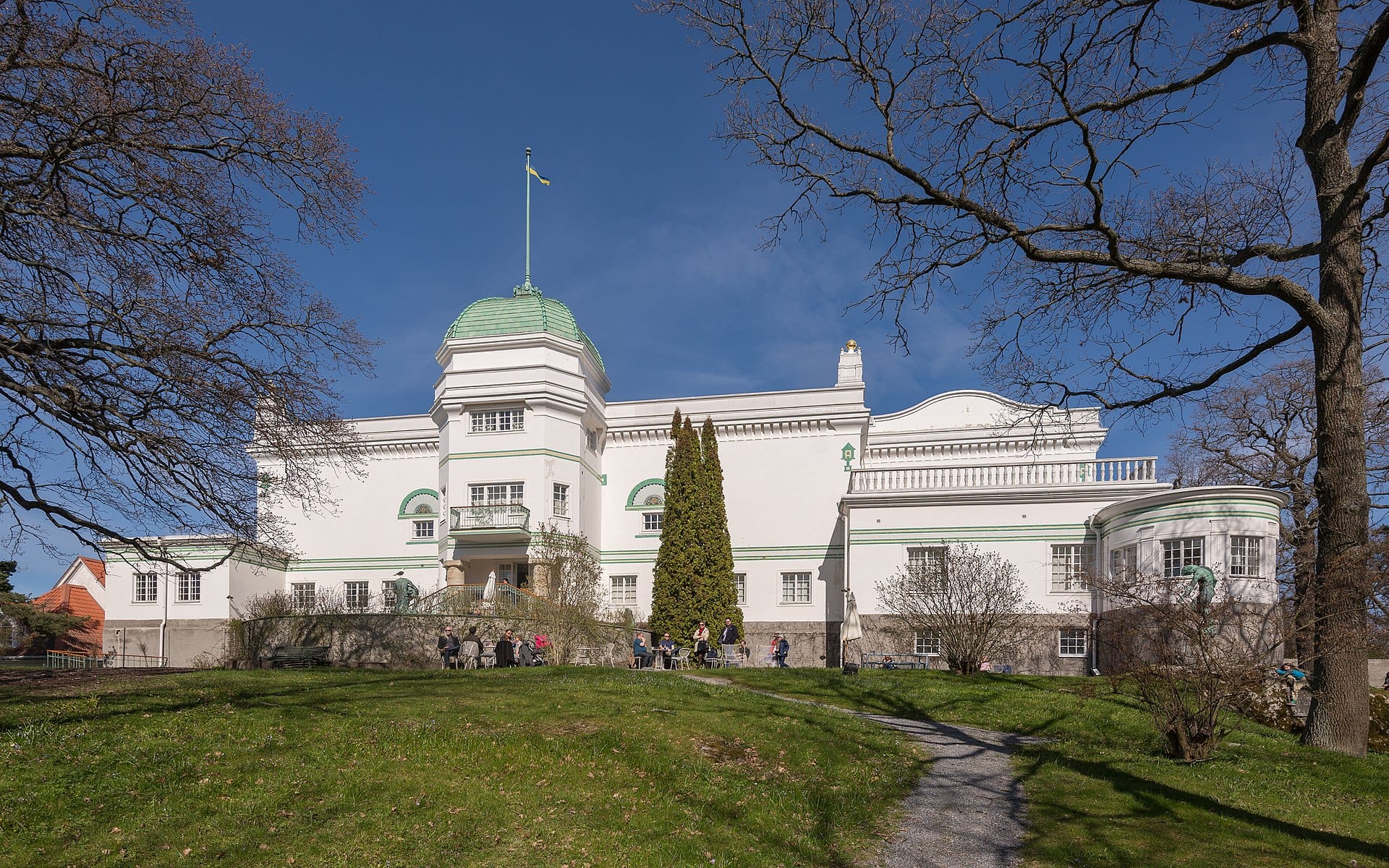
Thielska Galleriet is a fine art museum occupying the former home of Ernest Thiel, a Swedish banker whose wealth and taste made him one of the most significant private collectors in early 20th-century Scandinavia. The building itself, a villa commissioned from architect Ferdinand Boberg and completed in 1907, was purpose-built to display Thiel's collection while serving as his family residence. He lived here until 1924, when financial ruin following World War I forced him to sell. The Swedish state acquired the property, and in 1926 it opened to the public as a museum.
That history matters to how the place feels. Unlike purpose-built museums where art is arranged for maximum throughput, the rooms at Thielska retain the proportions and intimacy of a private home. Ceilings are high but not cathedral-scale. Light enters through tall windows rather than skylights. The art doesn't feel installed so much as lived with.
ℹ️ Good to know
The gallery is closed on Mondays. Open Tuesday through Sunday, 12:00 to 17:00. From May through September, Thursday hours extend to 20:00, which is one of the best times to visit in summer when the evening light across the water is exceptional.
The Collection: Scandinavian Masters in Intimate Rooms
Ernest Thiel was a personal friend of many of the artists he collected, and that relationship shows in the depth of individual representation. The collection is weighted toward Nordic Symbolism and turn-of-the-century realism. Works by Edvard Munch, Anders Zorn, Carl Larsson, Bruno Liljefors, and Ernst Josephson appear throughout the building, often in groupings that reflect how Thiel himself arranged them.
The Munch works are particularly notable. Thiel was one of the Norwegian painter's earliest serious patrons, and the pieces here include studies and portraits that don't circulate on the international blockbuster circuit. Visitors who arrive expecting the postcard version of Munch will find something more nuanced: smaller paintings with the same charged atmosphere but less theatrical composition.
Zorn's portraits reward slow looking. His facility with skin tone and light on fabric is technically dazzling, but what makes his work here feel different from reproductions is scale. Standing close to an original Zorn reveals brushwork that disappears entirely in photographs. The same applies to Liljefors, whose animal paintings operate on a level of naturalist observation that feels almost scientific until you step back and they become pure landscape.
For travelers who have already visited the Nationalmuseum or the Moderna Museet, Thielska offers something neither of those institutions can match: a sense of how a single cultivated mind assembled a coherent vision of an era.
Tickets & tours
Live prices and dates from our booking partner. If you book, we may earn a commission at no extra cost to you.
2-hour archipelago tour on a RIB speedboat
From 122 €Instant confirmationFree cancellationHaunted Stockholm exploration game and tour
From 12 €Instant confirmationFree cancellationFotografiska Stockholm entrance tickets
From 0 €Instant confirmationFree cancellationStockholm: Nature Reserve Hiking Tour with Campfire Lunch
From 102 €Instant confirmationFree cancellation
The Building and Its Setting
Ferdinand Boberg was one of Sweden's most prominent architects at the turn of the 20th century, and the villa he designed for Thiel sits at the convergence of National Romantic style and continental refinement. The exterior is sober sandstone with ornamental details that become more apparent as you circle the building. The proportions are confident rather than showy.
The garden grounds deserve as much attention as the interior. The villa sits at Blockhusudden, the southeastern tip of Djurgården, where the water on three sides creates a mood that changes dramatically with season and weather. On overcast autumn mornings, the bare trees and grey water give the place an almost melancholy atmosphere that suits the Symbolist paintings inside. On a clear summer evening, the same view is all horizontal light and reflected sky.
The surrounding landscape is part of the Royal National City Park (Kungliga nationalstadsparken), the same protected area that contains Hagaparken and much of Djurgården. The trees around the villa are mature and dense enough to muffle the sounds of the city, which is genuinely unusual for a museum this close to central Stockholm.
How the Experience Changes by Time of Day
The gallery opens at noon, and the first hour after opening is the quietest. Arriving at 12:00 or 12:30 on a weekday means you may have entire rooms to yourself. Natural light at midday enters strongly from the east-facing windows, which works well for the portrait gallery but can create glare in a few spots depending on your position.
Late afternoons on weekends draw the largest crowds, though 'crowds' at Thielska is a relative term. Even on a busy Saturday, the total visitor count stays modest compared to Djurgården's more prominent institutions. The atmosphere never becomes noisy. What you'll notice instead is a low murmur of conversation, mostly in Swedish, with occasional tour groups that stay for an hour and then leave.
Thursday evenings in summer are the single best time to visit. The extended hours to 20:00 mean you can walk the grounds after the interior rooms are fully lit, and the water views from the garden catch the late Scandinavian light at its most dramatic. The gallery is also noticeably less crowded at 18:00 than at 14:00.
💡 Local tip
In winter, the reduced daylight makes the interior rooms feel especially cocooned. Bring a layer regardless of season: the historic building, while heated, has variable temperatures depending on which rooms are in use.
Getting There: Reaching the Tip of Djurgården
The gallery is at Sjötullsbacken 8, at the far southeastern end of Djurgården, about 25 to 35 minutes by public transport from the city centre. Bus 69 runs to the Thielska Galleriet/Blockhusudden stop and stops within a short walk of the museum entrance. Tram 7 serves the main Djurgården area but stops before the tip of the island, requiring a 15 to 20 minute walk through the park from the final tram stop.
That walk through the park is worth doing deliberately rather than treating as a problem to solve. The path along the southern shore of Djurgården passes through open landscape with water views and connects the area around Prins Eugens Waldemarsudde to Thielska Galleriet, making a natural two-museum afternoon if you plan the visit from west to east.
Cycling is a practical option in warmer months. Djurgården has dedicated cycling paths, and the route from the city centre takes roughly 20 minutes at a relaxed pace. Bike rentals are available near the Djurgårdsbron bridge. There is no dedicated parking lot at the museum, and car access to this part of Djurgården is limited.
Photography, Accessibility, and Practical Notes
Photography for personal use is generally permitted in the permanent collection rooms, though flash and tripods are not allowed. The garden exterior is freely photographable and offers some of the most architecturally interesting angles, particularly the rear facade facing the water.
Accessibility at Thielska is constrained by the historic building. The villa has multiple levels connected by original staircases, and the architecture was not designed with step-free access in mind. Visitors with specific mobility requirements should contact the museum directly at +46 (0)8-662 58 84 before visiting to understand which areas are accessible and what accommodations can be made.
Admission is free for visitors up to 18 years old. Students and seniors aged 65 and over qualify for reduced rates. Current prices should be confirmed through the official site or by calling the museum, as third-party listings are often out of date. The Stockholm Pass covers some major Djurgården attractions but does not consistently include Thielska, so check the current pass terms at the Stockholm Pass guide before assuming coverage.
⚠️ What to skip
The museum is closed on Mondays. Several visitors arrive on Monday expecting it to be open because other Djurgården attractions operate that day. Double-check before making the journey to this part of the island specifically for Thielska.
Is It Worth the Trip?
The honest answer is: it depends what you're looking for. Thielska Galleriet is not a comprehensive survey of Swedish art history. It does not have the breadth of the Nationalmuseum or the contemporary edge of the Moderna Museet. What it has is depth, atmosphere, and a sense of accumulated personal taste that larger institutions rarely achieve.
If you're moving through Stockholm at speed and trying to cover the main sights in a day or two, Thielska will feel like a detour. But for anyone spending three or more days in the city, it rewards the extra journey. Pair it with the walk along the southern Djurgården shore and a visit to Waldemarsudde, and you have a half-day in Djurgården that feels genuinely different from the Vasa Museum queue.
Travelers who prioritize interaction over contemplation, or who find pre-20th century Scandinavian painting unfamiliar, may find the collection hard to engage with. The museum provides context, but there are no large interpretive displays or audio guides that narrate the works extensively. The experience rewards visitors who are comfortable spending time with a painting they don't immediately understand.
Insider Tips
- Thursday evening visits in summer (May to September, open until 20:00) combine the lightest crowds with the best outdoor light. Bring something to sit on and spend time in the garden after touring the interior rooms.
- Walk from Waldemarsudde along the southern shore path rather than taking the bus. The 15-minute walk through the park provides gradual quiet before arrival and makes the transition into the gallery feel natural.
- The upper floors of the villa often contain temporary exhibitions that are less visited than the permanent collection rooms. These are sometimes where the most interesting curatorial thinking happens.
- If you're visiting in autumn or winter, arrive closer to 12:00 when natural light in the rooms is strongest. By 15:00 in November, some rooms feel noticeably dim.
- The garden side facing the water is the best spot for exterior photographs of the building. The main entrance facade faces away from the water and is partially obscured by trees in summer.
Who Is Thielska Galleriet For?
- Art lovers with a specific interest in Nordic Symbolism and early 20th-century Scandinavian painting
- Visitors who have already covered the major Djurgården institutions and want something quieter and less predictable
- Architecture enthusiasts interested in Ferdinand Boberg's work and National Romantic villa design
- Travelers on longer Stockholm trips (three or more days) looking for depth beyond the highlight circuit
- Anyone combining the gallery with a slow afternoon walk along the southern Djurgården waterfront
Nearby Attractions
Other things to see while in Djurgården:
- ABBA The Museum
ABBA The Museum is Stockholm's most popular music attraction, a permanent interactive exhibition dedicated to Sweden's most famous pop group. Located on Djurgården, it combines costumes, memorabilia, and hands-on experiences in a way that appeals well beyond die-hard fans.
- Gröna Lund
Gröna Lund has been drawing Stockholmers to Djurgården since 1883, packing around 30 rides, live concert stages, and seasonal events into just 3.8 hectares on the waterfront. This guide covers what the experience actually feels like across different times of day, who will love it, and who might want to skip it.
- Junibacken
Junibacken is a children's cultural centre on Djurgården dedicated to Astrid Lindgren's literary universe, featuring an indoor Story Train, immersive storybook scenes, live theatre, and a bookshop. Opened in 1996, it draws around 400,000 visitors a year and ranks consistently among Stockholm's most-visited attractions.
- Nordiska Museet
Nordiska museet on Djurgården holds over 1.5 million objects spanning 500 years of Nordic life, from peasant folk costumes to mid-century design. The building alone, a neo-Renaissance palace completed in 1907, earns a look even if you only have an hour. This guide covers what to see, when to go, and how to make the most of the visit.
Planning a trip? Discover personalized activities with the Nomado app.