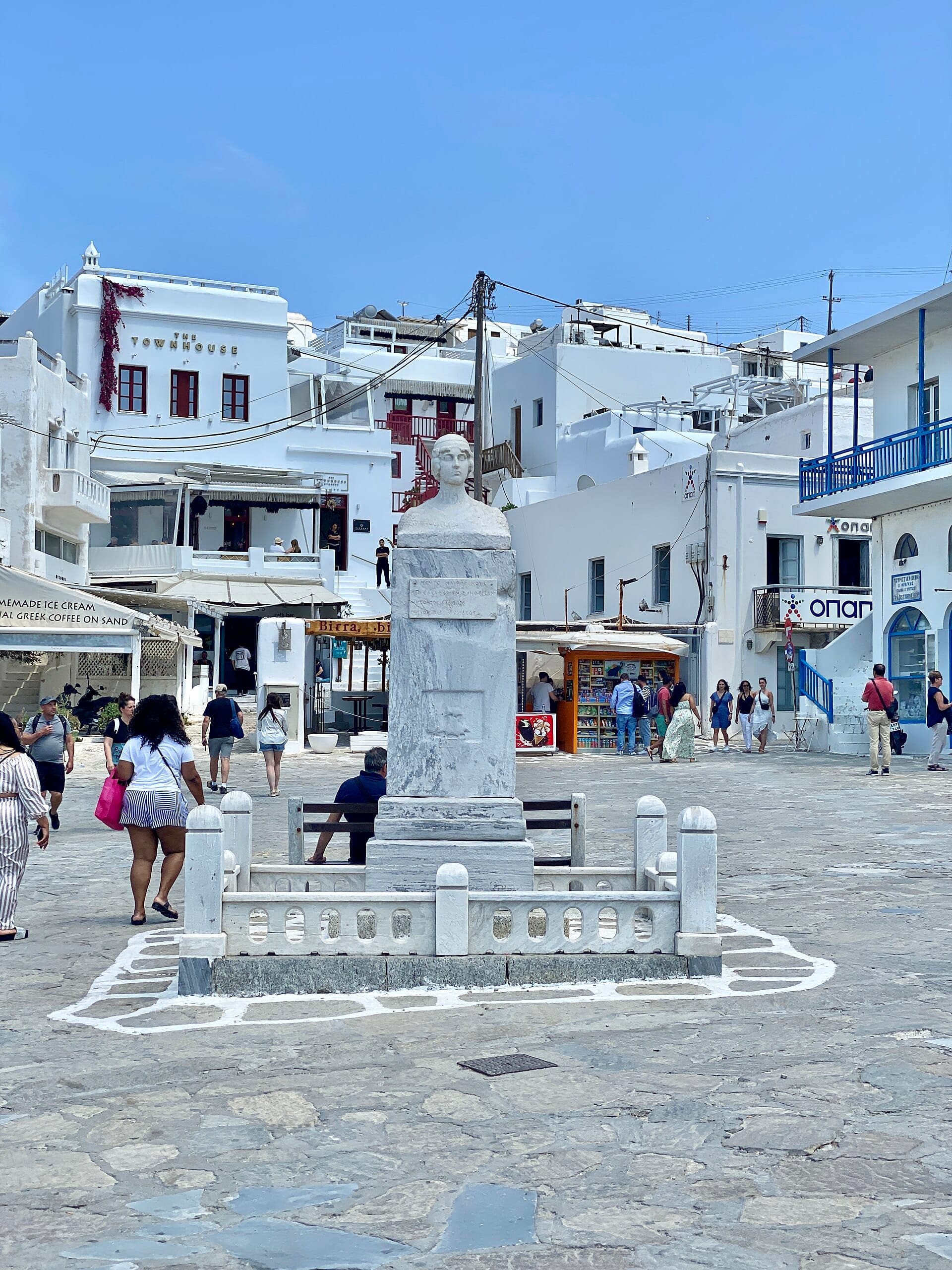
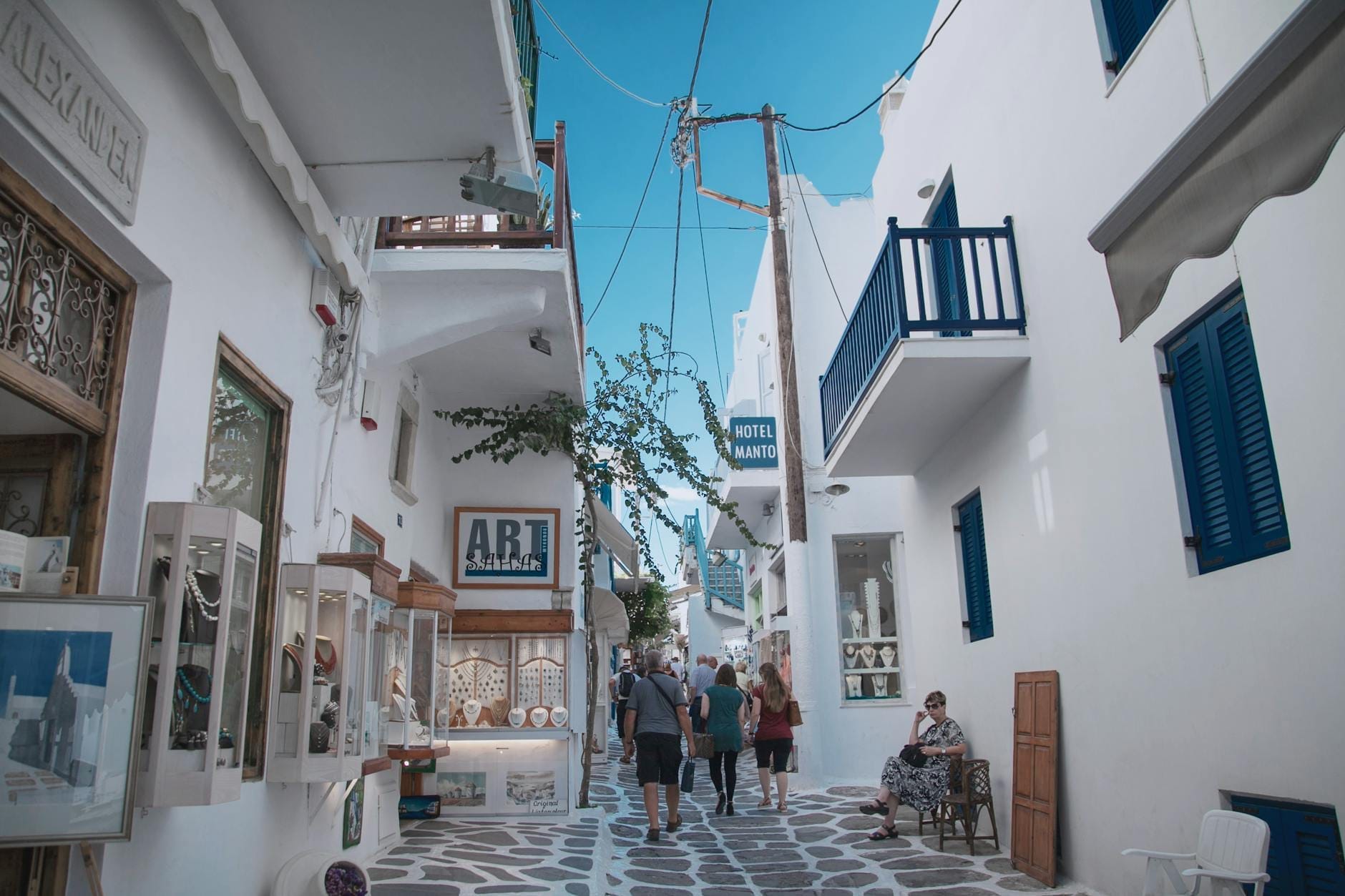
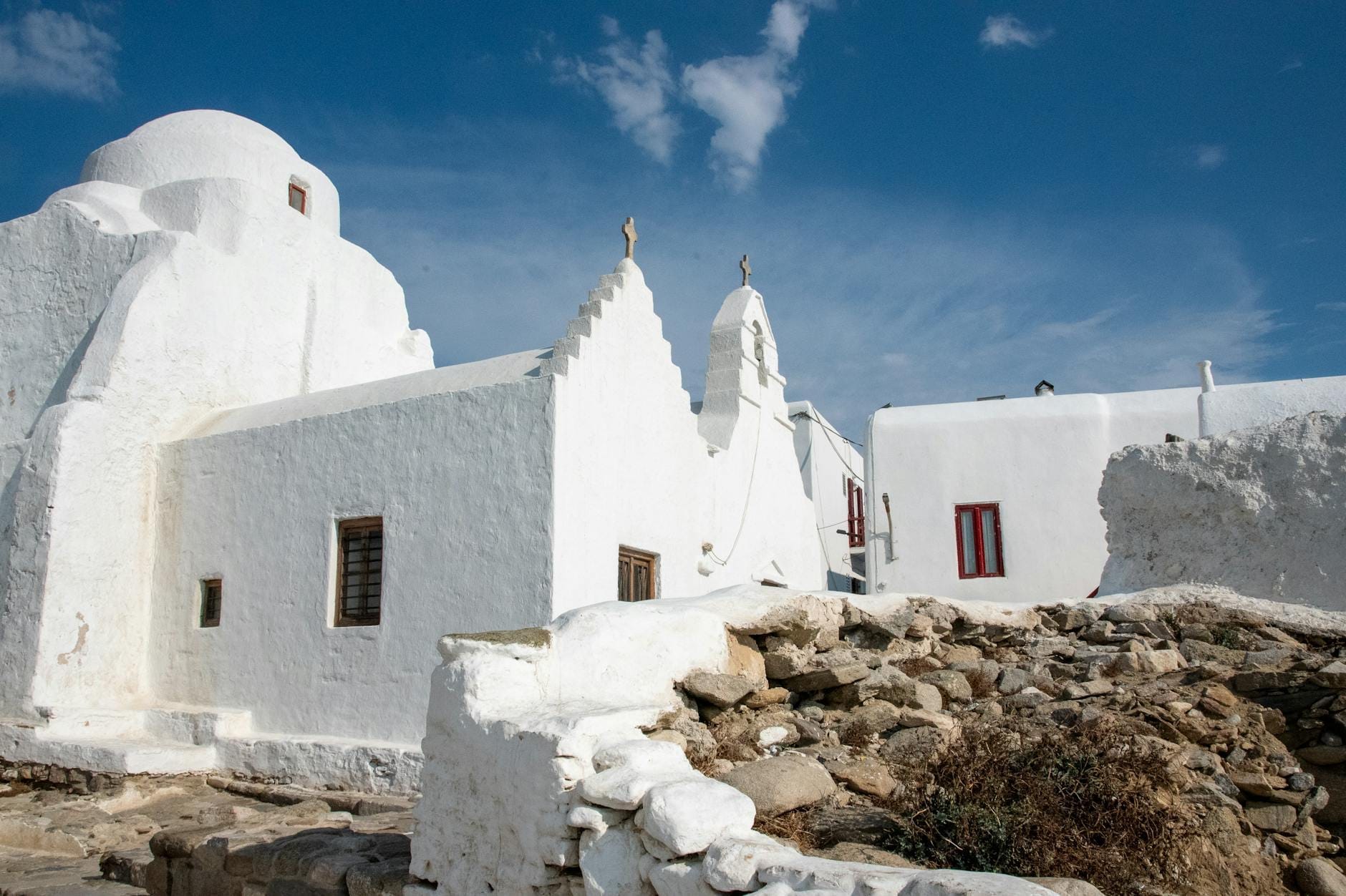
Mykonos Town, known locally as Chora, is the compact whitewashed capital on the island's west coast. It combines centuries-old Cycladic architecture with world-class restaurants, designer boutiques, and some of the Aegean's most photographed landmarks. From the iconic windmills to the waterfront bars of Little Venice, this is where the island comes alive.
Mykonos Town, or Chora, is the island's urban core: a deliberately labyrinthine web of whitewashed alleys, bougainvillea-draped walls, and cubic houses built around a historic port on the west coast. It holds nearly everything that defines Mykonos as a destination, from the famous Kato Mili windmills and the church of Panagia Paraportiani to the cocktail bars overhanging the sea at Little Venice, all within a walkable area you can cross in under twenty minutes.
Orientation
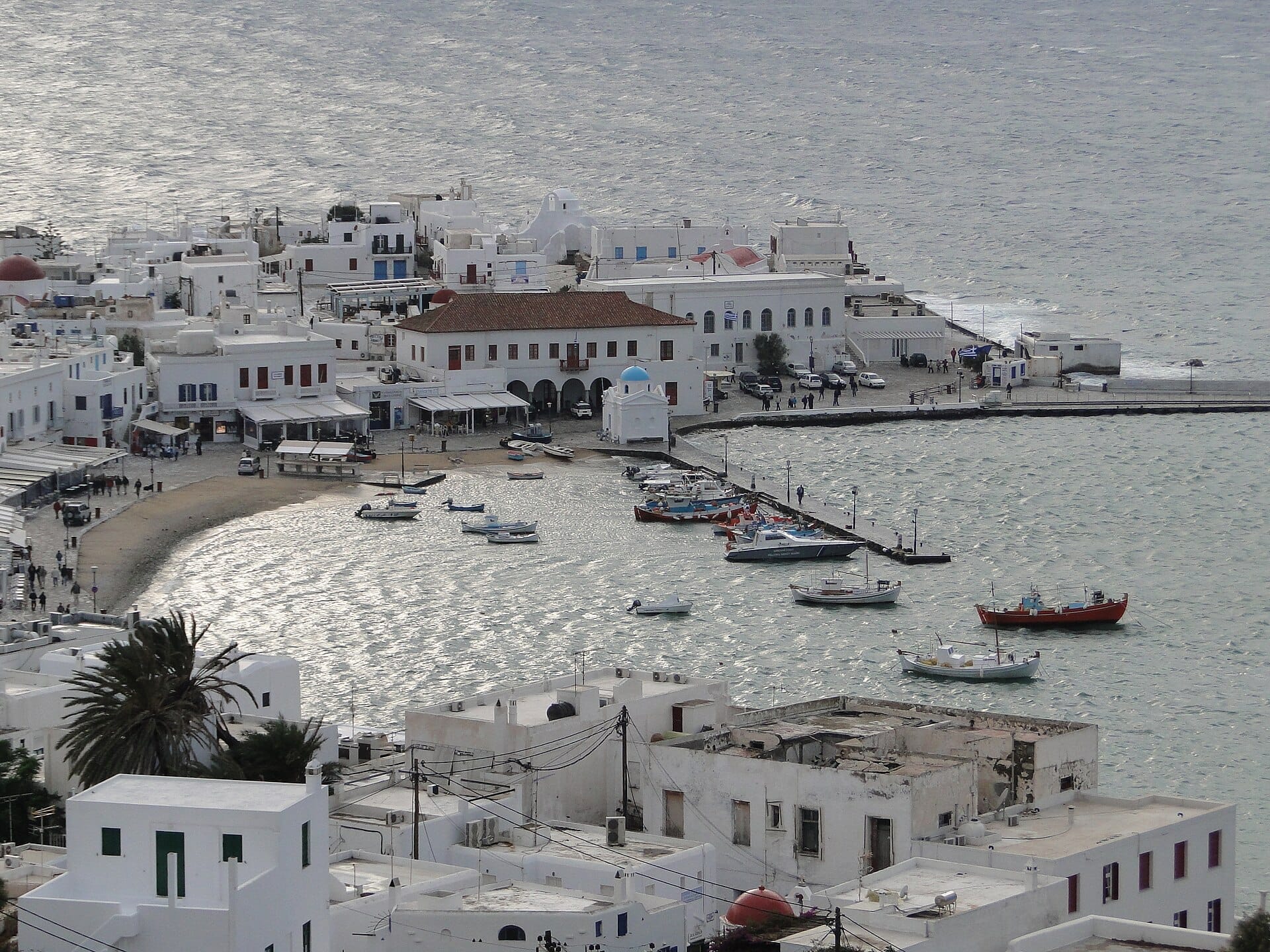
Chora sits on the western edge of Mykonos island, roughly 4 km from Mykonos International Airport (JMK) and about 155 km southeast of Athens across the Aegean. The town is built in a natural arc around the Old Port, rising gently from the waterfront into a dense grid of pedestrian alleys that climb toward the hill where the Kato Mili windmills stand above the sea. At street level, this reads as a continuous white maze with almost no right angles and very few signs, but the geography is simple: the sea is always to the west, the alleys always eventually return to the waterfront, and the whole historic core can be walked end to end in about fifteen minutes.
The main spine of the town is Matoyianni Street, which runs roughly south from the Old Port waterfront through the commercial heart of Chora, lined with jewelry shops, clothing boutiques, restaurants, and bars. North of Matoyianni, the neighborhood of Kastro surrounds the ruins of the old Venetian castle and leads to the church of Panagia Paraportiani and then into the Little Venice waterfront quarter. South along the coast, the town transitions toward Ornos and the beach road. To the north, the waterfront road connects to Tourlos (also called the New Port), about 2 km away, where large ferries and cruise ships dock.
Chora contains the island's two main bus terminals, which serve as the hub for routes to beaches and villages across the island. One terminal is near the Old Port (often used for services including Tourlos/New Port and Ano Mera); the other, on the south side of town at Fabrika, covers beaches like Platis Gialos and Paradise. Knowing which terminal you need before you set out saves real time.
ℹ️ Good to know
Mykonos has no metro or rail system. Movement across the island relies on buses, taxis, rental vehicles (cars, scooters, ATVs), and seasonal water taxis. Within Chora itself, the historic core is pedestrian-only during the day and evenings.
Character & Atmosphere
The layout of Chora was not accidental. The maze of narrow, twisting alleys was designed historically to disorient raiders approaching from the sea, and that logic still shapes your experience today. Streets rarely go straight for more than thirty meters before bending into another alley, courtyard, or dead end. Walking through it at different times of day, you encounter very different versions of the same place.
In the early morning, before 9 a.m., Chora shows its quieter face. The cobblestones are still damp from the overnight cleaning, bakers are opening their shutters, and the cats that own this town stretch out across doorsteps in the low angled light. The Aegean sun in summer hits the whitewashed walls at a shallow angle that makes the whole town glow pale gold. This is the best hour to photograph the windmills, Paraportiani, and the Little Venice waterfront without a wall of other photographers between you and the subject.
By midday the narrow alleys heat up and tourist traffic thickens on Matoyianni Street. The shade in the back alleys away from the main drag provides some relief, and the smaller cafes tucked off the main routes are significantly calmer than those on the waterfront. Afternoon is when the cruise ship passengers arrive in volume from Tourlos, and the Old Port and Matoyianni area can feel genuinely congested in July and August.
The real transformation comes in the late afternoon. The crowd shifts from sightseers to evening visitors, the light goes amber and then pink, and the bars along the Little Venice waterfront fill for sunset. By 9 p.m. Matoyianni is at full tilt: restaurant tables spill into alleys, music drifts from bars, and the alleys around the Kastro neighborhood feel like a slow-moving river of people. This continues well past midnight in high season. If you need quiet before midnight, Chora is not the place to sleep.
⚠️ What to skip
Noise is a genuine issue in Chora at night during summer. Bars and restaurants along Matoyianni Street and in the Little Venice area operate late, and sound carries easily through the narrow alleys. If you are a light sleeper, look for accommodation on the quieter eastern or southern edges of the old town, or consider staying outside the historic core entirely.
What to See & Do
The windmills are the visual signature of Mykonos. The Kato Mili group stands on a low hill at the southern edge of Chora, visible from almost everywhere in the old town and from the sea. Up close, these are large, cylindrical stone structures with wooden frames, many of which date from the 16th century to mill grain from the Aegean trade routes. They stopped working commercially long ago, but several have been partially restored and one is occasionally open as a small museum. The view from the hill down over Little Venice and out across the Aegean is one of the better vantage points on the island, especially in the hour before sunset.
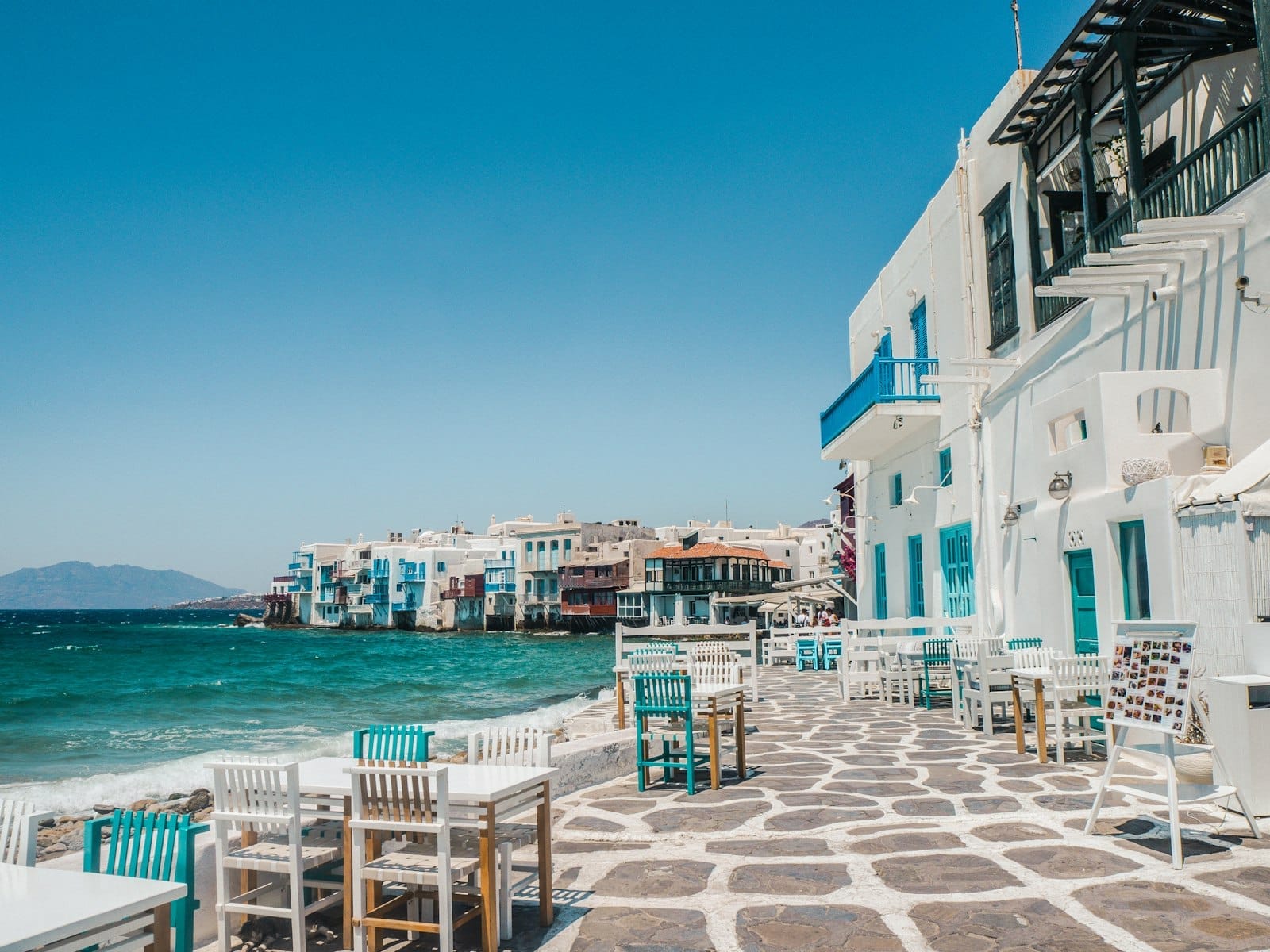
A short walk north from the windmills, along the waterfront, brings you to Little Venice, the most distinctive quarter of Chora. Here, a row of 18th-century mansions built directly over the sea creates a waterfront that looks unlike anywhere else in the Cyclades. The buildings were originally constructed by wealthy sea captains, with their ground floors opening directly onto the water. Today those lower levels house bars with tables positioned so that waves occasionally reach the feet of customers seated outside. It is genuinely atmospheric in the evening, though a single drink here will cost considerably more than one two streets inland.
At the northern edge of the Kastro neighborhood stands Panagia Paraportiani, a complex of five small chapels that evolved organically over several centuries between the 14th and 17th centuries. The result is one of the most distinctive church buildings in Greece: an asymmetrical, completely whitewashed mass of domes, arches, and walls that looks more sculptural than architectural. It is not large, but it photographs extraordinarily well in the morning light. The interior is generally open only for services, but the exterior and surrounding square are accessible at all times.
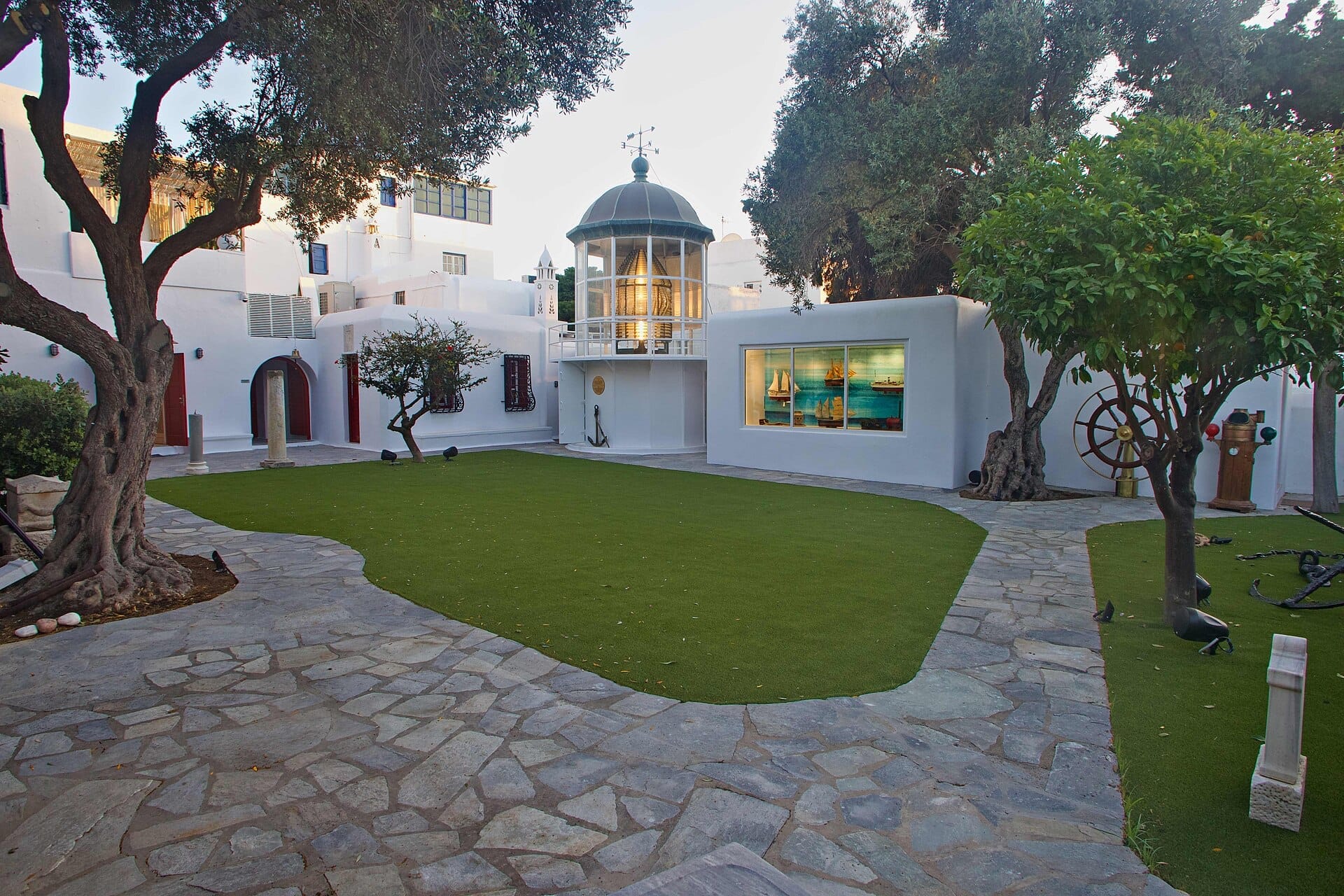
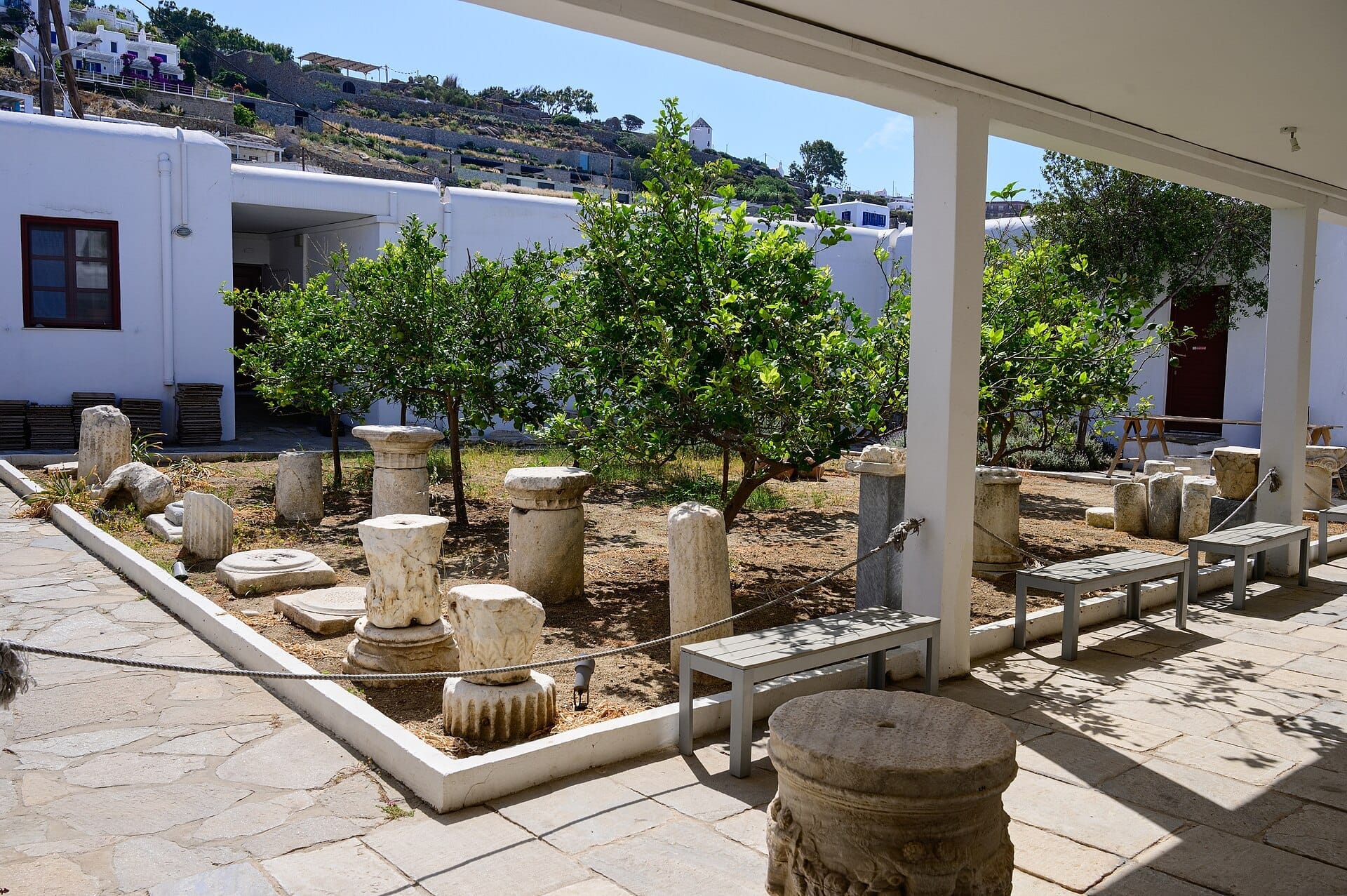
On the road leading toward the Old Port and the ferry embarkation point, the Mykonos Archaeological Museum holds a collection of finds from the island and nearby Delos, including Archaic-period ceramics, funerary sculptures, and the famous 7th-century BC pithos jar decorated with scenes from the Trojan War. It is a small but serious museum and well worth an hour. Also near the Old Port, the Aegean Maritime Museum covers the island's seafaring history with model ships, navigational instruments, and historical documents.
The Mykonos Old Port waterfront itself is worth a slow walk. Fishing boats tie up alongside excursion vessels, the harbor is lined with cafes and ticket offices, and the pelicans that have become unofficial mascots of Chora tend to station themselves along the quay. Manto Square (also known as Manto Mavrogenous Square), just back from the waterfront, is the main public gathering point of the town and a useful orientation anchor.
Kato Mili Windmills: best at sunrise or the hour before sunset
Little Venice waterfront: evening drinks with sea views
Panagia Paraportiani church: morning, before crowds arrive
Mykonos Archaeological Museum: allow 1 hour; often closed Tuesdays (check current schedule)
Aegean Maritime Museum: compact, 45 minutes is sufficient
Old Port waterfront promenade: morning coffee and people-watching
Chora is the main departure point for day trips to Delos, the uninhabited sacred island about 10 km offshore. Boats depart from the Old Port in the morning and return in the early afternoon. Delos is one of the most significant archaeological sites in the Aegean and pairs well with a half-day in Chora.
Eating & Drinking
The food scene in Chora covers an unusually wide range, from simple bakeries and traditional Greek tavernas to high-end restaurants with celebrity chefs and prices to match. The honest summary is that eating in the old town costs more than eating almost anywhere else in Greece, and the price premium does not always correspond to quality. The key is knowing where to look.
For breakfast and coffee, the bakeries and small cafes tucked into the alleys away from the main waterfront offer fresh spanakopita, tiropita, and proper Greek coffee at prices that feel almost reasonable by Mykonos standards. The closer you sit to the Little Venice water's edge or the Old Port promenade, the more you pay for the view. Matoyianni Street has a concentration of cafes that are efficient but often crowded by mid-morning.
For lunch and dinner, the alleys radiating off Matoyianni offer traditional Greek fare: grilled fish, moussaka, fresh salads with the island's own semi-hard cheese (kopanisti, a sharp, spreadable cheese particular to Mykonos, is worth ordering). Seafood is well represented given the island's location, though prices for fish in the tourist-facing restaurants are high. The further you move from the main drag into the back streets, the better the value tends to be.
Drinking in Chora is a serious pursuit. The bars along Little Venice are the most atmospheric but also the most expensive. The cocktail bars and clubs around Matoyianni and the northern part of the old town pick up from around 10 p.m. and run well past 2 a.m. Wine bars and more low-key spots are scattered through the Kastro neighborhood for those who want a drink without the full nightlife experience.
For a broader picture of what to eat on the island, the Mykonos food guide covers local specialties, market finds, and where to eat without spending a fortune. If the full nightlife scene is the draw, the Mykonos nightlife guide maps out the best bars, clubs, and late-night options across Chora and beyond.
Getting There & Around
From Mykonos International Airport (JMK), Chora is about 3–4 km by road, a taxi ride of around 10 to 15 minutes depending on traffic. Taxis in Mykonos generally use set zone-based fares published at the airport taxi stand during high season, with the approximate fare from the airport to the town center indicated on the official board. Bus service also connects the airport to the town, though schedules should be confirmed on arrival as frequency varies by season. Private hotel transfers can be arranged in advance, which is the least stressful option if you are arriving with heavy luggage.
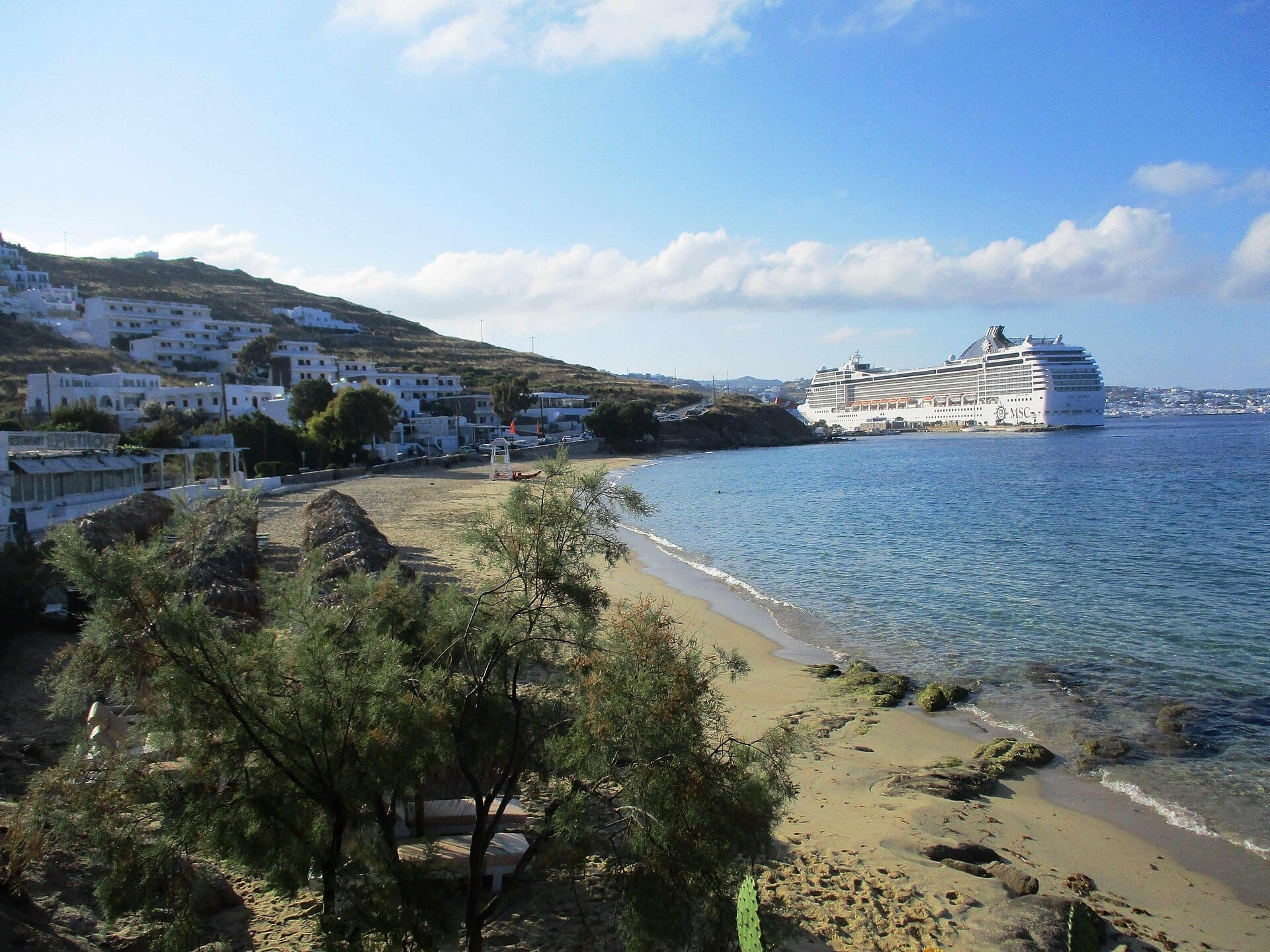
If arriving by ferry, the experience depends on which port you use. Larger ferries and cruise ships dock at Tourlos (the New Port), about 2 km north of the old town center. A taxi or local bus covers this distance quickly. Smaller vessels, excursion boats, and some Delos ferries use the Old Port within Chora itself, which deposits you directly into the heart of the neighborhood.
Within Chora, walking is the only practical option in the historic core. The pedestrian alleys are too narrow and too maze-like for vehicles, and even scooters are restricted in the main pedestrian zone during peak hours. The two bus terminals in Chora (one near the Old Port for northern routes, one on the south side of town for southern beaches) are the starting points for island-wide bus travel. Taxis congregate near Manto Square and the Old Port, though finding one at peak hours in July and August requires patience.
For a full breakdown of how to move around Mykonos, including bus routes, taxi tips, and whether renting a vehicle makes sense, see the complete guide to getting around Mykonos.
⚠️ What to skip
Getting lost in the alleys of Chora is nearly universal. The streets are intentionally disorienting, signage is minimal, and Google Maps works imperfectly in the densest parts of the old town. The reliable strategy: orient yourself by the sea (always to the west), and if in doubt, head downhill toward the waterfront.
Where to Stay
Staying in Chora puts you within walking distance of everything in the old town, which is a genuine advantage if you plan to spend evenings here. The tradeoff is noise, price, and the physical reality of navigating your luggage through narrow alleys to reach your accommodation. Most hotels in the historic core require a short walk from any vehicle drop-off point, as streets are pedestrian-only.
The Kastro neighborhood, in the northwestern corner of the old town near Paraportiani, tends to be quieter than the Matoyianni corridor and is often considered the most characterful part of Chora to base yourself. Rooms and small boutique hotels in this area typically occupy converted traditional houses. The further south and east you go within the old town, the more removed you are from the peak nightlife noise, though no part of Chora is truly quiet on a summer weekend night.
For travelers who want to experience Chora without sleeping in its loudest streets, Ornos (about 3 km south) and Platis Gialos (4 km south) offer calmer bases with beach access and easy bus connections to the old town. Luxury travelers have significant options across the island.
For a full breakdown of accommodation options across all price points and neighborhoods, the where to stay in Mykonos guide covers every area. For high-end options specifically, the Mykonos luxury guide goes into detail on the island's best properties.
Day Trips from Chora
Chora's Old Port is the departure point for ferries to Delos, the small uninhabited island that was one of the most sacred sites in the ancient Greek world. The crossing takes around 30 to 35 minutes, and boats typically leave in the morning with returns in the early afternoon, making it a natural half-day excursion. The archaeological site on Delos is extensive and genuinely impressive: the Terrace of the Lions, the Sanctuary of Apollo, and the House of Dionysus with its famous mosaic floor are among the highlights.
The island's main alternative settlement, Ano Mera, is about 8 km east of Chora in the island's interior. It is a genuine working village with a central square, traditional tavernas, and the impressive Monastery of Panagia Tourliani. It makes a good half-morning trip by bus from either of Chora's terminals, offering a counterpoint to the coastal tourist scene.
Mykonos has a strong beach culture, and several of the island's best beaches are reachable by bus from Chora's southern terminal. Platis Gialos and Psarou are among the closer options to the south, while the best beaches in Mykonos guide covers the full range from family-friendly coves to party beaches.
Practical Tips
Currency: Euro (EUR). ATMs are available near the Old Port and along Matoyianni Street.
Language: Greek is official; English is universally spoken in Chora's tourist-facing businesses.
Emergency number: 112 (EU-wide).
Electricity: 230V, Type C and F plugs.
Water: Check with your accommodation about tap water; bottled water is widely recommended on the island.
Dress code: Casual in town; modest dress (covered shoulders and knees) required at churches.
Tipping: Not mandatory but customary; rounding up the bill is the norm.
High season (July to August) brings maximum crowds, prices, and heat. May, June, and September offer more manageable conditions.
If you are still deciding whether Mykonos as a whole is the right destination for your trip, the guide on the best time to visit Mykonos gives a month-by-month breakdown of conditions and crowds.
TL;DR
Mykonos Town (Chora) is the island's historic, commercial, and social core: every essential landmark, restaurant, and nightlife venue is here or within easy reach.
Best for travelers who want to be at the center of the action, within walking distance of the windmills, Little Venice, and the Old Port.
Not ideal for light sleepers or budget travelers: noise runs late in summer, and prices in the old town are among the highest in the Cyclades.
The pedestrian alleys are genuinely disorienting and the area gets very crowded in July and August, particularly when cruise ships are in port at Tourlos.
Morning is the best time to explore the historic core: quieter streets, better light for photography, and cooler temperatures before the midday heat builds.
Three days is exactly enough time to cover Mykonos properly — the labyrinthine alleys of Chora, the UNESCO ruins of Delos, the south-coast beach scene, and a genuine taste of the island's nightlife. This day-by-day itinerary gives you the structure, the practical details, and the honest advice to make it work.
Mykonos has a beach for every type of traveler. This guide covers the 12 best beaches on the island, from the legendary party scene at Paradise to the car-free calm of Agios Sostis, so you can find exactly the day you're looking for.
Mykonos rewards travelers who time their visit carefully. This guide breaks down every season by weather, crowd levels, prices, and what's actually open, so you can decide when the island works best for your trip.
Delos is one of Greece's most extraordinary archaeological sites, and it sits just 30 minutes by boat from Mykonos. This guide covers ferry schedules, entry fees, the best ruins to prioritize, and whether a guided tour is worth the extra cost.
Mykonos is a small island with a surprisingly complex transport puzzle. From the KTEL bus network and south-coast caiques to the island's notoriously scarce taxis and rental vehicles, this guide breaks down every way to get around — with real prices, practical tips, and honest warnings about what doesn't work as well as you'd hope.
Mykonos has a reputation that precedes it: luxury prices, wall-to-wall tourists, and beach clubs that run until dawn. But the island is more layered than that. This guide cuts through the hype to tell you exactly who Mykonos is worth visiting for — and who should skip it.
Mykonos has some of the world's most famous beach clubs, from full-day party venues at Paradise Beach to bohemian sunset gatherings at Scorpios. This guide breaks down where to go, what to expect, what things actually cost, and how to book before peak season fills up.
Mykonos is far more than a party island. For couples, it offers sunset cocktails at Little Venice, private-pool suites above the Aegean, quiet beaches with turquoise water, and a day trip to the ancient ruins of Delos. This guide covers the best romantic experiences, when to go, where to stay, and how to avoid the crowds.
Mykonos is Greece's most polished luxury destination, combining world-class hotels, private beach clubs, superyacht culture, and some of the Aegean's best dining. This guide cuts through the hype with specific advice on when to go, where to stay, how to get around, and what actually justifies the price tag.
Mykonos has one of Europe's most legendary party scenes, from clifftop superclubs to sun-soaked beach raves and intimate cocktail bars in Chora's whitewashed alleys. This guide covers the best venues, realistic prices, seasonal timing, and the honest trade-offs so you can plan a night out that actually matches your expectations.
Mykonos has a reputation as one of Greece's most expensive islands, and that reputation is mostly earned. But visiting without hemorrhaging money is entirely possible if you understand how pricing works, when to go, and where to spend versus save. This guide breaks it all down honestly.
Everything you need to plan the trip from Mykonos to Santorini: which ferry operators run the route, how long the crossing takes, what fares to expect by season, whether flying makes sense, and how to fit in stops at Paros or Naxos along the way.
Both islands dominate Cyclades itineraries, but they deliver completely different experiences. This guide breaks down the real differences between Mykonos and Santorini across scenery, beaches, nightlife, budget, and logistics so you can choose the right one — or plan both smartly.
Mykonos delivers more than beach clubs and late nights. This guide covers the top things to do in Mykonos, Greece — from ancient ruins on Delos and windswept Cycladic lanes to family beaches and genuine local culture — with practical logistics for every type of traveler.
Mykonos has a distinct culinary identity that goes far beyond generic Greek salads and souvlaki. This guide covers the island's signature foods, honest price expectations, where to eat well on any budget, and the restaurants worth planning your day around.
Choosing where to stay in Mykonos shapes your entire trip. This guide breaks down every key area, from the lively lanes of Chora to the family-friendly shores of Ornos, with honest advice on prices, logistics, and who each neighborhood actually suits.