Day Trip to Delos from Mykonos: Everything You Need to Know
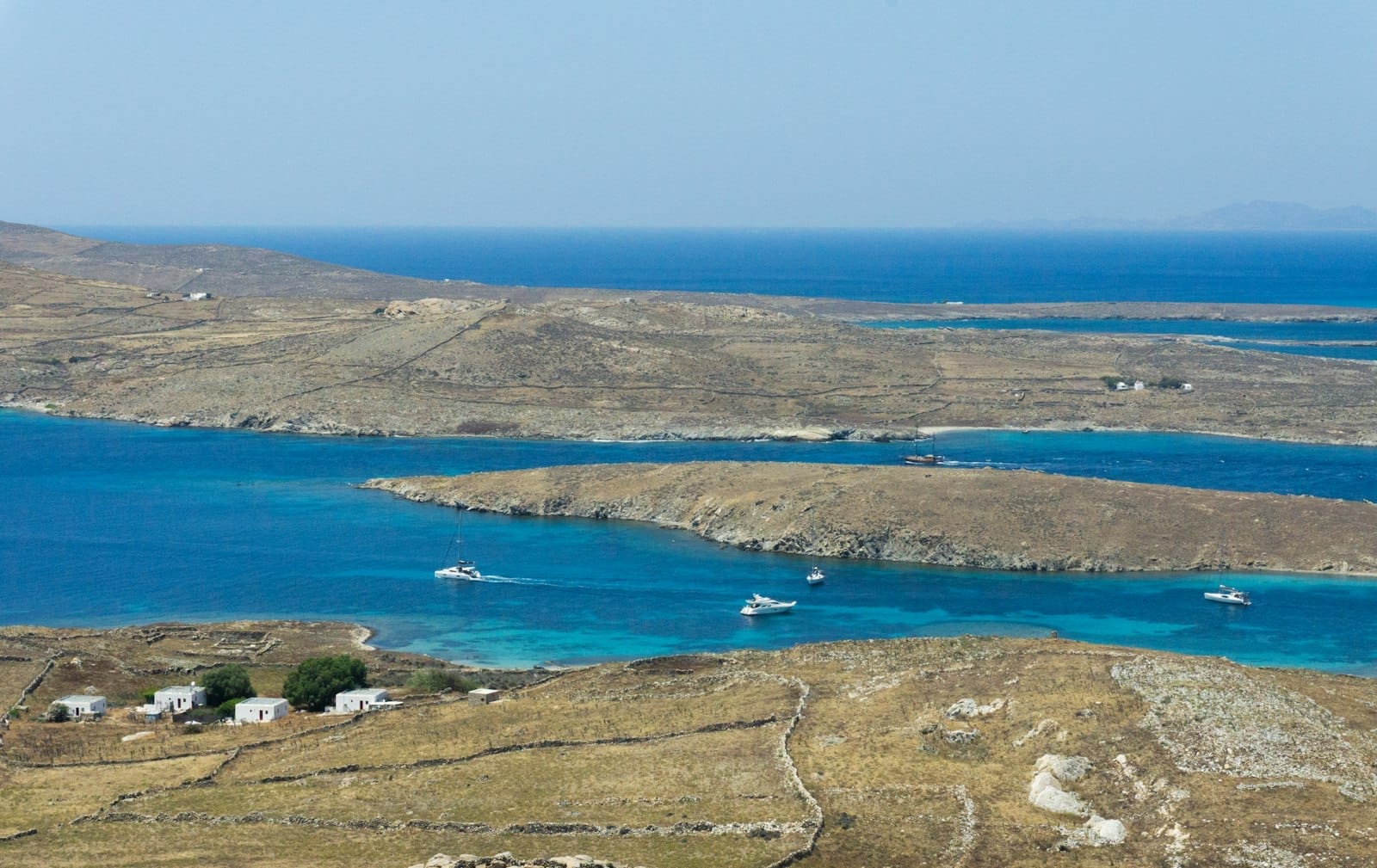
Delos is one of Greece's most extraordinary archaeological sites, and it sits just 30 minutes by boat from Mykonos. This guide covers ferry schedules, entry fees, the best ruins to prioritize, and whether a guided tour is worth the extra cost.
Tickets & tours
Live prices and dates from our booking partner. If you book, we may earn a commission at no extra cost to you.
TL;DR
- Boats to Delos depart from the Mykonos Old Port daily from around April to November; the crossing takes roughly 30 minutes.
- Budget around €45 for a DIY visit (approximately €25 return boat + €20 site entry); guided half-day tours run €70–€79 per adult and include the boat, entry, and a licensed archaeologist guide.
- You cannot stay overnight on Delos — there are no hotels, and the island closes to visitors when the last boat leaves.
- Go early: the site is exposed with almost no shade, and midday heat in July and August can be brutal. Pair the morning trip with an afternoon at Mykonos Town or a beach.
- Standalone site tickets cannot be bought online — you pay on arrival or book a guided tour package in advance.
Why Delos Deserves a Day of Your Mykonos Trip
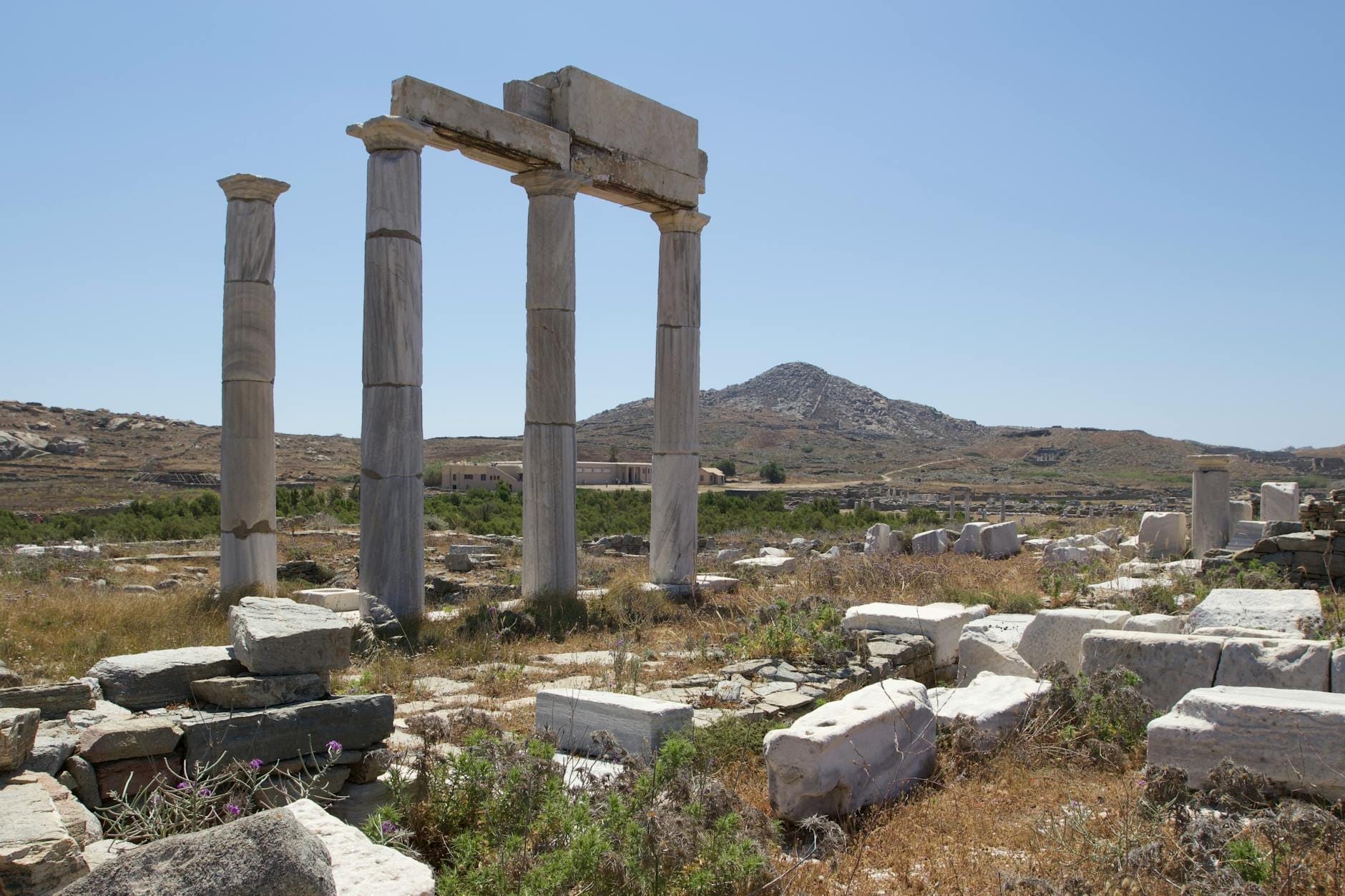
Most visitors come to Mykonos for the beaches, the nightlife, and the whitewashed streets of Chora. Delos offers something completely different: a UNESCO World Heritage Site covering the entire island, with ruins dating back over 3,000 years. In antiquity, Delos was considered the sacred birthplace of Apollo and Artemis, making it one of the most important religious and commercial centers in the ancient Mediterranean. Today it is uninhabited, frozen in time, and visited almost exclusively as a day trip from Mykonos.
The contrast with Mykonos couldn't be sharper. Where the main island is loud, commercially polished, and built for indulgence, Delos is silent, bone-dry, and genuinely humbling. You walk through the remains of marble temples, ancient merchant houses with intact floor mosaics, and one of the best-preserved collections of Hellenistic sculpture in Greece. This isn't a reconstructed tourist site — it's the actual thing, largely unrestored and spread across a small island that you can cover on foot in three to four hours.
ℹ️ Good to know
Delos has no permanent residents, no hotels, and no restaurants beyond a basic on-site café. The entire island is an archaeological zone. Visitors must leave on one of the return boats before the site closes — typically by early-to-mid afternoon (often around 3:00–3:30 PM), though schedules vary by season and any late-opening hours are served by specific returns. Always confirm last-boat times before you head out.
Getting There: Boats, Schedules, and Departure Points
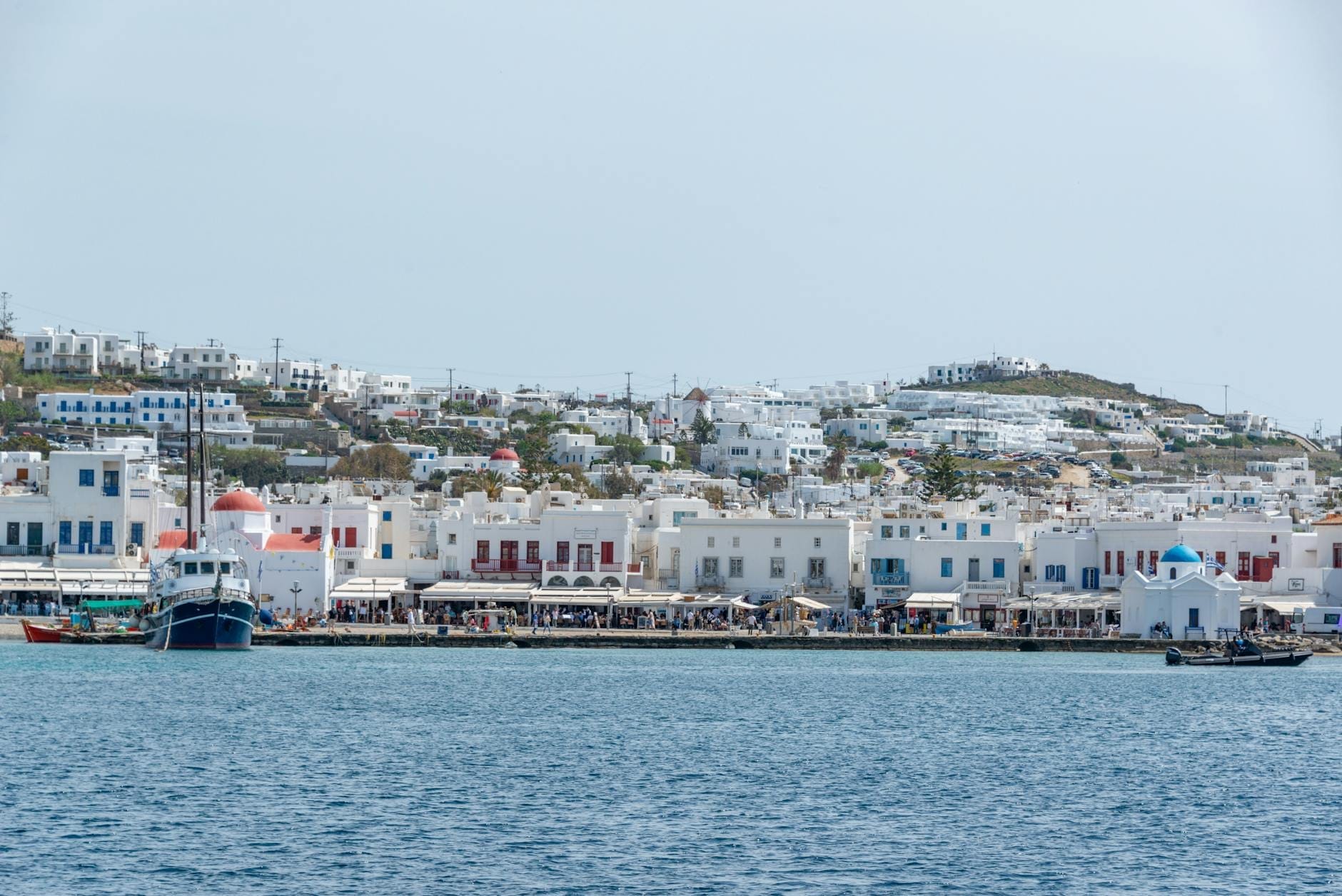
All tourist boats to Delos depart from the Mykonos Old Port (also called the Deliana Pier), located at the waterfront near the Town Hall and the small blue-domed church of St. Nicholas. This is where the Delos Tours ticket kiosk operates. It's a short walk from the heart of Mykonos Town — look for the cluster of caïques and the queue of people in sensible shoes carrying water bottles.
The crossing takes approximately 30 minutes each way in normal conditions. Boats run daily during the main tourist season, roughly April through November. In the high season (June to September), there are typically multiple morning departures, with the first boat leaving around 9:00 AM and the last return from Delos in the early-to-mid afternoon. As an example, April schedules published by Delos Tours show departures at 10:00 AM and 1:30 PM, with last returns around 3:00–3:30 PM. These times shift as the season progresses, so always check the current timetable at the kiosk or on the Delos Tours website before planning your day.
⚠️ What to skip
There is no standard winter ferry service to Delos. If you're visiting Mykonos in December through March, Delos will almost certainly be off the table. Off-season access is extremely limited and not designed for tourists. Plan this trip for your spring, summer, or early autumn visit.
- Departure point Mykonos Old Port (Deliana Pier), near Town Hall — walkable from anywhere in Mykonos Town in under 10 minutes.
- Crossing time Approximately 30 minutes each way.
- Season Daily service roughly April through November; no reliable winter service.
- First boats Typically depart around 9:00–10:00 AM depending on the month; confirm current times at the ticket kiosk or online.
- Last return Usually mid-to-late afternoon; missing it is not an option — there is no accommodation on Delos.
Costs: What You'll Actually Pay
A DIY visit to Delos from Mykonos costs around €45 per adult. That breaks down as approximately €25 for the return boat (some providers charge around €22 — prices vary slightly by operator and season) plus €20 for combined archaeological site and museum entry. The reduced entry ticket is €10 for eligible visitors, typically students and EU citizens over 65 with valid ID, in line with standard Greek Ministry of Culture concessions. Children under a certain age may enter free — confirm this at the ticket office on arrival.
If you want a guided experience, commonly advertised Delos Tours half-day packages are priced around €79 per adult and €35 for children aged 6–12, with under-6s free. This includes the return boat, a licensed guide, and the entrance fee. Third-party platforms like Viator and GetYourGuide list comparable tours often starting from around €70 per adult. An important practical note: standalone site entry tickets still cannot generally be purchased online. You either pay at the ticket office on Delos, or you book a package tour in advance that bundles entry with the boat.
💡 Local tip
In July and August, guided tours from reputable operators sell out days in advance. If you want a licensed archaeologist guide — and for a site this complex, it genuinely adds value — book before you arrive in Mykonos, not the night before.
DIY vs. Guided Tour: Which Is Right for You
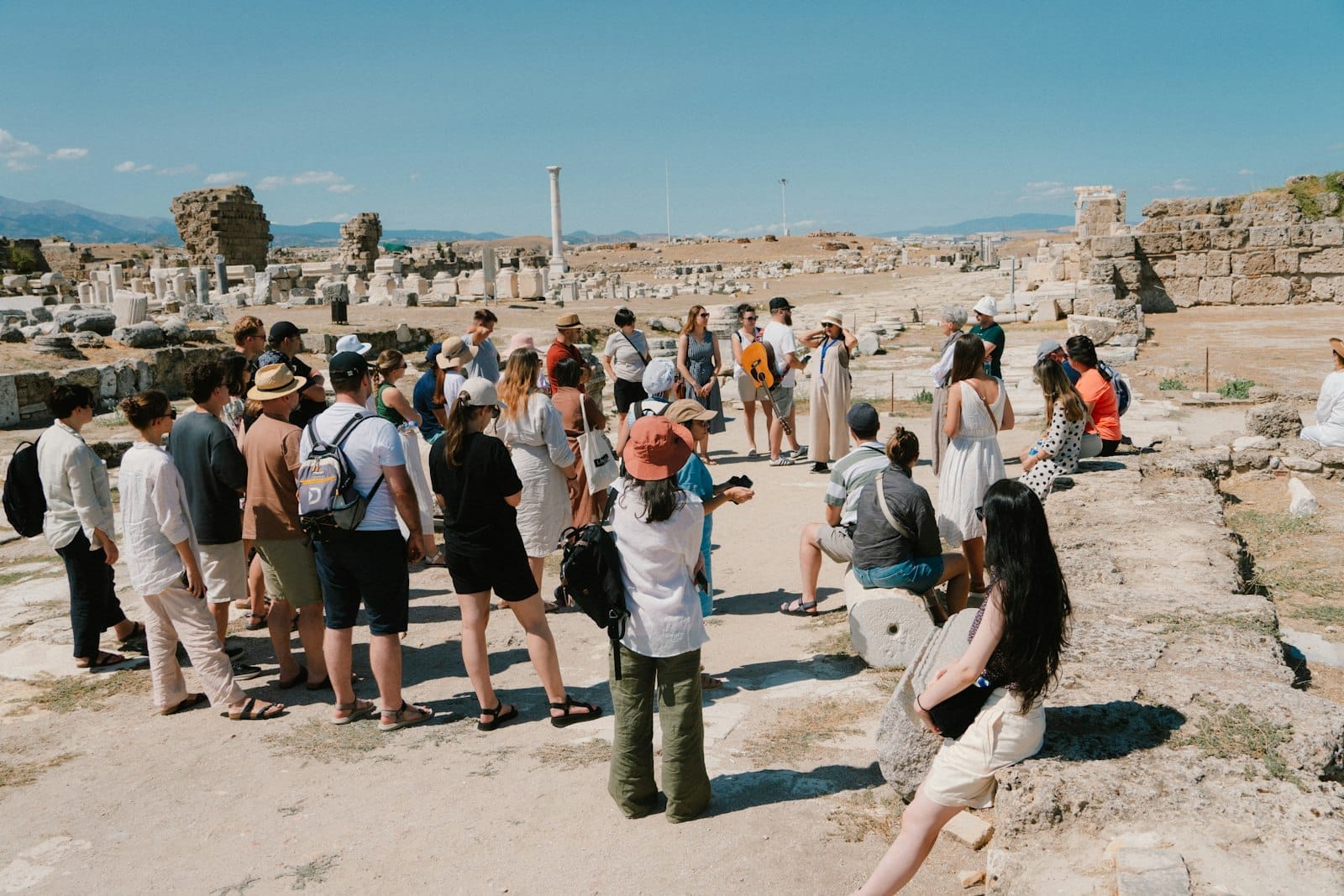
The honest answer is that it depends on how much you already know about ancient Greek history. Delos is a vast site covering the whole island, and many of the most impressive features — the symbolism of the terrace of the lions, the layout of the Sanctuary of Apollo, the significance of the House of Dionysus mosaics — require context to appreciate. Without it, you're looking at rubble in the heat. A good guide transforms the experience.
That said, the site map is decent and the ruins are labeled, so independent visitors who read up beforehand can have a rewarding visit. Key things not to miss on a DIY tour: the Terrace of the Lions (the original marble lions date to the 7th century BC, though the ones on display are mostly casts — originals are in the museum), the Sanctuary of Apollo, the House of Dionysus with its famous mosaic, the summit of Mount Kynthos for the panoramic view, and the Archaeological Museum of Delos for the original sculptures and artifacts.
- Choose DIY if: You've read about Delos beforehand, enjoy exploring at your own pace, and want to save around €30–35 per person.
- Choose a guided tour if: This is your first encounter with Hellenistic archaeology, you have limited time, or you want to ensure you don't miss the site's most significant areas.
- Skip Delos if: Ancient ruins hold zero interest for you, you have mobility issues (the terrain is uneven stone and rocky paths), or you're visiting in the peak of summer midday heat without preparation.
Practical Tips for the Day
The single most important logistical point: go on the first morning boat. The site opens early and the light is better for photography, the temperature is manageable, and you beat the wave of cruise-ship day-trippers who arrive later in the morning. By 11:00 AM in July, Delos can feel like standing inside a convection oven. There is almost no shade anywhere on the island.
Bring at least 1.5 liters of water per person — more in summer. The on-site café sells drinks and basic snacks, but at elevated prices and with limited selection. Wear comfortable, closed-toe shoes: the ancient paving stones are uneven, and sandals make the rocky paths genuinely hazardous. Sun protection is non-negotiable. A hat, sunscreen, and sunglasses are as essential as your ticket. You can easily spend three to four hours on the site; if you're heading up Mount Kynthos (elevation roughly 110–115 meters), factor in an extra 45 minutes for the ascent and descent. The view from the top — across the Cyclades, with Mykonos visible to the northeast — is one of the best in the Aegean. For more context on timing your overall Mykonos stay to align with this trip, see the guide on the best time to visit Mykonos.
- Bring at least 1.5L of water per person; more in summer months.
- Wear closed-toe shoes — the ancient stone paths are uneven and can be slippery.
- Apply sunscreen before boarding the boat; there is virtually no shade on the island.
- Arrive at the Old Port 20–30 minutes before your desired departure to buy tickets and board.
- Bring cash for on-site ticket purchase; card readers exist but connections can be unreliable on a remote island.
- Photography is permitted throughout the site; flash is typically restricted in the museum.
- Dress modestly if visiting the small chapel on the island — standard Greek religious site etiquette applies.
✨ Pro tip
Combine the Delos morning trip with a relaxed afternoon at one of Mykonos's calmer beaches. After a few hours of exposed walking on ancient stone, Platis Gialos or Ornos Beach — both accessible by bus or taxi from Mykonos Town — offer exactly the right kind of recovery. Avoid scheduling the beach party circuit at Paradise or Super Paradise on the same day; you'll be too tired.
How Delos Fits Into a Broader Mykonos Itinerary
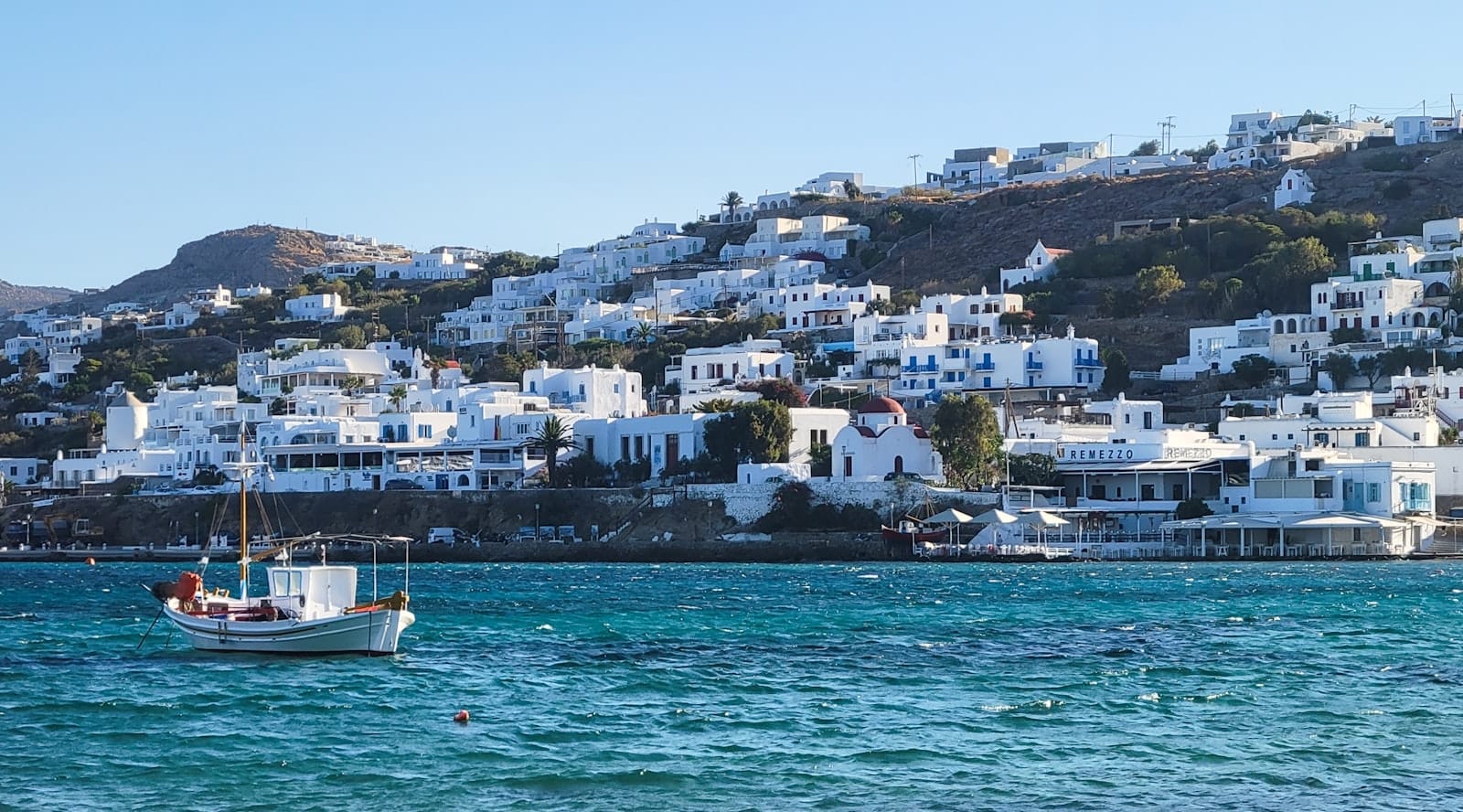
A Delos day trip works best scheduled mid-stay rather than on arrival or departure day. You need a full morning free, and you want flexibility in case of wind-related cancellations (the Aegean can be choppy, particularly in spring and late autumn). If you're spending 3 days in Mykonos, dedicate day two to Delos with a low-key afternoon recovery. Day one can cover the town and beaches; day three works for the nightlife circuit or a boat day around the island's south coast.
For travelers comparing Mykonos against other Cycladic options, Delos is genuinely one of the strongest arguments for choosing Mykonos as a base. No other major island in the chain offers this level of archaeological access with this degree of logistical ease. The trip takes half a day, costs under €50 DIY, and delivers an experience that stands apart from anything else in the Aegean island circuit. If you're weighing island options, the Mykonos vs Santorini comparison covers this and other deciding factors in detail.
FAQ
How do I get to Delos from Mykonos?
Boats depart daily from the Mykonos Old Port (Deliana Pier) near the Town Hall during the tourist season, roughly April through November. The crossing takes about 30 minutes. Tickets can be purchased at the kiosk at the pier; no advance booking is required for the boat itself, though guided tours should be reserved ahead in high season.
How much does a day trip to Delos cost?
A DIY visit costs approximately €45 per adult: around €25 for the return boat and €20 for site and museum entry. Guided half-day tours including the boat and entry run €70–€79 per adult through official and third-party operators. Children's rates and reduced tickets apply — confirm current pricing at the pier or with your tour operator.
Can you stay overnight on Delos?
No. Delos has no hotels, guesthouses, or any accommodation for visitors. Only archaeologists and site staff with special permits can remain on the island after closing. You must return to Mykonos on one of the scheduled boats before the site closes in the afternoon.
How long should I spend on Delos?
Three to four hours is enough to cover the main highlights: the Terrace of the Lions, the Sanctuary of Apollo, the House of Dionysus mosaics, the Archaeological Museum, and the summit of Mount Kynthos. If you take the first morning boat from Mykonos, you can be back in Mykonos Town by early afternoon.
Is Delos worth visiting from Mykonos?
For anyone with an interest in ancient history or archaeology, yes, without reservation. It's one of the most intact and atmospheric ancient sites in Greece, and the proximity to Mykonos makes it unusually accessible. If ancient ruins hold no interest for you, or if you have mobility limitations that make uneven terrain difficult, it may not be the best use of a half day.
Tickets & tours
Live prices and dates from our booking partner. If you book, we may earn a commission at no extra cost to you.
Planning a trip? Discover personalized activities with the Nomado app.