Mykonos Old Port: The Waterfront Where the Island's Real Life Plays Out
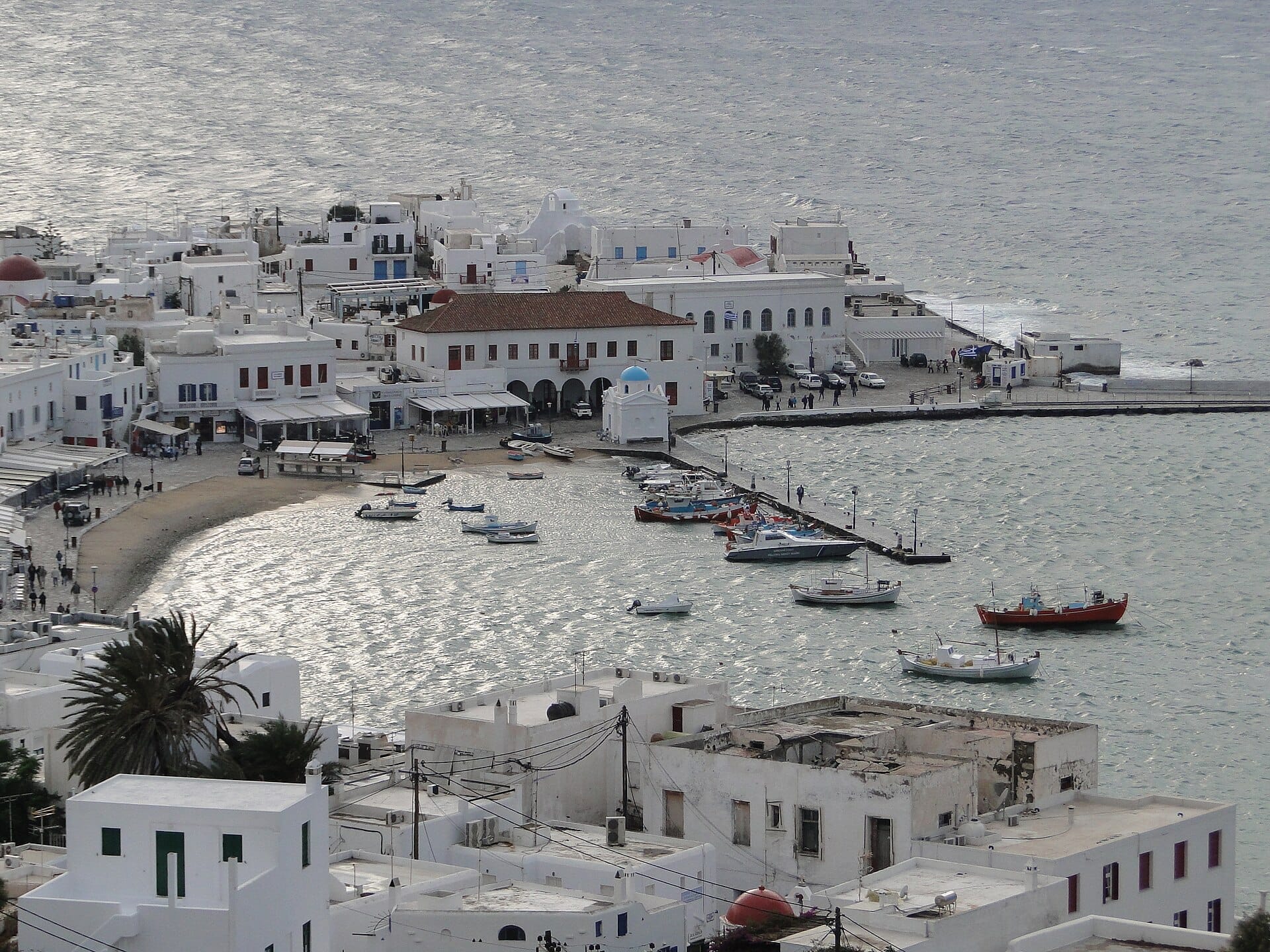
The Old Port of Mykonos Town (Παλαιό Λιμάνι Μυκόνου) sits at the heart of Chora, where fishing boats bob alongside private yachts and excursion vessels bound for Delos. Free to access at any hour, it offers a grounded counterpoint to the island's polished tourist facade, with strong sea light, salt-heavy air, and the daily rhythm of a working Aegean harbor.
Quick Facts
- Location
- Mykonos Town (Chora) waterfront, west coast of Mykonos
- Getting There
- Sea Bus from New Port (Tourlos) ~€2.00 one way; taxi from Tourlos ~€10, about 5 min; on foot from Tourlos ~25-30 min
- Time Needed
- 30–90 minutes for a waterfront stroll; longer if catching a Delos excursion boat
- Cost
- Free to access; Delos excursion boats have their own ticket prices set by individual operators
- Best for
- Morning walkers, photographers, travelers departing to Delos, and anyone wanting a quieter corner of Chora
What the Old Port Actually Is
The Mykonos Old Port is the original harbor of Mykonos Town, sitting right on the western seafront of Chora. For much of the island's modern history, this was where ferries docked and travelers first set foot on Mykonos. That changed when the New Port at Tourlos, roughly 2 km to the north, took over large-scale passenger and freight traffic. Large ferries and cruise ships now use Tourlos, and the Old Port settled into a quieter, more atmospheric role.
Today the Old Port is the domain of fishing boats, private yachts, and smaller excursion vessels. Its most practical function for most visitors is as the main departure point for boats to Delos Island. Beyond that, it is simply a place to walk, watch the water, eat, and observe a version of Mykonos that hasn't been entirely curated for Instagram.
ℹ️ Good to know
The Old Port waterfront is open 24 hours and free to access. There are no entrance gates, tickets, or formal visiting hours. Individual cafes, restaurants, and shops along the waterfront follow their own seasonal hours.
How It Feels at Different Times of Day
Arrive early in the morning, around 7–8 am, and the Old Port has a texture that the rest of Mykonos Town rarely shows. Fishing boats come in with their catch. The air smells of salt, diesel, and occasionally fresh fish. Pelicans, for which Mykonos is well known, are often spotted near the waterline at this hour, moving between the quay and the water with a proprietorial calm. The stone promenade is damp with sea spray and the light is clear and cold, even in summer.
By mid-morning, the character shifts. Excursion boats loading for Delos create a short burst of activity as passengers gather, tickets are checked, and crew prepare lines. This is typically the busiest functional moment at the Old Port, usually running from around 9 am onward during the tourist season. If you are catching one of these boats, arrive a few minutes early and watch your step on the dock, as surfaces can be slippery when wet.
Afternoons bring a slower pace. Yachts sit at anchor. Cafe tables fill with people who have walked over from the old town lanes. The light at this hour falls low across the water and the whitewashed walls of Chora, creating sharp contrasts that photographers aim for. In the evening, the promenade becomes part of Mykonos Town's general social circulation, with visitors walking between the waterfront, Little Venice, and the Matoyianni Street shopping area.
💡 Local tip
For photography, the morning light at the Old Port is noticeably cleaner than the harsh midday sun. The hour after sunrise gives you soft shadows, calm water reflections, and far fewer people in frame.
Tickets & tours
Live prices and dates from our booking partner. If you book, we may earn a commission at no extra cost to you.
Catamaran cruise in Mykonos with meal, drinks and transport
From 149 €Instant confirmationFree cancellationMykonos South Coast Cruise on a Traditional Caique
From 93 €Instant confirmationFree cancellationMykonos yacht cruise to Rhenia Island and guided tour of Delos
From 120 €Instant confirmationFree cancellationHalf-Day Mykonos, Delos and Rhenia Catamaran Cruise with Lunch
From 150 €Instant confirmationFree cancellation
The Port's Place in Mykonos History
Mykonos has been inhabited since antiquity, and its position in the central Aegean, near the sacred island of Delos, shaped its history as a transit and trading point. The Old Port waterfront represents that continuous function: generations of Cycladic islanders loading and unloading goods, fishing, and receiving visitors from across the Aegean.
The proximity to Delos Island is still the Old Port's most historically significant connection. Delos, just a short boat ride to the southwest, was one of the most important religious and commercial centers of the ancient Greek world. The boats that run from the Old Port today follow a route that traders, pilgrims, and travelers have taken for over two millennia. It is a small but real piece of continuity in a place that otherwise changes fast.
The shift of ferry traffic to the New Port at Tourlos, which handles the large fast ferries and cruise ships that now define Aegean travel, effectively preserved the Old Port from the kind of heavy commercial development that would have erased its character. The trade-off is that it now operates at a quieter register, which is either a limitation or an appeal depending on what you are looking for.
Getting There: Old Port vs. New Port
Visitors arriving by large ferry or cruise ship will dock at the New Port in Tourlos, not at the Old Port. From Tourlos, the most convenient option is the Sea Bus shuttle, which connects the New Port to the town waterfront near the Old Port for approximately €2.00 each way. A taxi covers the same distance in about 5 minutes for roughly €10 per cab. Walking from Tourlos takes around 25–30 minutes but parts of the route lack proper sidewalks, so it is not ideal with luggage or in summer heat.
Once you are in Mykonos Town, the Old Port is easy to reach on foot. It sits at the edge of Chora's main waterfront, adjacent to the Little Venice neighborhood and a short walk from the Mykonos Windmills. All three form a natural walking circuit along the western seafront that takes about 30–45 minutes at a relaxed pace.
⚠️ What to skip
Do not confuse the Old Port with the New Port at Tourlos. If your ferry booking shows 'Mykonos Port' without further detail, check with your operator: most large ferries now use Tourlos. Missing a departure from the wrong port is a common mistake.
Catching a Boat to Delos from the Old Port
The Old Port is the primary departure point for excursion boats to the Sanctuary of Apollo on Delos, one of the most significant archaeological sites in the Aegean. Boats typically depart in the morning and return by early afternoon, as the Delos site closes in the early afternoon. Ticket prices and schedules are set by individual private operators, not a central authority, so check directly at the quay or book in advance during peak season (July–August), when spots fill quickly.
The crossing itself is brief, roughly 20–30 minutes depending on conditions, but the Meltemi wind, which blows strongly across the central Aegean in summer, can make the water choppy. If you are prone to seasickness, take precautions before boarding. Once on Delos, you will find the archaeological remains of temples, mosaic floors, and the iconic Terrace of the Lions waiting. It is a full half-day commitment and genuinely worth the effort if ancient history is part of your reason for coming to the Cyclades.
Accessibility and Practical Walkthrough
The Old Port waterfront is paved in stone, as is most of Mykonos Town. The surface is generally manageable but can be uneven in sections, especially on older parts of the quay. Travelers using wheelchairs or with significant mobility limitations should be aware that step-free access is not guaranteed throughout the area, and detailed accessibility specifications are not officially published. It is worth confirming conditions locally before visiting.
Shade is limited along the open waterfront sections. In July and August, midday temperatures in Mykonos regularly exceed 30°C. Bring water, wear sunscreen, and avoid the 12–3 pm window if you plan to spend extended time on the promenade. The cafes along the port offer shade and cold drinks, and they double as practical rest points between stretches of walking.
For a fuller picture of how to organize your time around Mykonos Town, the things to do in Mykonos guide has a practical breakdown of the main attractions and how they connect to each other on foot.
Insider Tips
- Pelicans frequent the Old Port in the morning and early evening. They are comfortable around people but move unpredictably. Keep a reasonable distance and don't try to feed them.
- If you want a Delos boat seat in July or August, book through one of the operators at the quay the evening before, not on the morning of departure. By 9 am on a busy summer day, boats are often at capacity.
- The sea-facing tables at cafes on the Old Port promenade fill up quickly after sunset. If you want one for dinner or an evening drink, arrive by 6:30–7 pm rather than later.
- The stretch of waterfront between the Old Port and Little Venice is one of the better spots on the island for watching the sunset without paying a premium. Position yourself facing west on the promenade and you get an unobstructed view over the water.
- The Sea Bus from Tourlos drops you very close to the Old Port waterfront. It is frequently overlooked by travelers who default to taxis, but it saves money and avoids the taxi queue at the New Port after large ferries disembark.
Who Is Mykonos Old Port For?
- Travelers planning a day trip to Delos who need a convenient departure point
- Early risers who want to experience Mykonos Town before the crowds arrive
- Photographers looking for clean morning light on boats and whitewashed walls
- Visitors who want a relaxed waterfront walk connecting Little Venice and the Windmills
- Anyone arriving by cruise ship at Tourlos who wants a quick, low-cost way into Chora
Nearby Attractions
Other things to see while in Mykonos Town (Chora):
- Aegean Maritime Museum
Tucked inside a 19th-century Cycladic building in the Tria Pigadia quarter of Mykonos Town, the Aegean Maritime Museum offers a focused, well-curated look at centuries of Aegean maritime history. It is small enough to do in under an hour, and genuinely informative for anyone curious about the sea culture that shaped these islands.
- Agios Stefanos Beach
Agios Stefanos Beach sits just 3.5 km north of Mykonos Town, relatively sheltered from the island's notorious winds and backed by a whitewashed chapel with a red roof. It draws families, couples on a quieter budget, and anyone who finds the party beaches on the south coast too much. Sandy underfoot, shallow at the waterline, and served by a regular bus from Chora.
- Armenistis Lighthouse
Perched on the rocky northwest tip of Mykonos at roughly 180–184 metres above sea level, Armenistis Lighthouse is a 19th-century navigation beacon with one of the island's most panoramic viewpoints. Built in 1891 after a fatal shipwreck, it rewards visitors willing to venture beyond the town with open Aegean horizons and a quieter side of the island.
- Manto Mavrogenous Square
Manto Mavrogenous Square sits at the center of Mykonos Town, honoring the island's most celebrated heroine of the Greek War of Independence. Effectively always accessible as a public space, it serves as both a landmark orientation point and a quiet pause within the frenetic energy of Chora.
Planning a trip? Discover personalized activities with the Nomado app.