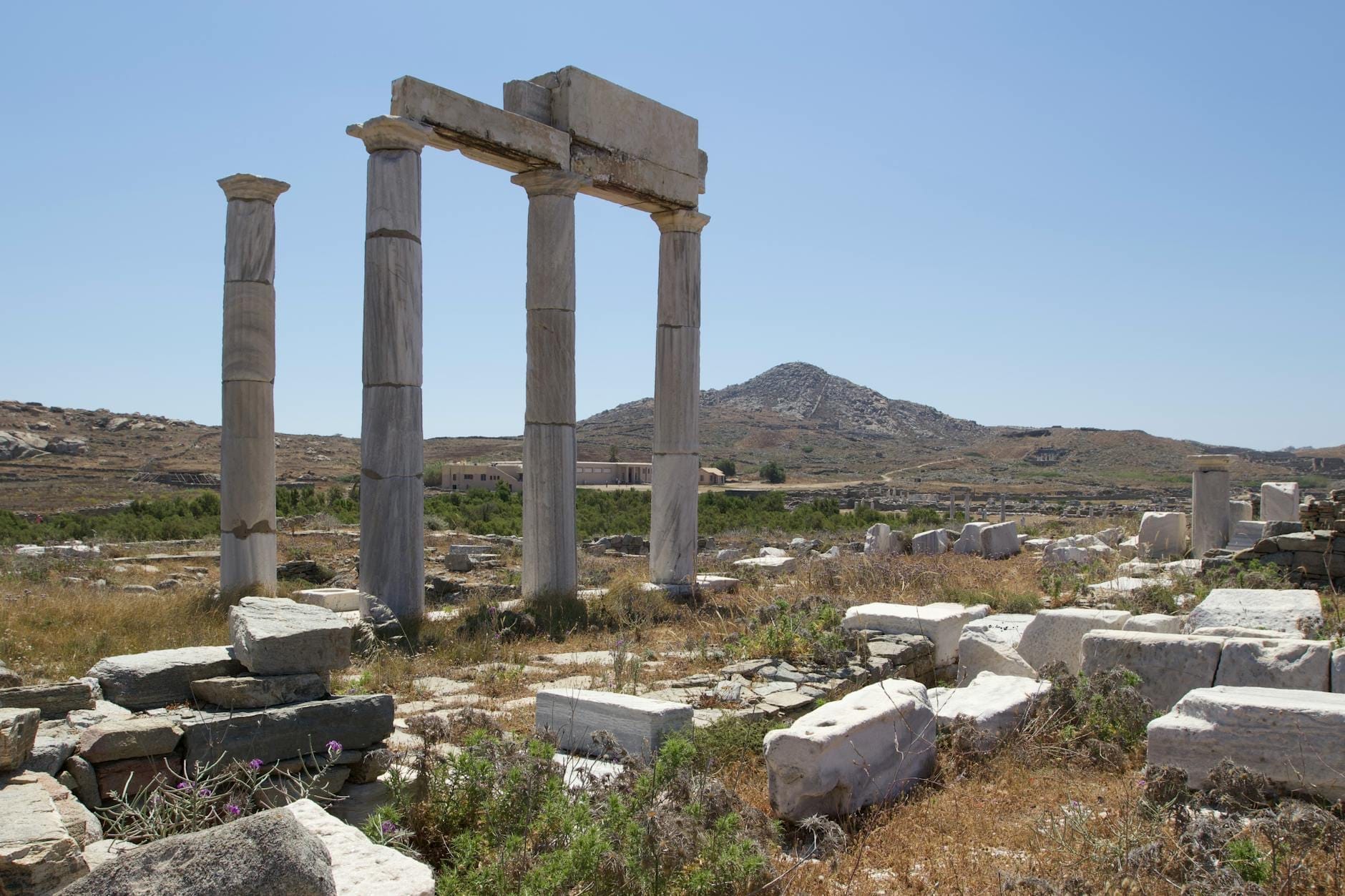
Delos is an uninhabited island and UNESCO World Heritage Site sitting less than 10 kilometers from Mykonos, accessible by a short boat ride from the Old Port. Once one of the most sacred and commercially powerful places in the ancient Greek world, the island is now an open-air archaeological site where visitors walk through the ruins of temples, sanctuaries, and merchant quarters that date back more than 2,500 years.
Delos is not a neighborhood, a beach resort, or a place you sleep in. It is a small, uninhabited island in the Cyclades that once served as the religious heart of the ancient Greek world, and today stands as one of the most significant and least-crowded UNESCO World Heritage Sites in the Mediterranean. A day trip from Mykonos, it rewards anyone willing to trade a few beach hours for two millennia of history underfoot.
Orientation: What and Where Delos Actually Is
Delos is a small island covering roughly 3.5 square kilometers (3.43 km² officially), located approximately 9 kilometers southwest of Mykonos Town. It sits at the geographic center of the Cyclades island group, which is no coincidence: ancient Greeks believed Delos was the birthplace of Apollo and Artemis, and the island's central position in the Aegean made it both a religious hub and a major commercial port during the Hellenistic period.
Unlike every other island covered in travel guides to Mykonos, Delos has no hotels, no permanent residents, no streets in any urban sense, and no infrastructure beyond the archaeological site and its small museum. There is a single jetty where boats dock, a visitor center near the entrance, and a seasonal cafe selling water and basic snacks. That is the entirety of it. The island is essentially one continuous archaeological site, divided loosely into the Sacred Quarter around the Sanctuary of Apollo, the Theater Quarter where wealthy merchants once lived, and the slopes of Mount Kynthos to the southeast.
The island is reached exclusively by boat from Mykonos Old Port in the heart of Mykonos Town. The crossing takes roughly 30 minutes depending on sea conditions. Delos is most commonly reached via Mykonos, which makes it firmly part of the Mykonos travel orbit even though it belongs to a separate municipal unit.
ℹ️ Good to know
Delos is a UNESCO World Heritage Site managed by the Greek Ministry of Culture. It is only open to day visitors. Overnight stays on the island are not permitted, and the last boats back to Mykonos typically depart in the early-to-mid afternoon. Plan your day accordingly.
Character and Atmosphere: A Place Outside Ordinary Time
Arriving at Delos in the morning, before the main wave of day-trippers from Mykonos, produces a particular kind of quiet that is almost impossible to find anywhere else in the Cyclades during summer. The light off the Aegean at 9am is sharp and flat, illuminating every carved stone with clinical precision. Lizards move between the mosaic floors. The wind off the sea is constant and strong enough that conversation has to be raised.
By midday, when the sun is directly overhead and the white marble and granite surfaces reflect the heat back intensely, the site feels simultaneously beautiful and brutal. There is almost no shade. The ground underfoot alternates between ancient stone paving, dry scrub, and bare rock. The Aegean blue is visible from nearly every elevated point on the island. It is atmospheric in the truest sense: the physical environment does a large part of the interpretive work that would normally require signage.
Delos is not a place for families with young children who need frequent rest, cafes, or air conditioning. It is not a place for anyone with significant mobility limitations, since the terrain is uneven and exposed. But for anyone with curiosity about classical antiquity and the willingness to spend a few hours walking slowly through one of the best-preserved ancient urban sites in the Mediterranean, the atmosphere is extraordinary.
What to See and Do: The Archaeological Site
The site divides naturally into several zones, and most organized tours move through them in a loose circuit starting from the jetty. Allow a minimum of two hours for a fast circuit, and three to four hours for a thorough visit.
The Sanctuary of Apollo
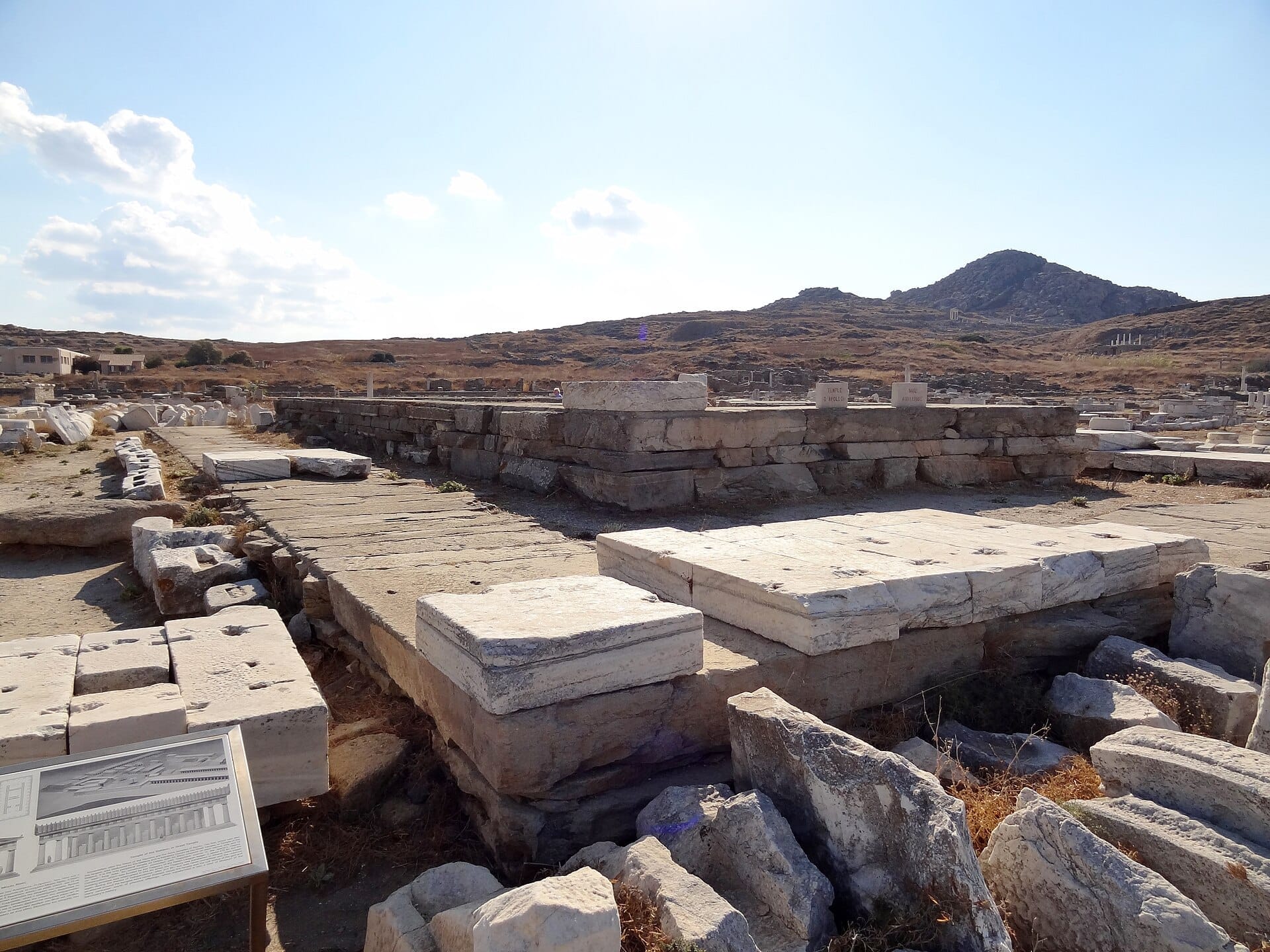
The Sanctuary of Apollo is the religious and historical core of the island, a sequence of temples, treasuries, and altars that accumulated over several centuries of Greek and later Roman patronage. The three main temples of Apollo, each built in a different era, stand side by side in a way that makes the accumulation of time across centuries physically visible. The Sacred Way approaching the sanctuary was once lined with votive monuments and statues.
The Terrace of the Lions
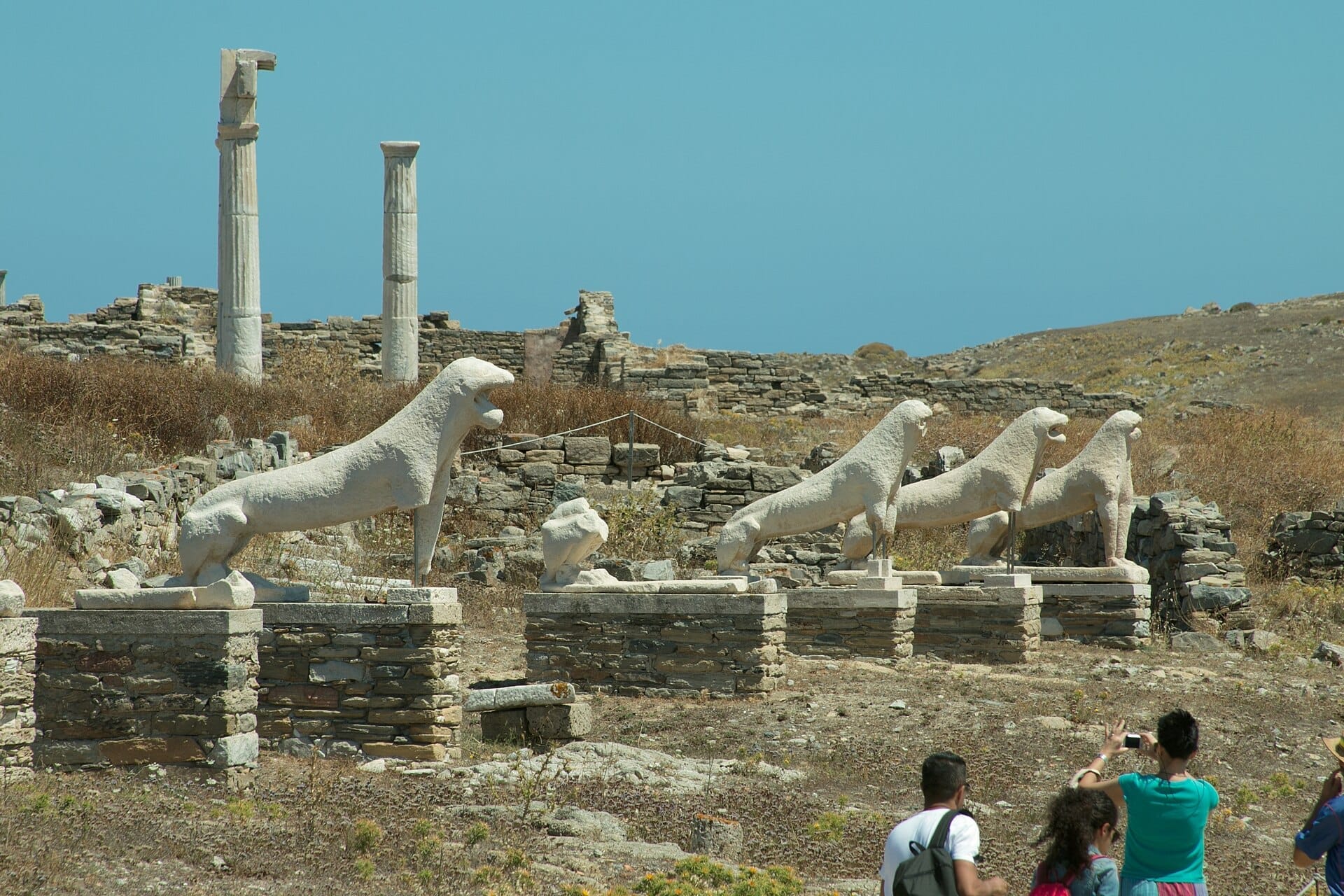
The Terrace of the Lions is the most photographed feature on Delos: a row of archaic marble lions, originally nine in number and dating to around 600 BCE, crouching along the Sacred Way facing the Sacred Lake. The originals have been moved to the site museum for protection; replicas stand in their place outside. The lions are among the finest surviving examples of Archaic Greek sculpture anywhere in the world.
The House of Dionysus and the Mosaic Quarter
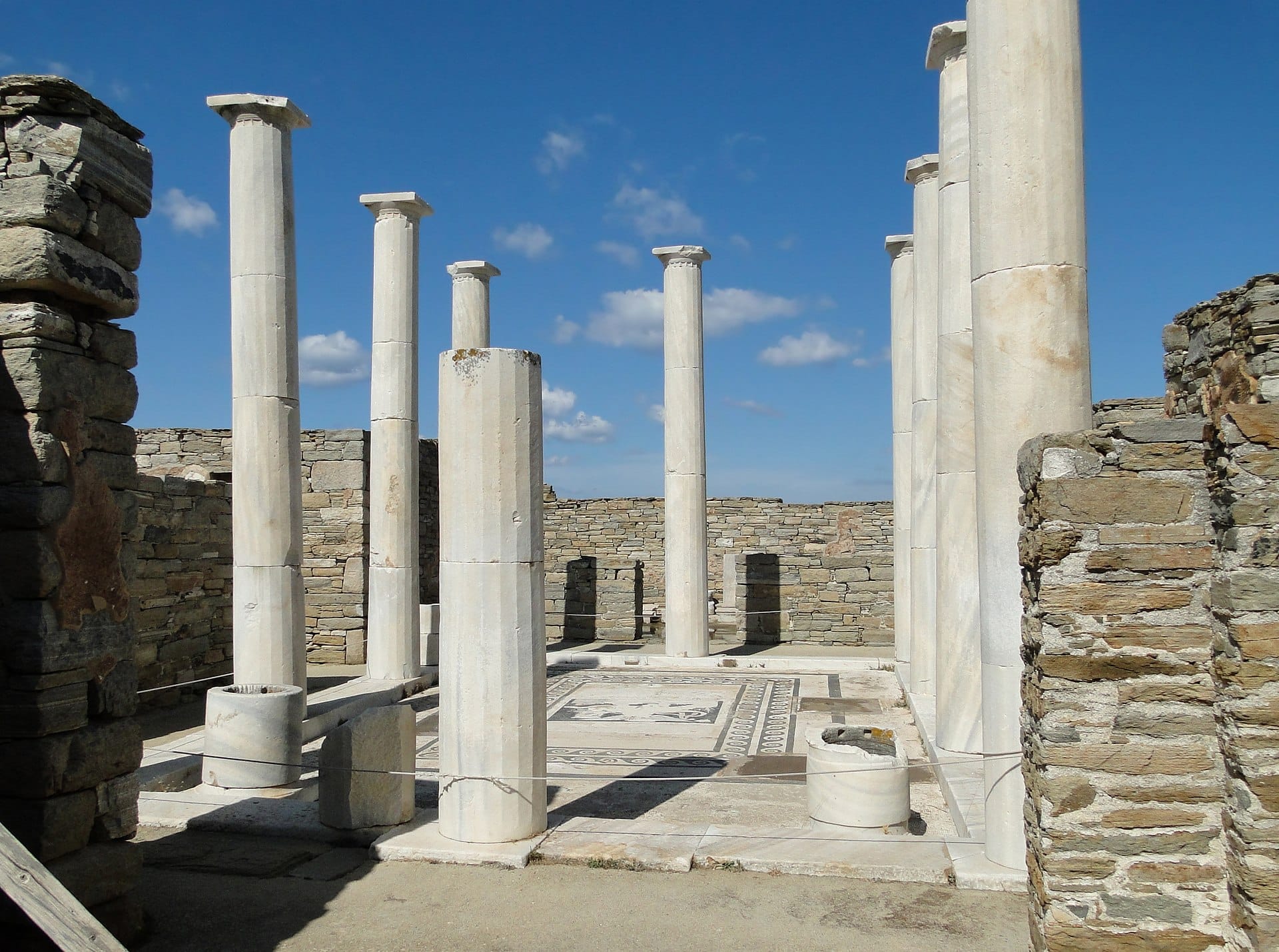
In the Theater Quarter, the residential area of ancient Delos where wealthy merchants built grand houses during the island's commercial peak, the House of Dionysus contains one of the best-preserved mosaic floors in the Cyclades, depicting the god Dionysus riding a panther. Several neighboring houses have their own mosaic floors and colonnaded courtyards that hint at the scale of wealth that passed through this trading hub.
Mount Kynthos
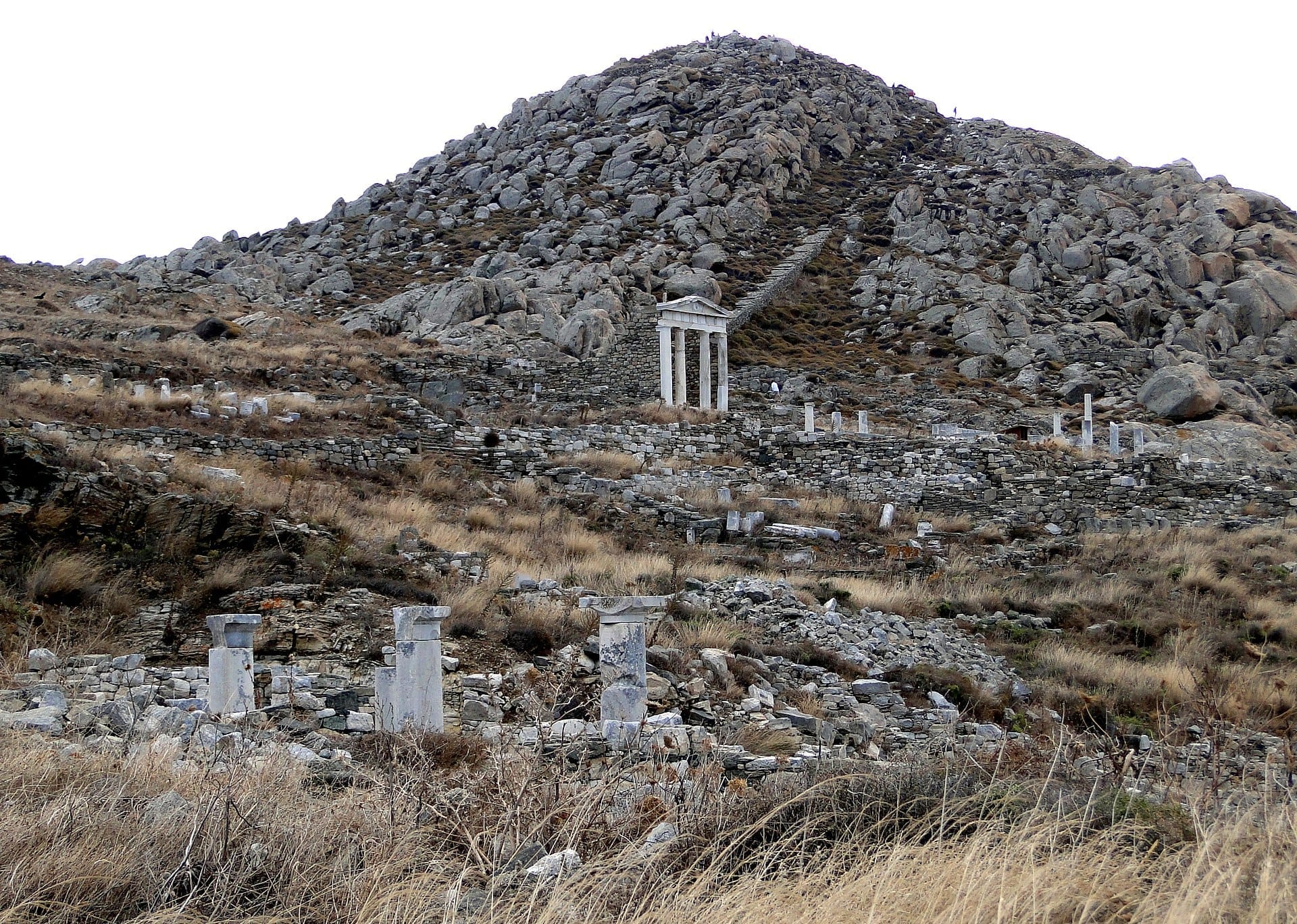
A 20-minute climb leads to the summit of Mount Kynthos at 113 meters, the highest point on the island. The view from the top encompasses the entire Cyclades chain, with Mykonos, Tinos, Syros, Paros, and Naxos all visible on a clear day. The sanctuary of Zeus and Athena at the peak is smaller and less visited than the Apollo sanctuary, but the panoramic context it provides for the whole site makes the climb worth it.
The Archaeological Museum of Delos
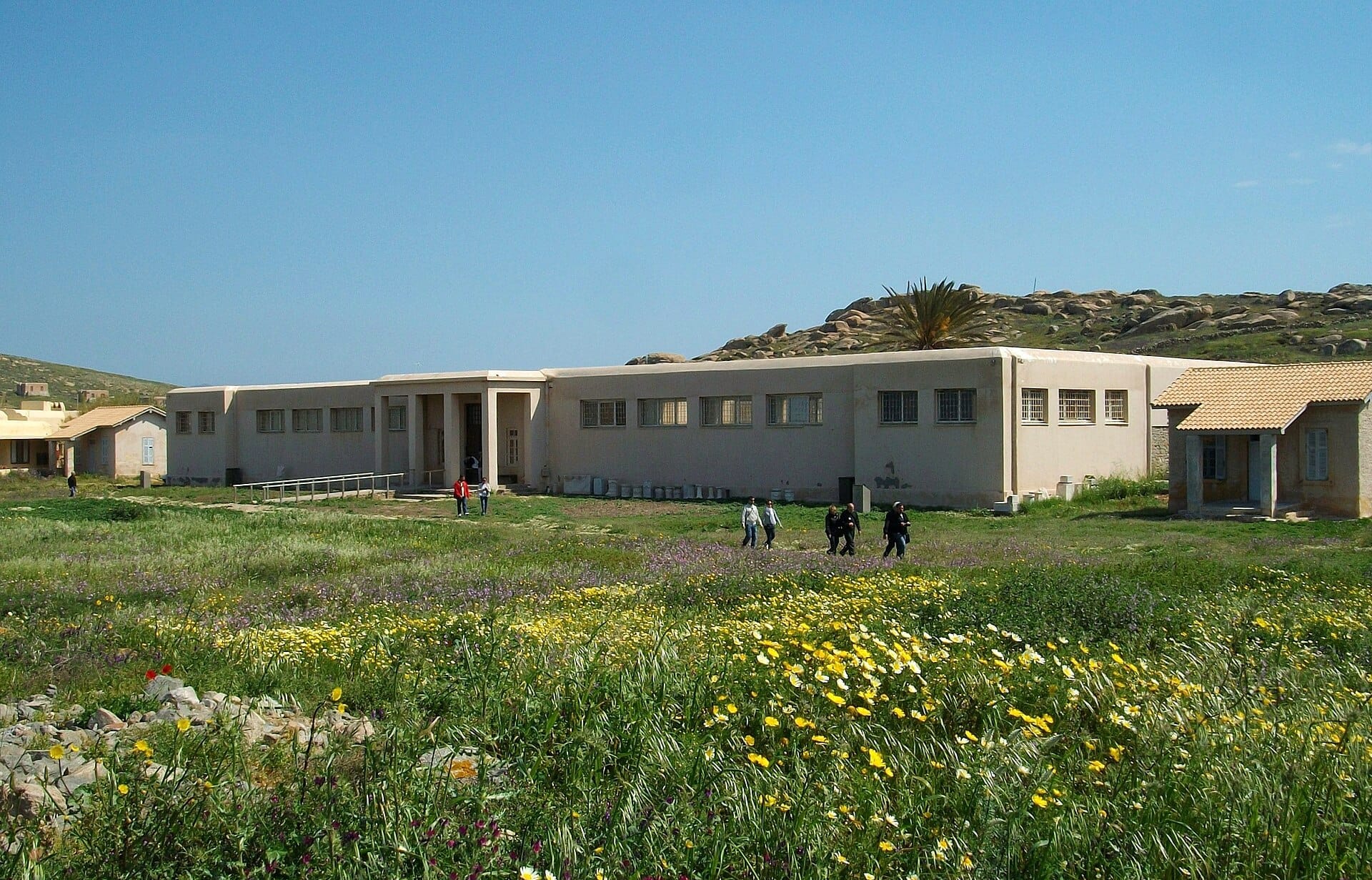
The Archaeological Museum of Delos sits near the site entrance and houses the original lions from the Terrace of the Lions along with an extensive collection of sculpture, pottery, jewelry, and household objects excavated from the site. The museum provides context that makes the outdoor ruins significantly more legible. Visit it either first, to orient yourself, or last, to see the objects you encountered in situ.
Sanctuary of Apollo: the religious heart of ancient Delos, with three overlapping temples
Terrace of the Lions: archaic marble lion sculptures dating to circa 600 BCE
House of Dionysus: extraordinary mosaic floors in the residential merchant quarter
Theater Quarter: labyrinthine streets of ancient houses with mosaic-floored courtyards
Mount Kynthos: short hike to the island's highest point with panoramic Cyclades views
Archaeological Museum of Delos: original lion sculptures and site finds, near the entrance
Eating and Drinking: Manage Your Expectations
There is a single seasonal cafe near the site entrance that sells bottled water, soft drinks, basic snacks, and simple food. It exists to prevent visitors from dehydrating rather than to provide a culinary experience. Do not arrive on Delos expecting a restaurant, a waterfront taverna, or any of the food and coffee culture that defines the rest of your time in the Cyclades.
The practical approach is to eat before boarding the boat in Mykonos Town, bring a substantial supply of water per person, and pack snacks if you plan a long visit. In summer, temperatures on the exposed site regularly exceed 30 degrees Celsius and there is almost no natural shade across most of the central site. Dehydration is a genuine concern, not an abstract one.
⚠️ What to skip
Bring at least 1.5 liters of water per person, more in July and August. There is no potable water source on the island, the cafe's supply can run low on busy days, and the exposed terrain makes the heat more intense than it feels on the Mykonos waterfront. A hat and sun protection are equally non-negotiable.
For food and drink before or after the crossing, Mykonos Town has plenty of cafes and restaurants within walking distance of the Old Port. Most morning boat departures leave early enough that a coffee and pastry near the embarkation point is a realistic option before boarding.
Getting There and Around
Delos is reached by scheduled boat from the Old Port of Mykonos Town. Boats depart in the morning, typically between 9am and 1pm, and return from Delos in the early-to-mid afternoon. The crossing takes approximately 30 minutes each way. Services are seasonal and run mainly in the warmer months (typically spring through autumn); in peak summer months, multiple departures per day are available. Schedules change annually, so verify current times at the Old Port or through local agencies before planning your day.
Tickets are sold at the embarkation point at the Old Port or through licensed tour operators in Mykonos Town. The ticket covers the boat crossing only; entry to the archaeological site is purchased separately upon arrival. Organized guided tours that include both boat transfer and a guided walk through the site are widely available from operators based in Mykonos Town and offer good value if this is your first visit, since the ruins are extensive enough that context significantly improves the experience.
For full logistics on planning your crossing, including current schedule information and what to combine with a Delos visit, the dedicated day trip to Delos from Mykonos guide covers everything from ticket pricing to how to structure your time on the island.
💡 Local tip
Take the earliest available boat to Delos. The site is significantly more pleasant before midday, both because of temperature and because the main tour groups arrive later in the morning. An early start also gives you more time on the island before the last return boat departs.
Once on Delos, movement is entirely on foot. The terrain is uneven, mixing ancient stone paving with dry scrub paths and rocky hillside approaches. Comfortable, closed shoes with grip are strongly recommended. The entire archaeological site is open air and spreads across the northern two-thirds of the island, with Mount Kynthos rising at the southern end. Walking distances within the site are modest, but the combination of heat, uneven ground, and the time required to actually look at things makes it physically demanding.
Where to Stay: There Are No Options on Delos
Accommodation on Delos does not exist. The island has been effectively uninhabited since antiquity, and overnight stays are not permitted under the site's UNESCO protection framework. Every visitor to Delos stays in Mykonos, either in Mykonos Town or at one of the island's beach areas, and makes a day trip across.
If your primary reason for visiting the Mykonos area is Delos rather than beaches and nightlife, staying in Mykonos Town itself makes the most logistical sense: the Old Port departure point is walkable from most accommodation in Chora. The where to stay in Mykonos guide breaks down all the island's accommodation zones and can help you find the right base for your priorities.
For travelers combining Delos with a broader Cyclades itinerary, it is worth noting that Delos also appears in 3-day Mykonos itineraries as a natural half-day excursion that pairs well with an afternoon spent in Mykonos Town's Chora district or at one of the calmer beaches on the island's west coast.
Historical Context: Why Delos Matters
Delos was one of the most important places in the ancient Greek world for reasons that have nothing to do with its size. The island's association with the birth of Apollo, the god of light, music, and prophecy, made it a pan-Hellenic sacred site from at least the 10th century BCE onward. City-states across the Greek world sent offerings, delegations, and tribute here. The island was considered so sacred that birth and death were eventually prohibited on it: pregnant women and the dying were transported to neighboring Rheneia island.
During the Hellenistic period, particularly after 166 BCE when Rome handed control of Delos to Athens, the island became the most important trading port in the eastern Mediterranean. At its peak it reportedly processed the sale of thousands of enslaved people daily, in addition to enormous quantities of grain, oil, and luxury goods. The residential quarter that visitors walk through today, with its elaborate mosaic floors and colonnaded courtyards, was built during this period of intense commercial wealth.
The island was sacked twice in the first century BCE, first by forces allied with Mithridates of Pontus in 88 BCE and again by pirates in 69 BCE. It never recovered its population or commercial significance, which is precisely why so much of it survives. Unlike sites that were continuously inhabited and rebuilt upon, Delos was essentially abandoned and left intact beneath the Aegean sun. French archaeologists began systematic excavation in the 1870s, and the work continues today.
Honest Assessment: Who Should Go and Who Should Skip It
Delos is not for everyone, and being clear about this saves disappointment. If your Mykonos trip is primarily about beaches, beach clubs, and late nights, a Delos day trip will feel like a significant detour. The site requires several hours, physical exertion in the heat, advance planning around the boat schedule, and a genuine interest in what you are looking at. Visitors who arrive on Delos without any preparation often find it overwhelming and confusing.
For travelers with any interest in classical history, Mediterranean archaeology, or the physical experience of standing inside a place that shaped the ancient world, Delos is genuinely one of the great sites in Europe. The combination of scale, preservation, setting, and relative lack of crowds compared to Pompeii or the Athenian Acropolis makes it an experience that most visitors describe as the highlight of their time in Greece.
If you are still deciding whether the broader Mykonos trip is worthwhile, the is Mykonos worth visiting guide addresses the full picture. For those who have already committed and want to build a complete itinerary, things to do in Mykonos includes Delos in the context of the island's other main experiences.
TL;DR
Delos is an uninhabited UNESCO World Heritage Site accessible by a 30-minute boat ride from Mykonos Old Port: it is a day trip destination, not a place to stay.
The site contains some of the most significant ancient Greek ruins in the Mediterranean, including the Sanctuary of Apollo, the Terrace of the Lions, the House of Dionysus, and the Archaeological Museum of Delos.
Take the earliest boat available, bring at least 1.5 liters of water per person, wear closed shoes and sun protection, and allow 3 to 4 hours to do the site justice.
There is no shade, no restaurant, and no potable water on the island: all logistics must be planned from Mykonos before you board.
Best suited for travelers with genuine interest in ancient history and archaeology; less suited for beach-focused visitors or anyone with significant mobility limitations.
Three days is exactly enough time to cover Mykonos properly — the labyrinthine alleys of Chora, the UNESCO ruins of Delos, the south-coast beach scene, and a genuine taste of the island's nightlife. This day-by-day itinerary gives you the structure, the practical details, and the honest advice to make it work.
Mykonos has a beach for every type of traveler. This guide covers the 12 best beaches on the island, from the legendary party scene at Paradise to the car-free calm of Agios Sostis, so you can find exactly the day you're looking for.
Mykonos rewards travelers who time their visit carefully. This guide breaks down every season by weather, crowd levels, prices, and what's actually open, so you can decide when the island works best for your trip.
Delos is one of Greece's most extraordinary archaeological sites, and it sits just 30 minutes by boat from Mykonos. This guide covers ferry schedules, entry fees, the best ruins to prioritize, and whether a guided tour is worth the extra cost.
Mykonos is a small island with a surprisingly complex transport puzzle. From the KTEL bus network and south-coast caiques to the island's notoriously scarce taxis and rental vehicles, this guide breaks down every way to get around — with real prices, practical tips, and honest warnings about what doesn't work as well as you'd hope.
Mykonos has a reputation that precedes it: luxury prices, wall-to-wall tourists, and beach clubs that run until dawn. But the island is more layered than that. This guide cuts through the hype to tell you exactly who Mykonos is worth visiting for — and who should skip it.
Mykonos has some of the world's most famous beach clubs, from full-day party venues at Paradise Beach to bohemian sunset gatherings at Scorpios. This guide breaks down where to go, what to expect, what things actually cost, and how to book before peak season fills up.
Mykonos is far more than a party island. For couples, it offers sunset cocktails at Little Venice, private-pool suites above the Aegean, quiet beaches with turquoise water, and a day trip to the ancient ruins of Delos. This guide covers the best romantic experiences, when to go, where to stay, and how to avoid the crowds.
Mykonos is Greece's most polished luxury destination, combining world-class hotels, private beach clubs, superyacht culture, and some of the Aegean's best dining. This guide cuts through the hype with specific advice on when to go, where to stay, how to get around, and what actually justifies the price tag.
Mykonos has one of Europe's most legendary party scenes, from clifftop superclubs to sun-soaked beach raves and intimate cocktail bars in Chora's whitewashed alleys. This guide covers the best venues, realistic prices, seasonal timing, and the honest trade-offs so you can plan a night out that actually matches your expectations.
Mykonos has a reputation as one of Greece's most expensive islands, and that reputation is mostly earned. But visiting without hemorrhaging money is entirely possible if you understand how pricing works, when to go, and where to spend versus save. This guide breaks it all down honestly.
Everything you need to plan the trip from Mykonos to Santorini: which ferry operators run the route, how long the crossing takes, what fares to expect by season, whether flying makes sense, and how to fit in stops at Paros or Naxos along the way.
Both islands dominate Cyclades itineraries, but they deliver completely different experiences. This guide breaks down the real differences between Mykonos and Santorini across scenery, beaches, nightlife, budget, and logistics so you can choose the right one — or plan both smartly.
Mykonos delivers more than beach clubs and late nights. This guide covers the top things to do in Mykonos, Greece — from ancient ruins on Delos and windswept Cycladic lanes to family beaches and genuine local culture — with practical logistics for every type of traveler.
Mykonos has a distinct culinary identity that goes far beyond generic Greek salads and souvlaki. This guide covers the island's signature foods, honest price expectations, where to eat well on any budget, and the restaurants worth planning your day around.
Choosing where to stay in Mykonos shapes your entire trip. This guide breaks down every key area, from the lively lanes of Chora to the family-friendly shores of Ornos, with honest advice on prices, logistics, and who each neighborhood actually suits.