Mykonos to Santorini: Ferry, Flight & Island-Hopping Guide
Everything you need to plan the trip from Mykonos to Santorini: which ferry operators run the route, how long the crossing takes, what fares to expect by season, whether flying makes sense, and how to fit in stops at Paros or Naxos along the way.
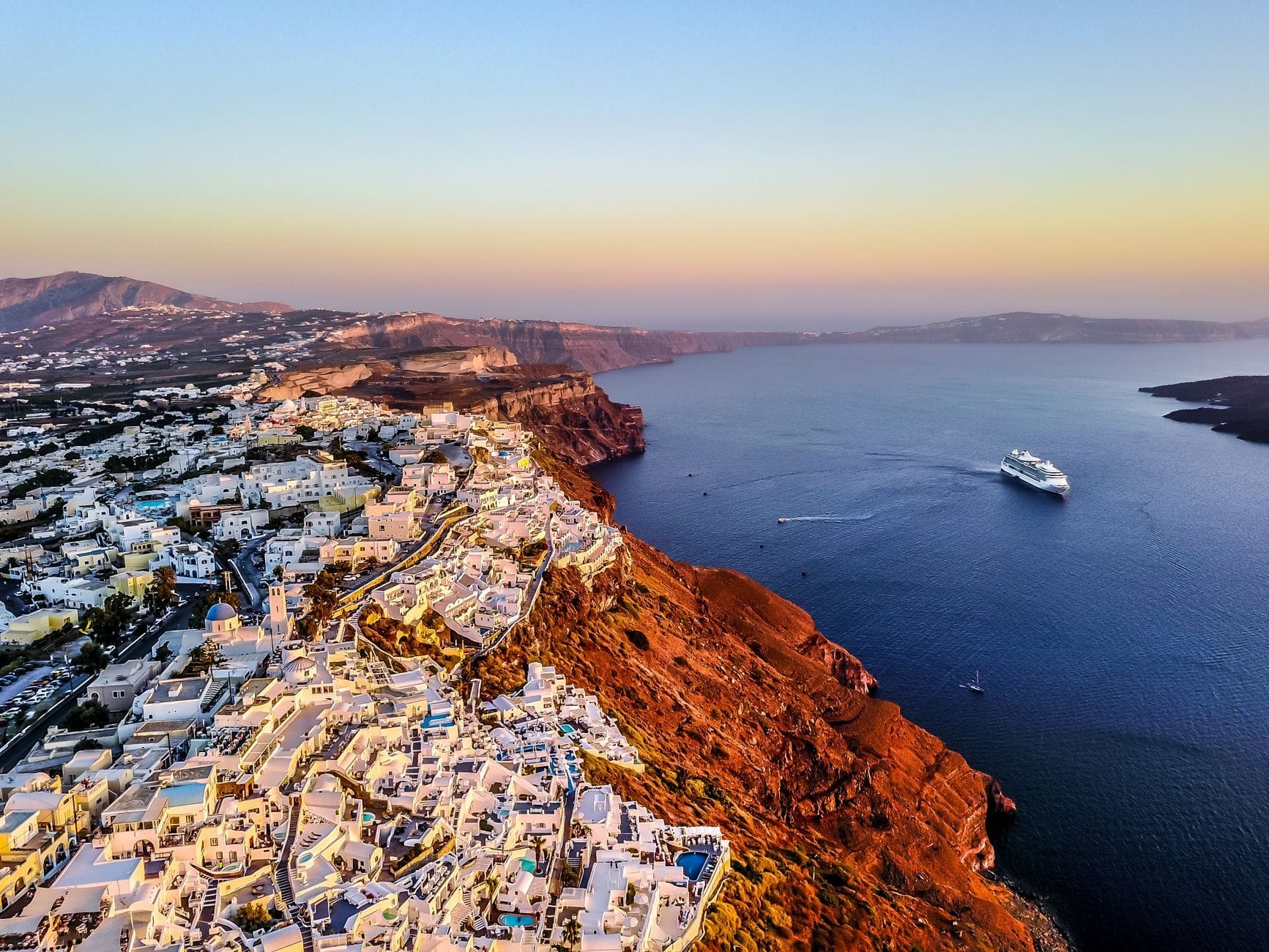
Tickets & tours
Live prices and dates from our booking partner. If you book, we may earn a commission at no extra cost to you.
TL;DR
- The fastest way from Mykonos to Santorini is a high-speed ferry: around 2h 10m with SeaJets or Golden Star Ferries, compared to 3-4 hours on conventional vessels.
- Fares range from roughly €35-45 on slow ferries to €89 or more on high-speed catamarans in peak season. Book early for July and August.
- There are no direct flights between Mykonos and Santorini. Flying means connecting through Athens, which adds cost and at least 3-4 hours of transit time.
- All sailings are daytime only. No overnight ferries operate on this route. Departures run roughly 09:40 to 18:05 depending on season.
- The route pairs naturally with stops at Paros or Naxos if you have extra days for island-hopping through the Cyclades.
Ferry vs. Flight: Which Option Actually Makes Sense
The Mykonos to Santorini route is one of the most popular inter-island connections in the Aegean, and the choice between ferry and flight is simpler than most travelers expect. There are no direct flights. Santorini's airport (JTR) and Mykonos airport (JMK) are not connected by any scheduled air service. If you want to fly, you board a flight to Athens, wait in transit, and board another flight south. That process typically takes about 2 hours in the air, plus airport time and connections, and costs significantly more than the ferry. For most travelers, the ferry wins easily.
The exception is travelers already booked on a connecting flight through Athens for other reasons, or those who are severely seasick-prone and willing to pay a premium for a shorter time on the water. Even then, a high-speed catamaran cuts the crossing to around 2 to 3 hours, which is manageable for most people. The Aegean can get rough, especially in July and August when the meltemi wind picks up, but modern high-speed ferries handle these conditions better than older conventional vessels.
⚠️ What to skip
The meltemi, a strong dry northerly wind, blows persistently across the Cyclades from mid-July through August. High-speed catamarans are more susceptible to cancellation in rough seas than larger conventional ferries. If you're traveling in peak summer, check cancellation policies and keep a flexible travel day if your schedule allows.
Ferry Routes, Operators, and Crossing Times
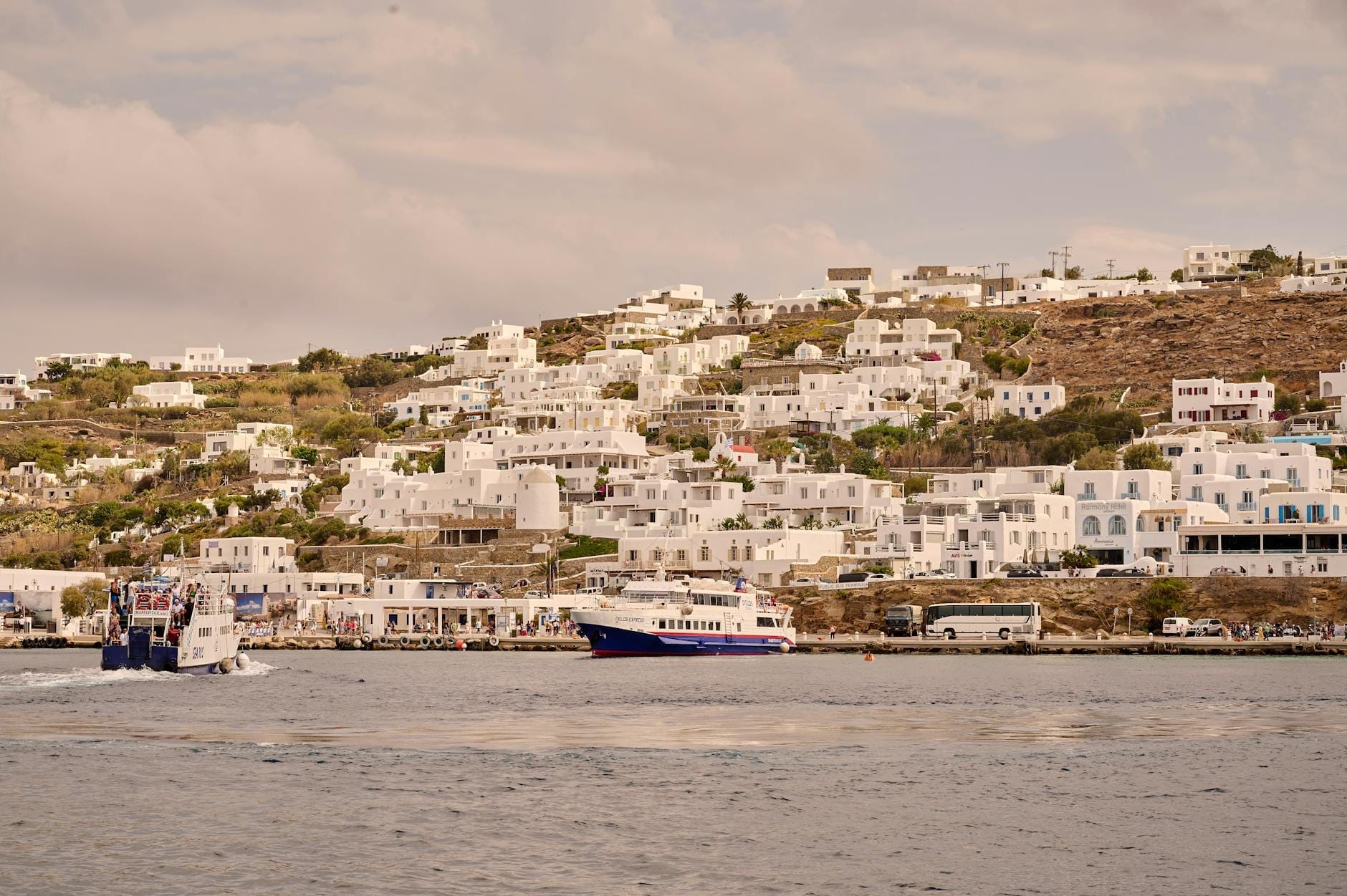
Ferries depart from the New Port at Tourlos, about 2.5 km north of Mykonos Town. This is different from the Old Port near Chora, which handles smaller boats and water taxis. If you're taking a ferry to Santorini, confirm your departure point when booking because arriving at the wrong port means missing your sailing.
Two main vessel types serve the route. High-speed catamarans, operated by SeaJets and Golden Star Ferries, cover the roughly 118 km crossing in about 2 hours to 3 hours 30 minutes. Conventional ferries take 3 hours 30 minutes to 4 hours but are significantly cheaper and more stable in choppy conditions. Blue Star also accommodates vehicles if you've rented a car, though transporting a rental across islands is rarely worth the added expense.
- SeaJets High-speed catamaran operator with the most frequent sailings in peak season. Fastest crossing times, higher fares. Best option if time matters most.
- Golden Star Ferries Another high-speed operator covering the Mykonos-Santorini route. Comparable speeds to SeaJets with competitive pricing, especially for advance bookings.
- Blue Star Ferries Conventional large ferry, slower crossing (3.5-4 hours) but more comfortable in rough seas, cheaper fares, and more stable for passengers prone to seasickness on fast boats.
In peak season (June through September), approximately 4-5 daily sailings operate across all operators. Outside peak season, this drops significantly, with fewer sailings per day and seasonal service from March to November. If you're traveling in May, October, or later, check schedules carefully before planning around this crossing.
💡 Local tip
Book ferry tickets at least 2-3 weeks ahead for July and August travel. Popular departure times (morning sailings around 09:40-10:00) sell out fast on this route. The Omio and Direct Ferries platforms let you compare all operators at once, but booking directly through SeaJets or Golden Star Ferries often avoids booking fees.
Fares and What to Expect at Different Price Points
Pricing on the Mykonos to Santorini ferry route varies considerably by operator, vessel type, travel class, and how far in advance you book. Economy deck seats on conventional ferries can start around €80. High-speed catamaran fares typically start around €80, rising higher in July and August. These prices reflect standard economy seating. Business class or cabin upgrades on conventional ferries cost more but rarely justify the added expense for a crossing under 4 hours.
- Economy (deck/seat class, conventional ferry): €80 and up depending on season
- Economy (high-speed catamaran): €80 and up depending on operator and season
- Business/cabin class (conventional ferry): €70-120, rarely necessary for a daytime crossing
- Child discounts: typically available on most operators
- Vehicles (cars): possible on Blue Star Ferries, but adds significant cost and complexity
✨ Pro tip
Traveling as a couple or group? The per-person savings from booking early on a high-speed catamaran versus buying last-minute on a conventional ferry can be surprisingly small. Compare total journey time against fare difference: an extra 90 minutes at sea rarely justifies paying €40 more per person, especially if the conventional ferry has better food and more stable conditions.
Practical Logistics: Ports, Timing, and Arriving in Santorini
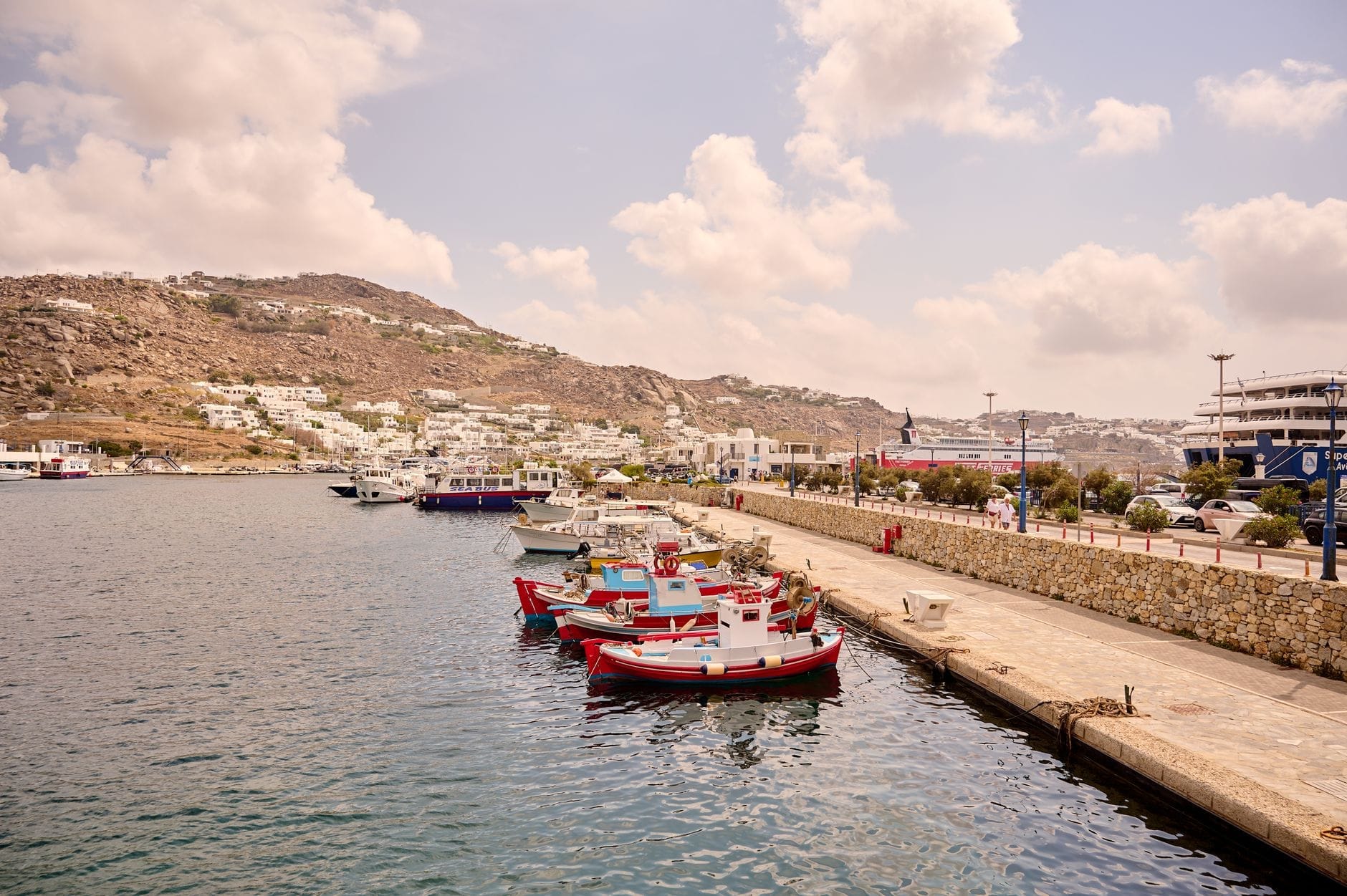
Allow at least 45-60 minutes to get from central Mykonos to the New Port at Tourlos for check-in. Taxis are the most reliable option, especially with luggage. The Old Port near Chora is a common point of confusion: it's a different location and handles different traffic. Tell your taxi driver you need the New Port (Tourlos) for the Santorini ferry.
Ferries dock at Athinios Port on Santorini, not at the famous caldera town of Fira or Oia. Athinios is a working port carved into a cliff about 10 km south of Fira. From there, you'll need a taxi, bus, or pre-arranged transfer to reach your accommodation. The switchback road from Athinios up the cliff can be slow in peak season, and taxis queue fast after ferries arrive. Pre-booking a transfer or having your accommodation send a driver is worth considering, particularly if you arrive with heavy luggage.
Departure times from Mykonos are clustered in the morning and early afternoon, generally between 09:40 and 18:05. There are no overnight crossings on this route. Most travelers aim for a morning departure to arrive in Santorini with time to get settled before dinner. Evening sailings are available but cut into your first afternoon, particularly given the transfer time from Athinios to caldera-side towns.
Island-Hopping: Adding Paros, Naxos, or Delos to the Route
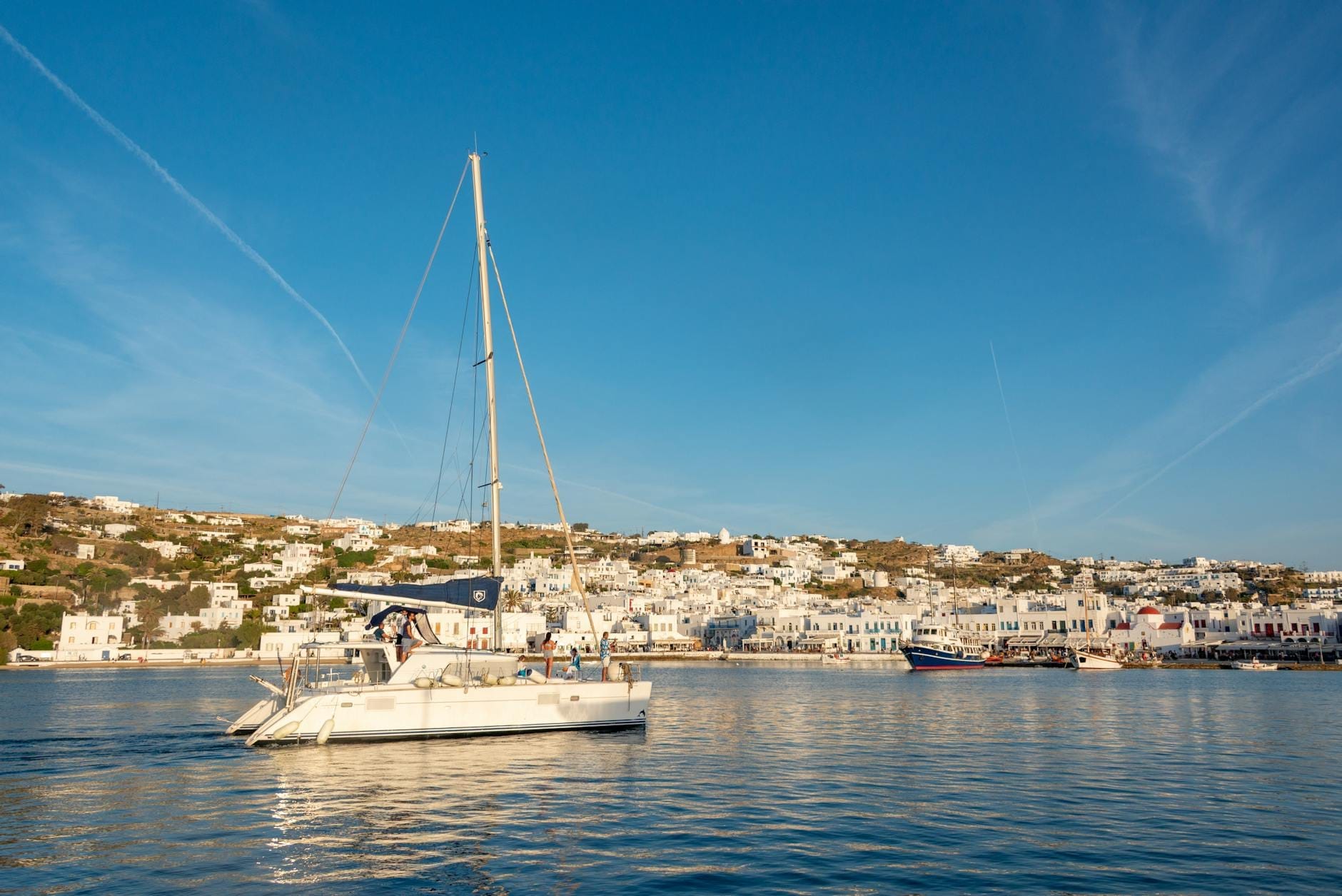
The Mykonos to Santorini corridor runs through some of the best islands in the Cyclades, and adding a night or two at an intermediate stop transforms a transfer into a proper island-hopping itinerary. A 3-day Mykonos itinerary pairs naturally with 2-3 nights in Paros or Naxos before continuing south to Santorini.
Paros is the most logical stopover: it's roughly halfway between Mykonos and Santorini, with regular ferry connections to both. It's quieter and cheaper than either Mykonos or Santorini, with good beaches and a genuinely local atmosphere. Naxos is a short hop from Paros and offers mountains, villages, and ancient ruins alongside beaches. If you have more interest in archaeology, a day trip to Delos departing from Mykonos before you leave is a practical add-on that requires only a half-day.
For ferry connections beyond Santorini or back to the mainland, understanding the Aegean ferry network helps significantly. The Mykonos to Athens ferry is another common route for travelers ending their Cyclades loop, with Blue Star Ferries and SeaJets both running regular service to Piraeus. Journey time to Athens is around 4-5 hours on a high-speed vessel or 6-7 hours on a conventional ferry.
- Mykonos to Paros Around 1 hour 20 minutes by high-speed ferry. Excellent stopover option with regular connections onward to Santorini. Considerably less crowded than Mykonos in summer.
- Mykonos to Naxos Approximately 1 hour 45 minutes to 2 hours 30 minutes depending on operator. Greece's largest Cycladic island with diverse landscape, beaches, and archaeology.
- Mykonos to Athens (Piraeus) 4-5 hours on high-speed, 6-7 hours on conventional ferry. Useful for travelers ending their island trip and flying home from Athens.
- Delos Day Trip from Mykonos A 30-minute boat ride from Mykonos Old Port. UNESCO World Heritage Site with extraordinary archaeological remains. Half-day is sufficient; no overnight stays permitted on the island.
Mykonos vs. Santorini: Should You Visit Both or Choose One?
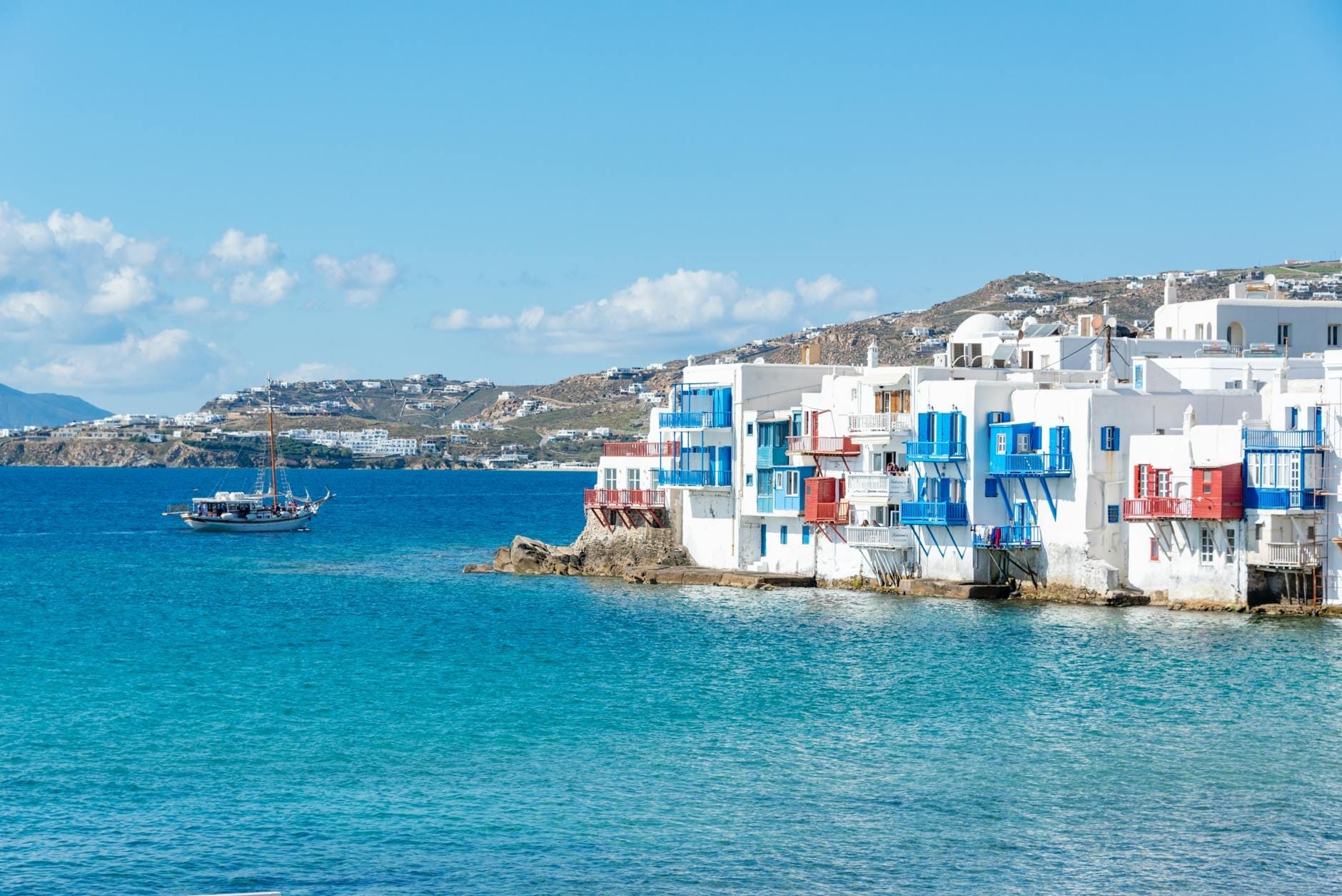
This is one of the most common questions about planning a Greek islands trip, and the honest answer is that they're different enough to complement rather than duplicate each other. Mykonos and Santorini serve different travel styles: Mykonos runs on nightlife, beach clubs, and cosmopolitan energy; Santorini trades on its volcanic caldera views, wine, and sunsets. If you're after both experiences, 3-4 nights on each is enough to get the most out of them.
If you only have a week and must choose, consider what matters most. Mykonos has better beaches overall, with options ranging from the party atmosphere at Paradise Beach to quieter stretches in the north. Santorini has virtually no good swimming beaches near the caldera towns, though it compensates with dramatic scenery that Mykonos can't match. Both are expensive in peak season, though Santorini's caldera-view accommodation commands a premium that has few parallels anywhere in Greece.
ℹ️ Good to know
Traveling in late September or October? Both islands are significantly calmer, cooler, and cheaper than July-August. The Mykonos to Santorini ferry still operates with reasonable frequency, and you'll find far shorter queues at ports, restaurants, and archaeological sites. Shoulder season is genuinely the better choice for travelers who prioritize experience over peak-season bragging rights.
FAQ
How long is the ferry from Mykonos to Santorini?
High-speed catamaran ferries (SeaJets, Golden Star Ferries) take approximately 2 hours 10 minutes to 2 hours 45 minutes. Conventional car ferries (Blue Star Ferries) take around 3 hours 30 minutes to 4 hours. The difference in journey time is the main reason most travelers choose the high-speed option despite the higher fare.
How much does the Mykonos to Santorini ferry cost?
Economy fares on conventional ferries start around €35-45 in shoulder season. High-speed catamaran tickets typically range from €55-65 in May-June up to €89-110 or more in July-August peak season. Book in advance for the best prices, especially for July and August travel.
Is there a direct flight from Mykonos to Santorini?
No. There are no direct scheduled flights between Mykonos (JMK) and Santorini (JTR). The only air connection between the two islands involves connecting through Athens, which adds significant time and cost. The ferry is almost always the better option for this journey.
Which port do ferries depart from in Mykonos?
Ferries to Santorini depart from the New Port at Tourlos, located about 2.5 km north of Mykonos Town (Chora). This is not the same as the Old Port near the town center, which handles water taxis and excursion boats. Allow at least 45-60 minutes from central Mykonos to reach the New Port, check in, and board.
Can I do Mykonos and Santorini in one trip?
Yes, and the combination is very common. Most travelers allocate 3-4 nights to each island. The ferry crossing takes 2-4 hours depending on the vessel, making it easy to travel between them in a single morning. You can also stop at Paros or Naxos en route if your itinerary allows for additional islands.
Tickets & tours
Live prices and dates from our booking partner. If you book, we may earn a commission at no extra cost to you.
Planning a trip? Discover personalized activities with the Nomado app.