Is Mykonos Worth Visiting? An Honest Assessment
Mykonos has a reputation that precedes it: luxury prices, wall-to-wall tourists, and beach clubs that run until dawn. But the island is more layered than that. This guide cuts through the hype to tell you exactly who Mykonos is worth visiting for — and who should skip it.
Tickets & tours
Live prices and dates from our booking partner. If you book, we may earn a commission at no extra cost to you.
TL;DR
- Mykonos is Greece's most expensive island — budget at least €150–200/night for a decent mid-range room in peak season, and significantly more for anything upscale.
- The island earns its reputation for nightlife and beach clubs, but also has genuine cultural landmarks, quieter beaches, and a charming main town worth exploring.
- Peak season runs July–August: expect maximum crowds and prices. May–June and September are the sweet spots — full sun, lower rates, and manageable crowds. See our best time to visit Mykonos guide for a month-by-month breakdown.
- Mykonos is not a traditional, quiet Greek island. If that's what you're after, look at Naxos, Folegandros, or Sifnos instead.
- For party travelers, honeymooners, and island-hoppers who want a high-energy 2–3 day stop, Mykonos absolutely delivers.
What Mykonos Actually Is (And Isn't)
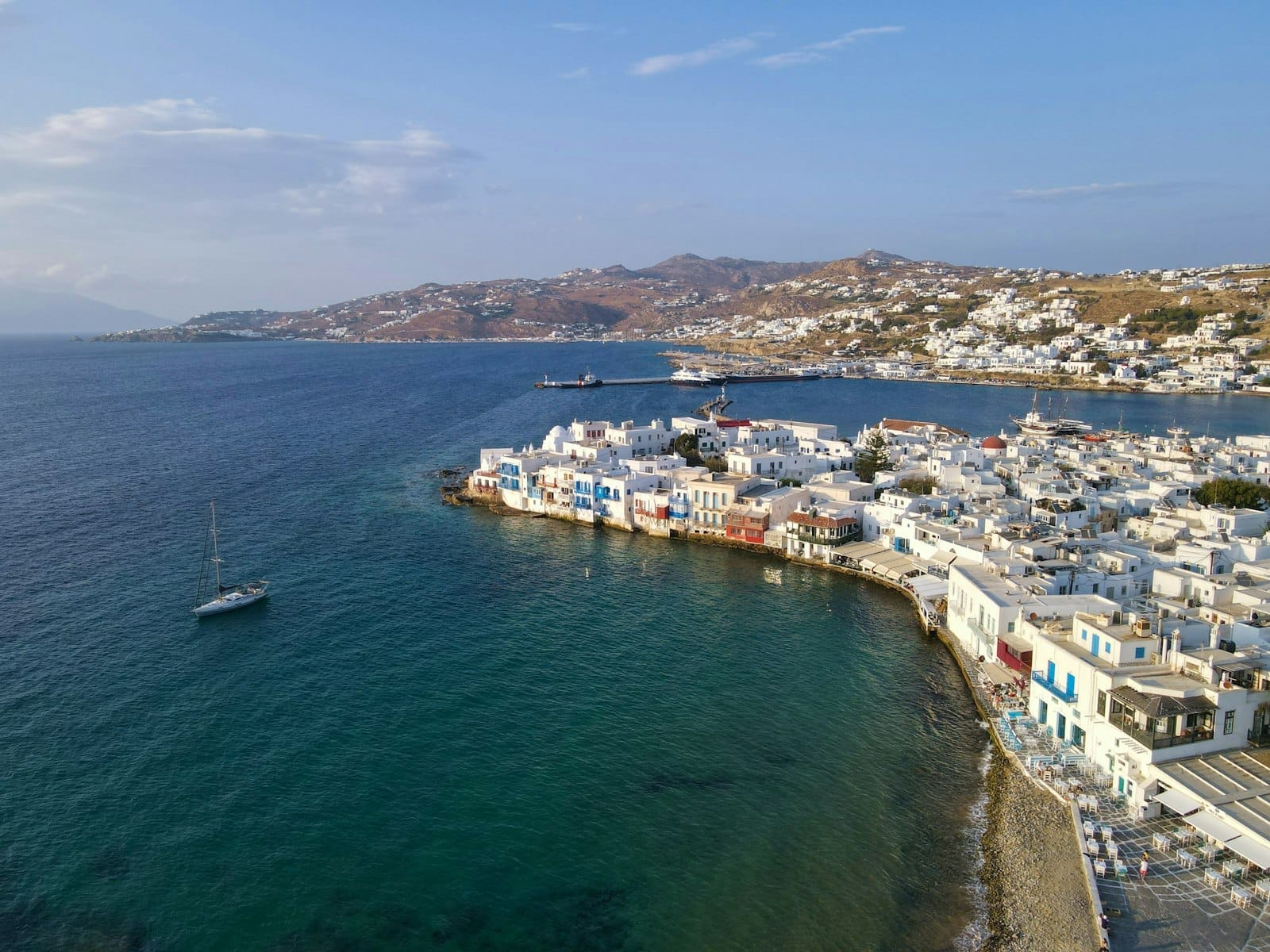
Mykonos is an 85.5 km² island in the Cyclades, about 150 km east of Athens, with a permanent population of just over 10,700 people. In summer, that number is overwhelmed by visitors many times over. The island sits in the path of the Meltemi winds — strong, dry northerly winds that sweep through the Aegean from June to September — which explains both the iconic rows of windmills and the fact that summers here feel less stifling than on more sheltered islands.
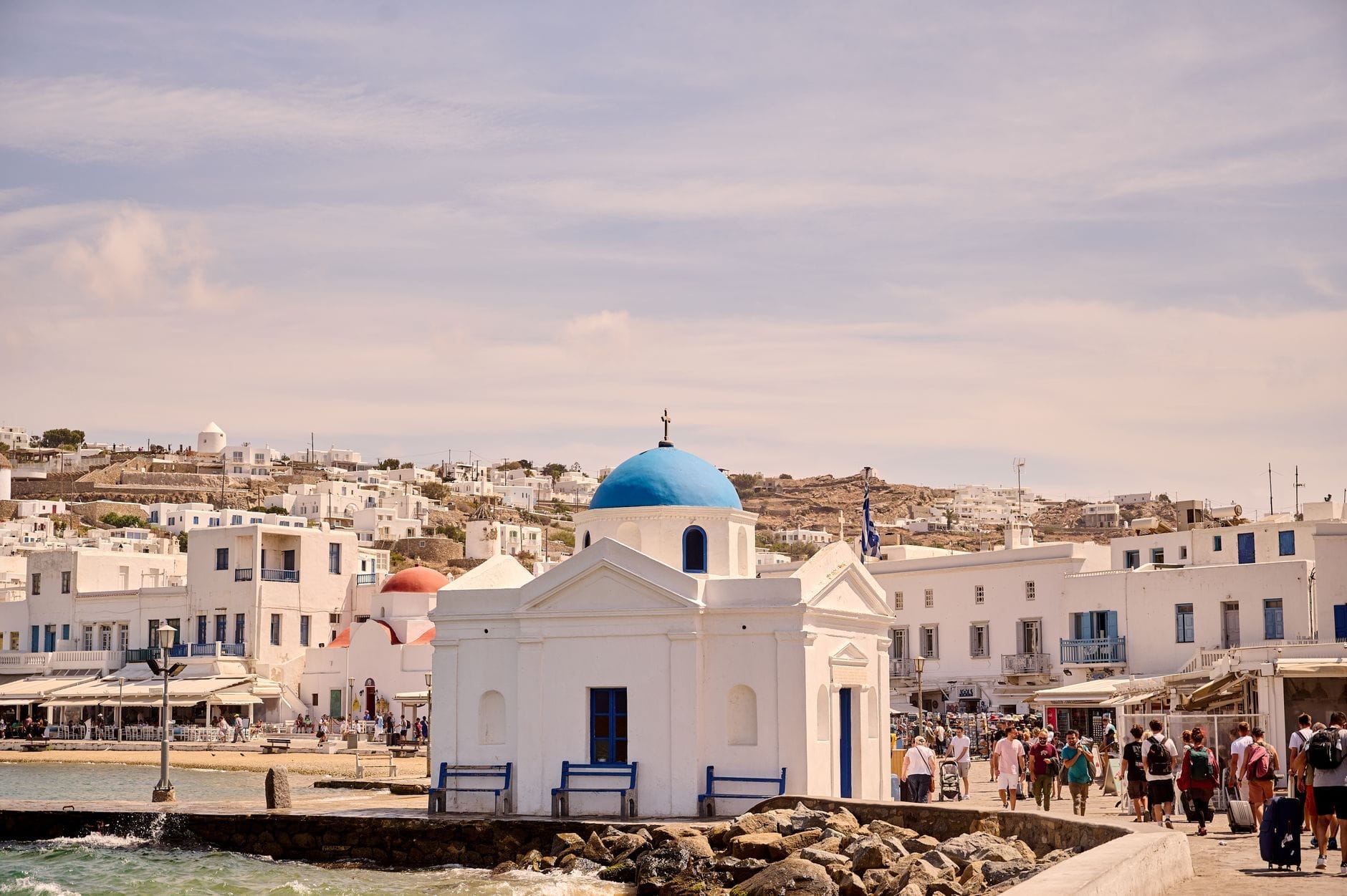
The main town, known as both Mykonos Town and Chora, is the heart of the island: a compact tangle of whitewashed alleys, blue-domed chapels, and high-end boutiques. Mykonos Town is genuinely beautiful and worth exploring on foot, especially in the early morning before the day-trippers arrive from cruise ships. Beyond the town, the island splits into two distinct personalities: the wild south coast with its organized beach clubs and party beaches, and the quieter north and east coasts where the crowds thin out considerably.
ℹ️ Good to know
Mykonos is part of the Schengen Area as a Greek island. EU/EEA citizens enter visa-free with a national ID. Many other nationalities can stay up to 90 days within any 180-day period without a visa — but always verify current entry requirements before booking.
The Case For Visiting Mykonos
The honest answer to whether Mykonos is worth visiting depends almost entirely on what you're looking for. For certain types of travelers, this island is close to ideal.
- The nightlife is genuinely world-class Mykonos delivers far more than its small size suggests. The party scene runs from late-afternoon beach clubs through to open-air clubs that don't hit their stride until 2 or 3am. This isn't generic club tourism — the island attracts serious international DJs and a cosmopolitan crowd.
- The architecture is the real thing Chora's labyrinthine alleyways, the iconic Kato Mili windmills above the waterfront, and the asymmetrical church of Panagia Paraportiani are genuinely photogenic and historically significant. This is Cycladic architecture at its most complete.
- Delos is right next door One of the most important archaeological sites in the ancient Greek world sits just 30 minutes by boat from Mykonos Town. Many visitors skip it entirely, which is a genuine mistake.
- Beach variety is underrated Beyond Paradise and Super Paradise, the island has calmer options: Agios Sostis in the north has no sunbeds and no bars — just sand and sea. Panormos is similarly low-key. The contrast with the party beaches is stark and worth knowing.
- It works perfectly as a 2-3 day island-hopping stop Mykonos has excellent ferry connections to Santorini, Paros, Naxos, and Athens ports. You can get the full experience without overstaying into diminishing returns.
The day trip to Delos deserves special mention. The island was considered the sacred birthplace of Apollo and Artemis in antiquity and is now a UNESCO World Heritage Site with no permanent inhabitants. The ruins — including the famous Terrace of the Lions and the remarkably preserved mosaics of the House of Dionysus — are extraordinary. Most Mykonos visitors never bother to cross the channel. Don't be one of them.
The Honest Drawbacks
Mykonos has real problems that travel brochures won't acknowledge. Understanding them before you go makes the difference between a trip that meets expectations and one that doesn't.
Cost is the most significant barrier. In July and August, budget accommodation is effectively nonexistent — anything decent starts around €150–200 per night and climbs fast. Beach club sunbeds at Psarou or Paradise can run €40–80 per person before you've ordered a drink. A cocktail at a well-known bar in Chora will typically set you back €16–22. This isn't price-gouging by accident; Mykonos has deliberately positioned itself as a premium destination, and the pricing reflects that positioning.
⚠️ What to skip
The south-coast party beaches — particularly Paradise and Super Paradise — are aggressively commercial. Sunbed prices, drink minimums, and general noise levels are not for everyone. If you're expecting a relaxed Greek beach experience, you'll be disappointed. Check quieter alternatives like Agios Sostis or Panormos beach in the north.
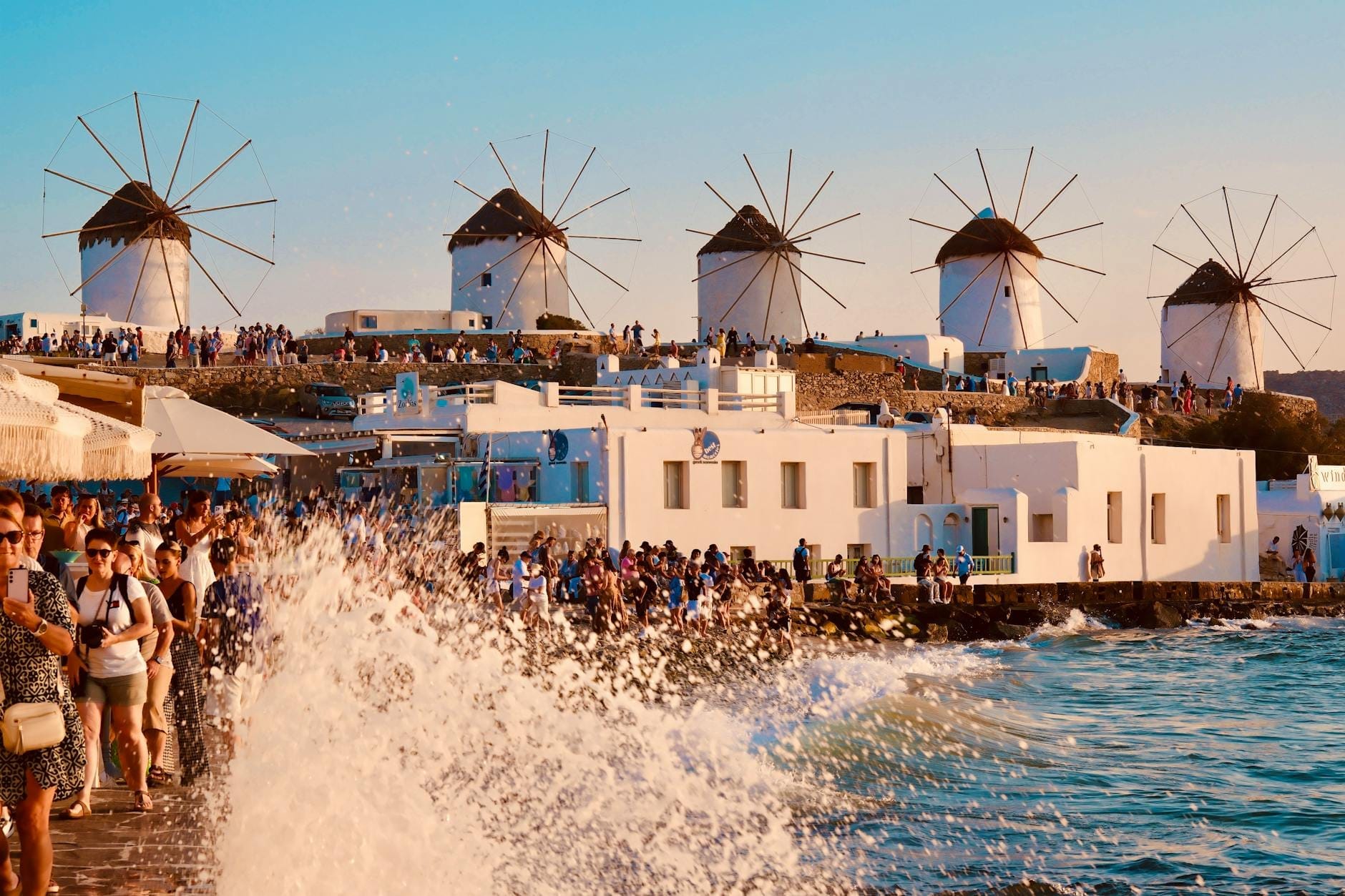
Crowds in July and August are genuinely intense. Matoyianni Street in Chora gets so packed in the evening that movement becomes slow and deliberate. The main beaches fill by 11am. Ferries and flights need to be booked months in advance. The island's infrastructure — roads, water supply, waste management — is under significant strain during peak weeks. Mykonos sources much of its fresh water from desalination and tanker deliveries because the island's semi-arid climate cannot support demand. Stick to bottled water.
Traffic and transport are also worth flagging. There's no rail or metro system — getting around means renting a scooter or ATV (which requires care on narrow, busy roads), taking taxis (which are scarce and expensive in peak season), or relying on the public bus network. Buses run from Mykonos Town to the main beaches but routes and frequency can be inconsistent. For a practical breakdown of your options, the getting around Mykonos guide covers all the logistics in detail.
When to Go: Seasons and Crowds
Mykonos has a hot semi-arid Mediterranean climate, which means dry, sunny summers and mild, wetter winters. The island is technically open year-round, but the reality of visiting outside the tourist season is quite different from high summer.
- May and early June The best combination of good weather, reasonable prices, and manageable crowds. Temperatures settle into the mid-20s°C, the sea is warm enough to swim from late May, and you can walk Chora without being shoulder-to-shoulder with other tourists. Accommodation rates are typically 30–50% lower than peak.
- July and August Peak season in every sense: maximum sun, maximum heat (high 20s to low 30s°C), maximum crowds, and maximum prices. The Meltemi winds are strongest in August and can make the north-facing beaches temporarily unswimmable. Choose this period if nightlife is your primary goal.
- September and October September is arguably the finest month to visit. The sea is at its warmest, crowds start to thin after the first week, prices drop noticeably, and the light has a quality that photographers specifically travel for. By mid-October, many beach clubs have closed for the season.
- November to April The off-season is a genuinely different Mykonos. Most beach clubs, seasonal hotels, and many restaurants are shuttered. Temperatures range from 7–18°C with regular rain. What remains is a quieter, cheaper island where locals go about their lives. Some travelers love this. Most will find it underwhelming.
What to Do: Priorities Beyond the Beach
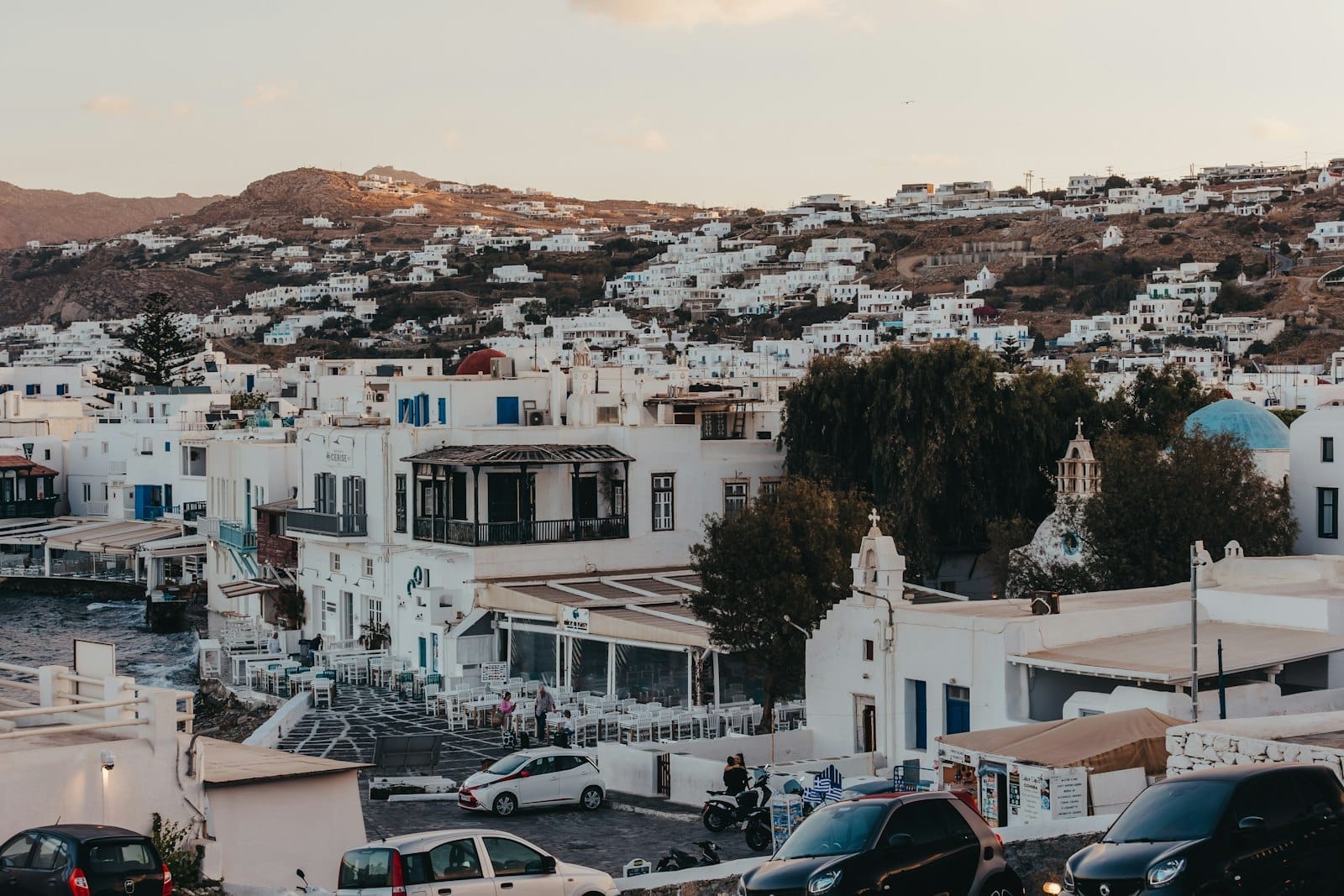
Most first-time visitors spend the majority of their time on the beach or in Chora — which is fine, but leaves a lot on the table. Panagia Paraportiani, the asymmetric whitewashed church built over several centuries and five separate structures, is one of the most photographed buildings in all of Greece. It sits on the edge of the Kastro neighborhood and is best seen at sunset or early morning. Entrance is free.
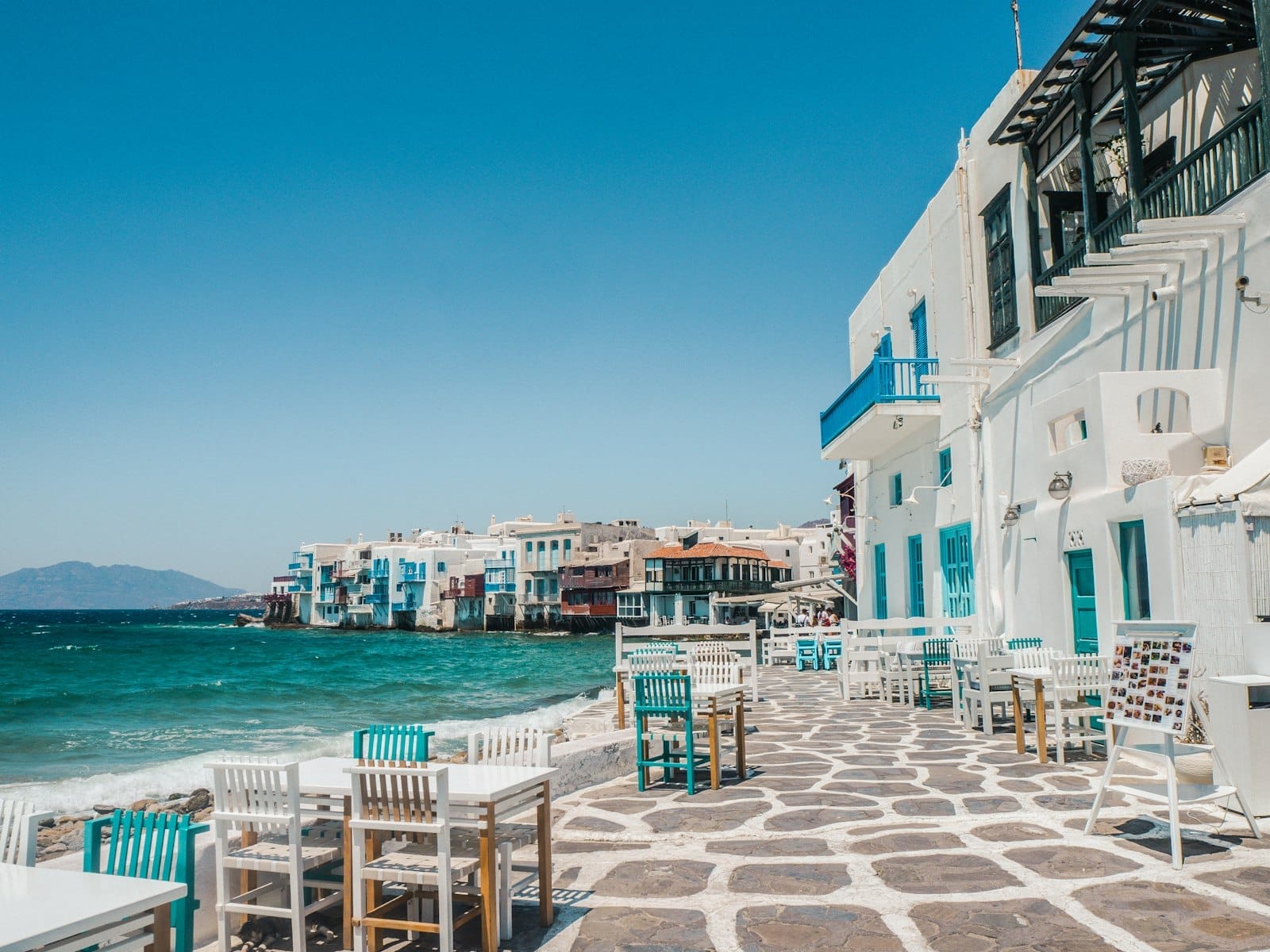
The Little Venice quarter, where 18th-century captains' houses hang directly over the water's edge, is worth an hour of your time — though every visitor goes there for sunset, so arrive early or accept the company. The Mykonos windmills above the harbor are the island's most recognizable landmark; the hill they sit on gives you the best panoramic view of Chora and the coastline.
For something completely different from the beach-club circuit, the village of Ano Mera in the island's interior is where locals actually live. The central square has a proper Greek taverna feel — lower prices, less performance, more authenticity. The Monastery of Panagia Tourliani nearby dates to the 16th century and is still an active religious site. Modest dress required.
Budget Reality Check: What Things Actually Cost
Mykonos is one of the most expensive destinations in the Mediterranean, and the gap between it and comparable Greek islands like Paros or Naxos is significant. Here's what to expect across different budget levels, with the caveat that prices fluctuate by season and change year to year.
- Accommodation Budget guesthouses in Chora from around €80–120/night in shoulder season. Mid-range hotels with a pool run €150–250/night in peak season. Boutique and luxury properties start around €300–400/night and climb to €1,000+ for top-tier options.
- Food and drink A simple gyros or souvlaki in Chora costs €4–6. A sit-down dinner at a mid-range restaurant runs €30–50 per person with wine. Beach club cocktails: €16–22 each. Supermarket beer from a kiosk: €2–3.
- Beach clubs Sunbed hire at popular organized beaches: €20–50 per bed at entry-level spots, with minimum spend requirements at premium clubs. Psarou and Nammos operate at the very top of this scale.
- Getting there Ferries from Piraeus (Athens) take around 4–5 hours by high-speed catamaran; tickets run €40–80 each way. Flights from Athens with Olympic or Aegean take 45 minutes; fares vary widely by booking date and season.
Travelers working with a tight budget will find Mykonos challenging but not impossible. Eating from bakeries and kiosks, staying slightly outside Chora, and choosing free beaches over organized ones all help significantly. The Mykonos on a budget guide has more specific strategies for keeping costs down without missing the island's highlights.
✨ Pro tip
Book accommodation at least 3–4 months in advance for July and August visits. Late bookers often find only the most expensive options remaining, or are forced into hotels far from the action. For shoulder season (May–June, September), 4–6 weeks advance booking is usually sufficient.
The Verdict: Who Should and Shouldn't Visit
Mykonos is worth visiting if you approach it with accurate expectations. It is not a traditional, quiet Greek island and has not been for decades. It's a well-oiled tourism machine that happens to have genuine beauty, excellent beaches, and a legitimately exciting nightlife scene — all wrapped in one of the most architecturally distinctive townscapes in the Aegean.
The island works best as a 2–4 day stop rather than a week-long base, and it pairs excellently with calmer neighboring islands. A classic combination: fly into Mykonos, spend 2–3 days, then take the ferry to Paros or Naxos for a slower pace. Alternatively, pair it with Santorini for contrast — our Mykonos vs Santorini comparison breaks down exactly how the two islands differ in atmosphere, cost, and what type of traveler each suits.
If you're planning a honeymoon or romantic trip, Mykonos can absolutely deliver — but you'll need to be selective about where you stay and where you spend time. The Mykonos honeymoon guide covers the neighborhoods and properties that offer privacy and romance rather than party-adjacent chaos.
FAQ
Is Mykonos worth visiting if you don't party?
Yes, but you need to be intentional about it. The island has genuine cultural and historical draws: Panagia Paraportiani, the Chora streetscape, the Aegean Maritime Museum, and the Delos day trip are all excellent. Quieter beaches like Agios Sostis and Panormos have no beach clubs. That said, the party atmosphere is pervasive in peak season — if nightlife culture genuinely bothers you, May or September visits (or a different island entirely) are worth considering.
How many days in Mykonos is enough?
Two to three full days covers the essentials comfortably: one day to explore Chora and Little Venice, one day at the beach of your choice, and a half-day for the Delos day trip. Four days allows for a slower pace and exploration of the island's quieter corners. Beyond five days, many visitors find Mykonos starts to feel repetitive unless they're deeply invested in the nightlife scene.
Is Mykonos too expensive?
It depends on your baseline. Mykonos is one of the priciest destinations in the Mediterranean — comparable to Capri, Ibiza, or Positano rather than a typical Greek island. In peak season (July–August), a mid-range trip for two people can easily cost €300–400 per day all-in. In shoulder season, the same trip runs considerably less. Budget travelers can manage with discipline, but this island rewards those who have flexibility on spend.
Is Mykonos worth it for a day trip from Athens?
A day trip is technically possible — the high-speed ferry from Rafina takes about 2 to 2.5 hours each way — but it's a long day for limited time on the island. You'd get a few hours in Chora at best. If you're based in Athens and considering a quick Aegean fix, spending one night on Mykonos gives you a dramatically better experience and allows for an early morning walk through Chora before the crowds arrive.
When is the best time to visit Mykonos to avoid crowds?
May and September are the clearest answers. Late May sees reliable warm weather, swimmable sea temperatures, and crowds that are a fraction of peak season. September adds the bonus of the warmest sea of the year and a post-summer calm that falls over the island after the first week. Both months offer prices 20–40% below July–August rates for most accommodation categories.
Tickets & tours
Live prices and dates from our booking partner. If you book, we may earn a commission at no extra cost to you.
Planning a trip? Discover personalized activities with the Nomado app.