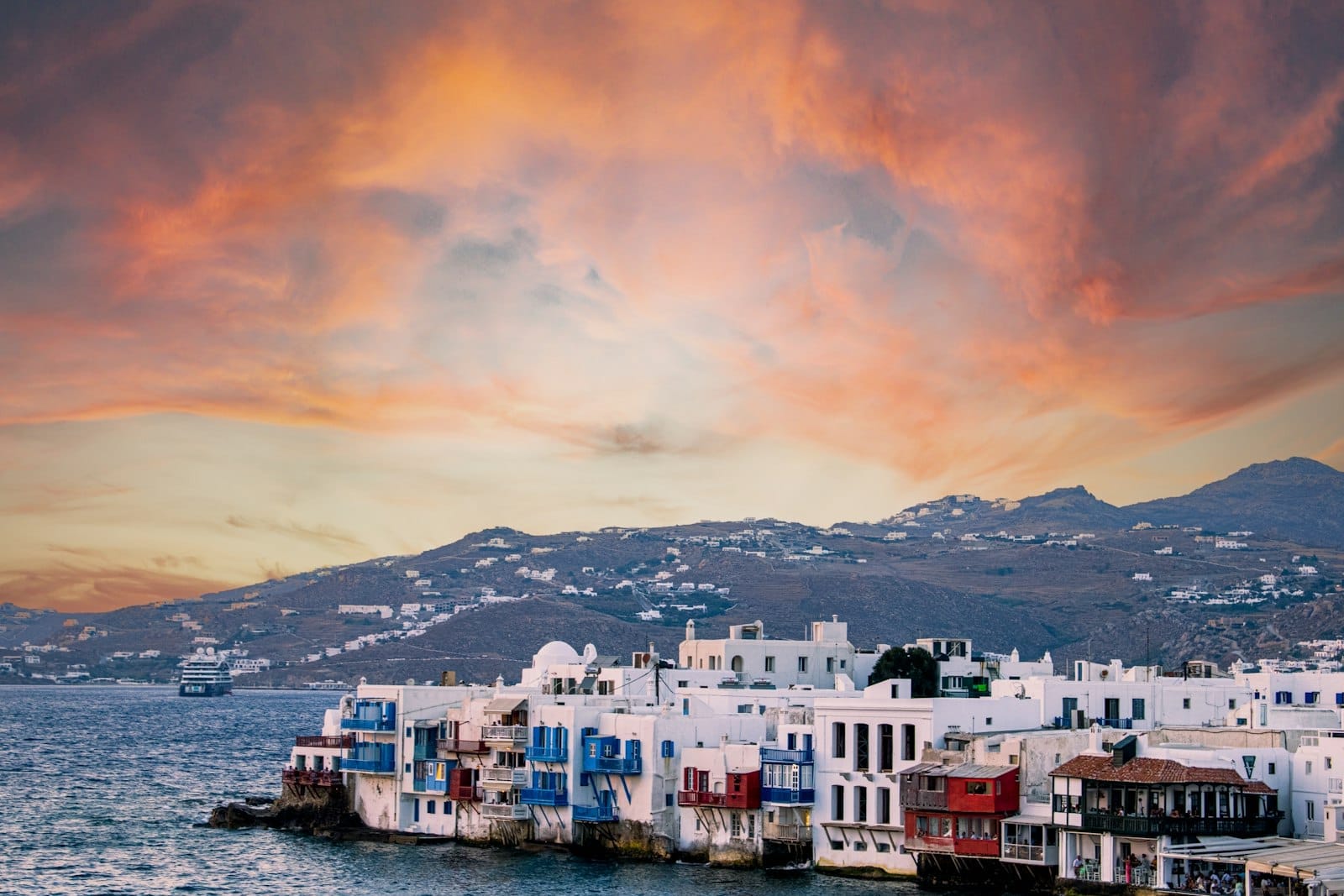
Little Venice, historically called Alefkandra, is a compact waterfront quarter of Mykonos Town where whitewashed 18th-century sea captains' houses cling to a sea wall above the Aegean. The balconied buildings, now converted into cafés and bars, make it the most photographed corner of Chora and the undisputed focal point for sunset watching on the island.
Little Venice is the stretch of Mykonos Town where the architecture meets the Aegean with no buffer at all: centuries-old sea captains' houses built directly on the sea wall, their wooden balconies overhanging the water, their ground floors converted into some of the island's most atmospheric bars. It is one of the most recognizable waterfront scenes in all of Greece, and it earns that reputation every evening at golden hour.
Orientation: Where Little Venice Sits in Mykonos Town
Little Venice occupies a short but visually concentrated stretch of the western waterfront of Mykonos Town (Chora), the island's main settlement on its west coast. The quarter historically carries the name Alefkandra, and it centers on the cluster of houses whose foundations sit directly in the sea, just south of the Old Port and north of the Kato Mili windmill hill. On a map, it reads as a narrow coastal fringe, perhaps 150–200 meters of waterfront, but its visual impact is disproportionate to its size.
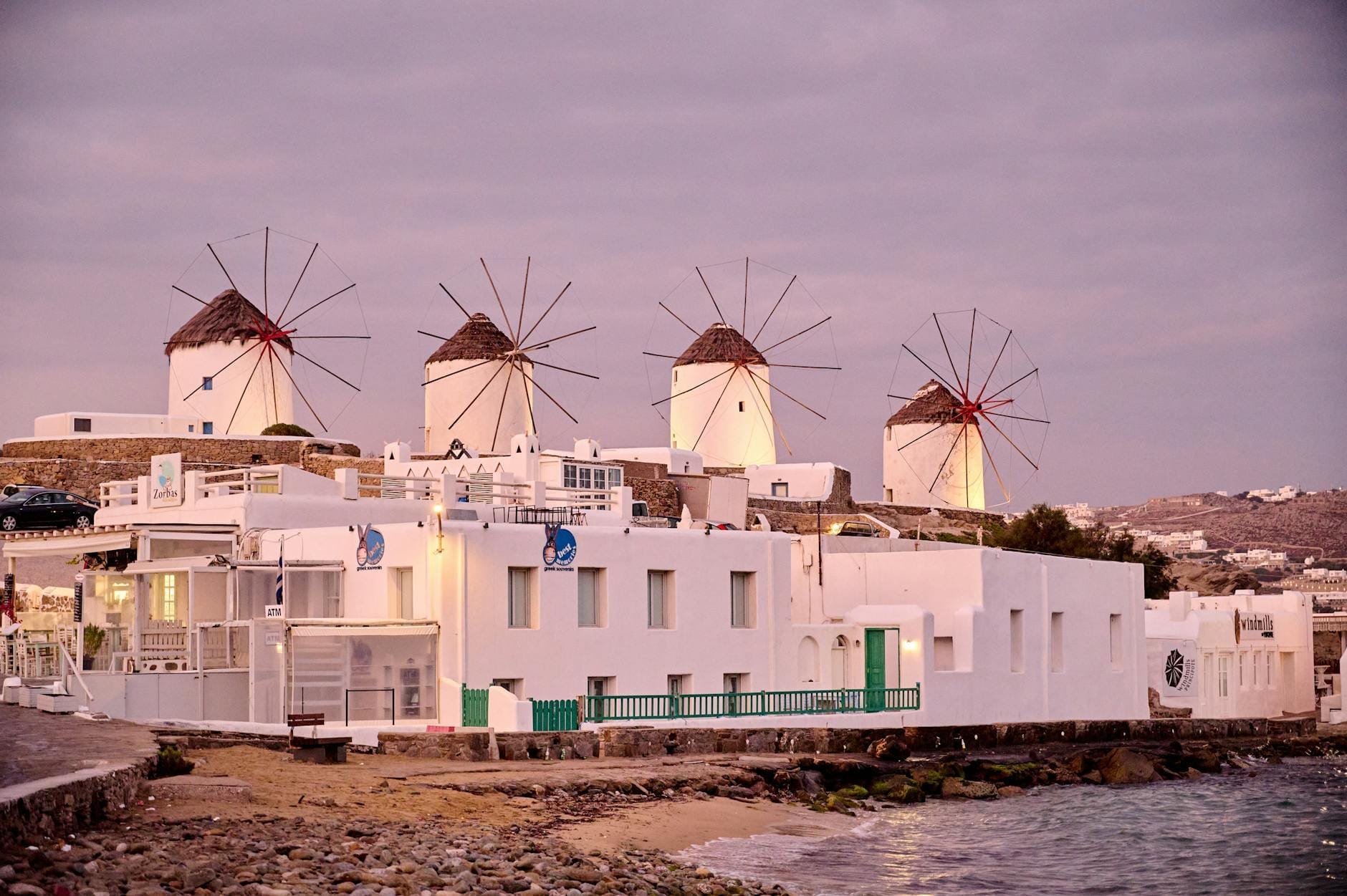
The natural anchor points that frame Little Venice are easy to locate. To the north lies the Mykonos Old Port, where fishing boats and excursion vessels still tie up. To the south and slightly uphill, the iconic row of the Mykonos Windmills (the Kato Mili group) crowns the ridge, visible from almost every angle and serving as the most useful navigation landmark in the whole town. Between those two reference points, the narrow pedestrian lane running along the sea wall is the heart of Little Venice itself.
Inland from the waterfront, the old quarter transitions immediately into the dense labyrinth of Chora's pedestrian alleys. Within a few steps east, you reach the Kastro neighborhood and the unmistakable whitewashed mass of Panagia Paraportiani, one of the most distinctive churches in the Cyclades. The Kastro area was the medieval fortified core of the settlement, and Little Venice grew along its seaward edge, which explains the density and the unusual architectural style of the houses here.
ℹ️ Good to know
Little Venice is not a separate village or district with clear administrative boundaries. It is a colloquial name for the western waterfront section of Mykonos Town (Chora). When locals say 'Alefkandra,' they mean the same area. For navigation purposes, aim for the Paraportiani church and then follow the sound of the sea westward.
Character and Atmosphere: What It Actually Feels Like
The morning version of Little Venice is quieter than most first-time visitors expect. Before 10am, the waterfront lane is nearly empty. The bars are shuttered, the wooden balconies cast long shadows across the stone path, and the only sounds are the slap of small waves against the foundations and the distant clatter of delivery crates being unloaded somewhere in the lanes behind. The light at this hour is clean and direct from the east, and the colored facades, pale ochre, terracotta, faded blue, look their best without the crowds pressing in. This is the time to photograph the houses without fifty other camera phones in frame.
By midday the cafés open and the foot traffic builds steadily. The narrow path along the sea wall, which can feel spacious at 8am, becomes genuinely tight by noon in July or August. Tourists arriving from the port, day-trippers walking up from the beaches, and groups pausing every few meters to photograph the windmills from below all converge on a lane that was not designed for this volume of traffic. The sun hits the white walls hard in the afternoon, and the reflected glare can be intense. Most of the bars and café terraces face west, which means afternoon shade is limited, but it also means they are perfectly aligned for what the area does best.
Sunset is the main event. From about an hour before the sun drops into the Aegean, the waterfront bars fill completely, often with a queue for terrace seats. The light turns the water copper and the windmills above glow warm against the sky. Music drifts out from multiple bars simultaneously, cocktails arrive in large glasses, and the whole scene takes on a performative quality, everyone watching the same spectacle, aware that they are part of it. It is genuinely beautiful and also genuinely crowded. After sunset, the atmosphere shifts: the bars keep going well into the night, the music gets louder, and what was a scenic terrace experience becomes an extension of Mykonos Town's nightlife circuit.
⚠️ What to skip
The stone walkway along the sea wall is narrow, uneven in places, and sits directly at water level. When the Aegean is rough, waves can splash over the edge and onto the terrace areas without warning. Wear shoes with grip, and keep a close eye on children near the water's edge. This is not a boardwalk with a railing: it is a working historical sea wall.
What to See and Do
The main activity in Little Venice is simply being present on the waterfront, but there is enough in a concentrated radius to occupy several hours. The architecture itself is the primary draw: the row of 18th-century captains' houses, built when Mykonian merchants were significant players in Aegean trade, represents a specific building tradition where the ground floor opened directly to the sea for loading cargo and the upper floors served as residences. The wooden balconies projecting over the water are structurally unusual for Cycladic architecture, which is why the Venetian comparison stuck, even if the influence was more broadly Aegean merchant than specifically Italian.
A short walk uphill from the waterfront brings you to the Panagia Paraportiani church, a compound of five chapels that merged organically over several centuries into one asymmetrical whitewashed mass. It is not always open for interior visits, but the exterior, particularly in morning or late afternoon light, is worth the short detour. Continuing further into the Kastro district, the Mykonos Folklore Museum occupies a traditional captain's house and provides context for the island's seafaring history. The Aegean Maritime Museum is a short walk further into town and is more substantial, with ship models, navigational instruments, and documents that trace Mykonos's role in Aegean trade and the wider Greek maritime tradition.
The windmills above Little Venice are the most visible landmarks in Chora and the walk up to the Kato Mili group takes only a few minutes from the waterfront. From the ridge, the view back down over the rooftops and the water is the classic postcard image of Mykonos. The windmills no longer operate commercially, but their scale and positioning, catching the strong Aegean winds that funnel through this part of the island, makes the engineering logic immediately clear. For a broader look at the town and the harbor from a different angle, Manto Mavrogenous Square near the Old Port is a ten-minute walk north and serves as a useful orientation point.
Walk the sea wall at dawn or dusk for the best light and manageable crowds
Photograph the windmills from the waterfront below, then walk up to the ridge for the reverse view
Visit Panagia Paraportiani in the morning before the tour groups arrive
Stop into the Aegean Maritime Museum for context on the island's seafaring past
Watch the sunset from a bar terrace with a view west over the open Aegean
Eating and Drinking
The food and drink scene in Little Venice is almost entirely oriented around the terrace experience: you are paying, in part, for the view and the atmosphere, and prices reflect that honestly. The bars along the waterfront serve cocktails, wines, and spirits from mid-morning through the night, with cocktail prices typically at the higher end of what you would pay anywhere in Mykonos Town, which is itself not a cheap destination. The trade-off is a seat on a terrace a meter from the Aegean with the windmills framed above you, which is a specific experience that has real value.
Full meals are available at several of the larger establishments, with menus leaning toward Mediterranean and Greek dishes alongside international options. Fresh fish and seafood feature prominently given the proximity to the sea and the Old Port fishing boats. For a broader understanding of what to look for on Mykonos plates generally, the island's food culture is detailed in a dedicated guide to what to eat in Mykonos. In Little Venice specifically, the quality varies between establishments, so check recent reviews before committing to a full dinner at somewhere you don't know.
Budget-conscious visitors should know that the waterfront bars are not where you find value eating on Mykonos. Moving a block or two inland into the Chora labyrinth, toward Matoyianni Street and the surrounding lanes, brings you to a wider range of price points and a more varied selection of traditional Greek tavernas alongside the international restaurants. The waterfront bars are worth one round of drinks for the setting; three rounds there will cost what a full dinner costs elsewhere in town.
💡 Local tip
Arrive at a waterfront bar at least 30 minutes before sunset to secure a terrace seat, especially between June and September. By the time the sky turns orange, standing room at the edge is often the only option. Weekday evenings are slightly less competitive than weekends throughout high season.
Getting There and Around
Little Venice is car-free and reached exclusively on foot through Mykonos Town's pedestrian lane network. If you are arriving by ferry at the New Port (Tourlos), buses and taxis run to the center of Chora, from where Little Venice is a 10-15 minute walk west and southwest through the town. The Fabrika bus station on the south side of Chora is the main hub for island buses arriving from the beaches; from Fabrika, the walk to Little Venice takes around 10 minutes through town. The Old Port is even closer, only a few minutes' walk north of the waterfront quarter.
Navigation inside Chora requires patience. The lanes are intentionally irregular, a design feature that historically slowed the advance of pirate raids from the coast, and they defeat any instinct to walk in a straight line. The most reliable approach is to aim for the windmills, which are visible above rooftops from many points in town, and descend toward the sea from there. Alternatively, follow the signs toward Paraportiani church and then continue west to the waterfront. For broader transport logistics on the island, the getting around Mykonos guide covers bus routes, taxis, and rental options in detail.
Mykonos International Airport (JMK) sits approximately 4 kilometers from Mykonos Town, connected by taxi and seasonal bus service. The taxi journey into town takes around 10 minutes depending on traffic; from the central drop-off points in Chora, Little Venice is then a short walk. Note that scooter and ATV rentals, which are common ways to get around the island, are not useful for reaching Little Venice itself since the waterfront and the surrounding lanes are pedestrian-only. Park or drop off in the wider Chora area and walk in.
Where to Stay
Staying in Little Venice itself means staying in the heart of Mykonos Town, which has real advantages for exploring Chora on foot and being steps from the sunset scene every evening. The trade-off is noise: bars along the waterfront operate late, the surrounding lanes carry foot traffic well past midnight in high season, and the general energy of Chora does not wind down early. For a full overview of accommodation options across the island and advice on which area suits different travel styles, the where to stay in Mykonos guide breaks down the choices district by district.
Accommodation in and immediately around Little Venice tends toward boutique hotels and guesthouses in converted traditional buildings, often with small terraces and atmospheric interiors but compact room sizes. This is characteristic of Chora's architecture. If you want more space, a pool, or a quieter setting, areas like Ornos or Platis Gialos on the south coast offer that, with easy bus connections back into town. For those prioritizing luxury and proximity to the waterfront scene, Little Venice and the broader Mykonos luxury accommodation options include some genuinely high-end properties within walking distance. Couples looking for a romantic setting specifically will find the waterfront location compelling, and the area features in most Mykonos honeymoon itineraries for exactly that reason.
Light sleepers and families with young children should think carefully before booking in Little Venice or its immediate surroundings. The noise from bars and foot traffic peaks between 10pm and 2am in summer, and the cobbled lanes and sea wall are not ideal terrain for strollers or anyone with significant mobility challenges. These are genuine practical considerations, not minor inconveniences.
Honest Drawbacks: What to Know Before You Go
Little Venice is one of those places where the gap between expectation and reality depends entirely on when you arrive and what you are expecting. The photographs that circulate online tend to show an empty terrace, perfect light, and a clear view of the windmills. The reality in July and August is a narrow lane packed with people, terrace seats occupied by mid-afternoon, and music competing from multiple bars at once. None of that necessarily ruins the experience, but arriving with accurate expectations prevents disappointment.
Pricing throughout the area is premium. Drinks, food, and any services near the waterfront reflect a tourist surcharge that is higher than the Mykonos average, which is itself higher than the Greek average. This is openly the case and widely known. If budget is a primary concern, Little Venice is worth a single visit to see the architecture and catch the sunset, but it is not where you build your meals and evenings around. The wider Chora offers more varied pricing just a few streets inland.
The area also becomes genuinely crowded when cruise ships are in port at Tourlos, as large groups often walk or take transport into Chora and gravitate directly toward the most iconic spots. Checking the cruise ship calendar before planning a visit can help: the difference between a cruise day and a non-cruise day is noticeable on the ground. For travelers on their first visit to the island, the 3-day Mykonos itinerary places Little Venice in its proper sequence alongside the beaches, Delos, and the rest of Chora so the area gets appropriate time without being the only focus.
TL;DR
Little Venice (Alefkandra) is the western waterfront of Mykonos Town, defined by 18th-century sea captains' houses built directly on the sea wall, now housing bars and cafés with some of the best sunset views on the island.
Best visited at sunrise for photography, or early evening for sunset drinks: the waterfront becomes very crowded at peak hours in summer, and terrace seats go fast before golden hour.
The adjacent Kastro neighborhood, Panagia Paraportiani church, the Kato Mili windmills, and the Aegean Maritime Museum make the surrounding area worth at least half a day of exploration.
Pricing is at the top end of Mykonos, which is itself an expensive destination: treat the waterfront bars as a one-round experience and look inland for meals at more reasonable prices.
Best suited to travelers who want atmosphere, iconic views, and proximity to Chora's nightlife; less suited to light sleepers, families with young children, or anyone with significant mobility challenges navigating cobbled, uneven terrain.
Three days is exactly enough time to cover Mykonos properly — the labyrinthine alleys of Chora, the UNESCO ruins of Delos, the south-coast beach scene, and a genuine taste of the island's nightlife. This day-by-day itinerary gives you the structure, the practical details, and the honest advice to make it work.
Mykonos has a beach for every type of traveler. This guide covers the 12 best beaches on the island, from the legendary party scene at Paradise to the car-free calm of Agios Sostis, so you can find exactly the day you're looking for.
Mykonos rewards travelers who time their visit carefully. This guide breaks down every season by weather, crowd levels, prices, and what's actually open, so you can decide when the island works best for your trip.
Delos is one of Greece's most extraordinary archaeological sites, and it sits just 30 minutes by boat from Mykonos. This guide covers ferry schedules, entry fees, the best ruins to prioritize, and whether a guided tour is worth the extra cost.
Mykonos is a small island with a surprisingly complex transport puzzle. From the KTEL bus network and south-coast caiques to the island's notoriously scarce taxis and rental vehicles, this guide breaks down every way to get around — with real prices, practical tips, and honest warnings about what doesn't work as well as you'd hope.
Mykonos has a reputation that precedes it: luxury prices, wall-to-wall tourists, and beach clubs that run until dawn. But the island is more layered than that. This guide cuts through the hype to tell you exactly who Mykonos is worth visiting for — and who should skip it.
Mykonos has some of the world's most famous beach clubs, from full-day party venues at Paradise Beach to bohemian sunset gatherings at Scorpios. This guide breaks down where to go, what to expect, what things actually cost, and how to book before peak season fills up.
Mykonos is far more than a party island. For couples, it offers sunset cocktails at Little Venice, private-pool suites above the Aegean, quiet beaches with turquoise water, and a day trip to the ancient ruins of Delos. This guide covers the best romantic experiences, when to go, where to stay, and how to avoid the crowds.
Mykonos is Greece's most polished luxury destination, combining world-class hotels, private beach clubs, superyacht culture, and some of the Aegean's best dining. This guide cuts through the hype with specific advice on when to go, where to stay, how to get around, and what actually justifies the price tag.
Mykonos has one of Europe's most legendary party scenes, from clifftop superclubs to sun-soaked beach raves and intimate cocktail bars in Chora's whitewashed alleys. This guide covers the best venues, realistic prices, seasonal timing, and the honest trade-offs so you can plan a night out that actually matches your expectations.
Mykonos has a reputation as one of Greece's most expensive islands, and that reputation is mostly earned. But visiting without hemorrhaging money is entirely possible if you understand how pricing works, when to go, and where to spend versus save. This guide breaks it all down honestly.
Everything you need to plan the trip from Mykonos to Santorini: which ferry operators run the route, how long the crossing takes, what fares to expect by season, whether flying makes sense, and how to fit in stops at Paros or Naxos along the way.
Both islands dominate Cyclades itineraries, but they deliver completely different experiences. This guide breaks down the real differences between Mykonos and Santorini across scenery, beaches, nightlife, budget, and logistics so you can choose the right one — or plan both smartly.
Mykonos delivers more than beach clubs and late nights. This guide covers the top things to do in Mykonos, Greece — from ancient ruins on Delos and windswept Cycladic lanes to family beaches and genuine local culture — with practical logistics for every type of traveler.
Mykonos has a distinct culinary identity that goes far beyond generic Greek salads and souvlaki. This guide covers the island's signature foods, honest price expectations, where to eat well on any budget, and the restaurants worth planning your day around.
Choosing where to stay in Mykonos shapes your entire trip. This guide breaks down every key area, from the lively lanes of Chora to the family-friendly shores of Ornos, with honest advice on prices, logistics, and who each neighborhood actually suits.