Monastery of Panagia Tourliani: Mykonos's Soul Beyond the Party Scene
Founded in 1542 in the inland village of Ano Mera, the Monastery of Panagia Tourliani is the most historically and spiritually significant site on Mykonos. Its whitewashed Cycladic courtyard, carved wooden iconostasis, and small collection of religious vestments offer a grounded, contemplative counterpoint to the island's coastal chaos.
Quick Facts
- Location
- Central square, Ano Mera 84600, Mykonos — approx. 7–8 km east of Mykonos Town (Chora)
- Getting There
- Public bus from Mykonos Town (Old Port) to Ano Mera, then a 3–4 min walk to the square; also reachable by taxi or rental car
- Time Needed
- 45–90 minutes, including the small museum and a walk around Ano Mera's square
- Cost
- Around €2 per person (entrance fee/donation); verify on-site as this may change
- Best for
- History lovers, Orthodox art enthusiasts, travelers seeking a quieter side of Mykonos
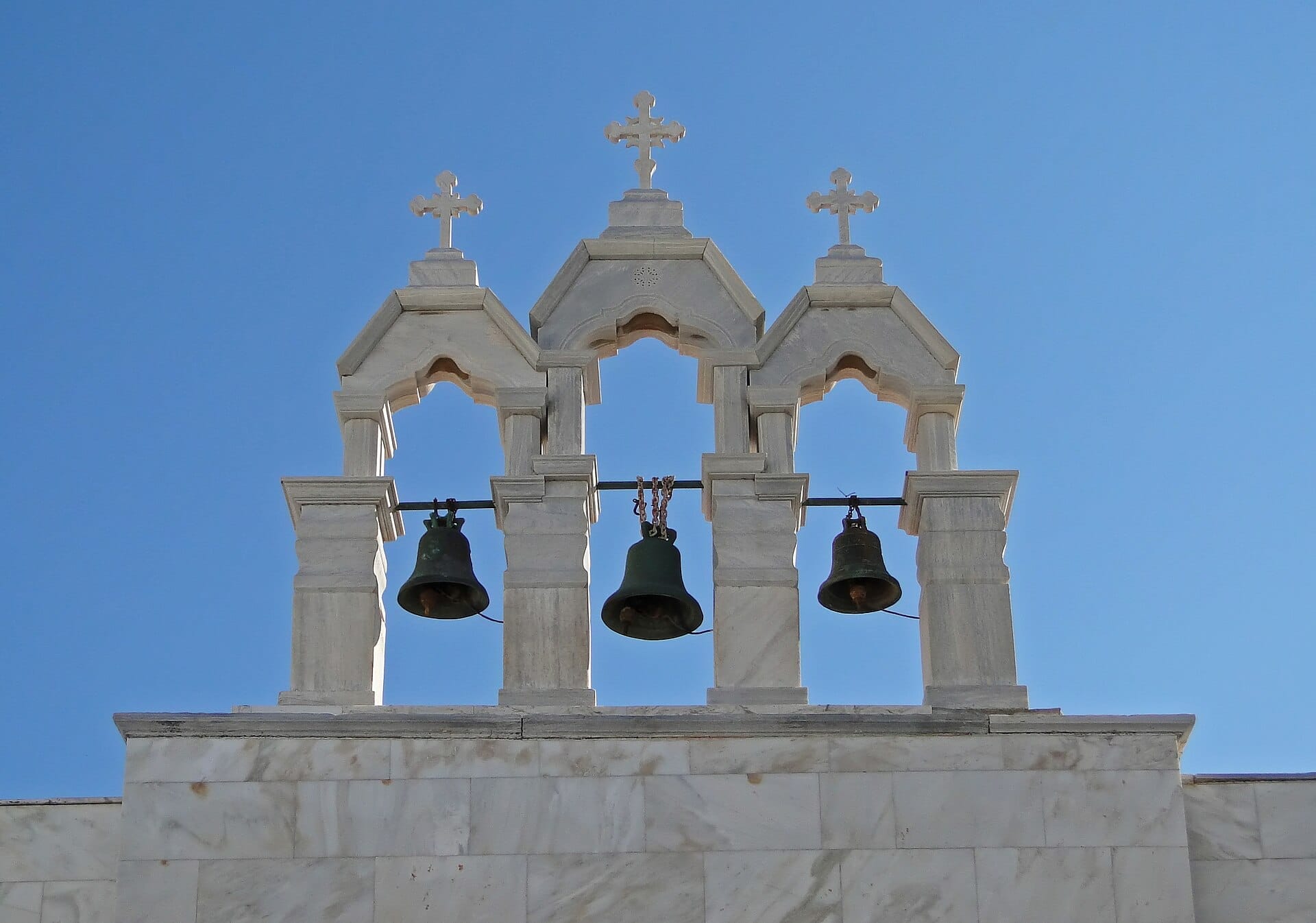
What the Monastery of Panagia Tourliani Actually Is
The Monastery of Panagia Tourliani sits at the center of Ano Mera, Mykonos's only significant inland village, and it anchors that square with an authority the rest of the island rarely projects. This is a working Greek Orthodox monastery, not a ruin or a museum replica. Monks established the monastery here in 1542, and the structure was restored in 1767, which accounts for the confident, well-preserved condition you encounter today.
From the outside, the monastery reads as classic Cycladic: whitewashed walls, blue accents, and a marble bell tower that rises cleanly against the Aegean sky. It looks, at first glance, like an oversized version of the island's smaller chapels. Step through the entrance gate into the courtyard, and the scale shifts. The space is larger than expected, shaded in parts, with flower pots and the smell of incense drifting from the main church door.
ℹ️ Good to know
Reported visiting hours are 09:00–13:00 and 15:30–19:00. Hours vary on religious holidays. Arrive during the morning session if you want the church and museum open simultaneously.
The Interior: What Deserves Your Full Attention
The centerpiece of the church is the wooden iconostasis, the carved screen that separates the nave from the sanctuary in Orthodox tradition. This one dates to the 18th century and was reportedly crafted in Florence and brought to Mykonos — an unusual detail that speaks to the island's historical role as a trading port in the Aegean. The carving is dense and technically accomplished: figures, foliage, and gilded surfaces that catch whatever light filters through the church's small windows. It takes a few minutes to properly absorb the detail, and it rewards patience in a way that most Cycladic sights do not.
The icons displayed on and near the iconostasis follow the conventions of Byzantine and post-Byzantine religious painting: gold-leaf backgrounds, frontal compositions, and an intentional flattening of depth that communicates theological meaning rather than naturalism. If you have no background in Orthodox iconography, the visual language may initially feel opaque, but the sheer concentration of craftsmanship in this small space is legible regardless of context.
For travelers who want broader context on the religious and cultural heritage of the Aegean, a visit here pairs well with the island's other historical site, the Mykonos Archaeological Museum in Chora, which covers the island's pre-Christian past.
Tickets & tours
Live prices and dates from our booking partner. If you book, we may earn a commission at no extra cost to you.
Mykonos South Coast Cruise on a Traditional Caique
From 93 €Instant confirmationFree cancellationMykonos yacht cruise to Rhenia Island and guided tour of Delos
From 120 €Instant confirmationFree cancellationSunset sailing to Rhenia with Delos self-guided virtual tour
From 110 €Instant confirmationFree cancellationHalf-Day Mykonos, Delos and Rhenia Catamaran Cruise with Lunch
From 150 €Instant confirmationFree cancellation
The Small Museum: Brief but Worth It
Adjacent to the main church, a small museum occupies what functions as a treasury of the monastery. The collection includes embroidered vestments, liturgical objects, and religious relics accumulated over centuries. It is compact — you can move through it in 20 minutes — but the quality of the embroidery work in particular is genuinely fine, with gold and silver thread applied to fabrics that have survived remarkable conditions.
The museum requires climbing a short staircase. There is no documented step-free access to the upper level, so travelers with significant mobility limitations should be aware that this portion of the visit may not be accessible. The courtyard and main church are reached via a flat exterior approach from the square.
How the Visit Feels at Different Times of Day
Morning visits, particularly before 11:00, offer the most rewarding experience. The square at Ano Mera is quiet at this hour, local life is underway in the cafes ringing the perimeter, and the interior of the church is cool and relatively dim. The light entering through the windows creates warm pools across the iconostasis that are difficult to replicate later in the day when the midday sun hardens the shadows. The smell of candle wax and incense is strongest in the morning.
By midday in summer (late June through August), Ano Mera fills with visitors arriving on organized excursions from the beach resorts on the south coast. The square becomes louder, the taverna terraces fill, and the monastery sees a concentrated influx. The afternoon closure (roughly 13:00 to 15:30) enforces a natural break, but the period just before the morning session ends sees the heaviest indoor crowding.
The late afternoon session, opening between 15:30 and 19:00, is underused by most visitors. Many tour groups have already departed by then, and the quality of light in the late afternoon gives the marble bell tower a warmth that is particularly good for photography. This is also when the square itself is most pleasant: the heat has dropped, the cafes are active, and the pace of the village returns to something more local.
💡 Local tip
For photography: the courtyard's whitewashed walls reflect light evenly in morning and late afternoon, reducing harsh shadows on the architecture. The interior is low-light and flash is generally inappropriate in active religious spaces — a phone camera with a good low-light mode handles it better than a DSLR with restricted flash use.
Historical Context: Why This Exists in Ano Mera
Ano Mera's location away from the coast was not accidental. Inland settlements on Aegean islands were historically positioned to reduce vulnerability to pirate raids, a persistent threat in the region through the medieval and early modern periods. The monastery's founding in 1542 places it in this defensive geographic logic. The village of Ano Mera itself remains the island's most significant settlement outside Mykonos Town, and it retains a texture and pace that the coastal areas have largely lost to tourism. For a fuller picture of how the island's different zones relate to each other, the guide on Ano Mera as a destination covers the village beyond the monastery.
The 1767 renovation that shaped the monastery's current appearance came during a period of relative Aegean stability, which explains the investment in imported decorative elements like the Florentine iconostasis. Mykonos had enough commercial activity and maritime connectivity in the 18th century to commission and transport significant craftwork from the Italian peninsula — a detail that complicates any overly simple picture of the island as an isolated outpost.
Practical Walkthrough: Getting There and What to Expect
The most straightforward and affordable approach is the public bus from Mykonos Town to Ano Mera. Buses depart from the Old Port area and run regularly during the tourist season. The journey takes roughly 15–20 minutes and deposits you near the village square, from which the monastery entrance is a short, flat walk. For context on navigating the island's transport options more broadly, the guide to getting around Mykonos covers buses, taxis, and rental vehicles in practical detail.
By rental car or taxi, Ano Mera is about 8 km east of Mykonos Town, on a road that is straightforward to navigate. Parking near the square is available but limited in high season. A taxi from Chora to Ano Mera and back, with an hour at the monastery, is a reasonable and time-efficient option for those not renting vehicles.
Dress code is standard for Greek Orthodox religious sites: shoulders and knees should be covered. The monastery typically has wraps or scarves available at the entrance for visitors who arrive underprepared, but bringing your own is more reliable. Sandals are fine; the courtyard surfaces are smooth stone.
⚠️ What to skip
The monastery is an active place of worship. Loud conversation inside the church, photographs during any ongoing religious service, and the use of flash photography are all inappropriate. Treat the space accordingly.
Who This Is Not For
Travelers whose Mykonos visit is entirely organized around beaches and nightlife will find the monastery a minor detour rather than a compelling destination. It is not spectacular in the way that the Panagia Paraportiani in Chora is spectacular — there is no dramatic hillside position or famous silhouette. Its value is interior: the quality of its religious art, the texture of the village around it, and the relief it offers from the resort-oriented experience that dominates most of the island.
Visitors with limited mobility who cannot manage stairs will be unable to access the museum level. The main church and courtyard are reachable, but the full visit is partial without the upper floor.
If a deeper historical experience is what you are looking for, consider pairing the monastery visit with a day trip to Delos — the uninhabited sacred island just off Mykonos that contains one of the most significant archaeological sites in the Aegean. The day trip to Delos guide has the logistics.
Insider Tips
- Visit on a weekday morning in shoulder season (May or September) if you can. The combination of good light and thin crowds makes a real difference inside the church.
- The cafes and tavernas on the Ano Mera square are significantly cheaper than anything in Mykonos Town. Plan lunch or coffee there before or after the monastery — you will typically pay noticeably less for similar quality.
- The late afternoon opening session (from roughly 15:30–19:00) is consistently quieter than the morning, because most organized excursions have already moved on. If you have flexibility, this is the better slot.
- The marble bell tower photographs best from the far corner of the square in late afternoon light, when the sun is at a low angle from the west. Arrive 30 minutes before the tower catches full shade.
- If the monastery happens to be holding a liturgical service when you arrive, wait rather than entering mid-service. Services are generally brief, and the church afterward will be quiet and fragrant with incense — a better experience than walking through an active ceremony.
Who Is Monastery of Panagia Tourliani For?
- Travelers interested in Byzantine and Orthodox religious art who want to see a significant iconostasis outside of a major city
- History-focused visitors looking for context on Mykonos beyond its coastal and nightlife identity
- Couples or solo travelers seeking a quieter, more contemplative half-day away from the beach resort circuit
- Photographers interested in Cycladic architecture and religious interiors in natural light
- Anyone visiting Mykonos for more than three days who wants to understand the island's interior geography and village life
Planning a trip? Discover personalized activities with the Nomado app.