Agios Stefanos Beach: Mykonos's Calm, Underrated Northern Shore
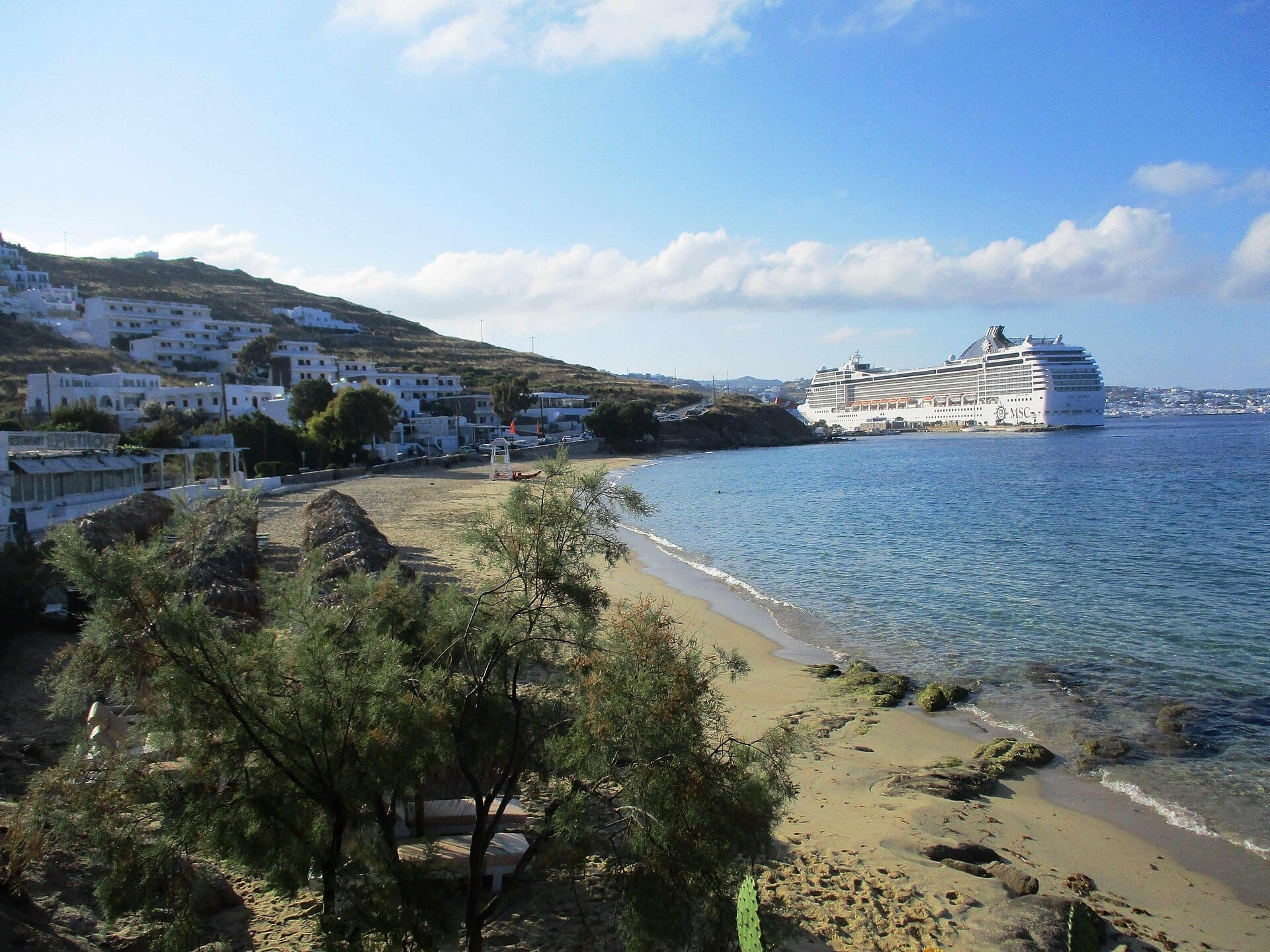
Agios Stefanos Beach sits just 3.5 km north of Mykonos Town, relatively sheltered from the island's notorious winds and backed by a whitewashed chapel with a red roof. It draws families, couples on a quieter budget, and anyone who finds the party beaches on the south coast too much. Sandy underfoot, shallow at the waterline, and served by a regular bus from Chora.
Quick Facts
- Location
- 3–3.5 km north of Mykonos Town (Chora), just north of Tourlos (New Port)
- Getting There
- Regular bus from the Old Port bus station in Mykonos Town; taxi or scooter in about 5–15 minutes depending on traffic; parking available at the beach entrance
- Time Needed
- 2–4 hours for a beach session; half-day if you combine with lunch and a walk
- Cost
- Free beach access; sunbed and umbrella rental approximately €12–€20 per set (verify locally)
- Best for
- Families with young children, couples seeking calm water, day-trippers without a rental vehicle
What Kind of Beach Is Agios Stefanos?
Agios Stefanos Beach is a mid-sized sandy bay on the north coast of Mykonos, close enough to the New Port at Tourlos to feel connected to town, but far enough to have its own quiet identity. The sand is soft and pale, the sea floor drops gradually, and the water stays shallow for a reasonable distance out. On most summer days, the surface is calm and clear enough to see the bottom. This is not a party beach. There are no thumping sound systems, no cocktail waitresses weaving through rows of sun loungers. What you get instead is a beach that functions like a beach should: space to swim, tavernas for a proper Greek lunch, and the kind of unhurried pace that the south coast abandoned years ago.
The bay is relatively sheltered from the meltemi, the strong northerly wind that routinely makes many exposed beaches on Mykonos choppy and uncomfortable from mid-July onwards. That protection is the single most underappreciated feature of Agios Stefanos. When Ornos or Platis Gialos is getting kicked up by afternoon winds, this beach often stays glassy. For families with small children, or anyone who wants to actually swim rather than fight the surf, that matters enormously.
💡 Local tip
If you're visiting between mid-July and late August, check wind conditions each morning. On days when the meltemi picks up strongly, Agios Stefanos is one of the most reliably calm options within easy reach of Mykonos Town.
The Church at the End of the Sand
The beach takes its name from the small chapel of Agios Stefanos (Saint Stephen) that sits at the far end of the bay. It is exactly what you would hope for from a Cycladic chapel: whitewashed walls, a deep-red domed roof, and a silhouette that photographers tend to position against the blue water behind it. The church is not a major archaeological site or heritage monument in the formal sense, but it anchors the beach visually and gives the whole cove a sense of place that the purely commercial beaches lack.
The surrounding area of Agios Stefanos is documented as one of the older settlements on the island. Manuscript references place habitation here at roughly 500 years or more, though precise historical records are limited. Walking to the chapel from the main beach strip takes only a few minutes along the sand. The chapel itself is typically closed to visitors unless a service is being held, but the exterior and the small courtyard around it are worth a look, particularly in the low-angled light of late afternoon.
Tickets & tours
Live prices and dates from our booking partner. If you book, we may earn a commission at no extra cost to you.
Mykonos South Coast Cruise on a Traditional Caique
From 93 €Instant confirmationFree cancellationMykonos yacht cruise to Rhenia Island and guided tour of Delos
From 120 €Instant confirmationFree cancellationSunset sailing to Rhenia with Delos self-guided virtual tour
From 110 €Instant confirmationFree cancellationHalf-Day Mykonos, Delos and Rhenia Catamaran Cruise with Lunch
From 150 €Instant confirmationFree cancellation
How the Beach Changes Through the Day
Early morning at Agios Stefanos is genuinely peaceful. The bus service from Mykonos Town doesn't bring the first wave of visitors until mid-morning, and before that the beach belongs mostly to guests staying at the hotels and apartments that line the low hillside behind it. The water is at its clearest at this hour, the light is soft, and the surface picks up a milky-green colour that shifts to deep blue once the sun climbs higher. If you want photographs without people in the background, before 9 a.m. is your window.
By late morning, the beach fills steadily. Families with children tend to anchor near the centre of the bay, where the water is shallowest and the sand most level. The sunbed area runs along most of the beachfront, operated by the nearby tavernas and beach businesses. Renting a set (one umbrella, two loungers) runs approximately €12–€20 depending on position and the specific operator. Rates are set seasonally and can vary, so confirm on arrival. There is also free-access sand where you can lay your own towel without paying.
Afternoons bring the fullest crowds, though Agios Stefanos never reaches the density of Paradise or Super Paradise Beach. The tavernas do brisk business from around 1 p.m. onwards. By late afternoon, the light angles in from the west and catches the chapel roof in a way that makes the far end of the beach particularly attractive. Sunsets from here frame the water and the rocky northern coastline rather than the famous windmill view from Mykonos Town, so manage expectations on that front. If a dramatic sunset panorama is your goal, you need to be on the west side of the island.
For context on how Agios Stefanos fits into a broader beach strategy, see our guide to the best beaches in Mykonos, which covers everything from the calm family bays in the north to the full-service club beaches on the south coast.
Getting There and Getting Around
The most straightforward way to reach Agios Stefanos from Mykonos Town is the public bus service from the Old Port bus station in Chora. The route runs regularly during the summer season and takes roughly 5–10 minutes. Bus timetables change seasonally, so check current schedules at the bus station or with your accommodation. This is one of the few Mykonos beaches genuinely accessible without a rental vehicle, which makes it a practical choice if you're relying on public transport.
By taxi, the journey from Mykonos Town is around 10–15 minutes. By scooter or ATV (common rentals on Mykonos), the road is straightforward. There is a parking area at the start of the beach for those arriving by car or bike. Note that parking in high season anywhere near popular Mykonos beaches fills quickly by mid-morning. If you're driving, arriving before 10 a.m. makes finding a space far easier.
The beach is also conveniently close to the New Port at Tourlos, where larger ferries and cruise ships dock. If you're arriving by ferry and want to drop your bags and head straight to a beach before checking in, Agios Stefanos is the most logistically sensible option. For more on island transport options, the getting around Mykonos guide covers buses, taxis, and rentals in detail.
Facilities, Food, and Water Sports
Agios Stefanos is an organized beach with a full set of summer facilities. Several tavernas line the back of the beach, offering grilled fish, salads, and the standard Greek beach lunch menu at prices that are high by mainland standards but moderate for Mykonos. Eating directly at the beach tavernas costs more than eating in Mykonos Town, but the tradeoff is sitting with your feet near the sand and a view of the water.
Water sports are available seasonally, including pedal boats and other non-motorized options. The calm conditions make this a good beach for beginners or children trying water activities for the first time. Shower facilities are available at the beach. Toilets are provided by the tavernas and beach operators. There is no formal changing facility on the open sand, but most visitors change at nearby accommodation or use what the beach bars provide.
ℹ️ Good to know
Beach access is always free. You are never obligated to rent a sunbed. Free sand exists outside the organized sunbed areas, particularly toward the chapel end of the beach. Bring your own umbrella if you want shade without paying the rental fee.
Who This Beach Suits and Who It Doesn't
Agios Stefanos is genuinely well-suited to families with young children. The shallow gradient, calm water, soft sand, and easy bus access add up to a low-stress day out. Couples looking for a quieter experience than the south coast provides will also find it comfortable. The beach has enough going on to feel lively without tipping into the overstimulating scene that defines spots like Paradise Beach.
Travelers chasing the iconic Mykonos nightlife and club beach experience should be clear-eyed about this: Agios Stefanos is not that. The beach quietens down by early evening. If the full party beach setup is what you're after, look at the south coast options covered in the Mykonos beach clubs guide instead. Similarly, if dramatic, wild coastline is the draw, beaches like Agios Sostis on the north coast offer a rawer, less developed alternative.
Visitors with significant mobility limitations should be aware that no specific step-free infrastructure (wheelchair ramps, paved beach access, accessible toilets) is documented for Agios Stefanos. The sandy approach from the parking area is relatively flat, which may help, but anyone requiring specific accessibility provisions should contact hotels in the area directly before visiting.
Photography Tips
The composition that most photographers attempt at Agios Stefanos centres on the whitewashed chapel with the red roof framed against the sea. The best light for this shot is late afternoon, when the sun is behind you if you're standing mid-beach looking toward the chapel. Morning light works well for wide shots of the whole bay from the chapel end, with the water in the foreground and the hillside accommodation behind.
Avoid shooting during the midday glare between roughly 11 a.m. and 3 p.m. in summer. The harsh overhead light flattens the water colour and washes out the white buildings. For underwater or waterline photography, the calm conditions here make it one of the more cooperative beaches on the island.
Insider Tips
- The free-access sand at the chapel end of the beach is the quietest stretch. Walk past the last row of sunbeds rather than claiming space in the paid section.
- Agios Stefanos is the closest sandy beach to the New Port (Tourlos). If your ferry arrives early and check-in isn't until afternoon, this beach is a 5–10-minute taxi ride from the port and a practical way to fill the gap.
- The bus from Mykonos Town Old Port station is the cheapest and most direct public transport option, but on peak-season afternoons the return buses fill quickly. Check timetables before you go and consider taking an earlier bus back or arranging a taxi pickup.
- Wind conditions: the meltemi usually builds in the afternoon. Agios Stefanos handles it better than most Mykonos beaches, but if you want guaranteed calm water, arrive before noon.
- The tavernas at the back of the beach serve food throughout the day, but lunchtime (1–3 p.m.) brings the longest waits. Eating at 12 p.m. or after 3 p.m. gets you faster service and usually a better table.
Who Is Agios Stefanos Beach For?
- Families with young children who need shallow, calm water and easy logistics
- Travellers without rental vehicles who want a beach reachable by public bus
- Ferry arrivals looking for a beach close to the New Port before check-in
- Couples seeking a relaxed mid-range beach day without the south coast noise
- Photographers wanting the whitewashed chapel and clear water without fighting crowds
Nearby Attractions
Other things to see while in Mykonos Town (Chora):
- Aegean Maritime Museum
Tucked inside a 19th-century Cycladic building in the Tria Pigadia quarter of Mykonos Town, the Aegean Maritime Museum offers a focused, well-curated look at centuries of Aegean maritime history. It is small enough to do in under an hour, and genuinely informative for anyone curious about the sea culture that shaped these islands.
- Armenistis Lighthouse
Perched on the rocky northwest tip of Mykonos at roughly 180–184 metres above sea level, Armenistis Lighthouse is a 19th-century navigation beacon with one of the island's most panoramic viewpoints. Built in 1891 after a fatal shipwreck, it rewards visitors willing to venture beyond the town with open Aegean horizons and a quieter side of the island.
- Manto Mavrogenous Square
Manto Mavrogenous Square sits at the center of Mykonos Town, honoring the island's most celebrated heroine of the Greek War of Independence. Effectively always accessible as a public space, it serves as both a landmark orientation point and a quiet pause within the frenetic energy of Chora.
- Matoyianni Street
Matoyianni Street is the beating commercial heart of Mykonos Town, a short but dense pedestrian lane lined with boutiques, jewelry shops, cafes, and bars tucked into the whitewashed Cycladic old town. Free to walk, open day and night, and best experienced at the quieter hours when the crowds thin and the lane reveals its actual character.
Planning a trip? Discover personalized activities with the Nomado app.