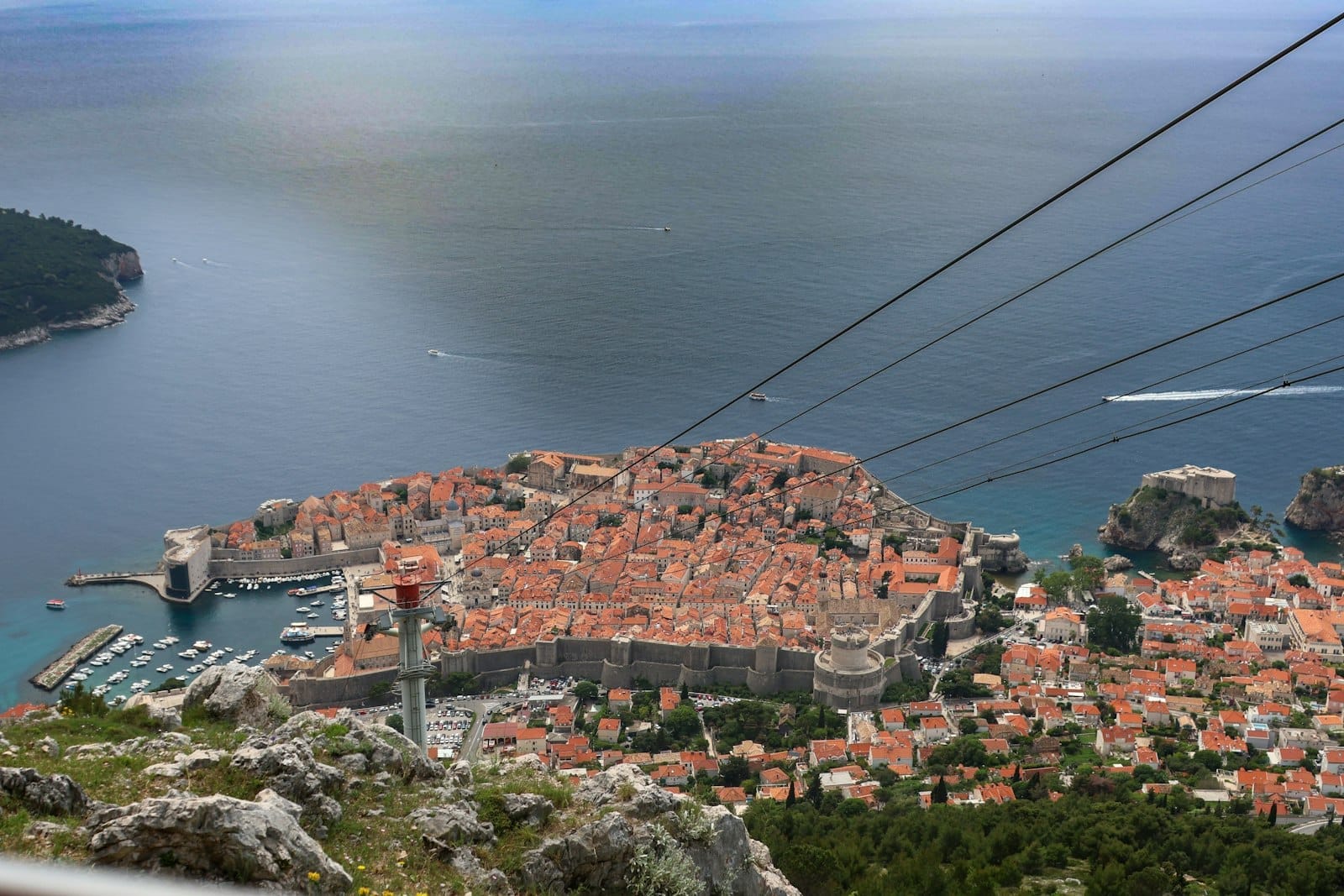
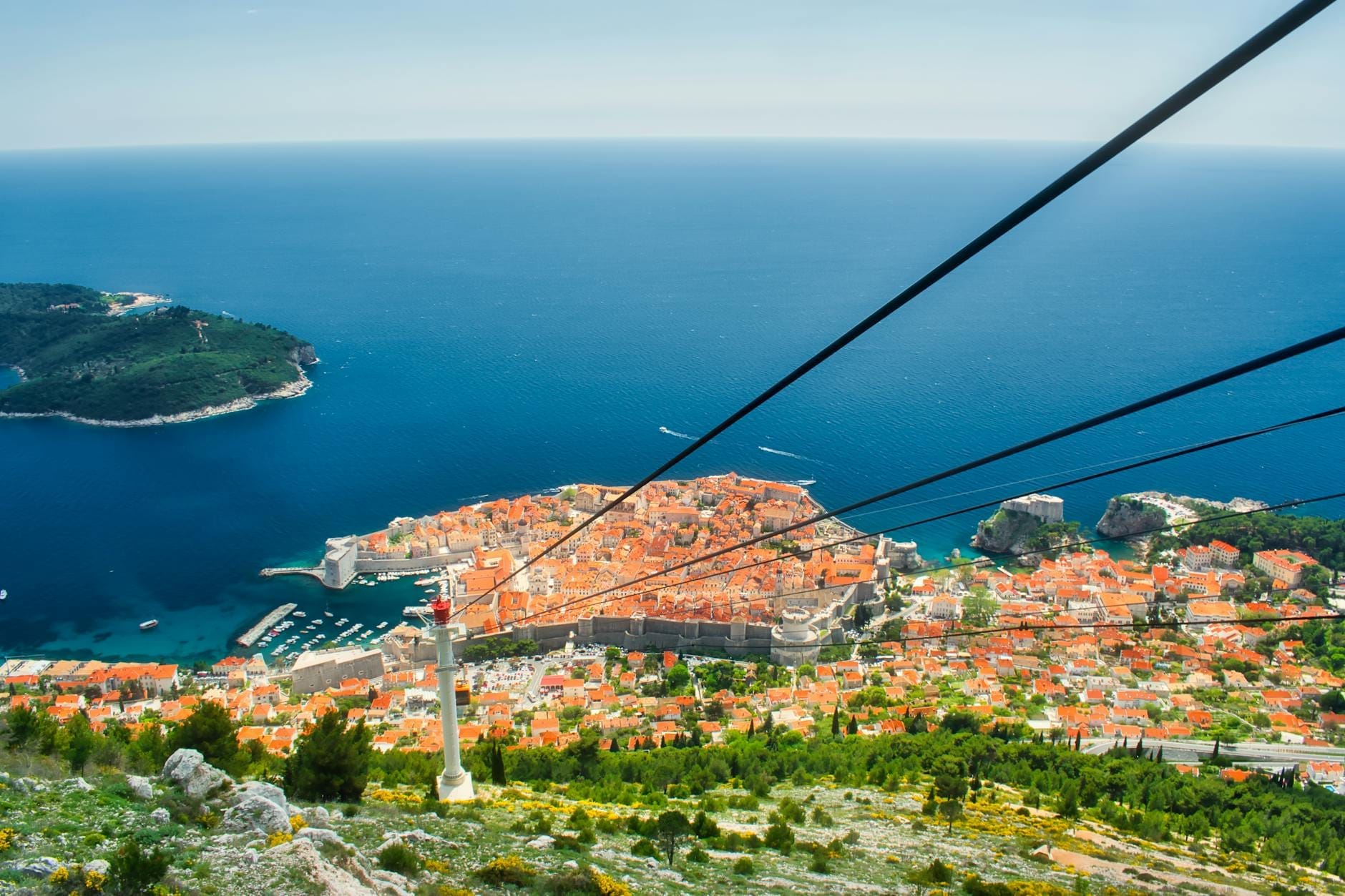
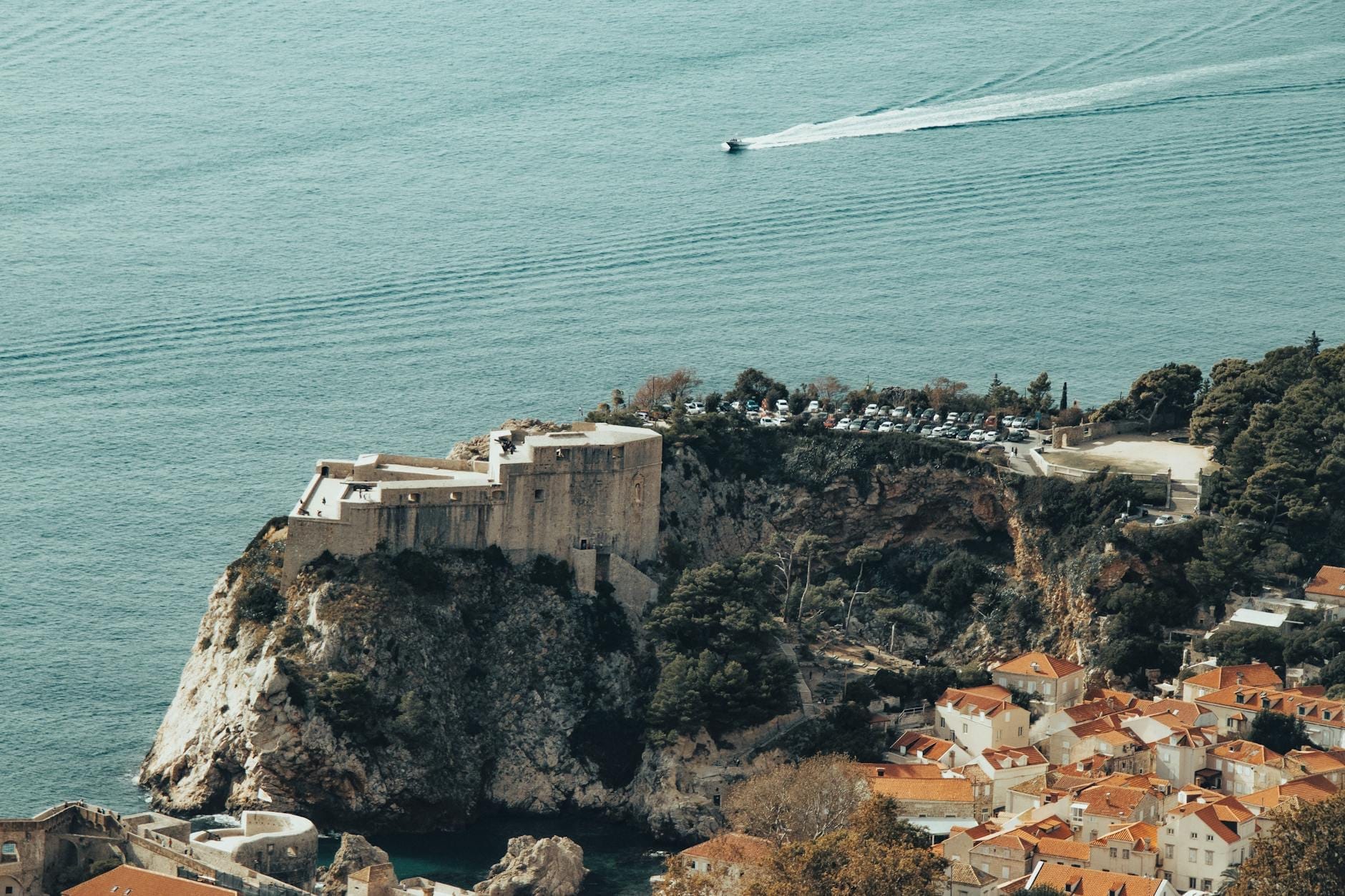
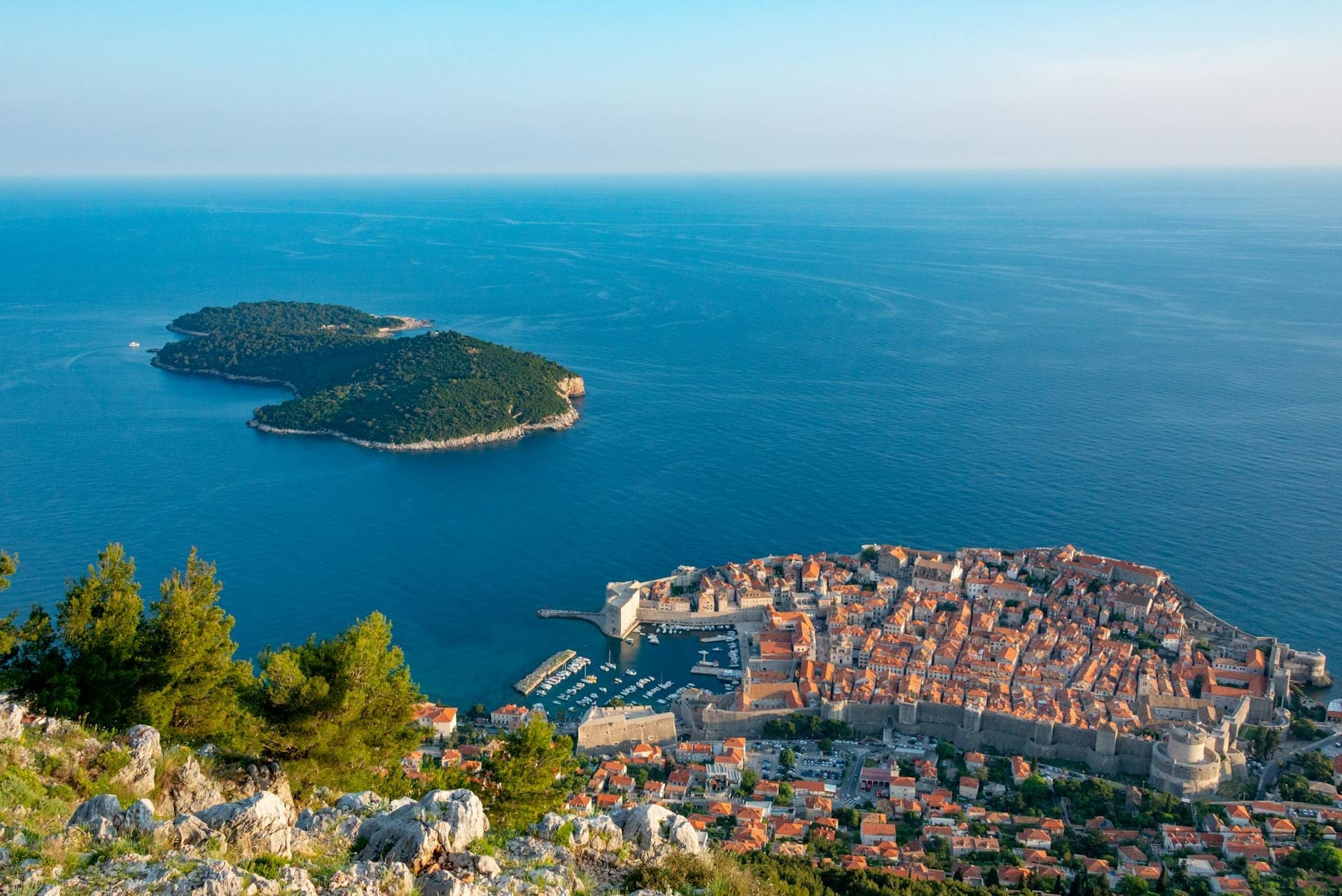
Mount Srđ is the bare limestone peak that towers directly above Dubrovnik's Old Town, offering the most complete panorama of the walled city, the Adriatic, and Lokrum Island available anywhere in the region. Reachable by cable car in minutes or on foot in under two hours, it combines stunning natural scenery with a sobering piece of wartime history at Fort Imperial.
Mount Srđ is the 412-meter ridge that defines Dubrovnik's northern skyline, serving as both the city's most dramatic vantage point and a landmark with genuine historical weight. From the summit, the geometry of the Old Town walls becomes fully legible for the first time, and on clear days the view extends east into Bosnia-Herzegovina and south toward Montenegro.
Orientation
Mount Srđ sits immediately north of Dubrovnik's Old Town, rising steeply from the coastal strip to a summit at 412 meters above sea level. It forms the dominant ridge of a spur of the Dinaric Alps that runs close to the Adriatic coastline here, which is why the contrast between the limestone heights and the sea below feels so abrupt and theatrical.
The mountain is not a neighborhood in the residential sense. There are no streets, shops, or apartment blocks on its slopes. Think of it instead as a destination zone that sits in direct relationship with the city below: the lower cable car station is located just north of Pile Gate, which is the main western entrance to the Old Town. The road that curves around the base of the mountain on its western side is Jadranska Cesta, and the hiking trail access points sit roughly 1 kilometer from Pile Gate along this corridor.
To the north and east, the ridge drops toward the Konavle valley and the hilly interior of southern Croatia. To the south and west, the land falls away sharply toward the Adriatic. This geography means that from the summit you are not just looking down onto Dubrovnik but are effectively hovering above it, with nothing interrupting the line of sight between you and the city walls below.
Character & Atmosphere
The character of Mount Srđ changes significantly depending on how you arrive and what time of day you go. In the early morning, the hiking trails are quiet, the air is cool, and the limestone path catches the first flat light in a way that makes the scrubby vegetation and pale rock look almost cinematic. The silence up here before the cable car starts running is one of the more striking contrasts available in a city that, at peak season, rarely goes quiet.
By late morning, the summit becomes genuinely crowded. The cable car delivers groups in rapid succession, and the observation terrace outside the restaurant and fort fills up fast. The atmosphere shifts from contemplative to social, with a lot of camera activity and the low hum of tour groups receiving commentary. If the panorama is your main goal, arrive early or come in the late afternoon when the light is better anyway and the morning crowds have thinned.
Midday in summer is uncomfortable for hiking. The exposed limestone reflects heat intensely, there is almost no shade on the upper trail, and temperatures on the open ridge can feel considerably hotter than in the shaded streets of the Old Town below. The trail itself is steep, averaging around a 6 percent gradient, and the final approach to the summit is relentlessly exposed. What makes the effort worthwhile is the transition: the moment the Old Town walls come fully into frame as you crest the ridge is a genuine visual payoff.
At sunset, Mount Srđ becomes a different place again. The western light turns the terracotta roofs of the Old Town deep orange, and the sea changes color in stages from blue to gold to grey. The restaurant terrace fills with couples and small groups. It is worth noting that the last cable car down runs after sunset in peak season, but schedules vary, so checking before you go is important.
💡 Local tip
For the best photography conditions, aim to reach the summit either before 9am or after 5pm. The midday light is flat and harsh on the limestone, while the low-angle morning and evening sun gives the Old Town walls depth and color.
What to See & Do
The summit of Mount Srđ is dominated by Fort Imperial, a star-shaped Napoleonic fortress built by French forces in the early 19th century during the period when Dubrovnik was under French administration. The fort played a crucial role during the 1991-1992 Siege of Dubrovnik, when Croatian defenders held the position against extended attack. Today it houses the Museum of the Croatian War of Independence, which documents the siege through photographs, weapons, personal accounts, and multimedia displays. The museum is compact but affecting, and it provides essential context for understanding the city below. You can learn more in our dedicated guide to Fort Imperial and the siege museum.
Just outside the fort, a large white stone cross and altar mark the summit plateau. The cross is visible from the Old Town below and has become a recognized part of Dubrovnik's skyline. The observation area around it is open and unfenced, which means the views are completely unobstructed but also means you should keep children close to the edges.
The other major draw is the cable car itself. The Dubrovnik Cable Car runs from a lower station just above the Pile Gate area to the summit station in around four minutes. The cars are modern and glass-sided, and the ascent is steep enough that the views open up dramatically even before you reach the top. The cable car is the quickest and most practical way up for most visitors, though the round-trip ticket price is not insignificant. Check our full guide for current pricing and opening hours.
For those who prefer to hike, two main routes lead to the summit. The serpentine path is the more direct and more popular of the two, starting near the road signage on Jadranska Cesta and climbing through switchbacks to the top in 40 to 90 minutes depending on fitness and pace. The total distance is approximately 3 kilometers one-way, with around 280 to 380 meters of elevation gain depending on exactly where you start. A second, longer gravel road route also exists and is sometimes used for buggy safaris, which are a popular organized excursion to the summit.
Fort Imperial and the Museum of the Croatian War of Independence
Summit observation terrace with 360-degree views
White stone cross and altar at the summit plateau
Dubrovnik Cable Car (lower station near Pile Gate)
Hiking trails via the serpentine path or gravel road
Buggy safari excursions from the Old Town
Summit restaurant and café with terrace seating
ℹ️ Good to know
On clear days, the summit view extends north into Bosnia-Herzegovina, south toward the Montenegrin coast, and east across the Adriatic toward Italy. The complete circuit of the Old Town walls is visible from directly above, which gives you a spatial understanding of the city's layout that is impossible to get from inside the walls.
Eating & Drinking
Food and drink options on Mount Srđ itself are limited to the summit restaurant and its terrace café, which is operated in conjunction with the cable car. The restaurant offers Croatian and Mediterranean dishes with a predictable emphasis on the view over the food, though the quality is generally acceptable given the setting. Prices reflect the captive audience situation: expect to pay more than you would for comparable food in the Old Town.
The café section of the summit facility is useful for a cold drink and a rest after the hike, but it is not a destination in itself. If you are hiking up, bringing your own water is strongly advisable, particularly in summer. The exposed trail has no water sources, and dehydration is a genuine risk on a hot day.
For a proper meal before or after your visit to the mountain, the Old Town has the full range of options. For guidance on where to eat well in the city, our Dubrovnik restaurant guide covers everything from budget konobas to upmarket seafood. The area around Pile Gate, at the base of the cable car, also has a few café options that work well as a starting or finishing point.
⚠️ What to skip
Bring at least 1.5 liters of water per person if you are hiking in summer. The trail is fully exposed above the treeline, temperatures on the open limestone can exceed 35°C between June and August, and there are no water refill points on the mountain.
Getting There & Around
The most straightforward way to reach Mount Srđ is the cable car from the lower station, which is located on Petra Krešimira IV street, a short walk uphill from Pile Gate. The Pile Gate area is itself served by Dubrovnik's Libertas bus network, with several bus lines stopping at the main Pile terminal. This makes Mount Srđ directly accessible from Gruž harbour, Lapad, and other parts of the city without needing a car. For full guidance on navigating the Libertas bus system, see our guide to getting around Dubrovnik.
If you are hiking, the trailhead for the main serpentine path begins near Jadranska Cesta, approximately 1 kilometer west of Pile Gate. The practical approach is to walk through or around the Pile Gate area and follow the road northwest until you see the trail markers and the welcome signboard near the freeway tunnel junction. A navigation app is useful here because the road and trail can be confusing to distinguish at the starting point, and walking on Jadranska Cesta itself is not safe due to traffic.
Taxis and rideshare services can take you to the summit via a road that winds up the mountain's northern side. This is useful for those with mobility constraints or those who simply want to reach the fort without the physical effort. The road access means the summit is technically drivable, though parking is limited and the road is narrow in sections.
If you are arriving in Dubrovnik by cruise ship, Mount Srđ is a feasible excursion from the port at Gruž. The port is connected to the Pile Gate area by bus, and the total transit time from ship to summit via cable car is manageable within a half-day port stop. See our Dubrovnik cruise port guide for practical logistics on organizing your time ashore.
Planning Your Visit: Practical Advice
Mount Srđ pairs naturally with a visit to the Old Town walls, since the two experiences give you the city at ground level and from above respectively. Many visitors do both in a single day, walking the walls in the morning before temperatures peak, then taking the cable car to the summit in the late afternoon. Our guide to the Dubrovnik City Walls covers the wall walk in full, including entry points, costs, and how long to allow.
For photographers, Mount Srđ is one of the key locations in the city for aerial-style shots of the Old Town. The angle from the summit is unique: you are looking almost directly down onto the walled city, with the sea and Lokrum Island framing the background. Our Dubrovnik photography guide includes the best summit positions and timing windows for different light conditions.
If you want to add a full hike to Mount Srđ rather than taking the cable car, this is best treated as a half-day activity. Start early (before 8am in summer), carry sufficient water, and wear shoes with grip as the limestone path can be loose in sections. The descent is harder on the knees than the ascent. Alternatively, many visitors hike up and take the cable car down, which saves the legs and is a perfectly reasonable approach. You can read more about the hiking option in our dedicated guide to the Mount Srđ hike.
Mount Srđ also works as a standalone reason to visit Dubrovnik if you are arriving specifically to walk in the surrounding hills. The ridge extends well beyond the summit area and there is scope for longer routes into the karst interior. For context on how this fits into a wider Dubrovnik itinerary, see our 3-day Dubrovnik itinerary, which positions the mountain visit within a logical sequence of the city's major sights.
Historical Context
The name Srđ (pronounced roughly as 'surdj') comes from Saint Sergius, a Christian martyr to whom a church on the hillside was once dedicated. The mountain has been part of Dubrovnik's defensive geography for centuries: control of the high ground above the city has always been militarily significant, which is why Napoleon's forces chose to build Fort Imperial at the summit during the French period in the early 1800s.
The most significant chapter in the mountain's recent history came in 1991 and 1992, during the siege of Dubrovnik in the broader context of Croatia's war of independence. Yugoslav People's Army and Montenegrin forces advanced from the north and east, and the summit of Srđ became a frontline position. Croatian defenders held the fort against sustained assault, and the mountain's role in preventing the fall of the city is commemorated throughout the summit area and in detail within the museum inside Fort Imperial.
The cable car, which had originally opened in 1969, was destroyed during the war and remained inoperative for years afterward. Its restoration and reopening in 2010 was treated as a symbolic milestone in the city's postwar recovery. This history gives the cable car ride a layer of meaning that goes beyond the engineering achievement of a modern gondola system, and it is worth holding in mind as you ascend.
Who Should Visit Mount Srđ
Mount Srđ is worth visiting for almost any traveler spending more than a day in Dubrovnik. The view from the summit genuinely reorients your understanding of the city's layout, and the museum inside Fort Imperial adds historical depth that complements rather than duplicates what you see at ground level in the Old Town.
It is less suitable for visitors with significant mobility limitations if the cable car is not running, or for those with a strong aversion to heights on the open summit platform. The hiking option is not appropriate for small children in summer heat. But for anyone capable of the cable car ride or the walk, the summit is one of the more rewarding single experiences the city offers.
If you are trying to make the most of limited time, our guide on whether Dubrovnik is worth visiting and our complete things-to-do guide both help prioritize between the city's main draws. Mount Srđ consistently ranks among the experiences that visitors say they are glad they made time for.
TL;DR
Mount Srđ sits directly above Dubrovnik's Old Town at 412 meters and is reachable by cable car in 4 minutes or on foot in 40-90 minutes via the serpentine hiking trail.
The summit offers the most complete panoramic view of the walled city available anywhere, with sightlines extending to Lokrum Island, the Adriatic, and the mountains of Bosnia-Herzegovina.
Fort Imperial at the summit houses the Museum of the Croatian War of Independence, which documents the 1991-1992 siege in which Croatian defenders held the mountain against sustained attack.
Go early in the morning or in the late afternoon: midday crowds and summer heat make the summit experience significantly less enjoyable between 10am and 4pm.
Best suited to travelers who want to understand Dubrovnik's geography from above, history enthusiasts, hikers, and photographers. Less suitable for those with mobility limitations if the cable car is unavailable.
Choosing the best time to visit Dubrovnik shapes your entire trip. This guide breaks down every season honestly, covering weather, crowds, costs, and what's actually worth doing in each period, so you can plan around your priorities rather than tourist brochure hype.
Buza Bar is Dubrovnik's most atmospheric drinking spot, clinging to the rocks outside the southern city walls with direct access to the Adriatic. This guide covers both locations, how to find them, what things cost, the truth about sunset views, and everything else you need before you go.
Dubrovnik rewards slow exploration, but the surrounding region is packed with destinations worth a full day out. These are the best day trips from Dubrovnik, covering Adriatic islands, Bosnian towns, coastal nature, and a UNESCO-listed arboretum.
Dubrovnik's coastline offers far more than one famous beach. From the postcard views at Banje to the calm lagoon on Lokrum Island and the car-free sandy shore of Lopud, here is where to swim, sunbathe, and cool off around the city.
The Dubrovnik Cable Car is the fastest way to reach Mount Srđ and its 412-metre panorama above the Old Town. This guide covers tickets, seasonal hours, crowd patterns, what to expect at the summit, and honest advice on whether it's worth the fare.
The Dubrovnik Pass promises free entry to the City Walls, Rector's Palace, six museums, skip-the-line access, and bus rides. But does the math work out? This guide breaks down every included attraction, the real savings by pass type, and exactly who should (and shouldn't) buy one.
The Dubrovnik City Walls are the single most impressive feature of this UNESCO-listed old city: a nearly 2 km loop of medieval fortifications with uninterrupted views over the Adriatic. This guide covers ticket prices, entry points, the best time to go, and everything the official site doesn't tell you.
Cruise ships dock at Port Gruž, roughly 3km from Dubrovnik's Old Town. This guide covers exactly how to get there, what to expect on arrival, how to spend your time ashore, and how to avoid the most common mistakes cruise passengers make.
Most visitors to Dubrovnik walk the walls, photograph the Stradun, and leave. But the city rewards those who look further. From cliff-side bars and car-free islands to a centuries-old arboretum and a wartime fortress on the hill above the city, these are the experiences that make Dubrovnik far more than its postcard image.
Dubrovnik is one of the Adriatic's most photogenic cities, and for couples it delivers something genuinely special: medieval stone streets, cliff-top bars with open sea views, private boat tours, and candlelit waterfront dining. This guide covers the most romantic things to do in Dubrovnik, the best times to visit as a couple, and practical advice that saves you from the tourist-trap pitfalls.
The Elaphiti Islands sit just off Dubrovnik's coast and offer everything the city lacks in summer: quiet coves, car-free lanes, and unhurried lunches. This guide covers ferry logistics, guided tours, what each island is actually like, and how to make the most of a day on the water.
Three days is enough to see the best of Dubrovnik without rushing. This itinerary covers the City Walls, Old Town highlights, a day trip to the islands, and practical advice on timing, pricing, and what to skip.
Paddling the Adriatic Sea along Dubrovnik's UNESCO-listed city walls is one of the most visually striking experiences the Croatian coast offers. This guide covers every sea kayak tour option, honest pricing, the best routes, top operators, and what to expect on the water.
Dubrovnik after dark is more layered than its reputation suggests. This guide covers the top things to do in Dubrovnik at night — cliff-side cocktails, beach clubs, a 16th-century fortress turned dance floor, and the quieter bars most tourists walk past. Includes prices, seasonal notes, and what to skip.
Dubrovnik has a reputation as one of Croatia's priciest destinations, and it earns it. But budget-conscious travelers still make it work every year. This guide breaks down real costs, seasonal pricing shifts, and the specific decisions that separate a €70/day trip from a €200/day one.
Dubrovnik is one of the most photogenic cities in Europe, but great shots require more than just showing up. This guide covers the best photography spots in Dubrovnik, including exact vantage points, optimal timing by season, entry costs, and honest advice on which locations are worth the effort.
Dubrovnik ranks among Croatia's safest cities, but its popularity brings a predictable set of tourist-targeted scams. This guide breaks down exactly what to watch for, where risks concentrate, and how to travel confidently without falling for overcharges, fake taxis, or phishing QR codes.
Running for 47 days across 16+ historic venues each summer, the Dubrovnik Summer Festival transforms the Old Town into an open-air cultural stage. This guide covers dates, ticket booking, the best performances to catch, and how to plan your visit without the headaches.
Walk Dubrovnik's UNESCO-listed Old Town on your own terms. This guide covers the full route from Pile Gate to the Clock Tower, every major stop along the way, the best apps to use, and honest advice on timing, crowds, and what to skip.
Dubrovnik's Mediterranean climate means sun-drenched summers, mild winters, and two golden shoulder seasons. This guide breaks down temperatures, rainfall, sea conditions, and crowd levels for every month so you can choose the visit that suits you best.
Dubrovnik is more family-friendly than its reputation suggests, but it rewards planning. This guide covers the best beaches, activities for children of all ages, seasonal timing, and practical logistics so your family trip actually works.
Dubrovnik has a reputation for being expensive, but plenty of its best experiences cost nothing at all. From wandering the Stradun to hiking Mount Srđ for panoramic views, here are the top free things to do in Dubrovnik.
Dubrovnik's Old Town doubled as King's Landing for eight seasons of Game of Thrones, and the locations are remarkably easy to visit on foot. This guide covers every major filming site, honest advice on tours versus self-guided walks, seasonal crowd warnings, and current pricing so you can plan without surprises.
Dubrovnik's Old Town is car-free, hilly, and can swallow an afternoon if you don't know the bus routes. This guide covers every transport option in the city: Libertas buses, airport shuttles, taxis, the cable car, and the Dubrovnik Pass, with real fares and honest advice on what to skip.
Dubrovnik gets more attention than almost any city its size. But does it live up to the hype? This guide cuts through the marketing noise with honest answers on costs, crowds, timing, and what makes the city genuinely special — plus what to watch out for.
Dubrovnik punches well above its size when it comes to luxury travel. This guide covers the best 5-star hotels on the Adriatic, where to eat well without the tourist markup, and how to get the most out of one of Europe's most dramatic coastal cities — without overpaying for it.
Three routes connect Split and Dubrovnik, each with a different trade-off between cost, comfort, and scenery. This guide breaks down the ferry, bus, and driving options with real pricing, seasonal schedules, and honest advice on which to choose.
St Blaise Church stands at the heart of Dubrovnik's Old Town, a Baroque masterpiece dedicated to the city's patron saint. This guide covers its architecture, the remarkable silver statue, practical visiting advice, and the annual February celebrations that bring the church to life.
Dubrovnik rewards visitors who go beyond the obvious. This guide covers the top things to do in Dubrovnik, Croatia, from the iconic City Walls walk and cable car summit to sea kayaking, island hopping, and the local spots most guides skip. Includes real prices, crowd timing, and honest take on what's worth it.
Dubrovnik's food scene runs much deeper than tourist-trap menus on the Stradun. This guide covers the essential Dalmatian dishes every visitor should try, where to actually eat them, and how to avoid wasting a meal on overpriced mediocrity.
Dubrovnik is perched on a narrow coastal promontory in southeastern Croatia, roughly 42.64° N, 18.11° E, with the Adriatic Sea on one side and the bare limestone mass of Mount Srđ on the other. This guide covers the city's precise geography, its distinct neighborhoods, the best routes in, and the seasonal realities that shape every visit.
Dubrovnik's dining scene runs from rooftop fine dining above limestone walls to burek shops wedged into medieval alleyways. This guide cuts through the tourist-trap noise to tell you exactly where to eat, what to order, and how much to pay — by neighbourhood, budget, and occasion.
Choosing where to stay in Dubrovnik shapes your entire experience. This guide covers every major neighbourhood, from the medieval Old Town to the resort strip of Lapad, with honest advice on who each area suits, what to expect, and how to avoid common booking mistakes.