Dubrovnik Cable Car: The View That Puts the Whole City in Perspective
The Dubrovnik Cable Car carries passengers 412 meters up Mount Srđ in roughly four minutes, delivering one of the most complete views of the Old City, the surrounding islands, and the Adriatic coastline anywhere in the region. At the top, the Imperial Fortress adds a layer of history that most visitors overlook.
Quick Facts
- Location
- Lower station: Petra Krešimira IV 10a, Dubrovnik (5–6 min walk from Pile Gate)
- Getting There
- Walk from Pile Gate (5–6 min) or Buža Gate (7–9 min uphill); Libertas bus stops nearby
- Time Needed
- 1.5–2.5 hours including summit exploration
- Cost
- Prices vary seasonally; check dubrovnikcablecar.com for current EUR rates. Under 4 free.
- Best for
- Panoramic photography, understanding the city's geography, history context
- Official website
- www.dubrovnikcablecar.com
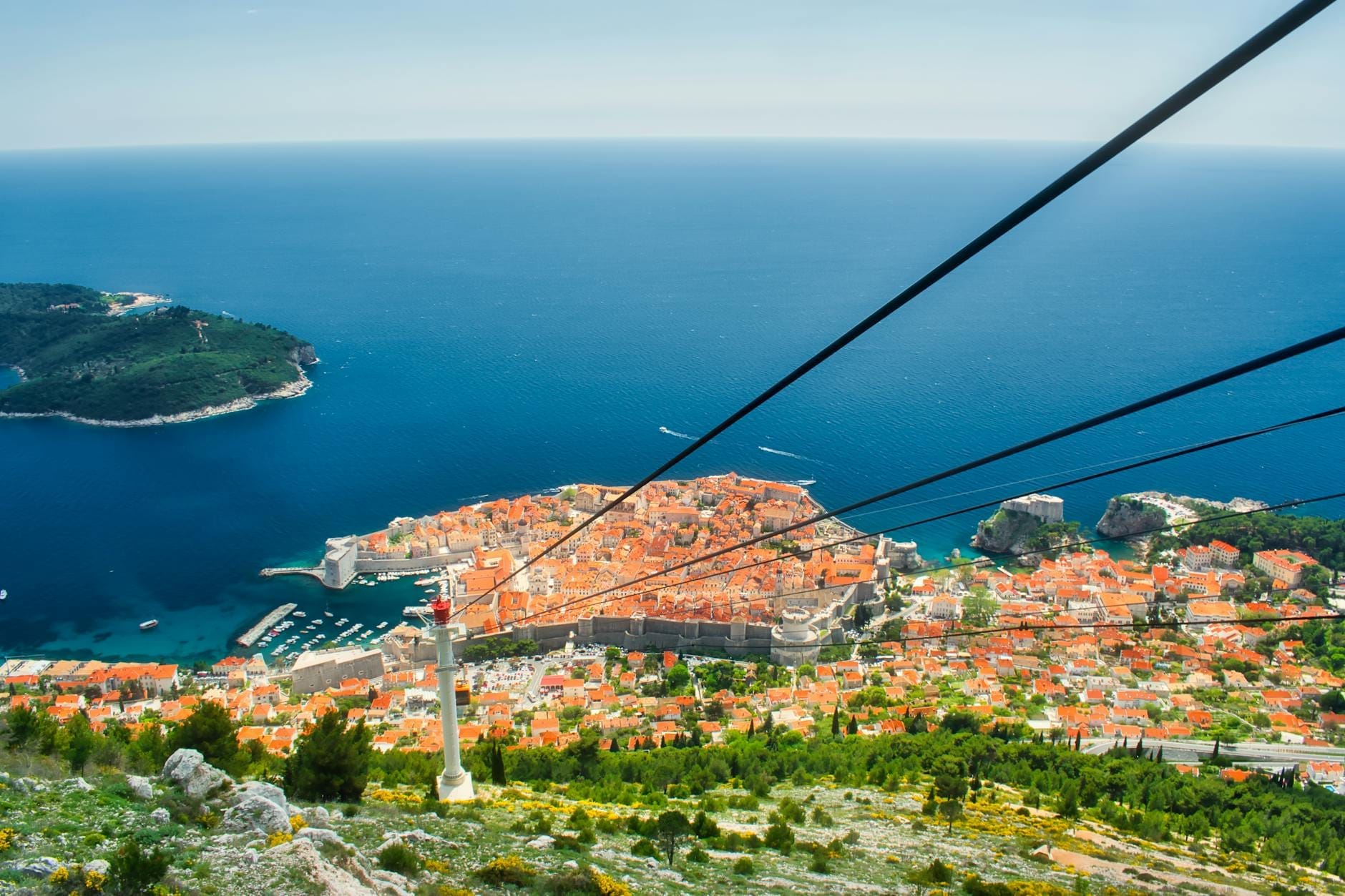
What the Dubrovnik Cable Car Actually Offers
The Dubrovnik Cable Car, known in Croatian as Žičara Dubrovnik, runs 778 meters from a lower station just outside the Old City walls to the summit of Mount Srđ at 412 meters above sea level. The ride takes roughly four minutes each way. What you get at the top is not just a view: it is a spatial understanding of Dubrovnik that is impossible to achieve from ground level.
From the summit terrace, the entire Old City unfolds below as a single coherent form: its limestone walls tracing a neat oval, the long straight line of the Stradun bisecting the interior, terracotta rooftops still showing patches of newer replacement tiles that mark where mortar shells landed during the 1991–1992 siege. On a clear day, the Elaphiti Islands appear to the northwest, Lokrum sits close to shore directly below, and the Dalmatian coast stretches south toward Montenegro.
⚠️ What to skip
The cable car closes annually for maintenance, typically in late winter. Check the official timetable at dubrovnikcablecar.com before visiting, as closures are not always prominently flagged on third-party booking sites.
A Short History with a Long Gap
The original cable car opened in 1969, giving locals and tourists their first mechanized access to the ridge above the city. It ran for over two decades before the Yugoslav Wars brought the Siege of Dubrovnik in 1991 and 1992. The system was destroyed during the conflict and remained non-operational for nearly two decades. The rebuilt cable car reopened in 2010, restored to serve the same route, but the gap in its history is not incidental: the Imperial Fortress at the summit was also a focal point of the siege, and the views from the top allow you to understand exactly why controlling that ridge mattered militarily.
The fortress itself, sometimes called Fort Imperial, dates from the early 19th century Napoleonic occupation of Dubrovnik. It now houses the Museum of the Homeland War, which documents the 1991–1992 siege with photographs, artifacts, and maps. Admission to the museum is separate from the cable car ticket. For visitors who want more depth on the military and political geography of this area, the Fort Imperial warrants at least 30 minutes of your time at the summit.
Tickets & tours
Live prices and dates from our booking partner. If you book, we may earn a commission at no extra cost to you.
Dubrovnik Old Town Tour ith Cable Car Ride
From 56 €Instant confirmationFree cancellationDubrovnik all-in-one Tour with Cable Car Ride
From 98 €Instant confirmationFree cancellationVisit Mostar and Kravice waterfalls from Dubrovnik with a private car
From 49 €Instant confirmationFree cancellationMostar and Kravice Waterfalls excursion from Dubrovnik
From 120 €Instant confirmationFree cancellation
The Ride Up: Four Minutes That Change Your Frame of Reference
The cabin holds up to 30 to 32 passengers and departs every 15 minutes, or sooner when a full complement arrives. During peak summer months (July and August), queues at the lower station can stretch to 45 minutes or more, particularly between 10:00 and 14:00. In that window, the combination of direct sunlight on the exposed queuing area and the psychological pressure of a long wait makes early morning the clearly superior choice.
As the cabin ascends, the city drops away with surprising speed. Within the first 90 seconds you are high enough to see over the city walls entirely. The limestone face of Srđ is bare and pale in summer, the scrub vegetation sparse. You can hear the hum of the cable mechanism and, faintly, the sounds of the city fading below. By the time you step onto the upper platform, the air is noticeably cooler than the city streets, even in August, and the breeze that comes off the ridge is a genuine relief after the heat of the Old Town.
💡 Local tip
Go up at sunrise or in the first hour after opening. The light from the east hits the Old City walls at a low angle, the terracotta rooftops glow amber, and the cruise ships have not yet arrived in the port. This is the single best photography window of the day.
Time of Day and How the Experience Changes
Morning visits (before 10:00) offer short queues, soft light, and cool temperatures. The city below is quiet, the harbor traffic minimal, and the visibility often sharpest before sea haze builds. This is the window serious photographers target.
Midday is the most crowded and the least comfortable. The exposed summit terrace provides limited shade, the light is flat and harsh for photography, and queues at both stations are at their longest. If midday is your only option, bring water, sunscreen, and manage your expectations for both comfort and photos.
Sunset visits are popular and for understandable reasons: the western light turns the Old City a warm orange and the sea goes silver. However, the last car down runs close to closing time, and the exact closing hour shifts seasonally (during the October to May period, last cars run around 17:00; summer hours extend significantly later). Confirm current hours before planning a sunset ascent, as missing the last cable car means a 45-minute hike down on an unmarked path in fading light.
Getting There and Practical Walkthrough
The lower station sits at Petra Krešimira IV 10a, opposite the fire station, about five to six minutes on foot from Pile Gate. The walk is flat and well-signposted from the gate. From the Buža Gate on the eastern side of the walls, the walk is seven to nine minutes and slightly uphill. Libertas city buses serve stops near the cable car; the specific route numbers serving the area are subject to schedule changes, so check the Libertas website for current timetabling.
At the summit, the covered terrace adjacent to the upper station has a cafe and restaurant. The food is adequate and the prices are what you would expect from a captive-audience location with exceptional views. Bring your own water if you are budget-conscious, but there is no restriction on food and drink on the premises.
For those who prefer to hike rather than ride, a walking trail ascends Mount Srđ from near the Pile Gate area. The Mount Srđ hike takes approximately 45 to 60 minutes each way on a rocky, exposed path with no shade. It is a legitimate option in cooler months, but in July and August the combination of heat and uneven limestone surface makes it genuinely demanding. Sturdy footwear is necessary regardless of season.
Photography: What to Shoot and When
The summit is one of Dubrovnik's best photography locations, and the Dubrovnik photography guide covers the full range of vantage points in the city. From Mount Srđ specifically, the key compositions are: the full aerial view of the Old City walls against the sea (best with a standard zoom, 24–70mm equivalent), the detail of the fortress walls in the foreground with the city behind (allows for scale and depth), and the sweep of the coastline toward the Elaphiti Islands on a clear day (a longer focal length compresses the distance effectively).
Drone pilots should be aware that Dubrovnik's airspace is heavily restricted, particularly over the UNESCO-listed Old City. Check current no-fly zone boundaries before bringing a drone, as regulations are enforced and fines apply.
Accessibility and Who Might Not Enjoy This
The cable car itself is accessible for most mobility levels: the cabin platform is at grade with the loading area, and no steps are required to board. The summit terrace and viewpoint are paved and relatively flat near the upper station. However, exploring further along the ridge or around the fortress walls involves uneven limestone and unpaved surfaces. Visitors with significant mobility limitations can still access the main viewpoint without difficulty.
The experience is genuinely less rewarding in overcast or hazy conditions. Dubrovnik's summer air quality is generally good, but sea haze can reduce visibility significantly by midday, particularly in July and August. If the skies are grey, the view from the summit loses much of its drama. For those with only one day in the city, weigh whether the cable car is the best use of a cloudy morning compared to exploring the streets and churches at ground level.
Visitors who are primarily interested in the Old City's architecture, street life, and interior spaces may find the cable car a pleasant addition but not essential. The view is spectacular; the ground-level experience of Dubrovnik is a different kind of reward. Travelers on very tight itineraries who feel overwhelmed by queue times in peak season sometimes choose to skip the cable car in favor of more time on the city walls, which offer their own elevated perspective from a completely different angle.
ℹ️ Good to know
The Dubrovnik City Pass does not automatically include cable car access in every package. If you plan to visit multiple major attractions, the pass may still represent meaningful savings. Check current inclusions before purchasing, as bundle details change periodically.
Insider Tips
- Arrive at opening time to avoid queues entirely. By 10:30 AM in peak summer, wait times at the lower station regularly exceed 30 to 40 minutes.
- The northern-facing terrace at the summit gives you the city view everyone photographs. Walk around to the southern and eastern sides for views inland over the Dinaric karst landscape, which most visitors ignore entirely.
- The Museum of the Homeland War inside Fort Imperial is genuinely affecting and adds historical weight to what might otherwise be just a scenic stop. Budget an extra 30 minutes and the modest separate admission fee.
- If you are visiting in shoulder season (May or October), the cable car is far less crowded and the light is better for photography than in midsummer. The ridge also stays greener longer into autumn than the bare limestone suggests.
- Check the official website for the current maintenance closure schedule before building your itinerary around the cable car. The annual shutdown typically falls in late winter but the exact dates shift year to year.
Who Is Dubrovnik Cable Car For?
- First-time visitors who want to understand Dubrovnik's geography before exploring at street level
- Photographers targeting the iconic aerial view of the Old City walls
- History-minded travelers interested in the 1991–1992 siege and the Napoleonic-era fortress
- Families with children who can handle a short, open-air cable car ride
- Anyone visiting in shoulder season looking for a crowd-free, high-impact experience
Nearby Attractions
Other things to see while in Mount Srđ:
- Fort Imperial (Fort Imperijal)
Perched at 415 metres on the summit of Mount Srđ, Fort Imperial is a Napoleonic-era fortress that became a frontline command post during the 1991-1995 Homeland War siege of Dubrovnik. It combines panoramic views of the old city and Adriatic with a sobering war museum that most visitors to Dubrovnik never make time for.
- Mount Srđ Hiking Trail
The Mount Srđ hiking trail climbs 412 metres above Dubrovnik to deliver one of the Adriatic coast's most dramatic panoramas. It's free, open around the clock, and rewards the effort with views that the cable car queue cannot replicate. Here's everything you need to plan the ascent well.
Planning a trip? Discover personalized activities with the Nomado app.