Fort Imperial (Fort Imperijal): Dubrovnik's Hilltop Fortress and War Memorial
Perched at 415 metres on the summit of Mount Srđ, Fort Imperial is a Napoleonic-era fortress that became a frontline command post during the 1991-1995 Homeland War siege of Dubrovnik. It combines panoramic views of the old city and Adriatic with a sobering war museum that most visitors to Dubrovnik never make time for.
Quick Facts
- Location
- Summit of Mount Srđ, 415 m above Dubrovnik Old Town
- Getting There
- Dubrovnik Cable Car from Ulica Petra Krešimira IV 35 (near Pile Gate); zigzag hiking path or road also available
- Time Needed
- 1.5 to 2.5 hours including museum and viewpoint
- Cost
- Cable car ticket required separately; museum entry affordable (verify current prices on-site)
- Best for
- History enthusiasts, photographers, hikers, and anyone wanting Dubrovnik's best panoramic views
- Official website
- mdrd.hr/eng
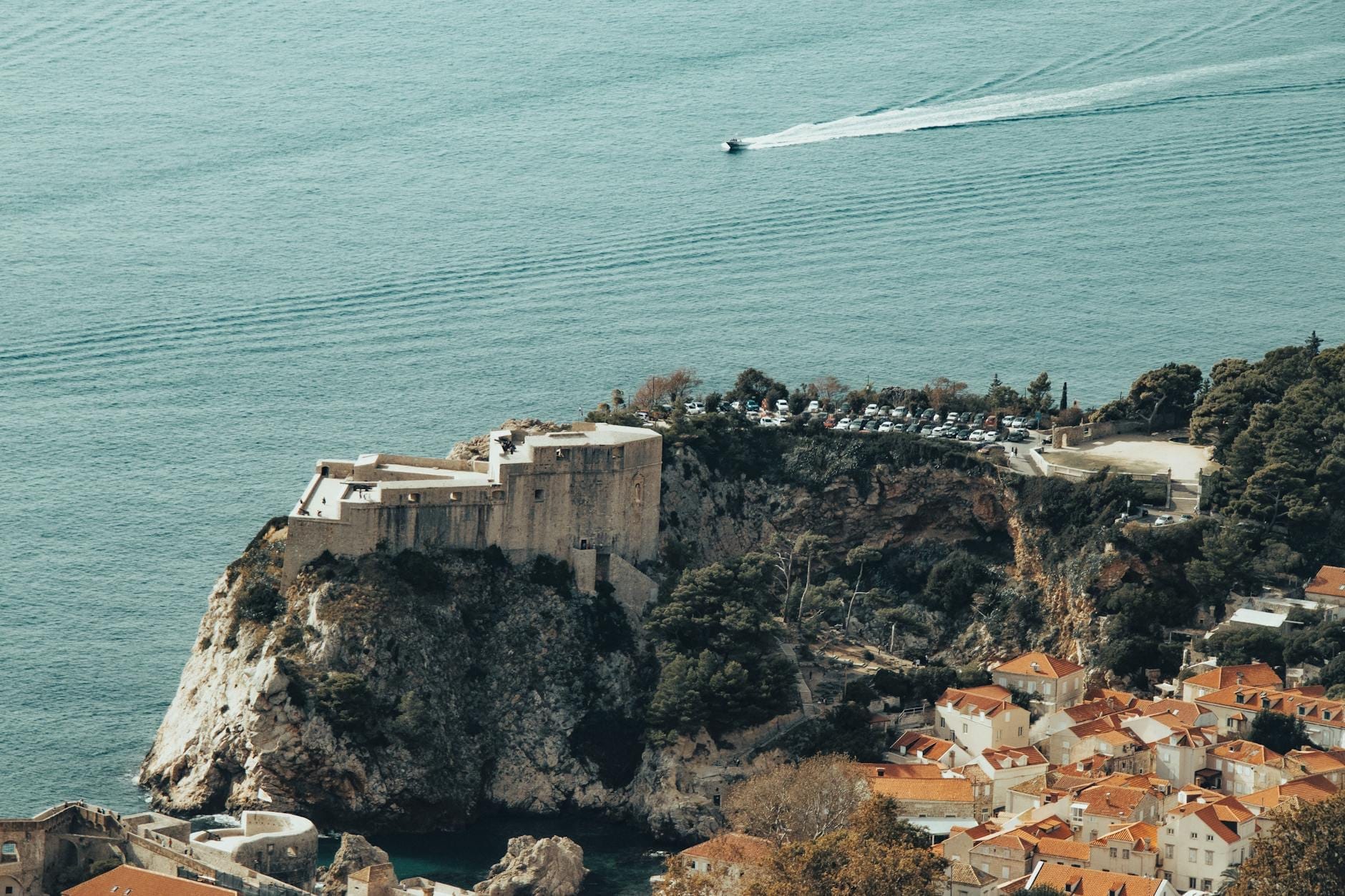
What Fort Imperial Actually Is
Fort Imperial, known in Croatian as Tvrdava Imperial, sits at the very top of Mount Srđ, the bare limestone ridge that rises sharply behind Dubrovnik's old city. From sea level, it looks like a small square silhouette against the sky. Up close, it is a compact but serious military structure: thick stone walls, angular bastions designed for cannon fire, and interior spaces that have survived two centuries of military use. The fort is not a ruin polished for tourists. It is rough, weathered, and carries visible scars from the 1991-1992 siege. That rawness is part of what makes it worth the climb.
Inside the fort, the permanent exhibition titled 'Dubrovnik in the Homeland War 1991-1995' tells the story of the siege through photographs, documents, weapons, and personal accounts. It opened in 2008 and covers the aggression, the defence, the casualties, and the eventual liberation of the city. The exhibition is modest in scale but direct in tone. This is not a sanitised memorial; it presents the conflict with the specificity of a community that lived through it.
ℹ️ Good to know
The fort and its museum are associated with the Homeland War Museum Dubrovnik (mdrd.hr). Exhibition hours and entry fees are not fixed across all seasons, so verify current information at the cable car station or on-site before your visit.
History: From Napoleon to the 1991 Siege
French forces built the fort between 1806 and 1812, during the Napoleonic occupation of the former Republic of Ragusa. It was dedicated to Napoleon I and designed to control the high ground above the city, a standard Napoleonic military principle applied across occupied Europe. The choice of Mount Srđ was strategic: whoever holds the ridge controls artillery angles over the harbour, the old town walls, and the road north. For most of the 19th and 20th centuries, the fort changed hands with the empires that passed through the Balkans.
In October 1991, Yugoslav People's Army and Montenegrin forces launched an offensive against Dubrovnik. The Croatian Army's 163rd Dubrovnik Brigade used Fort Imperial as its frontline command headquarters. The battle for the fort on 6 December 1991 is considered a turning point: Croatian defenders held the position and prevented the city from being taken from the high ground. The ridge is riddled with wartime trenches, and visitors should stay on marked paths. Some areas beyond the immediate fort perimeter were mined during the conflict; rehabilitation has been extensive but exercise caution outside marked zones.
Understanding this history transforms the experience of standing on the fort's upper terrace. Looking down at the Dubrovnik City Walls from above, you are standing on the exact ground where defenders watched shelling hit the old city below. The city walls guide covers the damage and restoration from street level, but Fort Imperial gives you the commander's perspective.
Tickets & tours
Live prices and dates from our booking partner. If you book, we may earn a commission at no extra cost to you.
Konavle and Falcon Fortress half-day tour with lunch
From 224 €Instant confirmationFree cancellationMostar and Kravice Waterfalls excursion from Dubrovnik
From 120 €Instant confirmationFree cancellationDubrovnik Old Town Tour ith Cable Car Ride
From 56 €Instant confirmationFree cancellationMostar and Kravice Waterfalls full-day tour with pickup from Dubrovnik
From 66 €Instant confirmationFree cancellation
The View: What You See and When to See It
The panorama from Fort Imperial is the widest and highest available above Dubrovnik without a plane. To the south and west, the old city spreads below you in its full oval shape, surrounded by walls on three sides and the Adriatic on the fourth. On clear days, the islands of Lokrum, Koločep, Lopud, and Šipan are all visible. The Montenegrin coast appears as a dark line on the far horizon to the southeast.
Light conditions change the experience significantly. Morning visits, roughly from opening until 10:00, offer cooler temperatures, softer light on the city, and noticeably fewer people. The cable car fills up fast after mid-morning, especially from June through August, and the summit platform becomes crowded. Late afternoon, from around 16:00 onward, brings warm golden light from the west and is the preferred window for photography. Sunset draws the largest crowds of the day, so arrive at least 45 minutes before sunset if you want space on the viewing terrace.
💡 Local tip
Photography tip: For a clear shot of the old city walls against the sea, position yourself on the fort's southwestern corner. A standard wide-angle lens covers the full city. Telephoto lenses bring out individual towers and the Elaphiti Islands in the distance. Early morning also reduces haze over the water.
The cable car ride itself is worth noting. The gondola climbs at a steep angle and offers unobstructed views over the old city during the four-minute ascent. The full guide to the Dubrovnik Cable Car covers ticketing, schedules, and what to expect at the upper station.
Getting There: Cable Car, Hike, or Drive
The cable car is the fastest and most popular option. The lower station is on Ulica Petra Krešimira IV 35, a ten-minute walk from Pile Gate on the western edge of the old city. The upper station deposits you near the fort summit, with the fortress entrance a short walk uphill from the platform.
Hikers can reach the summit via a marked zigzag path that begins near the lower cable car station. The ascent takes roughly 45 to 60 minutes depending on fitness and pace. The path is rocky and exposed, with minimal shade, so start early in summer and bring at least one litre of water. The surface is loose limestone in places and requires proper footwear: sandals are a bad idea. The reward is arriving at Fort Imperial before the cable car crowds, with the city spreading out below you in the morning quiet.
A road also reaches the summit and is used by taxis and private vehicles. If you are planning to combine the fort with a broader exploration of the ridge or considering the Mount Srđ hike, arriving by foot and descending by cable car is a practical combination.
⚠️ What to skip
The hiking path and road are fully exposed to sun. In July and August, midday temperatures at the summit regularly exceed 35°C. Heat exhaustion is a genuine risk for anyone attempting the hike between 11:00 and 16:00 without adequate water and sun protection.
Inside the Fort: What to Expect
The fort's interior is not large. The outer walls define a roughly square perimeter with bastions at the corners. The interior courtyard is open and plain. The museum occupies a portion of the ground-floor rooms along the inner walls. Exhibits include wartime photographs, military equipment used by both sides, maps of the siege lines, and panels covering specific events and casualties. Text is presented in Croatian and English.
The fort has not been comprehensively restored and awaits further renovation. Some walls show shell damage that has been left visible rather than repaired. Floors in the museum sections are uneven in places. The upper terraces and bastions are accessible on foot and offer the clearest views, but the surfaces are rough and there are no guardrails on all sections. Visitors with limited mobility should be aware that the interior involves steps and uneven terrain; the cable car upper station itself is accessible, but the fort proper presents challenges.
Pairing Fort Imperial with the Rest of Mount Srđ
The upper cable car station has a bar and restaurant with terrace seating that shares the panoramic view, useful for a drink after the museum. The station area is also the starting point for several walking trails along the ridge. The broader Mount Srđ area is worth spending time on if you have more than an hour. The ridge offers a very different perspective on the city than anything achievable at sea level.
From the summit, the contrast between the compact medieval geometry of the old city and the modern suburbs of Lapad to the northwest is striking. You also get a clear view of the cruise ship anchorage at Gruž harbour, which puts the scale of cruise tourism into immediate visual context.
Who Should Skip Fort Imperial
Travellers who are purely after a quick viewpoint and have no interest in history will find the cable car upper station terrace covers the panoramic need without entering the fort at all. The museum is not suitable for very young children, less because of difficult imagery and more because the exhibits are text-heavy and the fort interior is rough underfoot. Anyone with significant mobility limitations should also weigh the interior conditions carefully against the effort of getting there.
The fort experience is also weather-dependent in a way that purely enclosed museums are not. Heavy rain makes the cobbled interior slippery and the viewpoints largely pointless. Low cloud, which occurs occasionally in autumn and winter, can completely obscure the view from the summit. Check weather before making the cable car trip specifically for this attraction.
Insider Tips
- Arrive at the lower cable car station before 09:00 in peak season. Lines form quickly and the first gondola of the day is almost always the quietest. You will have the fort's terraces largely to yourself for the first hour.
- The fort's northeastern bastion is less visited than the main southern terrace. It gives a clear line of sight along the ridge toward Montenegro and shows the wartime trench lines in the hillside below more clearly than any other vantage point.
- If you are hiking up, the path surface near the top becomes very loose and pale white in colour, blending with the limestone background. Poles or good grip footwear help here more than anywhere on the lower sections.
- The bar at the upper cable car station serves cold drinks at reasonable prices relative to Old Town. It is the only refreshment option on the summit, so plan accordingly if you intend to spend time exploring beyond the immediate fort area.
- Combine the visit with a clear-weather evening: the lights of the old city after sunset, viewed from the fort terrace, are exceptional and almost no travel photography covers this angle at night.
Who Is Fort Imperial (Fort Imperijal) For?
- History travellers who want to understand the 1991-1992 siege of Dubrovnik beyond a footnote
- Photographers seeking the highest and widest panoramic angle above the old city
- Hikers who want a destination with genuine historical context at the end of a half-day trail
- Visitors who have already covered the main Old Town sights and want something with more depth
- Couples or solo travellers who prefer a less saturated experience away from the most crowded attractions
Nearby Attractions
Other things to see while in Mount Srđ:
- Dubrovnik Cable Car
The Dubrovnik Cable Car carries passengers 412 meters up Mount Srđ in roughly four minutes, delivering one of the most complete views of the Old City, the surrounding islands, and the Adriatic coastline anywhere in the region. At the top, the Imperial Fortress adds a layer of history that most visitors overlook.
- Mount Srđ Hiking Trail
The Mount Srđ hiking trail climbs 412 metres above Dubrovnik to deliver one of the Adriatic coast's most dramatic panoramas. It's free, open around the clock, and rewards the effort with views that the cable car queue cannot replicate. Here's everything you need to plan the ascent well.
Planning a trip? Discover personalized activities with the Nomado app.