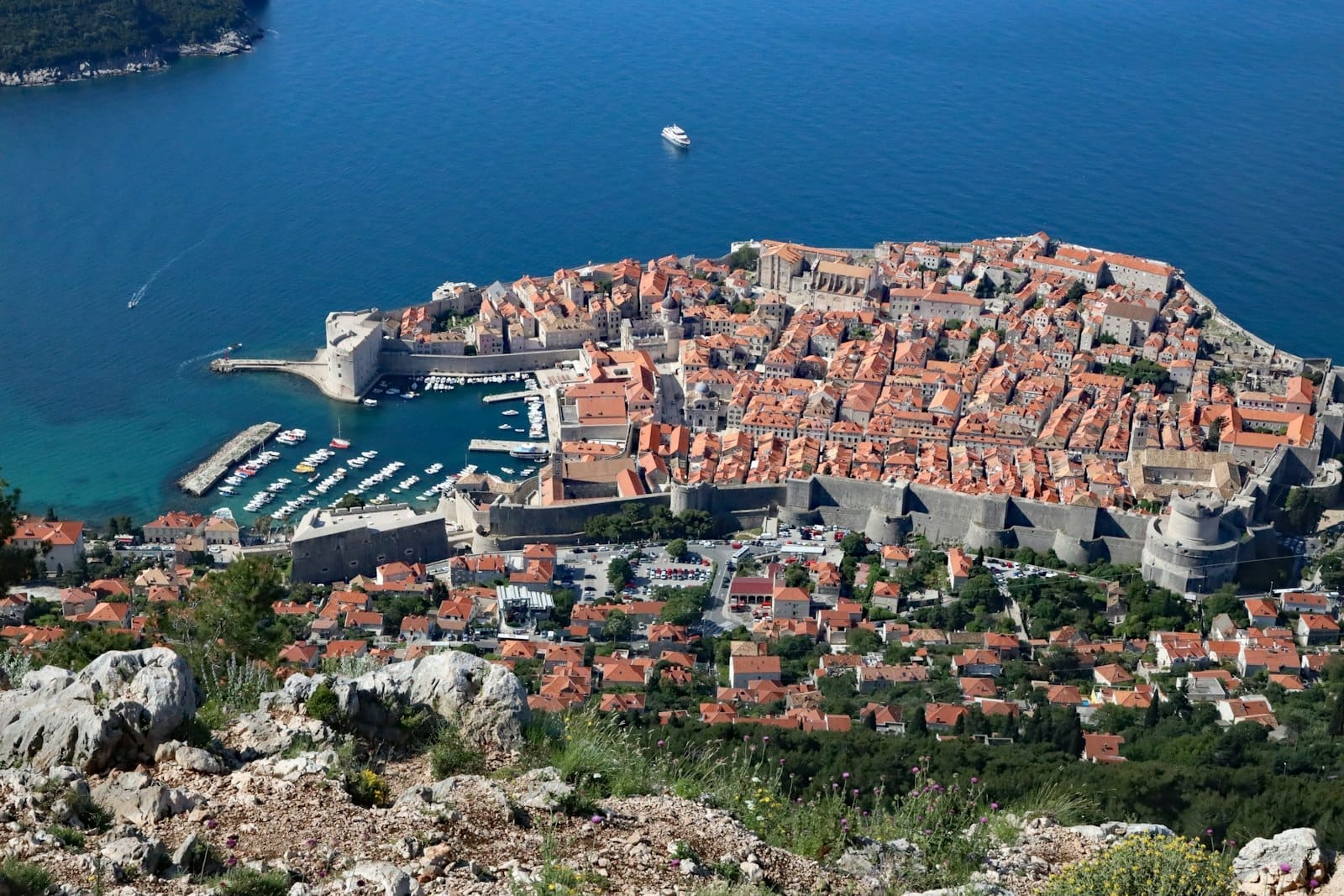
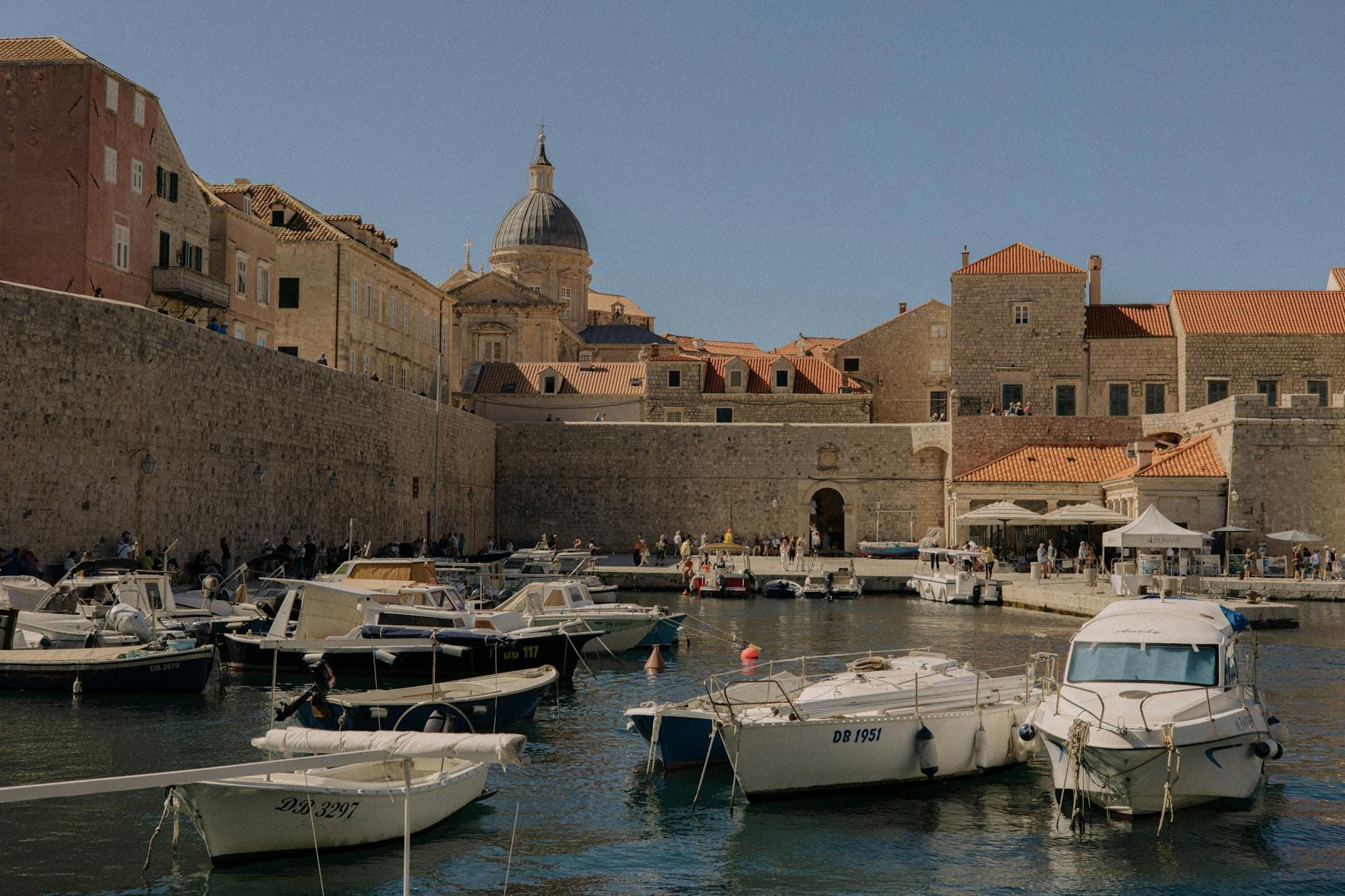
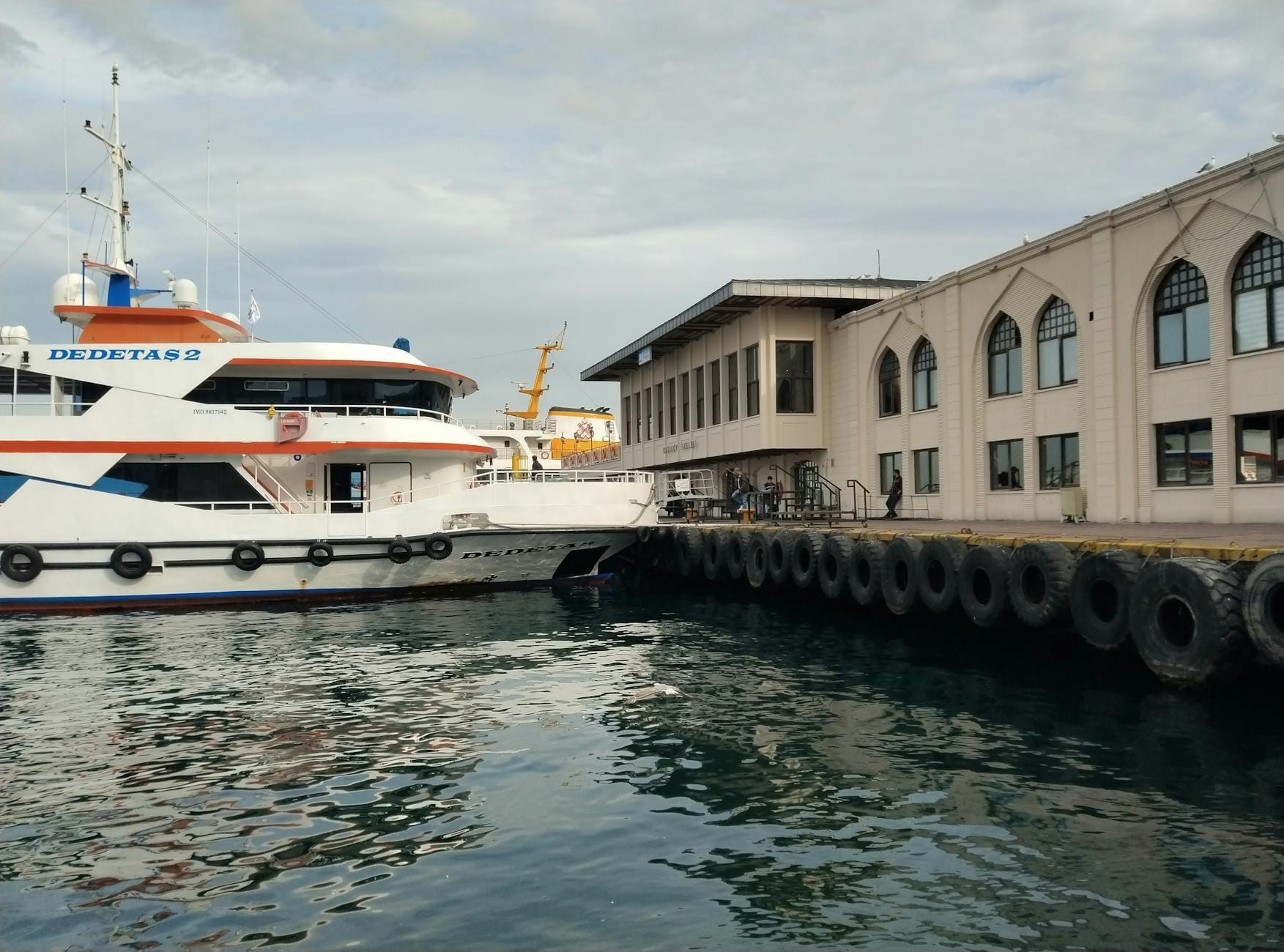
Gruž is the port and transit heart of Dubrovnik, roughly 2 km northwest of the Old City. It handles the city's ferries, cruise ships, and main bus terminal, but it also has a waterfront market, stone residential streets, and a pace of life entirely different from the tourist-saturated Old Town.
Gruž is the part of Dubrovnik that actually keeps the city running. It holds the main ferry terminal, the cruise port, the intercity bus station, and the largest daily market in the region. Away from the medieval theatre of the Old Town, it reads as a real working neighbourhood, and that contrast is precisely its value.
Orientation
Gruž sits approximately 2 km northwest of the Pile Gate, at the head of a deep, sheltered inlet called the Gruž bay. The bay curves inward from the open Adriatic, creating one of the most naturally protected harbours on the Dalmatian coast. That geography is why the port has been here for centuries, and why the neighbourhood still anchors so much of Dubrovnik's logistics today.
The neighbourhood's core runs along the waterfront road that borders the harbour. Moving inland from the quay, the streets climb steadily toward the residential hillsides shared with Lapad to the west and the slopes below Mount Srđ to the east. The boundary with Lapad is loose rather than formal: as the harbour area gives way to hotels and pine-lined coastal paths, you have crossed into Lapad. To the east, the road back toward the Old City passes through the suburb of Ploče before reaching the Pile Gate.
The Franjo Tuđman Bridge, the dramatic cable-stayed structure that carries the main road over the mouth of the Rijeka Dubrovačka inlet, acts as the most visible northern landmark. The Port of Gruž itself stretches along the south side of the bay, with cruise ship berths to the west and the ferry terminal to the east. The main bus station (operated under the Libertas brand) sits directly beside the ferry terminal, making this the single most important transit node in all of Dubrovnik.
Character & Atmosphere
Early in the morning, Gruž feels nothing like the Dubrovnik of postcards. By 7am, the open-air market on the waterfront is already in full voice: vendors calling prices for tomatoes and figs, the smell of fresh bread mixing with sea air and diesel from the early ferries. Locals do their shopping here, and the conversations are in Croatian, not English. The whole scene is efficient and slightly chaotic in the best way.
By mid-morning, the character shifts. Cruise passengers pour off the large vessels moored along the western quay and immediately board shuttle buses toward the Old City. The waterfront road gets heavy with foot traffic and coach movements between roughly 9am and noon. This is the least pleasant window to linger in Gruž if you are not connecting to a ferry or picking up groceries. The infrastructure here is built for volume transit, and it shows.
By afternoon, the mood settles back into neighbourhood normality. Residents sit outside cafes on the quieter inland streets. The light on the harbour in late afternoon, when the sun drops behind the hills to the northwest, turns the water a flat silver that the photographers among ferry passengers routinely miss because they are already halfway to the Old Town. The stone houses that climb the hillside above the quay, some of them converted from old Austro-Hungarian-era villas with overgrown gardens still intact, give the upper streets a faded, unhurried quality.
After dark, Gruž is quiet by Dubrovnik standards. There are local bars and a few restaurants, but this is not where the nightlife concentrates. The ferry terminal takes on an almost industrial calm: lights on the water, the low sound of engines idling, occasional PA announcements. For travellers who find the Old Town relentless, the evening quiet in Gruž is a genuine relief.
ℹ️ Good to know
Gruž has a residential population of around 15,000, making it one of the largest inhabited districts in the Dubrovnik municipality. Historically, it has been an industrial and maritime base back to the 10th century, and it served as an Austro-Hungarian naval facility until 1918.
What to See & Do
The Gruž Market is the single most compelling reason to make the trip out here even if you are not catching a ferry. Operating every morning from Monday through Saturday (with a smaller presence on Sunday), it is Dubrovnik's largest fresh produce market. You will find seasonal fruit and vegetables, local olive oil, dried figs, homemade rakija (fruit brandy), honey, and cheese. Prices are considerably lower than anything sold near the Old City.
Beyond the market, the harbour itself is worth an hour of unhurried attention. Walk the length of the quay from the ferry terminal toward the cruise berths and you get a working port panorama that most visitors never see: fishing boats tied alongside international car ferries, the Franjo Tuđman Bridge framing the horizon, the pine-covered hillside of Lapad on the far bank. It is an honest portrait of a city that functions beyond its historic core.
Gruž is also the primary departure point for island excursions. Ferries leave from here to the Elaphiti Islands (Koločep, Lopud, and Šipan), and there are services further down the coast as well. If you are planning any island hopping during your stay, you will pass through Gruž at least once regardless. The island hopping guide for Dubrovnik covers the ferry schedules and which islands suit different types of traveller.
Morning market shopping at Gruž Market: best before 9am for full selection
Harbour walk along the quay toward the Franjo Tuđman Bridge
Ferry departures to the Elaphiti Islands and further coastal destinations
Watching the cruise ship arrivals and departures from the western berths (a spectacle in themselves during summer)
Exploring the residential hillside streets above the waterfront for examples of older Dalmatian stone architecture
💡 Local tip
If you are visiting the Gruž Market, go before 9am on a weekday for the best produce and the most genuinely local atmosphere. By 10am, the stalls thin out and the neighbourhood fills with transit passengers heading for the Old Town.
Eating & Drinking
The food scene in Gruž is practical rather than destination-worthy, which in Dubrovnik's overpriced context can actually be a point in its favour. You will not find the white-tablecloth tourist restaurants that line the streets near the Old City, but you will find cafes where a coffee costs what a coffee should cost, and konobe (traditional Croatian taverns) where grilled fish is priced for people who live here rather than people on holiday.
The market area is the best starting point for eating well on a budget. Vendors sell bread, cheese, and cured meats that make a solid breakfast or lunch. For a broader look at local food culture across Dubrovnik, the guide to what to eat in Dubrovnik covers regional specialities from black risotto to fresh oysters that you can also find represented in Gruž at more honest prices than in the Old Town.
Along the waterfront, there are several cafes that serve the local working population: strong espresso, burek (flaky pastry filled with meat or cheese), and the kind of unremarkable but satisfying food that keeps port workers and market vendors going through a long morning. These places tend to open early, close after lunch, and have no English menus. That is either a feature or a drawback depending on your perspective.
In the evenings, the dining options are thinner. A few restaurants near the ferry terminal cater to passengers waiting for late sailings, and their quality is mixed. The better choice for dinner is usually to take the bus to the Old City or to explore the restaurant strips in Lapad, which has a more developed evening dining scene specifically oriented toward hotel guests.
⚠️ What to skip
Restaurants directly adjacent to the ferry terminal and bus station tend to charge Old Town prices without Old Town quality. Walk two or three streets inland from the quay for noticeably better value.
Getting There & Around
Gruž is the hub of Dubrovnik's public transport network. The Libertas bus terminal is located right beside the ferry terminal on the harbour waterfront. From here, buses run frequently to the Pile Gate (the entry point for the Old Town) and to Lapad. The journey by bus from Gruž to Pile Gate takes around 10 minutes depending on traffic and time of day, and the service runs from early morning until late evening. Tickets can be bought on the bus, though paying by card on the validator is faster.
Walking from Gruž to the Pile Gate takes approximately 25 to 30 minutes along the main coastal road. The route is flat and straightforward, following the harbour edge before cutting through Ploče toward the city walls. It is a perfectly reasonable walk in the morning or evening, but in the midday heat of July or August, most visitors sensibly opt for the bus.
Taxis and Uber both operate in Gruž, with taxi stands near the ferry terminal. If you are arriving by cruise ship or ferry and want to reach the Old Town without waiting for a bus, a taxi is straightforward. For more context on navigating the city's transport options, the guide to getting around Dubrovnik covers all modes including cable car access from Ploče, which is the fastest way up to Mount Srđ.
Gruž is also one of the few parts of Dubrovnik where parking is meaningfully available. The harbour area has surface car parks that, while not free, are far less restricted and less expensive than anything near the Old City. If you are renting a car for day trips to places like the Pelješac peninsula or Trsteno, basing yourself in Gruž makes the logistics considerably simpler.
For those arriving from Split by bus, the journey ends at the Gruž bus terminal. From there, the walk or short bus ride to the Old Town is the standard onward connection. The Split to Dubrovnik travel guide has full details on travel times, bus companies, and what to expect on arrival.
Where to Stay
Gruž is a practical choice for accommodation, especially for travellers who are using Dubrovnik as a base for island trips or who are arriving and departing by ferry. The neighbourhood has a range of apartments, guesthouses, and mid-range hotels, and prices are consistently lower than equivalent options near the Old City.
The best-positioned accommodation in Gruž sits within a 5-minute walk of the ferry terminal: close enough for early-morning departures without the noise of cruise ship arrivals disturbing sleep. Further up the hillside, away from the waterfront road, the streets are quieter and the residential character is more pronounced. For a full comparison of where to stay across Dubrovnik's neighbourhoods, including how Gruž compares to Lapad and the Old Town, the where to stay in Dubrovnik guide breaks it down by traveller type and budget.
Families and budget-conscious travellers may also want to compare Gruž with Lapad, the adjacent coastal suburb. Lapad has more hotels with pools, a dedicated beach, and a pedestrian promenade lined with restaurants. Gruž wins on transit convenience; Lapad wins on beach and leisure infrastructure. The two are connected by a short bus ride or a 15-minute walk.
💡 Local tip
If you are staying in Gruž and plan to visit the Old Town frequently, buy a multi-day or multi-journey bus pass from the Libertas terminal on arrival. Single-journey tickets add up quickly, and the pass pays for itself within a day or two.
Honest Drawbacks
Gruž is not where you come to experience the beauty that makes Dubrovnik famous. There are no medieval walls, no baroque churches, no sea-view promenades lined with orange trees. The waterfront road carries significant traffic throughout the day, particularly when cruise ships are docking and disembarking. The ambient noise from port operations starts early in the morning, and accommodation directly on the quay can be affected by it.
The neighbourhood's commercial strip, particularly around the bus and ferry terminal, can feel generic and slightly frantic during the summer peak. Some restaurants in this zone are clearly aimed at capturing tired transit passengers rather than offering quality food. First impressions of Gruž, for those arriving by ferry and stepping out into the terminal area, are not always flattering.
That said, the drawbacks are almost all addressable with basic planning. Walk a few streets inland, go to the market rather than the terminal cafes, take the bus rather than paying taxi prices at the quay. For travellers willing to treat Gruž as a neighbourhood rather than a transit corridor, it offers a version of Dubrovnik that is genuinely complementary to the Old Town experience. For a broader look at what the city rewards and what it overcharges for, the guide to visiting Dubrovnik on a budget is useful context.
TL;DR
Gruž is Dubrovnik's main port and transit hub, 2 km northwest of the Old City, handling ferries, cruise ships, and the intercity bus terminal.
The waterfront Gruž Market is the best place in the city for fresh produce at local prices, best visited before 9am on weekdays.
Transit connections to the Old Town are fast and frequent by Libertas bus; the walk takes about 25-30 minutes along a flat coastal road.
Accommodation here is more affordable than near the Old City and suits travellers planning ferry trips to the Elaphiti Islands or other coastal destinations.
Gruž rewards travellers who engage with it as a working neighbourhood rather than a sightseeing destination: it is honest, functional, and a genuine counterpoint to the polished spectacle of the historic core.
Choosing the best time to visit Dubrovnik shapes your entire trip. This guide breaks down every season honestly, covering weather, crowds, costs, and what's actually worth doing in each period, so you can plan around your priorities rather than tourist brochure hype.
Buza Bar is Dubrovnik's most atmospheric drinking spot, clinging to the rocks outside the southern city walls with direct access to the Adriatic. This guide covers both locations, how to find them, what things cost, the truth about sunset views, and everything else you need before you go.
Dubrovnik rewards slow exploration, but the surrounding region is packed with destinations worth a full day out. These are the best day trips from Dubrovnik, covering Adriatic islands, Bosnian towns, coastal nature, and a UNESCO-listed arboretum.
Dubrovnik's coastline offers far more than one famous beach. From the postcard views at Banje to the calm lagoon on Lokrum Island and the car-free sandy shore of Lopud, here is where to swim, sunbathe, and cool off around the city.
The Dubrovnik Cable Car is the fastest way to reach Mount Srđ and its 412-metre panorama above the Old Town. This guide covers tickets, seasonal hours, crowd patterns, what to expect at the summit, and honest advice on whether it's worth the fare.
The Dubrovnik Pass promises free entry to the City Walls, Rector's Palace, six museums, skip-the-line access, and bus rides. But does the math work out? This guide breaks down every included attraction, the real savings by pass type, and exactly who should (and shouldn't) buy one.
The Dubrovnik City Walls are the single most impressive feature of this UNESCO-listed old city: a nearly 2 km loop of medieval fortifications with uninterrupted views over the Adriatic. This guide covers ticket prices, entry points, the best time to go, and everything the official site doesn't tell you.
Cruise ships dock at Port Gruž, roughly 3km from Dubrovnik's Old Town. This guide covers exactly how to get there, what to expect on arrival, how to spend your time ashore, and how to avoid the most common mistakes cruise passengers make.
Most visitors to Dubrovnik walk the walls, photograph the Stradun, and leave. But the city rewards those who look further. From cliff-side bars and car-free islands to a centuries-old arboretum and a wartime fortress on the hill above the city, these are the experiences that make Dubrovnik far more than its postcard image.
Dubrovnik is one of the Adriatic's most photogenic cities, and for couples it delivers something genuinely special: medieval stone streets, cliff-top bars with open sea views, private boat tours, and candlelit waterfront dining. This guide covers the most romantic things to do in Dubrovnik, the best times to visit as a couple, and practical advice that saves you from the tourist-trap pitfalls.
The Elaphiti Islands sit just off Dubrovnik's coast and offer everything the city lacks in summer: quiet coves, car-free lanes, and unhurried lunches. This guide covers ferry logistics, guided tours, what each island is actually like, and how to make the most of a day on the water.
Three days is enough to see the best of Dubrovnik without rushing. This itinerary covers the City Walls, Old Town highlights, a day trip to the islands, and practical advice on timing, pricing, and what to skip.
Paddling the Adriatic Sea along Dubrovnik's UNESCO-listed city walls is one of the most visually striking experiences the Croatian coast offers. This guide covers every sea kayak tour option, honest pricing, the best routes, top operators, and what to expect on the water.
Dubrovnik after dark is more layered than its reputation suggests. This guide covers the top things to do in Dubrovnik at night — cliff-side cocktails, beach clubs, a 16th-century fortress turned dance floor, and the quieter bars most tourists walk past. Includes prices, seasonal notes, and what to skip.
Dubrovnik has a reputation as one of Croatia's priciest destinations, and it earns it. But budget-conscious travelers still make it work every year. This guide breaks down real costs, seasonal pricing shifts, and the specific decisions that separate a €70/day trip from a €200/day one.
Dubrovnik is one of the most photogenic cities in Europe, but great shots require more than just showing up. This guide covers the best photography spots in Dubrovnik, including exact vantage points, optimal timing by season, entry costs, and honest advice on which locations are worth the effort.
Dubrovnik ranks among Croatia's safest cities, but its popularity brings a predictable set of tourist-targeted scams. This guide breaks down exactly what to watch for, where risks concentrate, and how to travel confidently without falling for overcharges, fake taxis, or phishing QR codes.
Running for 47 days across 16+ historic venues each summer, the Dubrovnik Summer Festival transforms the Old Town into an open-air cultural stage. This guide covers dates, ticket booking, the best performances to catch, and how to plan your visit without the headaches.
Walk Dubrovnik's UNESCO-listed Old Town on your own terms. This guide covers the full route from Pile Gate to the Clock Tower, every major stop along the way, the best apps to use, and honest advice on timing, crowds, and what to skip.
Dubrovnik's Mediterranean climate means sun-drenched summers, mild winters, and two golden shoulder seasons. This guide breaks down temperatures, rainfall, sea conditions, and crowd levels for every month so you can choose the visit that suits you best.
Dubrovnik is more family-friendly than its reputation suggests, but it rewards planning. This guide covers the best beaches, activities for children of all ages, seasonal timing, and practical logistics so your family trip actually works.
Dubrovnik has a reputation for being expensive, but plenty of its best experiences cost nothing at all. From wandering the Stradun to hiking Mount Srđ for panoramic views, here are the top free things to do in Dubrovnik.
Dubrovnik's Old Town doubled as King's Landing for eight seasons of Game of Thrones, and the locations are remarkably easy to visit on foot. This guide covers every major filming site, honest advice on tours versus self-guided walks, seasonal crowd warnings, and current pricing so you can plan without surprises.
Dubrovnik's Old Town is car-free, hilly, and can swallow an afternoon if you don't know the bus routes. This guide covers every transport option in the city: Libertas buses, airport shuttles, taxis, the cable car, and the Dubrovnik Pass, with real fares and honest advice on what to skip.
Dubrovnik gets more attention than almost any city its size. But does it live up to the hype? This guide cuts through the marketing noise with honest answers on costs, crowds, timing, and what makes the city genuinely special — plus what to watch out for.
Dubrovnik punches well above its size when it comes to luxury travel. This guide covers the best 5-star hotels on the Adriatic, where to eat well without the tourist markup, and how to get the most out of one of Europe's most dramatic coastal cities — without overpaying for it.
Three routes connect Split and Dubrovnik, each with a different trade-off between cost, comfort, and scenery. This guide breaks down the ferry, bus, and driving options with real pricing, seasonal schedules, and honest advice on which to choose.
St Blaise Church stands at the heart of Dubrovnik's Old Town, a Baroque masterpiece dedicated to the city's patron saint. This guide covers its architecture, the remarkable silver statue, practical visiting advice, and the annual February celebrations that bring the church to life.
Dubrovnik rewards visitors who go beyond the obvious. This guide covers the top things to do in Dubrovnik, Croatia, from the iconic City Walls walk and cable car summit to sea kayaking, island hopping, and the local spots most guides skip. Includes real prices, crowd timing, and honest take on what's worth it.
Dubrovnik's food scene runs much deeper than tourist-trap menus on the Stradun. This guide covers the essential Dalmatian dishes every visitor should try, where to actually eat them, and how to avoid wasting a meal on overpriced mediocrity.
Dubrovnik is perched on a narrow coastal promontory in southeastern Croatia, roughly 42.64° N, 18.11° E, with the Adriatic Sea on one side and the bare limestone mass of Mount Srđ on the other. This guide covers the city's precise geography, its distinct neighborhoods, the best routes in, and the seasonal realities that shape every visit.
Dubrovnik's dining scene runs from rooftop fine dining above limestone walls to burek shops wedged into medieval alleyways. This guide cuts through the tourist-trap noise to tell you exactly where to eat, what to order, and how much to pay — by neighbourhood, budget, and occasion.
Choosing where to stay in Dubrovnik shapes your entire experience. This guide covers every major neighbourhood, from the medieval Old Town to the resort strip of Lapad, with honest advice on who each area suits, what to expect, and how to avoid common booking mistakes.