Where Is Dubrovnik? Location, Geography & How to Get There
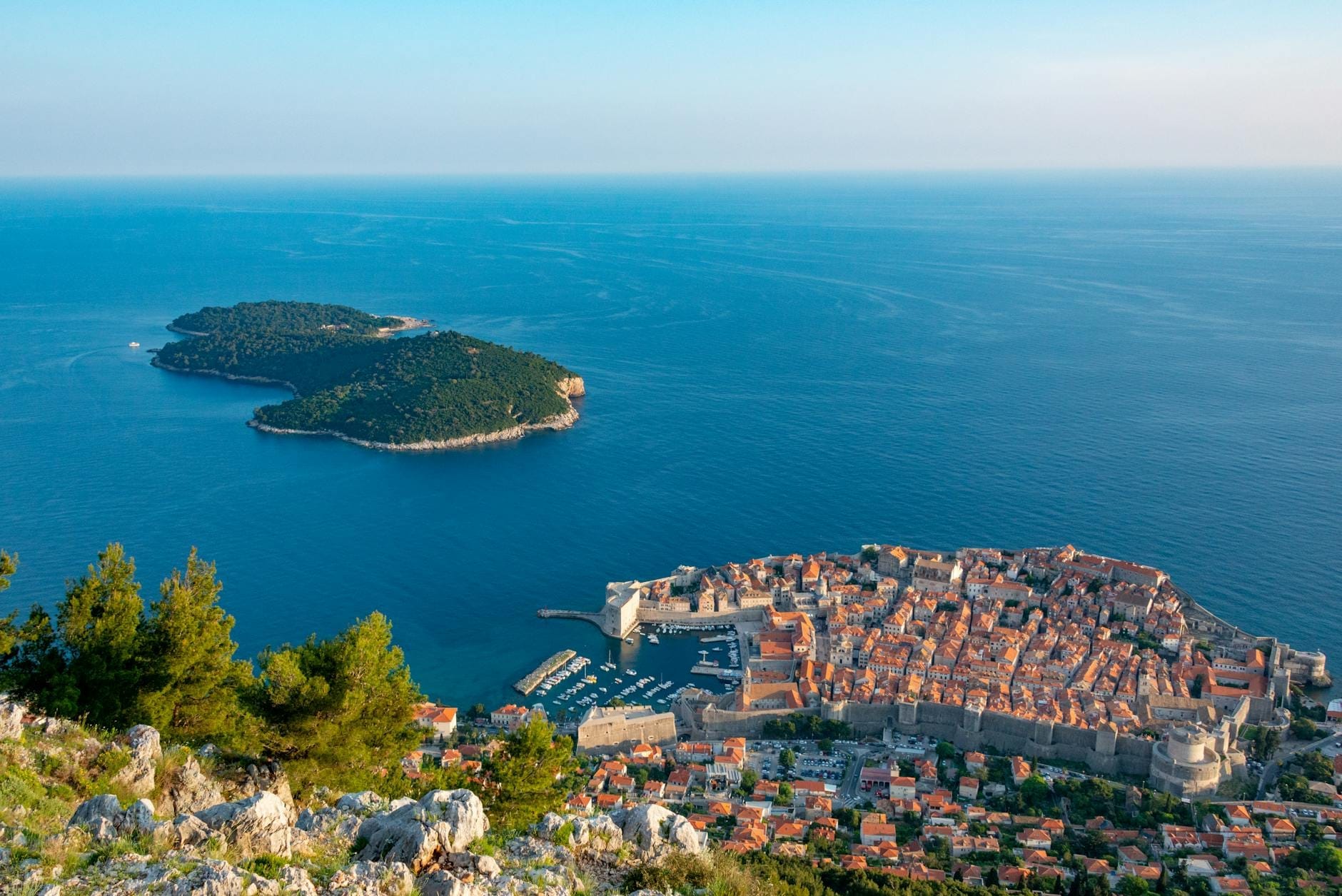
Dubrovnik is perched on a narrow coastal promontory in southeastern Croatia, roughly 42.64° N, 18.11° E, with the Adriatic Sea on one side and the bare limestone mass of Mount Srđ on the other. This guide covers the city's precise geography, its distinct neighborhoods, the best routes in, and the seasonal realities that shape every visit.
Tickets & tours
Live prices and dates from our booking partner. If you book, we may earn a commission at no extra cost to you.
TL;DR
- Dubrovnik is in southeastern Croatia, on the Dalmatian coast, approximately 20 km north of the Montenegro border.
- The city sits on a rocky promontory beneath Mount Srđ at around 42.64° N, 18.11° E — not on an island, despite what many first-time visitors assume. The nearby Elaphiti Islands are a short boat ride away.
- Dubrovnik Airport (DBV) is 24 km from the city center; buses, taxis, and shared shuttles run regularly.
- A Mediterranean climate means hot, dry summers (peaking in July–August) and mild, wetter winters — spring and autumn offer the best balance of weather and manageable crowds.
- The UNESCO-listed Old Town (Stari Grad) is the historic core, but the city also includes modern neighborhoods like Lapad and the port district of Gruž.
Dubrovnik's Exact Location in Croatia
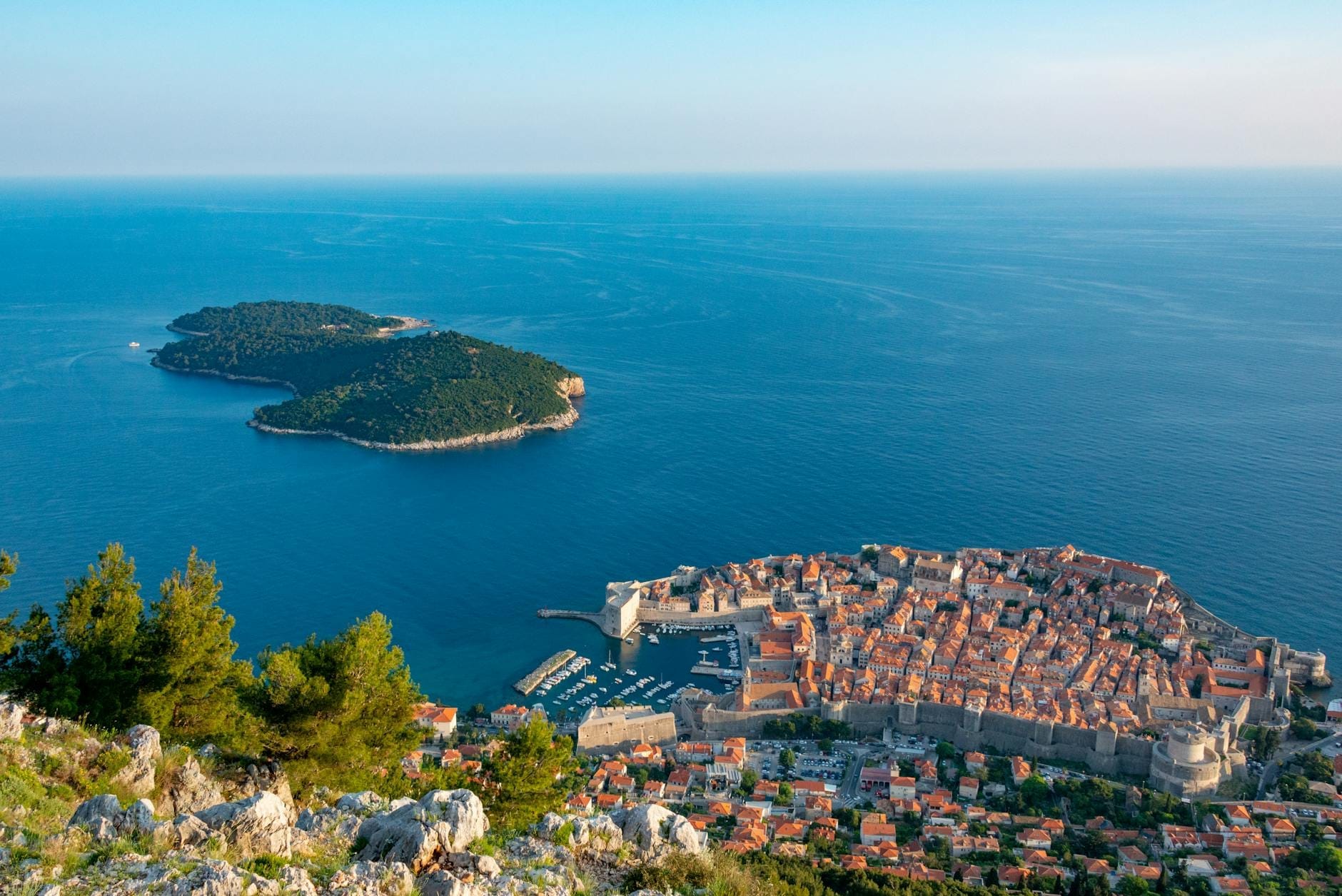
Dubrovnik sits at the far southern end of Croatia's Adriatic coastline, in the region historically known as Dalmatia. Its coordinates are approximately 42.64° N, 18.11° E, placing it closer to Montenegro and Albania than to Zagreb, which lies some 600 km to the north by road. Croatia's geography in this area is unusual: a thin sliver of Bosnian territory at Neum briefly cuts the country in two along the coastal road, technically separating Dubrovnik from the rest of Croatia. In practice, most travelers pass through Neum without issue, and the Pelješac Bridge (opened in 2022) now allows road travel that bypasses Bosnia entirely.
The city occupies a small, rocky promontory that juts into the Adriatic, backed by the steep limestone ridgeline of Mount Srđ. This geography is not incidental — it defined Dubrovnik's history as a maritime republic (formerly known as Ragusa) that depended on the sea for trade and defense rather than on fertile inland territory. The bare karst hills behind the city still give it a dramatically compressed, vertical quality: the water is never far, and neither is the stone.
ℹ️ Good to know
Dubrovnik is frequently confused with being an island or part of Montenegro. It is firmly on the Croatian mainland. The Elaphiti Islands visible from the city walls are separate archipelago islands, accessible by ferry from Port Gruž.
The City's Distinct Neighborhoods
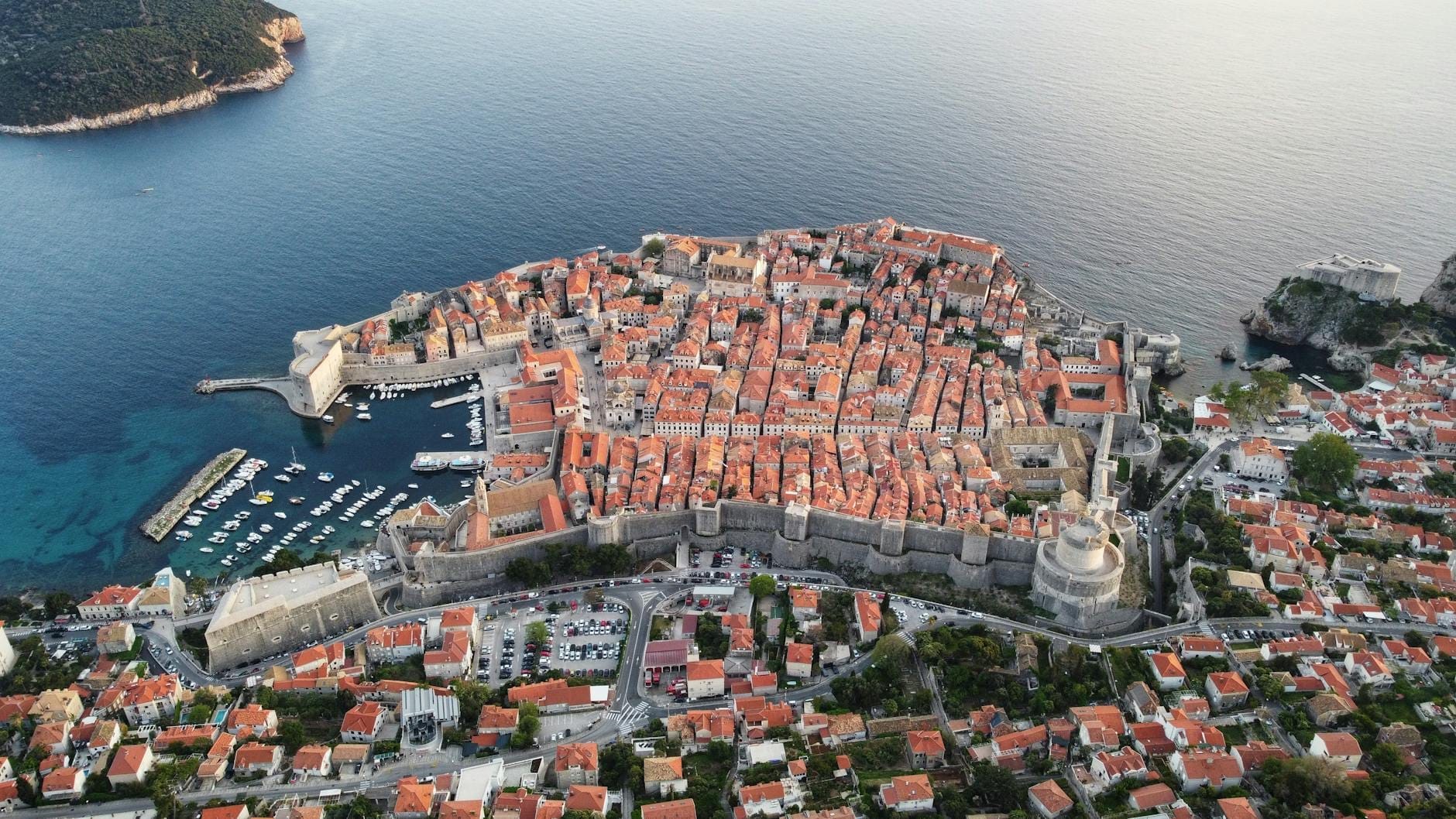
Most guides treat Dubrovnik as a monolith, but the city has several distinct areas with very different atmospheres. The Old Town (Stari Grad) is the UNESCO-listed medieval core: walled, pedestrianized, and dense with Baroque churches, marble-paved streets, and Renaissance palaces. It is where you'll find the Stradun, the main limestone thoroughfare, and major landmarks like the Pile Gate and the Fort Lovrijenac. It is also the most expensive and crowded part of the city, especially in summer.
- Old Town (Stari Grad) The walled medieval core, UNESCO-listed since 1979. Almost entirely pedestrian. Best for sightseeing, dining, and nightlife — but noisy and expensive.
- Port Gruž (Gruž) The modern harbor district, 3 km northwest of the Old Town. This is where cruise ships dock, ferries to the islands and Split depart, and where you'll find the excellent Gruž market on weekday mornings.
- Lapad A residential coastal suburb west of Gruž, favored by families and package tourists. More affordable hotels, quieter beaches, and a low-key promenade. A practical base if Old Town prices are prohibitive.
- Mount Srđ The 412-meter limestone ridge directly above the Old Town. Accessible by cable car or a strenuous hike. The summit holds Fort Imperial and the Homeland War Museum, with panoramic views across the city and Adriatic.
For travelers deciding where to base themselves, the tradeoffs are real. Staying inside the Old Town puts you close to everything but means contending with summer crowds, cobblestones, and a near-total absence of parking. Lapad trades atmosphere for practicality. Gruž works well if you're arriving or departing by ferry. Our full guide to where to stay in Dubrovnik breaks down the neighborhoods in detail.
How to Get to Dubrovnik
Dubrovnik Airport (IATA: DBV), officially Dubrovnik Airport Čilipi, is located 24 km southeast of the city center. It handles direct flights from most major European hubs year-round, with significantly more routes and frequency in summer (May to October). Carriers including Croatia Airlines, British Airways, Ryanair, easyJet, and Lufthansa serve the airport. Flight time from London is around 2.5 hours; from Frankfurt, under 2 hours.
From the airport to the city, you have three realistic options: the Libertas public bus (Line 11 to Pile Gate, approximately 30–45 minutes, around 5–7 EUR), a metered taxi or Uber (around 25–40 EUR depending on traffic and time of day), or a pre-booked shared shuttle. The bus is cheap and reliable outside peak crush periods; taxis are faster and more predictable with luggage. Uber operates in Dubrovnik and is often marginally cheaper than a metered cab.
⚠️ What to skip
Driving to Dubrovnik from Split or Zagreb is scenic but long — Split is around 230 km south by road (3–4 hours), and Zagreb is nearly 600 km north (6+ hours). If you're arriving by car, note that parking inside or near the Old Town is extremely limited and expensive in summer. Most visitors park at Ilijina Glavica or use the cable car lot.
By sea, ferries and catamarans connect Dubrovnik's Port Gruž with Split, Hvar, Korčula, and the Elaphiti Islands. Jadrolinija operates the main routes; Krilo and Kapetan Luka run faster catamarans. The Split-to-Dubrovnik catamaran takes around 3.5 hours in good conditions and costs roughly 20–30 EUR. If you're combining multiple Croatian destinations, this route offers a far more enjoyable journey than the inland highway. See our Split to Dubrovnik travel guide for a full breakdown of transport options.
Climate, Seasons, and When to Visit
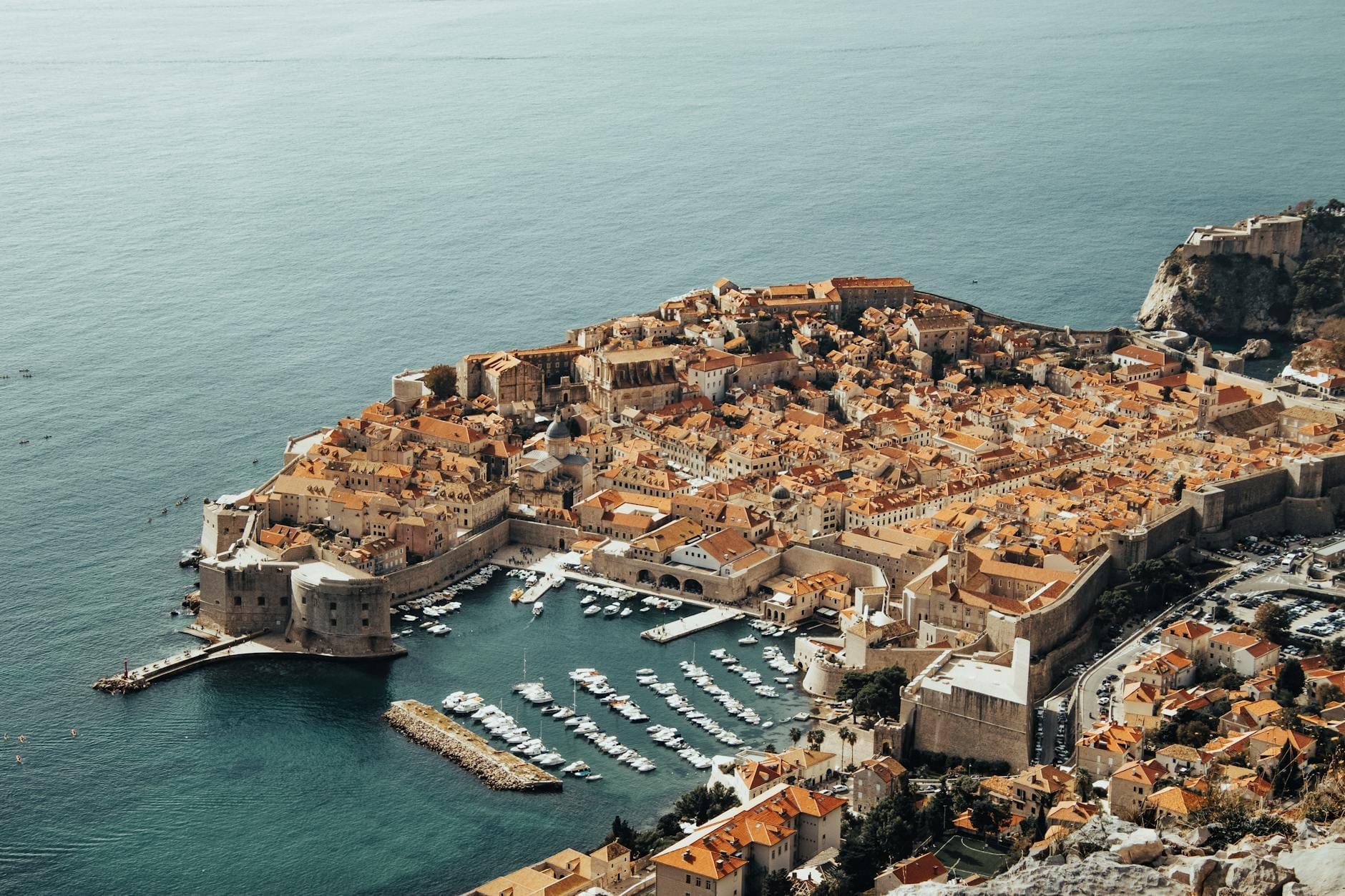
Dubrovnik has a classic Mediterranean climate: long, hot, dry summers and mild, wetter winters. July and August are the hottest and driest months, with average highs around 28–30°C (82–86°F) and very little rainfall. This is also when the city is at peak capacity, with cruise ships disgorging thousands of day-trippers through the Pile Gate before noon. If you're asking about croatia in august specifically, know that it is spectacular and punishing in equal measure: the light is extraordinary, the sea is warm, and the Old Town is genuinely overwhelming between 10am and 5pm.
The shoulder seasons — May to early June and September to October — are widely regarded as the best time for most visitors. Temperatures are still warm (20–26°C), the sea is swimmable from late May, and crowds thin considerably after the school summer holidays end. Late October brings more rain and cooler evenings, but also a city that actually functions as a place people live in. For a full seasonal breakdown, consult our guide to the best time to visit Dubrovnik, which covers event calendars and pricing fluctuations by month.
- July–August: hottest, driest, and most crowded. Peak prices. Book everything months in advance.
- May–June: warm, quieter, green hills. Good for hiking Mount Srđ before the heat peaks.
- September–October: best overall balance. Sea still warm, crowds thinning, accommodation prices dropping.
- November–April: mild to cool, some rain. Very few tourists. Many restaurants and smaller hotels close. Best for budget travelers who don't need beach weather.
✨ Pro tip
If you're visiting in summer, plan any outdoor sightseeing — the city walls, Mount Srđ hike, or Lokrum Island — for before 9am or after 5pm. Midday heat on the limestone walls can exceed 40°C in July, and shade is minimal.
Practical Basics: What You Need to Know Before You Arrive
Croatia joined the Eurozone in January 2023, replacing the Kuna with the Euro (EUR). This simplifies things considerably for most European visitors. ATMs are available throughout the city; credit cards are widely accepted. Tipping is not mandatory but expected in restaurants (5–10% is standard) and appreciated by taxi drivers as a round-up.
English is spoken widely in tourist-facing businesses across the Old Town, Lapad, and Gruž. Italian and German are also commonly understood. The city's official language is Croatian, and making basic efforts (hvala means thank you, molim means please) is genuinely appreciated. Tap water in the Old Town is safe to drink. Electricity uses Type C/F plugs at 230V/50Hz, standard across continental Europe. The country code is +385, and the emergency number throughout Croatia (and the EU) is 112.
For visa requirements: most EU citizens, US, UK, Canadian, and Australian passport holders can enter Croatia visa-free for up to 90 days within any 180-day period. The EU's ETIAS travel authorization system (expected to launch for non-EU visitors in the future) may add a pre-registration requirement — check current requirements before you travel. There is no internal border check between Croatia and other Schengen countries. Getting around the city once you arrive is covered in detail in our guide to getting around Dubrovnik.
Common Misconceptions About Dubrovnik's Location
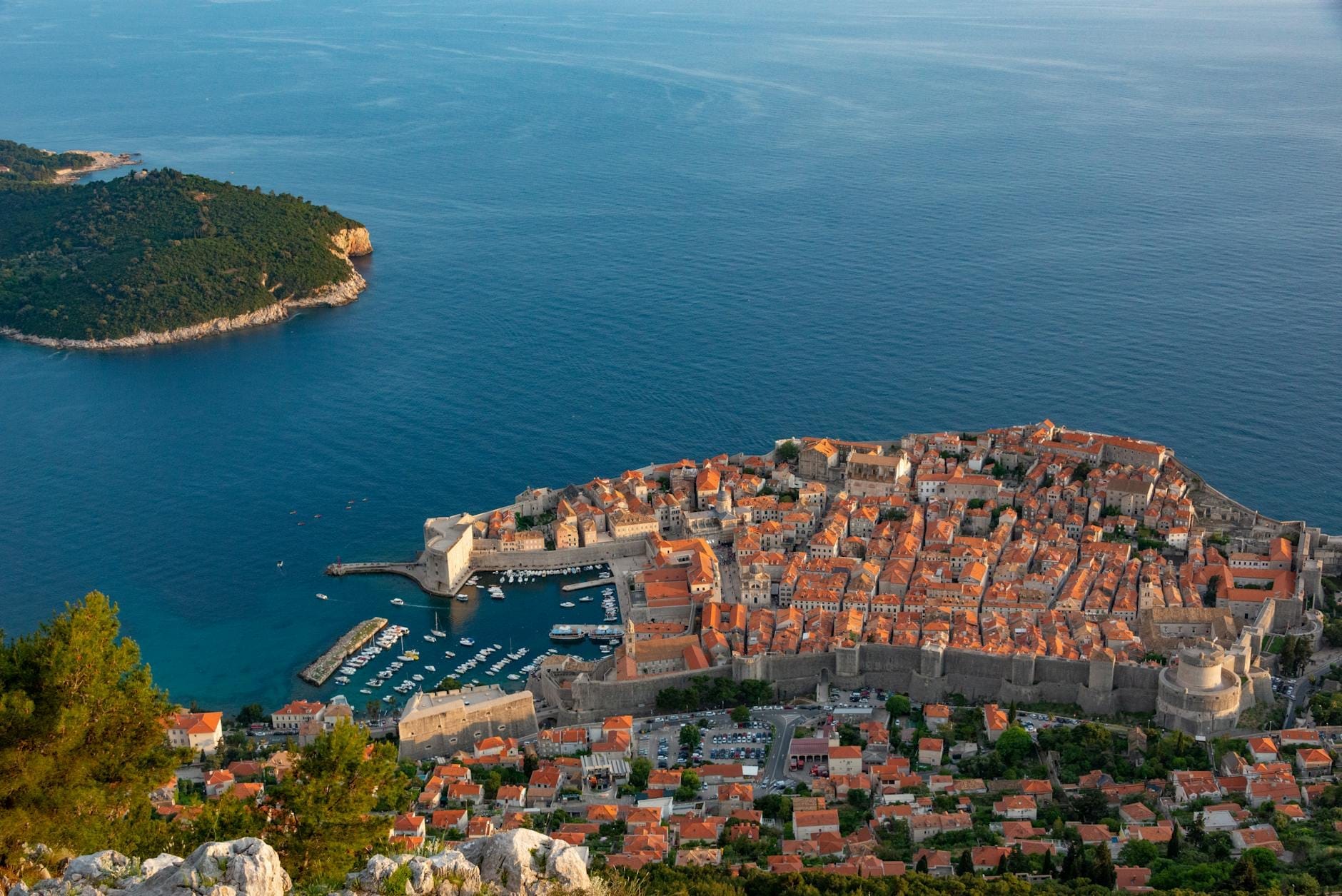
Several persistent myths confuse first-time visitors. First: Dubrovnik is not an island. The city sits on the Croatian mainland, connected by road to the rest of the country. The islands visible from the city walls — Lokrum immediately offshore, the Elaphiti chain further northwest — are separate. Second: Dubrovnik is not in Montenegro. The Montenegro border is approximately 20 km to the southeast at Karasovići. The two countries are distinct, though many travelers combine them on the same trip.
Third, and most practically significant: the UNESCO World Heritage site designation applies specifically to the historic walled city and its surroundings, not to the entire Dubrovnik municipality. The modern city extends well beyond the walls into suburbs and industrial areas that look nothing like the marble-paved fantasy of the Old Town. This matters when booking accommodation — being "in Dubrovnik" can mean anything from a room inside the medieval walls to a hotel complex 8 km away in Lapad. Finally, Dubrovnik's historical name was Ragusa, used until the early 19th century. You'll still see it occasionally in historical contexts. For a fuller sense of what the city offers beyond its famous walls, our guide to things to do in Dubrovnik covers both the iconic and the overlooked.
💡 Local tip
The Neum corridor (a strip of Bosnian territory that crosses the coastal road) used to mean a brief border crossing for anyone driving between Split and Dubrovnik. The Pelješac Bridge, which opened in July 2022, now bypasses Neum entirely and has noticeably reduced travel times on that route.
FAQ
Where exactly is Dubrovnik located?
Dubrovnik is at the southern tip of Croatia's Dalmatian coast, at approximately 42.64° N, 18.11° E. It sits on a rocky promontory on the Adriatic Sea, around 20 km north of the Montenegro border. It is part of mainland Croatia, not an island.
What is the weather like in Dubrovnik, Croatia?
Dubrovnik has a Mediterranean climate. Summers (June–August) are hot and dry, with average highs around 28–30°C. Winters are mild and wetter, averaging 8–12°C. The driest and warmest months are July and August; November through February bring the most rainfall. May–June and September–October offer the best conditions for most travelers.
How do I get from Dubrovnik Airport to the city center?
Dubrovnik Airport (DBV) is 20 km from the city center. The Libertas public bus (Line 11) runs to Pile Gate in around 30–45 minutes for approximately 5–7 EUR. Taxis and Uber are faster, costing roughly 25–40 EUR. Pre-booked shared shuttles are a middle-ground option. Uber generally works out slightly cheaper than metered taxis.
Is Dubrovnik worth visiting outside of summer?
Yes, particularly in May–June and September–October. The sea is still warm from late May, temperatures are comfortable for walking, and the city is far less crowded. Winter visits are quiet and very affordable but many smaller restaurants and hotels close, and some attractions have reduced hours.
What country is Dubrovnik in, and do I need a visa?
Dubrovnik is in Croatia, an EU member state that uses the Euro. Citizens of most Western countries — including the US, UK, Canada, Australia, and all EU nations — can visit Croatia visa-free for up to 90 days within a 180-day period. The EU's ETIAS pre-authorization system may apply in future; check current requirements before travel.
Tickets & tours
Live prices and dates from our booking partner. If you book, we may earn a commission at no extra cost to you.
Planning a trip? Discover personalized activities with the Nomado app.