Fort Lovrijenac (St. Lawrence Fortress): Dubrovnik's Clifftop Fortress Guide
Perched on a 37-meter sea cliff just outside Dubrovnik's western walls, Fort Lovrijenac is one of the Adriatic's most dramatically positioned fortifications. Originally built to keep Venice at bay, it now doubles as an open-air theatre and a recognizable Game of Thrones filming location. This guide covers what to see, when to go, and whether it deserves a place in your itinerary.
Quick Facts
- Location
- West Harbour cliff, outside Pile Gate, Old Town Dubrovnik
- Getting There
- Walk 5 min from Pile Gate via West Harbour path; Libertas buses stop at Pile
- Time Needed
- 30–60 minutes
- Cost
- Separate admission fee applies; free with the Dubrovnik City Pass. Verify current pricing with local tourism office.
- Best for
- History enthusiasts, photographers, Game of Thrones fans, couples
- Official website
- tzdubrovnik.hr/lang/en/get/spomenici/5343/lovrjenac_fort.html
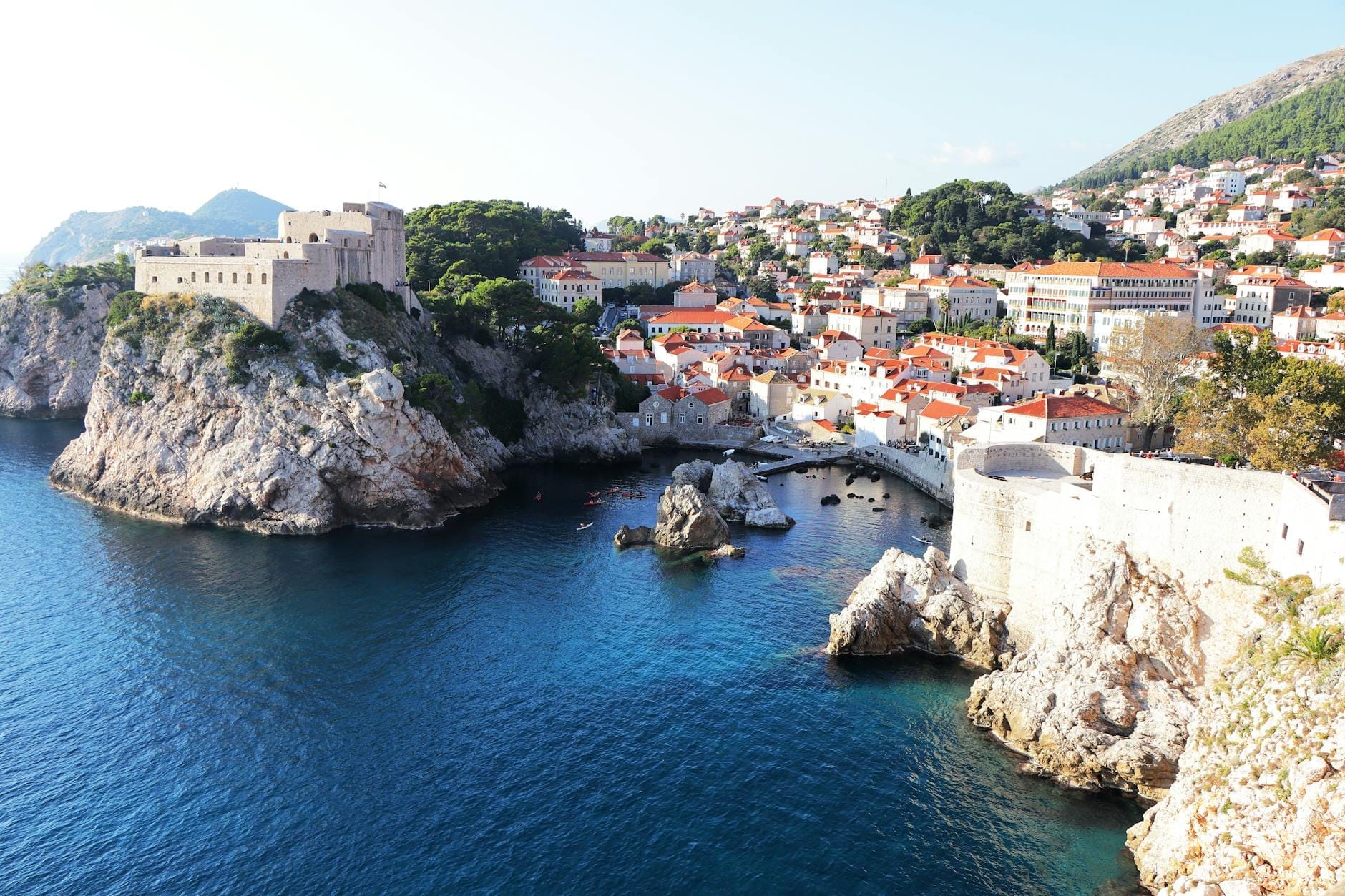
What Fort Lovrijenac Actually Is
Fort Lovrijenac, known in Croatian as Tvrđava Lovrijenac and in English as the Fort of St. Lawrence, is a medieval fortress built on a sheer 37-meter limestone cliff on the western edge of Dubrovnik's Old Town. It sits just outside the city walls rather than within them, connected to the Pile Gate area by a short coastal path along West Harbour. From a distance, the effect is almost theatrical: a triangular stone mass rising out of the Adriatic like something that shouldn't be there.
Unlike the city walls, which are a continuous circuit you walk along, Fort Lovrijenac is a destination in itself. You visit it separately, cross a short drawbridge-style entrance, and climb through three terraced levels to a rooftop platform that gives some of the best unobstructed views of both the sea and the city walls. Most visits take between 30 and 60 minutes, which is enough time to absorb the architecture, read the historical signage, and spend time on the upper terrace.
ℹ️ Good to know
The Dubrovnik City Pass includes free entry to Fort Lovrijenac alongside the city walls and several museums. If you're planning to visit more than two or three major attractions, the pass is worth calculating against individual ticket prices.
A Fortress Built on Defiance: The History
The origins of Fort Lovrijenac stretch back to the early 11th century. The first documented records date to 1301, by which point the fortress was already a cornerstone of Dubrovnik's western defenses. The context matters: the Republic of Ragusa (as Dubrovnik was known) operated as an independent city-state with a deeply pragmatic approach to survival. It paid tributes, signed treaties, and played regional powers against each other. Fort Lovrijenac was partly a product of that instinct.
Local accounts suggest that when Venice sought to build a fortress on the same rocky outcrop to dominate the approach to Pile Gate, Dubrovnik's citizens constructed the fort themselves in under three months, denying Venice the position. Whether the timeline is literal or legend, the story captures the Republic's operating principle: sovereignty at all costs. That principle is carved in stone above the entrance gate, in Latin: Non Bene Pro Toto Libertas Venditur Auro. It translates as 'Freedom is not to be sold for all the gold in the world.'
The fortress has a triangular footprint spread across three levels with three terraces. One of its most telling architectural details is the wall thickness: the sea-facing walls reach up to 12 meters thick to withstand naval bombardment. The eastern wall, facing the city itself, is just 60 centimeters thick. This was deliberate. Ragusan authorities wanted to ensure that if the fort was ever captured, it could be destroyed from the city side before an occupying force could turn it against the republic. The fortress was not just a defense against outsiders; it was designed to be expendable if betrayed from within.
Tickets & tours
Live prices and dates from our booking partner. If you book, we may earn a commission at no extra cost to you.
Konavle and Falcon Fortress half-day tour with lunch
From 224 €Instant confirmationFree cancellationMostar and Kravice Waterfalls excursion from Dubrovnik
From 120 €Instant confirmationFree cancellationDubrovnik Old Town Tour ith Cable Car Ride
From 56 €Instant confirmationFree cancellationMostar and Kravice Waterfalls full-day tour with pickup from Dubrovnik
From 66 €Instant confirmationFree cancellation
What You See Inside: Three Levels, Ten Cannons, and One Inscription
Entry is through a low stone gate. The inscription overhead is easy to miss if you're not looking for it, but it's worth pausing in the shadow of the arch to read it. Once inside, the fortress opens into a series of ascending terraces connected by stone staircases. The surfaces underfoot are worn smooth from centuries of use. There's no lift and no step-free alternative; anyone with limited mobility should factor this in before making the trip.
The rooftop terrace holds ten large cannons, the most famous of which is known as the Lizard. It was designed by Ivan Rabljanin in 1537 and represents some of the most sophisticated artillery craftsmanship of its era in the Adriatic region. The cannon placement was functional: the upper terrace commands a wide arc over the sea approach and the harbor entrance. Today those same sight lines make the rooftop one of the better photography positions in Dubrovnik, with the city walls curving away to the right and open water to the left.
The interior spaces between terraces are partly open to the elements and partly shaded by stone overhangs. Signage explains the fortress's construction history and its role during various periods of Ragusan history. For visitors already doing the Dubrovnik city walls walk, Fort Lovrijenac functions as a natural extension rather than a separate excursion — you'll see it from the walls, and visiting it adds historical depth to what the walls can only show from the outside.
Game of Thrones and the Red Keep
Fort Lovrijenac served as one of the filming locations for Game of Thrones, specifically used to represent the exterior of the Red Keep in King's Landing. Scenes involving the Joffrey's name day tournament and other exterior Red Keep sequences were filmed here. The fortress's natural drama — stone walls, sea backdrop, and imposing verticality — made it an easy fit for a show that required locations with genuine age and weight.
Visitors who recognize the location will find the correspondence reasonably clear, though the filming involved camera angles that don't always match the casual visitor's perspective. If Game of Thrones locations are a specific interest, this site is well worth combining with a broader Game of Thrones filming locations tour of Dubrovnik, since the city has several other recognizable sites within walking distance of the Old Town.
Shakespeare Under the Stars: The Summer Festival
Every summer, Fort Lovrijenac is transformed into one of the most atmospheric open-air stages in Europe. The Dubrovnik Summer Festival, which typically runs from mid-July through mid-August, uses the fortress's upper terraces as its primary outdoor performance space. Hamlet is performed here with notable regularity, and the irony of a play preoccupied with betrayal and power being staged in a fort built to resist both is not lost on the organizers or the audience.
Performances begin at dusk, and the combination of candlelit stone, sea air, and professional Croatian theatre companies makes for an experience that is harder to replicate anywhere else. Tickets sell out weeks in advance during peak summer. If this interests you, check the Dubrovnik Summer Festival guide well before your travel dates and book early. During festival season, access to the fortress for standard daytime visits may be restricted around setup and performance windows.
When to Visit and What to Expect by Time of Day
Morning visits, especially before 9 a.m., offer the quietest experience. The light at that hour catches the stone at a low angle, and the sea below shifts between green and deep blue depending on cloud cover. There are almost no crowds, and the cannons on the upper terrace have a stillness that feels genuinely removed from the tourist circuit.
By mid-morning, cruise ship visitors begin arriving in numbers. From roughly 10 a.m. to 2 p.m. in peak summer (June through August), the fortress can feel crowded on the staircases and at the rooftop platform. The terraces are not large, and the sight lines from the top are best appreciated without 40 people doing the same thing. Late afternoon, after 4 p.m., sees a noticeable drop in foot traffic as cruise groups return to their ships.
The fortress is exposed to wind and sun with limited shade. In July and August, midday temperatures on the stone terraces can be punishing. Bring water, and consider timing your visit as part of a broader Old Town walking itinerary that keeps you moving between shaded and open-air spaces. A hat and sunscreen are not optional in summer.
💡 Local tip
For photography, the late afternoon golden hour produces the best light on the fortress exterior when shot from the West Harbour path below. The rooftop view toward the city walls is strongest in mid-morning before the sun moves directly overhead and flattens the shadows.
Getting There and Practical Details
Fort Lovrijenac is a five-minute walk from Pile Gate, which is the main western entrance to the Old Town. From Pile Gate, take the coastal path that descends toward the west harbour and follow it to the base of the cliff. The approach path passes along the water and gives you the full visual impact of the fortress from below before you begin climbing.
Libertas city buses terminate at Pile Gate from various parts of the city and from the Gruž harbor area. If you're arriving from Lapad or the cruise terminal, a bus to Pile and a short walk is the standard approach. Taxis and ride-shares can drop you at Pile Gate but cannot access the coastal path itself.
Access is via a steep stone staircase with no ramp or lift alternative. The fortress is not accessible to wheelchair users or visitors who cannot manage uneven steps with no handrail in all sections. This is a factual limitation, not a minor inconvenience; anyone with significant mobility concerns should be clear about this before making the trip.
⚠️ What to skip
During the Dubrovnik Summer Festival (typically mid-July to mid-August), standard daytime access to the fortress may be restricted or modified around stage setup and performances. Verify access windows directly with the tourism office or festival organizers before visiting during this period.
Insider Tips
- The view of Fort Lovrijenac from the city walls section near the Pile Gate is one of the best in Dubrovnik for photography — you get the full cliff and fortress composition with the sea behind it. Do the walls walk first, identify your shot, then visit the fortress itself.
- If you're visiting in summer, combine your Fort Lovrijenac visit with a stop at the small rocky beach and bar area at the base of the western cliffs, just below the fortress approach path. It's a useful way to break up the heat.
- The eastern wall of the fortress, just 60 centimeters thick, is visible from inside. Stand near it and compare it to the 12-meter sea-facing wall section. The physical contrast makes the strategic thinking behind the design immediately legible.
- Festival tickets for the Dubrovnik Summer Festival Shakespeare productions at the fortress go on sale months before the season opens. If Hamlet at Fort Lovrijenac is a priority, treat it like a concert ticket and book the moment sales open.
- The fortress entrance inscription is in Latin and positioned above the gate at an angle that makes it easy to walk under without noticing. Step back and look up before entering — it's the defining statement of the entire structure.
Who Is Fort Lovrijenac (St. Lawrence Fortress) For?
- History and military architecture enthusiasts who want context beyond the city walls
- Game of Thrones fans looking to stand inside an actual filming location
- Photographers focused on dramatic clifftop and seascape compositions
- Couples seeking a quieter, more contemplative alternative to the crowded Stradun
- Culture-focused travelers visiting during the Dubrovnik Summer Festival season
Nearby Attractions
Other things to see while in Old Town (Stari Grad):
- Banje Beach
Banje Beach is Dubrovnik's closest and most photographed beach, sitting just east of the Old Town walls with direct views of the medieval fortifications and Lokrum Island. It's a pebbly, organized beach with free public access, paid lounger rentals, and a restaurant-bar that runs well into the night. Convenient, yes. Quiet, no.
- Buža Bar
Buža Bar is a no-frills open-air bar carved into a gap in Dubrovnik's ancient city walls, perched directly above the Adriatic Sea. Reached through a low iron-gated hole in the stonework, it offers cold drinks, cliff-jumping, and some of the most dramatic coastal views in the Mediterranean. There is no admission charge, no kitchen, and no pretense.
- Cathedral of the Assumption of the Virgin Mary
Rising from the rubble of a 1667 earthquake, the Cathedral of the Assumption of the Virgin Mary anchors the heart of Dubrovnik's Old Town with its commanding Baroque dome and a treasury that holds relics spanning a millennium. It's quieter than the city walls and more revealing than most visitors expect.
- Dominican Monastery & Museum
Built from 1225 and shaped through the 15th century, the Dominican Monastery in Dubrovnik's eastern Old Town holds one of Dalmatia's finest collections of medieval and Renaissance art. The Gothic-Renaissance cloister, a Titian altarpiece from 1554, and works by the Dubrovnik School of painters make this one of the most intellectually rewarding stops in the city.
Planning a trip? Discover personalized activities with the Nomado app.