Cathedral of the Assumption of the Virgin Mary: Dubrovnik's Baroque Landmark
Rising from the rubble of a 1667 earthquake, the Cathedral of the Assumption of the Virgin Mary anchors the heart of Dubrovnik's Old Town with its commanding Baroque dome and a treasury that holds relics spanning a millennium. It's quieter than the city walls and more revealing than most visitors expect.
Quick Facts
- Location
- Poljana M. Bunića 3, Old Town Dubrovnik — 3-minute walk from the Old Port
- Getting There
- Walk east along the Stradun from Pile Gate; the cathedral square opens on your left before the Old Port
- Time Needed
- 30–60 minutes for the nave and treasury combined
- Cost
- Entry to the nave is generally free; the Treasury charges a small admission fee — check the official site for current rates
- Best for
- History enthusiasts, architecture lovers, anyone seeking a cool, quiet contrast to the crowded city walls
- Official website
- katedraladubrovnik.hr/en/about-cathedral/
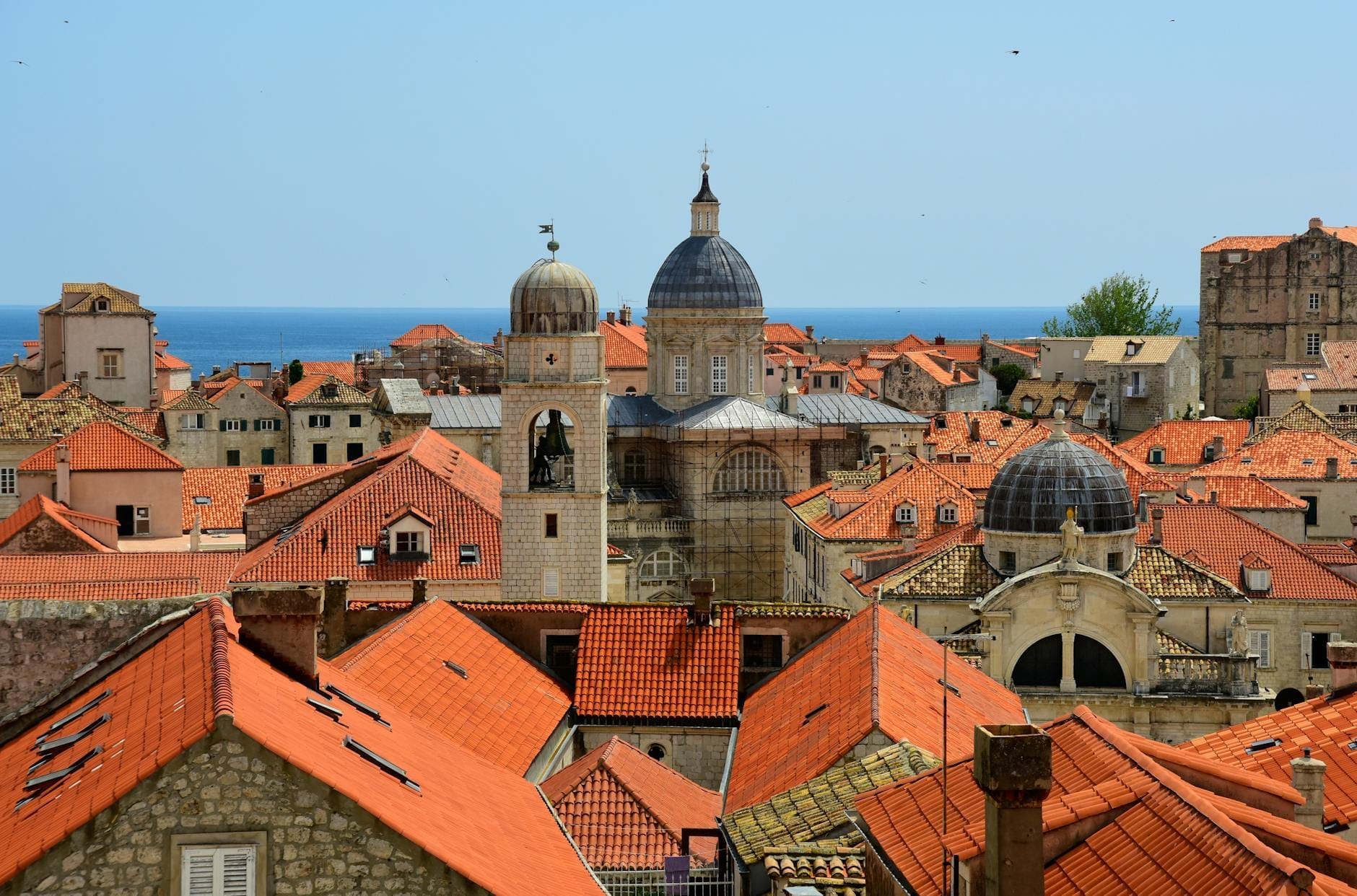
What You're Actually Looking At
The Cathedral of the Assumption of the Virgin Mary — known in Croatian as Katedrala Marijina Uznesenja — stands on a site that has held a place of worship since at least the 6th or 7th century. The building you see today is a three-aisled Baroque basilica, completed in 1713 after construction began in 1671–1673. It was built to replace a Romanesque cathedral that dated to the 12th century and was destroyed, along with much of the city, in the catastrophic earthquake of 6 April 1667. That earthquake killed an estimated one-third of Dubrovnik's population and leveled most of its medieval architecture. The cathedral rising in its place was a deliberate act of civic renewal.
The exterior is built in creamy limestone, the same material used throughout the Old Town, which means the cathedral reads as part of the urban fabric rather than a monument set apart from it. The dome is visible from the city ramparts and from the water, giving sailors and wall-walkers a useful landmark. Up close, the facade is restrained by Baroque standards: two pairs of pilasters flank the central doorway, and three arched windows light the interior from above the entrance. It won't overwhelm you with ornament before you've even walked in.
💡 Local tip
Arrive before 9 a.m. or after 5 p.m. if you want the nave mostly to yourself. Midday, especially in July and August, brings cruise-ship groups that can fill the space quickly.
Inside: The Nave and the Altarpiece
Stepping inside from the summer heat, the first thing you notice is the temperature drop — the thick limestone walls and the height of the barrel-vaulted nave keep the interior genuinely cool. The light shifts depending on the time of day: morning light enters from the south-facing windows and catches the gilded altar in a way that afternoon visits simply don't replicate.
The high altar holds a large polyptych altarpiece attributed to Titian — specifically a depiction of the Assumption of the Virgin. Art historians note that the attribution has long been debated, but the work itself is striking regardless of its provenance: a richly coloured composition with a luminous upper register. The cathedral also contains paintings attributed to other Italian masters, reflecting Dubrovnik's historical trading connections with Venice and the broader Adriatic world. These are not reproductions displayed for tourists; they are working parts of an active diocesan church.
Side chapels line the nave on both sides. They vary considerably in decoration and are easy to miss if you walk straight through. The acoustic quality of the space is worth noting too: if organ music is being practiced, the reverb is remarkable.
Tickets & tours
Live prices and dates from our booking partner. If you book, we may earn a commission at no extra cost to you.
Mostar and Kravice Waterfalls excursion from Dubrovnik
From 120 €Instant confirmationFree cancellationDubrovnik Old Town Tour ith Cable Car Ride
From 56 €Instant confirmationFree cancellationMostar and Kravice Waterfalls full-day tour with pickup from Dubrovnik
From 66 €Instant confirmationFree cancellationSea kayaking experience in Dubrovnik
From 46 €Instant confirmationFree cancellation
The Treasury: The Real Reason to Pay Admission
The cathedral treasury is separate from the nave and requires a ticket. For many visitors, it's the more interesting half of the visit. The collection includes reliquaries, chalices, and religious objects spanning roughly a thousand years, some of which predate the current building by centuries. The relics of Saint Blaise — the city's patron saint — are among the most significant items held here, displayed in elaborate Byzantine-influenced gold and enamel containers. Saint Blaise has been venerated in Dubrovnik since at least the 10th century, and his image appears on city gates, churches, and the old Republic's coinage.
The treasury's contents survived the 1667 earthquake because many items had been moved for safekeeping. They also survived the 1991–1992 siege of Dubrovnik relatively intact. To understand the cathedral's role in civic identity, it helps to know something about Saint Blaise — the Church of St. Blaise on the Stradun is dedicated entirely to him and makes a logical companion visit.
The treasury is small — four or five display cases in an adjoining room — and can be viewed in fifteen minutes. But the density of historically significant objects per square metre is high, and the labeling, while sometimes sparse, is serviceable. Photography restrictions may apply inside the treasury; check with staff on arrival.
The Cathedral in the Context of the Old Town
The cathedral sits at the eastern end of the Old Town's central axis, close to the Rector's Palace and the Sponza Palace. This clustering of civic and religious architecture was deliberate: the Dubrovnik Republic used spatial proximity to reinforce the relationship between church authority and state power. If you're doing a structured walk of the Old Town, the cathedral fits naturally into a loop that includes the Rector's Palace and Sponza Palace — all within three minutes of each other on foot.
The square in front of the cathedral, Bunićeva Poljana, is one of the more relaxed open spaces in the Old Town. In the evening, locals use it as a cut-through between the port area and the Stradun, and a few café tables occupy the edges. It's a reasonable place to sit after visiting the interior. For first-time visitors piecing together the Old Town's layout, the Old Town walking tour guide provides useful route context.
Practical Walkthrough: What to Expect on Arrival
The main entrance faces Bunićeva Poljana. There is typically no queue to enter the nave, though a small donation box or fee point may be present. Modest dress is expected — shoulders and knees covered — and this is enforced during religious services. If you arrive during a service, you may be asked to wait or to move quietly to the sides.
The treasury entrance is usually through a door to the side of the main altar or accessed via a separate entrance near the cathedral's perimeter. Signage inside the church directs you. Ticket prices for the treasury are modest but fluctuate; the official website at katedraladubrovnik.hr/en carries current rates and opening hours. Hours can shorten on Sundays and religious feast days — the Feast of Saint Blaise on 3 February is the most significant local celebration, during which the cathedral is central to public processions.
⚠️ What to skip
The cathedral is an active place of worship. Religious services take place regularly, including Sunday Mass. During services, tourist access to parts of the nave may be restricted. Check the official website for service times before planning your visit.
Accessibility: The main entrance is at street level with no steps at the threshold. The interior floor is flat stone. The treasury involves at least one step and a narrow doorway. For visitors with mobility limitations, phoning the cathedral in advance is advisable.
Photography and Honest Assessment
The interior photographs best in the morning when natural light enters from the south. The gilded altar and Titian altarpiece are the obvious subjects, but the side chapels offer more intimate compositions with less foot traffic in frame. A wide-angle lens helps in the nave; the space is tall and relatively narrow. Flash photography is typically discouraged.
An honest word on expectations: this is not one of the world's great Baroque interiors. It is handsome and historically significant, but visitors accustomed to Rome's churches or Salzburg's cathedral may find it modest in scale and decoration. What gives it weight is context — understanding that this building replaced something destroyed in one of the worst natural disasters in Adriatic history, and that its treasury connects the city to over a millennium of continuous devotion. Without that context, the visit can feel brief. With it, the thirty minutes you spend here lands differently.
If the cathedral leaves you wanting more architectural depth, the Dominican Monastery at the eastern edge of the Old Town holds a museum with a stronger collection of Renaissance paintings and is frequently overlooked by visitors focused on the walls and the Stradun.
Who Will Enjoy This, and Who Might Not
History and architecture enthusiasts, visitors with an interest in religious art, and anyone who wants a genuinely quiet contrast to the city walls will find the cathedral worthwhile. Families with young children may find the treasury's small cases and low lighting less engaging for kids, though the space is manageable.
If you're on a very tight schedule — say, a single afternoon from a cruise ship — and you've already decided the city walls are your priority, the cathedral is skippable. The Stradun and the walls carry more visual drama. But if you have half a day or more in the Old Town, the twenty to thirty minutes the cathedral asks of you is a reasonable investment, particularly if you pay for the treasury.
Insider Tips
- Visit on a weekday morning before 9 a.m. if you want to hear the building's acoustics rather than the sound of tour groups. The difference is significant.
- The Feast of Saint Blaise on 3 February transforms the entire Old Town, with the cathedral at the centre of public processions. If your trip coincides, attending is worth rearranging your itinerary for.
- The square outside the cathedral, Bunićeva Poljana, is a calmer spot for an evening drink than the Stradun — café prices are comparable but the atmosphere is far less chaotic.
- Look up at the dome from directly beneath it before heading to the altar. The proportions are best appreciated from that central point, and most visitors walk straight past it.
- If the treasury is closed when you arrive, it's worth asking a staff member — opening hours can flex around services and staffing, and sometimes a short wait is all that's needed.
Who Is Cathedral of the Assumption of the Virgin Mary For?
- History and art enthusiasts who want context beyond the city walls
- Visitors seeking air-conditioned shelter and quiet during the midday heat
- Anyone with an interest in Baroque architecture and ecclesiastical art
- Travellers doing a structured tour of the Old Town's civic and religious monuments
- Photography enthusiasts looking for interior natural-light compositions
Nearby Attractions
Other things to see while in Old Town (Stari Grad):
- Banje Beach
Banje Beach is Dubrovnik's closest and most photographed beach, sitting just east of the Old Town walls with direct views of the medieval fortifications and Lokrum Island. It's a pebbly, organized beach with free public access, paid lounger rentals, and a restaurant-bar that runs well into the night. Convenient, yes. Quiet, no.
- Buža Bar
Buža Bar is a no-frills open-air bar carved into a gap in Dubrovnik's ancient city walls, perched directly above the Adriatic Sea. Reached through a low iron-gated hole in the stonework, it offers cold drinks, cliff-jumping, and some of the most dramatic coastal views in the Mediterranean. There is no admission charge, no kitchen, and no pretense.
- Dominican Monastery & Museum
Built from 1225 and shaped through the 15th century, the Dominican Monastery in Dubrovnik's eastern Old Town holds one of Dalmatia's finest collections of medieval and Renaissance art. The Gothic-Renaissance cloister, a Titian altarpiece from 1554, and works by the Dubrovnik School of painters make this one of the most intellectually rewarding stops in the city.
- Dubrovnik Aquarium
The Dubrovnik Aquarium occupies the ground floor of the 16th-century St. John's Fortress, right at the edge of the Old Town harbor. With 31 seawater tanks fed by continuous fresh Adriatic seawater and a resident loggerhead sea turtle, it is one of the more unusual and quietly rewarding stops in Dubrovnik's historic core.
Planning a trip? Discover personalized activities with the Nomado app.