Buža Bar Dubrovnik: The Cliff-Side Bar Hidden in the City Walls
Buža Bar is a no-frills open-air bar carved into a gap in Dubrovnik's ancient city walls, perched directly above the Adriatic Sea. Reached through a low iron-gated hole in the stonework, it offers cold drinks, cliff-jumping, and some of the most dramatic coastal views in the Mediterranean. There is no admission charge, no kitchen, and no pretense.
Quick Facts
- Location
- Crijevićeva ul. 9, Old Town, Dubrovnik, Croatia
- Getting There
- Walk from Gundulić Square via Jesuit Stairs; follow yellow 'cold drinks' signs on the south side of the city walls
- Time Needed
- 30 minutes to 2 hours depending on how long you stay for drinks
- Cost
- No entry fee; drinks at moderate prices. Cash only — bring euros.
- Best for
- Sunset drinks, Adriatic views, cliff jumping, couples, solo travelers
What Is Buža Bar?
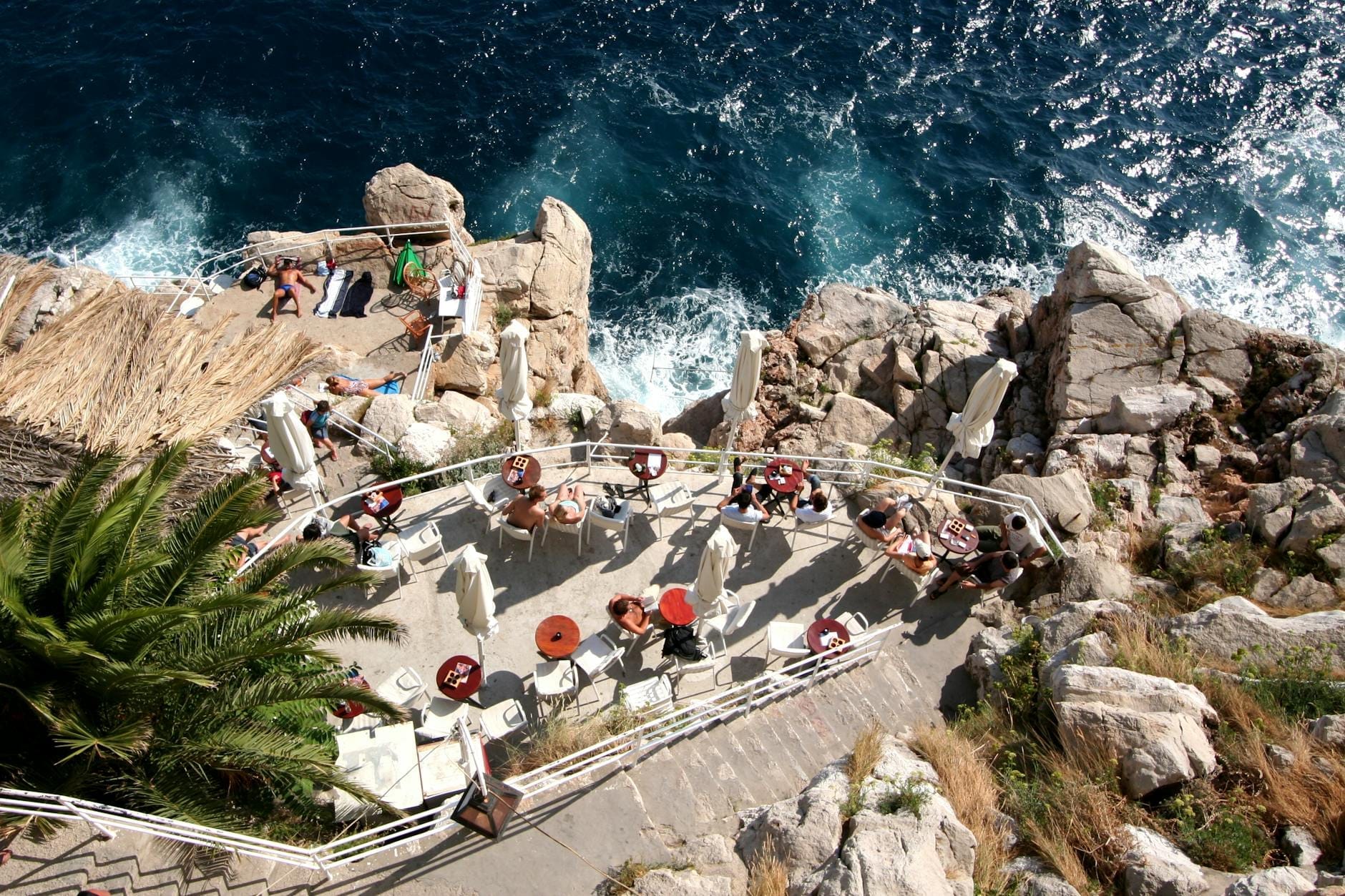
Buža Bar is exactly what its name suggests. In the local Dubrovnik dialect, 'buža' means 'hole,' and the entrance is precisely that: a low gap punched through the thick limestone of the Old Town's southern wall, sealed with a black iron gate and marked by hand-painted yellow signs reading 'cold drinks.' Duck through it, descend a few uneven stone steps, and the Adriatic opens in front of you with nothing blocking the view to the horizon.
There are plastic chairs and metal tables arranged across a series of flat rock terraces. There is no food menu in the off-season and no elaborate cocktail list year-round. The bar serves beer, wine, and basic spirits. What it offers in place of a full menu is a setting that is genuinely difficult to match anywhere in Dubrovnik: you are sitting on the outer face of a UNESCO World Heritage wall, meters above open sea.
ℹ️ Good to know
There are two Buža bars side by side on the same cliff stretch. The original Buža (Crijevićeva ul. 9) and Buža Bar II (also called Mala Buža) sit close together with similar access, views, and pricing. If one has a long queue, the other is likely quieter.
Finding Your Way In
Getting to Buža Bar is half the experience, and it is genuinely easy to walk past the entrance if you are not looking for it. The most reliable approach starts at Gundulić Square in the heart of the Old Town. From there, climb the broad Jesuit Stairs toward the Church of St. Ignatius, then follow the lane that runs left along the base of the city wall. Yellow painted signs pointing to 'cold drinks' appear on the stone around 100 meters ahead. The gate sits flush with the wall and looks, deliberately, like a maintenance entrance.
The surrounding streets of the Old Town are compact and mostly pedestrianized, so the walk from the Stradun takes under ten minutes at a steady pace. There is no parking nearby and no reason to look for any. All of Dubrovnik's main transport stops, including the bus terminus near Pile Gate, feed directly into the Old Town on foot.
⚠️ What to skip
The entrance involves a low doorway you physically need to duck through, followed by uneven stone steps down to the rock terraces. Anyone with limited mobility or difficulty on irregular surfaces should consider this carefully before making the trip. There are no restrooms or changing facilities on-site.
Tickets & tours
Live prices and dates from our booking partner. If you book, we may earn a commission at no extra cost to you.
Mostar and Kravice Waterfalls excursion from Dubrovnik
From 120 €Instant confirmationFree cancellationDubrovnik Old Town Tour ith Cable Car Ride
From 56 €Instant confirmationFree cancellationMostar and Kravice Waterfalls full-day tour with pickup from Dubrovnik
From 66 €Instant confirmationFree cancellationSea kayaking experience in Dubrovnik
From 46 €Instant confirmationFree cancellation
What the Experience Actually Feels Like
On a mid-morning visit, the terraces are calm. The limestone rocks are warm underfoot from the early sun. You can hear the sea slapping the base of the cliff below and the faint sound of boats crossing toward Lokrum Island in the distance. A handful of people are already in the water, having climbed or jumped down from the lower ledges. The bar staff move between the tables at an unhurried pace. This is when the place is at its most peaceful.
By early afternoon in summer, the dynamic shifts considerably. Tables fill quickly, especially on days when cruise ships are in port and the Old Town is at peak capacity. The wait for a seat can stretch to 20 or 30 minutes. Conversations in five different languages overlap. Cold cans click against rock tables. Occasional whoops echo up from people jumping into the water below. It is lively rather than frantic, but it is no longer quiet.
At sunset, Buža earns its outsized reputation. The sun drops toward the open Adriatic on the western horizon, the city walls glow amber, and the sea takes on a deep, layered blue. People hold drinks without drinking them, distracted by watching. On clear evenings, the color change across the water lasts nearly 30 minutes from first gold to deep red. This window draws serious crowds: arriving an hour before sunset and securing a seat first is not overcautious, it is necessary.
💡 Local tip
For sunset, arrive at least 45 to 60 minutes before the sun drops to guarantee a seat. In July and August, 90 minutes early is not unreasonable. Check the local sunset time before you visit: it varies from around 8:00 PM in early summer to closer to 7:00 PM by late September.
Cliff Jumping and Swimming
The lower rock ledges at Buža serve as informal jumping platforms, and on warm days a steady stream of swimmers make use of them. The sea here is clear and deep, and the rocks at water level provide natural footholds for climbing back up. That said, this is open sea on a cliff face with no lifeguard, no safety equipment, and no supervision. The rock surfaces are worn smooth and can be slippery when wet. Jumping is at your own risk and should only be attempted by confident, experienced swimmers.
There are no changing rooms or shower facilities. Swimmers typically change behind rocks or come already dressed for the water. Bringing a small dry bag for your phone and wallet is worth the effort: the terraces slope and plastic chairs on uneven rock are not a reliable place to leave valuables unattended.
Drinks, Prices, and What to Know Before You Order
The menu is simple: beer, wine, spirits, soft drinks, and occasionally basic cocktails. Prices are moderate by Dubrovnik standards, which means more than you would pay in a supermarket but not dramatically inflated for the location. The bar operates on a cash-only basis, so bring euros before you arrive. There is no ATM at the bar itself, and the nearest reliable cash machines are back toward the Stradun and Pile Gate.
Food options on-site are limited to none in the off-season. If you want to eat before or after, the lanes between the Stradun and the walls have several small restaurants and cafes. Dubrovnik's dining scene is concentrated in the Old Town, and a short walk covers a lot of options.
💡 Local tip
Cash only. No food in the off-season. Bring enough euros for at least two rounds before you arrive, since the nearest ATMs are a 5-10 minute walk away into the Old Town.
Practical Timing: When to Go and When to Avoid
Buža Bar is open daily from 9:00 AM to 1:00 AM. The sweet spots are mid-morning (before 11:00 AM) for calm and space, or the sunset window if you are willing to plan around it. Midday in July and August is the lowest-value time to visit: maximum heat, maximum crowds, and the sun is directly overhead rather than casting the golden light that makes the setting photographically interesting. If Dubrovnik's summer crowds are a concern generally, the guide on the best time to visit Dubrovnik explains seasonal patterns in detail.
In shoulder season (May, early June, September, October) the bar is considerably more relaxed. Temperatures are still warm enough to sit outside comfortably and the sea remains swimmable well into October. These months offer the closest thing to the unhurried cliff-bar experience that the setting genuinely deserves.
Photography at Buža is rewarding at almost any hour if you avoid the midday glare. The Dubrovnik photography guide covers the best light windows across the Old Town, including the cliff-side wall areas.
Who Might Not Enjoy This
Buža Bar is not for everyone. If you are traveling with very young children, the combination of open cliff edges, uneven rock surfaces, and no barriers above the sea requires constant attention and makes relaxed drinking effectively impossible. Guests with mobility limitations will find the access stairs and rocky terrace surfaces genuinely difficult to navigate. Anyone expecting a polished cocktail bar with a full kitchen and comfortable seating will be underwhelmed: this is a rough-edged outdoor bar on limestone. The appeal is the location and the atmosphere, not the hospitality infrastructure.
It is also worth being clear: Buža's reputation has made it one of the most visited spots in the city. In peak summer it is not a quiet discovery. The experience is real, but it is shared with many others. If you are specifically looking for solitude above the sea, the outer sections of the city walls or the less-visited beaches around the peninsula offer more privacy.
Insider Tips
- The two Buža bars (original and Mala Buža) are essentially adjacent. If one has a long queue for seating, walk 50 meters along the cliff to check the other. They have nearly identical views and pricing.
- Arrive 60 to 90 minutes before sunset in summer and order your first drink immediately. Staff give seated, paying customers priority over people waiting to be seated, so having a drink in hand secures your table for the sunset itself.
- Wear shoes with some grip. The rock terraces look flat in photos but are angled and worn smooth. Sandals with a flat sole are fine; flip-flops on wet rock near the water are not.
- The bar is cash only with no on-site ATM. The closest reliable cash machines are near Pile Gate and along the Stradun. Sort out your cash before you make the walk.
- If you want to swim, the sea here is cleanest and calmest in the morning before boat traffic picks up. By afternoon the water near the base of the rocks can have surface chop and occasional jellyfish in late summer.
Who Is Buža Bar For?
- Couples looking for a sunset drink with genuine atmosphere
- Solo travelers wanting a scenic place to decompress mid-afternoon
- Swimmers and cliff-jumping enthusiasts comfortable in open sea
- Photographers chasing golden-hour light over the Adriatic
- Anyone who wants the 'Dubrovnik cliff bar' experience without paying a premium entrance fee
Nearby Attractions
Other things to see while in Old Town (Stari Grad):
- Banje Beach
Banje Beach is Dubrovnik's closest and most photographed beach, sitting just east of the Old Town walls with direct views of the medieval fortifications and Lokrum Island. It's a pebbly, organized beach with free public access, paid lounger rentals, and a restaurant-bar that runs well into the night. Convenient, yes. Quiet, no.
- Cathedral of the Assumption of the Virgin Mary
Rising from the rubble of a 1667 earthquake, the Cathedral of the Assumption of the Virgin Mary anchors the heart of Dubrovnik's Old Town with its commanding Baroque dome and a treasury that holds relics spanning a millennium. It's quieter than the city walls and more revealing than most visitors expect.
- Dominican Monastery & Museum
Built from 1225 and shaped through the 15th century, the Dominican Monastery in Dubrovnik's eastern Old Town holds one of Dalmatia's finest collections of medieval and Renaissance art. The Gothic-Renaissance cloister, a Titian altarpiece from 1554, and works by the Dubrovnik School of painters make this one of the most intellectually rewarding stops in the city.
- Dubrovnik Aquarium
The Dubrovnik Aquarium occupies the ground floor of the 16th-century St. John's Fortress, right at the edge of the Old Town harbor. With 31 seawater tanks fed by continuous fresh Adriatic seawater and a resident loggerhead sea turtle, it is one of the more unusual and quietly rewarding stops in Dubrovnik's historic core.
Planning a trip? Discover personalized activities with the Nomado app.