Dubrovnik Aquarium: Adriatic Sea Life Inside a Medieval Fortress
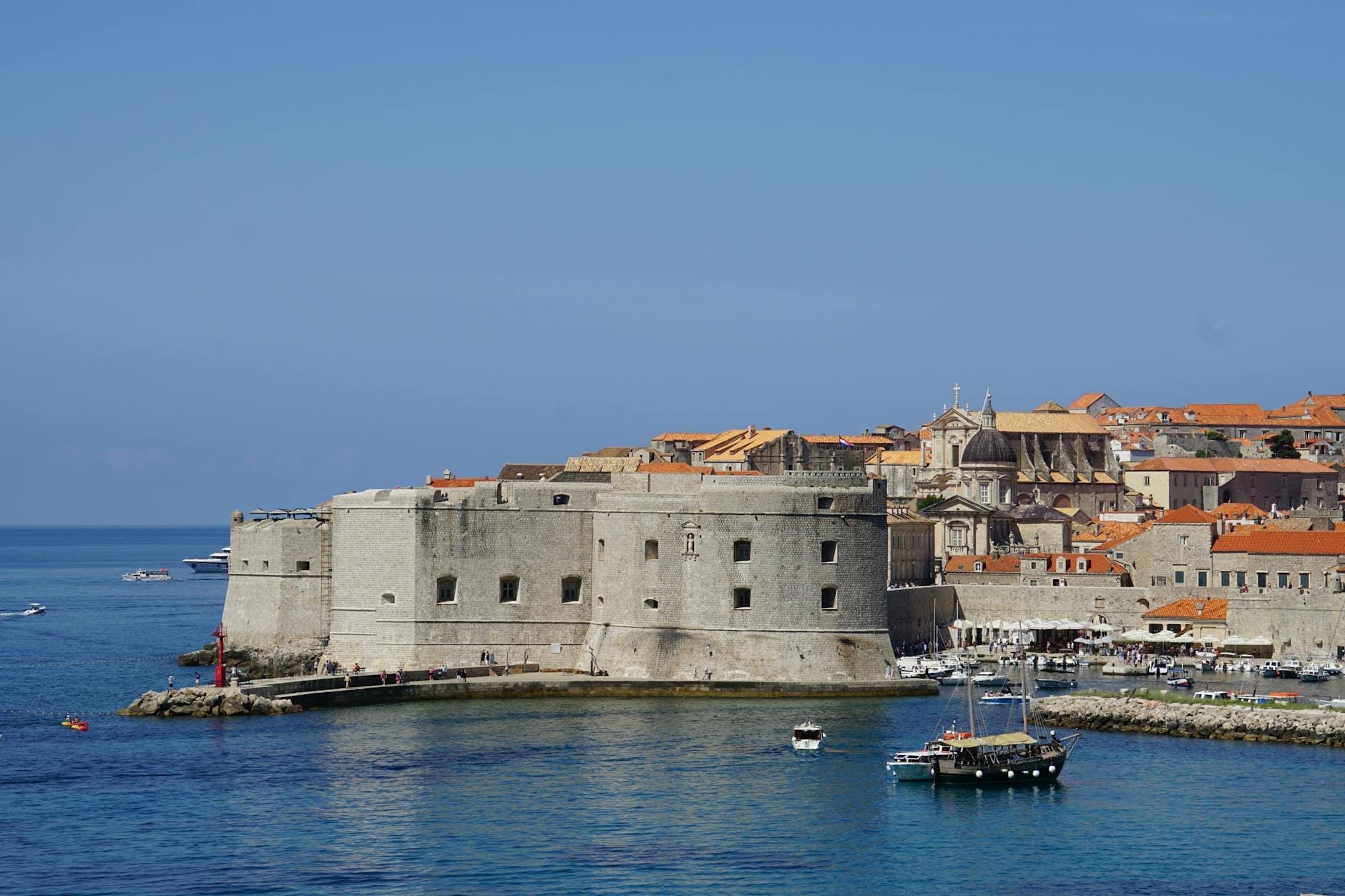
The Dubrovnik Aquarium occupies the ground floor of the 16th-century St. John's Fortress, right at the edge of the Old Town harbor. With 31 seawater tanks fed by continuous fresh Adriatic seawater and a resident loggerhead sea turtle, it is one of the more unusual and quietly rewarding stops in Dubrovnik's historic core.
Quick Facts
- Location
- Ul. kneza Damjana Jude 12, Old Town, Dubrovnik (inside St. John's Fortress, harbor end)
- Getting There
- No buses enter the Old Town. Walk from Pile Gate along the Stradun to the waterfront, then follow the harbor wall to St. John's Fortress — about 10 minutes on foot.
- Time Needed
- 45 minutes to 1.5 hours
- Cost
- Approximately €10 per adult (verify current prices at the entrance)
- Best for
- Families with children, travelers curious about Adriatic marine life, those seeking shade on hot summer days
What the Dubrovnik Aquarium Actually Is
The Dubrovnik Aquarium, known locally as Akvarij Dubrovnik, is a small but scientifically grounded marine exhibit operated under the Institute for Marine and Coastal Research at the University of Dubrovnik. It is not a large commercial aquarium with theatrical lighting shows or performing animals. What it offers instead is something more specific: a close look at the living creatures of the Adriatic Sea, displayed in 31 seawater tanks with a combined volume of 115 cubic meters.
The water in those tanks is not recycled or chemically treated in the conventional sense. Four high-pressure pumps draw in 200 liters of fresh Adriatic seawater per second, cycling it continuously through the system alongside a 150-cubic-meter gravitational reserve tank. That infrastructure matters: what you are looking at is genuinely local marine life in conditions close to their natural habitat, not tropical fish under artificial conditions.
ℹ️ Good to know
The aquarium is certified by Friend of the Sea for its sustainability practices — one of the few small aquariums in the Adriatic region to hold this designation.
The Setting: Inside St. John's Fortress
The building itself is worth understanding before you arrive. St. John's Fortress is a 16th-century defensive structure that forms the southeastern anchor of Dubrovnik's famous harbor. Its lower floor houses the aquarium; the upper floor holds the Maritime Museum. The walls are thick stone, the ceilings are vaulted, and the light that filters in from harbor-facing windows gives the interior a cool, slightly dim quality that turns out to suit the tanks perfectly.
Walking into the aquarium from the harbor promenade, you step down from bright Adriatic sunshine into a stone room that smells faintly of salt water and damp limestone. The shift in temperature is immediate, often 5 to 7 degrees cooler than outside. On a July afternoon, when the Stradun is radiating heat from its polished marble surface, that coolness is not a small thing. The tanks line the walls and cluster in the center of several connected chambers, each illuminated just enough to reveal the animals inside without flooding the room with artificial glare.
Tickets & tours
Live prices and dates from our booking partner. If you book, we may earn a commission at no extra cost to you.
Mostar and Kravice Waterfalls excursion from Dubrovnik
From 120 €Instant confirmationFree cancellationDubrovnik Old Town Tour ith Cable Car Ride
From 56 €Instant confirmationFree cancellationMostar and Kravice Waterfalls full-day tour with pickup from Dubrovnik
From 66 €Instant confirmationFree cancellationSea kayaking experience in Dubrovnik
From 46 €Instant confirmationFree cancellation
What You Will See
The species on display are drawn from the Adriatic and wider Mediterranean basin. Expect moray eels wedged into rocky crevices, sea horses that cling motionlessly to artificial weeds, various species of sea bream and grouper, octopus that tend to press themselves into the far corners of tanks, and an assortment of invertebrates including sea urchins, starfish, and crustaceans. The labels on most tanks are in Croatian and English.
The most reliably discussed resident is the loggerhead sea turtle, an animal whose connection to this institution stretches back to 1953. Loggerhead turtles are native to the Mediterranean and are classified as a vulnerable species. Seeing one at close range in a tank this size is not without its complications for thoughtful visitors, but the aquarium's research context and its Friend of the Sea certification indicate that conservation, not entertainment, is the stated purpose.
There is also a touch pool in one section, where children can handle certain small invertebrates under supervision. This tends to be the noisiest corner of the aquarium and the one that small children are most reluctant to leave.
How the Experience Changes by Time of Day
The aquarium is open Tuesday through Sunday. It is closed on Mondays. The early part of the morning, between 10:00 and 11:30 AM, tends to be the quietest window. School groups and cruise ship visitors typically arrive mid-morning and fill the space between roughly 11:00 AM and 1:00 PM, when the low-ceilinged chambers can feel noticeably crowded and the acoustic environment changes considerably.
💡 Local tip
Arrive at opening time (10:00 AM) or after 2:30 PM for the quietest visit. Mid-morning is when cruise ship excursion groups tend to pass through.
The afternoon hours, particularly from 2:30 PM onward, are calmer. Many day-trippers have moved on to the city walls or the cable car by this point, and the aquarium returns to a quieter register. The tanks themselves look broadly the same throughout the day since the lighting is artificial, but the animals are marginally more active in the cooler morning hours.
Getting There and Practical Logistics
The aquarium entrance is on the harbor side of St. John's Fortress, facing the Old Town marina. From Pile Gate, walk the length of the Stradun, turn right toward the old port, and continue along the waterfront. The fortress is the large rounded tower at the far end of the harbor wall. The walk takes around 10 minutes at a comfortable pace.
No public buses serve the Old Town interior. Visitors coming from Lapad or Gruž should take the Libertas bus to the Pile Gate stop and walk in from there. Taxis and ride-hailing services drop off at Pile Gate as well.
The entrance involves stairs inside the medieval structure. There are no noted accessibility features for visitors with mobility impairments. The stone floors can be uneven in places, and the passage between tank chambers is narrow in sections. Bring comfortable, flat-soled shoes.
⚠️ What to skip
The aquarium's location inside a historic fortress means there are steps and narrow passages throughout. It is not easily navigated with a stroller or wheelchair. Verify accessibility needs directly with the venue before visiting.
Photography and What to Expect Visually
Photography without flash is permitted throughout most of the aquarium. The low ambient light and the reflective tank glass make clean shots genuinely difficult without a camera or phone that performs well in low-light conditions. Most mobile phone cameras will struggle to produce sharp images through tank glass at these light levels. The exterior of St. John's Fortress, on the other hand, photographs well at almost any time of day, particularly in the golden hour before the aquarium closes.
For more general photography guidance in Dubrovnik, the Dubrovnik photography guide covers the best vantage points and lighting windows across the Old Town.
Is It Worth Your Time?
This is a small aquarium. It will not compare to large national marine institutions in terms of scale or spectacle. The whole visit fits comfortably into an hour, and even with children stopping to examine each tank carefully, most visitors are done within 90 minutes. At roughly €10, it sits in a reasonable price range for what it offers, particularly on a hot day when the cool stone interior is itself a selling point.
Visitors who are primarily focused on Dubrovnik's architectural and historical heritage might find their time better spent at the Rector's Palace or the Dominican Monastery, both of which offer richer cultural context. Travelers who are simply ticking boxes on a one-day itinerary may not feel the aquarium earns its place. But for families with young children, those with a specific interest in Adriatic marine biology, or anyone who wants a genuine pause from the heat and crowds of the Old Town in peak summer, it earns its entry fee.
If a Dubrovnik City Pass is part of your planning, check whether the aquarium is included in the current pass benefits. The Dubrovnik City Pass guide outlines which attractions are currently covered.
Insider Tips
- The Maritime Museum on the upper floor of St. John's Fortress is accessed by a separate entrance and ticket. If nautical history interests you, combining both visits in one stop at the fortress makes practical sense and saves backtracking.
- The aquarium chambers are significantly cooler than the Old Town streets in summer. If you are carrying a bag, bringing a light layer is worth considering, particularly for young children who have been in the sun all morning.
- The sea turtle tank draws the most visitors and tends to cluster people around it. If you want an unobstructed view, arrive right at 10:00 AM or wait until the school group waves have moved on after 1:00 PM.
- The harbor wall directly outside the fortress entrance is one of the less-photographed stretches of the Old Town waterfront. The angle looking back toward the city from this point captures the city walls, the church towers, and the marina together in a single frame.
- The aquarium does not have a café or gift shop of note. Plan your refreshments before or after — there are several small konobas and coffee bars along the harbor promenade within a two-minute walk.
Who Is Dubrovnik Aquarium For?
- Families with children aged 4 to 12, particularly those who want a structured indoor activity during the hottest part of the afternoon
- Travelers with an interest in Adriatic marine biology or Mediterranean ecology
- Visitors looking for relief from the summer heat inside a genuinely cool, shaded space
- Those combining the visit with the Maritime Museum upstairs for a full fortress afternoon
- Budget-conscious travelers who want a legitimate cultural stop at a moderate price point
Nearby Attractions
Other things to see while in Old Town (Stari Grad):
- Banje Beach
Banje Beach is Dubrovnik's closest and most photographed beach, sitting just east of the Old Town walls with direct views of the medieval fortifications and Lokrum Island. It's a pebbly, organized beach with free public access, paid lounger rentals, and a restaurant-bar that runs well into the night. Convenient, yes. Quiet, no.
- Buža Bar
Buža Bar is a no-frills open-air bar carved into a gap in Dubrovnik's ancient city walls, perched directly above the Adriatic Sea. Reached through a low iron-gated hole in the stonework, it offers cold drinks, cliff-jumping, and some of the most dramatic coastal views in the Mediterranean. There is no admission charge, no kitchen, and no pretense.
- Cathedral of the Assumption of the Virgin Mary
Rising from the rubble of a 1667 earthquake, the Cathedral of the Assumption of the Virgin Mary anchors the heart of Dubrovnik's Old Town with its commanding Baroque dome and a treasury that holds relics spanning a millennium. It's quieter than the city walls and more revealing than most visitors expect.
- Dominican Monastery & Museum
Built from 1225 and shaped through the 15th century, the Dominican Monastery in Dubrovnik's eastern Old Town holds one of Dalmatia's finest collections of medieval and Renaissance art. The Gothic-Renaissance cloister, a Titian altarpiece from 1554, and works by the Dubrovnik School of painters make this one of the most intellectually rewarding stops in the city.
Planning a trip? Discover personalized activities with the Nomado app.