Dominican Monastery & Museum Dubrovnik: The Art Treasury the Crowds Miss
Built from 1225 and shaped through the 15th century, the Dominican Monastery in Dubrovnik's eastern Old Town holds one of Dalmatia's finest collections of medieval and Renaissance art. The Gothic-Renaissance cloister, a Titian altarpiece from 1554, and works by the Dubrovnik School of painters make this one of the most intellectually rewarding stops in the city.
Quick Facts
- Location
- Od sv. Dominika 4, eastern Old Town, near Ploče Gate
- Getting There
- Walk east along Stradun to Ploče Gate; the monastery steps are immediately visible on the right
- Time Needed
- 45–90 minutes
- Cost
- Paid entry; combined museum tickets may apply — verify on-site or at the Dubrovnik City Pass desk
- Best for
- Art lovers, history readers, travelers wanting a cool refuge from midday heat
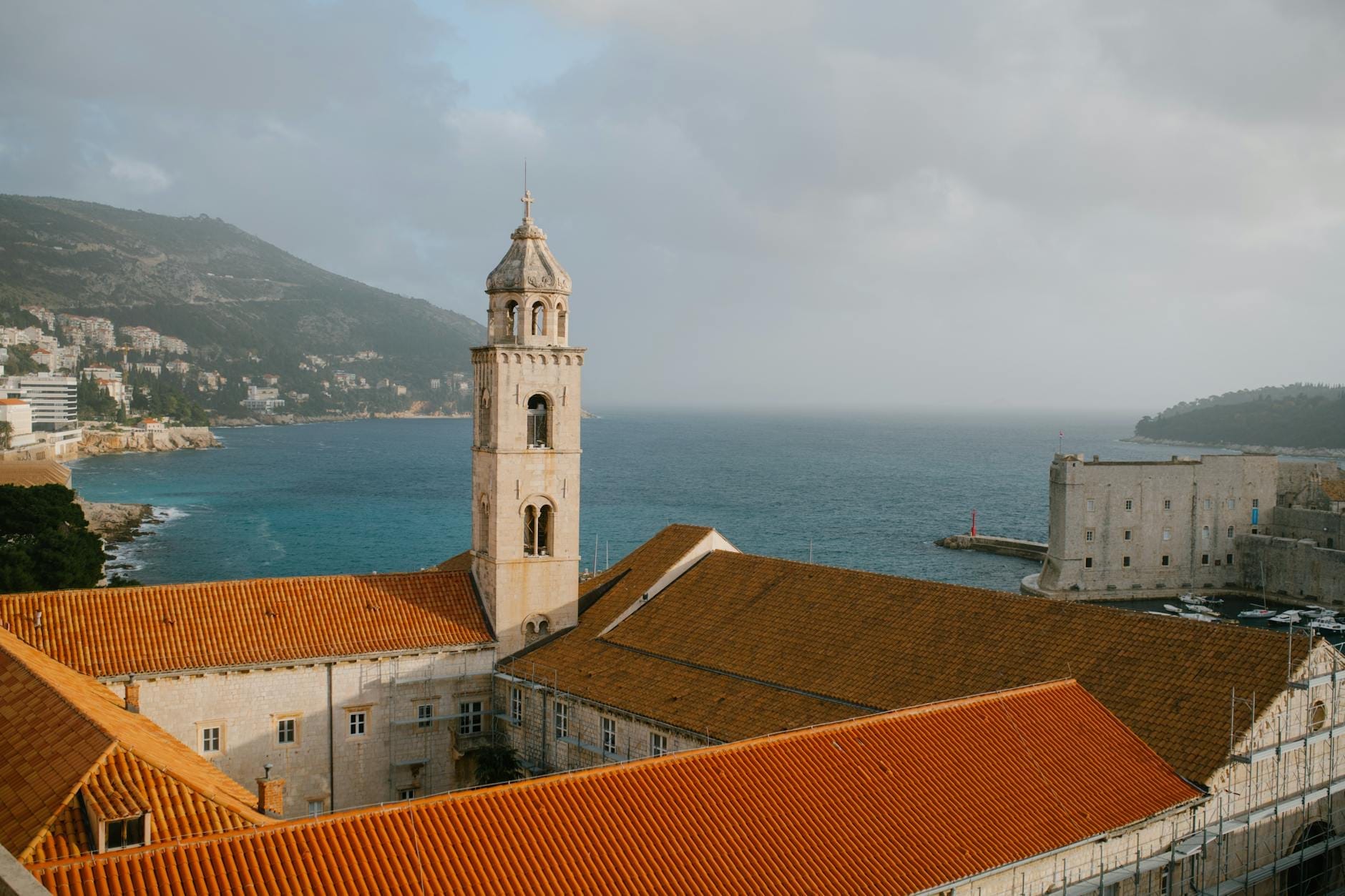
What Is the Dominican Monastery?
The Dominican Monastery (Dominikanski samostan) sits at the eastern edge of Dubrovnik's Old Town, tucked behind a broad stone staircase that climbs from the street just inside Ploče Gate. It is one of the oldest and most architecturally complex religious institutions in the city, founded in 1225 and gradually built into its present form through the 14th and 15th centuries. Most visitors hurry past the entrance on their way toward the city walls — which makes the monastery one of the few places in Dubrovnik's Old Town where you can stand in near-silence, surrounded by genuine artistic and historical weight.
The complex combines a functioning church, a late-Gothic cloister of considerable elegance, and a museum that holds what many art historians consider the single most important collection of Dubrovnik School paintings in existence. This is not a reconstructed heritage site or a tourist-oriented replica. The paintings, manuscripts, and goldsmith work here are original, and some have been in this building for five centuries.
💡 Local tip
The monastery is open daily from 9:00 to 18:00. Church access may be briefly restricted during religious services. Arrive before 10:00 or after 16:00 in summer for the quietest experience.
The Cloister: Architecture Worth Slowing Down For
The cloister is the first thing that stops you in your tracks. It is a broad, arcaded quadrangle in the Gothic-Renaissance transitional style, built in the early 15th century. The arcade columns are slender, paired, and topped with ornate capitals — each one slightly different, bearing carved foliage, animal forms, and human faces that reward close inspection. The central garden is planted simply, which keeps the focus on the stonework.
In the morning, low light enters the cloister from the east and casts long shadows across the stone floor. By midday, the garden fills with diffuse light while the arcaded walkway stays shaded and noticeably cooler than the streets outside. This is a practical advantage in July and August, when temperatures regularly reach the low 30s Celsius and the Stradun becomes uncomfortable. The cloister offers a genuine respite, not just an aesthetic one.
The well at the center of the garden dates to the same construction period as the cloister itself. It remains intact and is one of the better-preserved examples of medieval civic stonework in the city. Photographers should note that the cloister is best lit for wide-angle shots in the late morning, roughly 10:00–11:30, when the angle of light avoids the deep contrasts that make interior and exterior zones difficult to expose simultaneously.
Tickets & tours
Live prices and dates from our booking partner. If you book, we may earn a commission at no extra cost to you.
Mostar and Kravice Waterfalls excursion from Dubrovnik
From 120 €Instant confirmationFree cancellationDubrovnik Old Town Tour ith Cable Car Ride
From 56 €Instant confirmationFree cancellationMostar and Kravice Waterfalls full-day tour with pickup from Dubrovnik
From 66 €Instant confirmationFree cancellationSea kayaking experience in Dubrovnik
From 46 €Instant confirmationFree cancellation
The Museum Collection: Dubrovnik School and Beyond
The museum occupies the former sacristy and adjoining rooms of the monastery, and it holds a concentration of 15th and 16th-century Dalmatian art that would be significant anywhere in Europe. The Dubrovnik School of painting flourished between roughly 1430 and 1570, producing a regional style that blended Byzantine iconographic tradition with the compositional advances of the Italian Renaissance. The monastery holds key works by the three most important figures of that school: Nikola Božidarević, Mihajlo Hamzić, and Lovro Dobričević.
Nikola Božidarević's triptych is the piece most often singled out by art historians. The figures have a softness and psychological depth that distinguishes his work from the flatter Byzantine tradition he inherited, and the gold-leaf treatment of the background shows technical mastery rather than mere decoration. Stand close enough to see the brushwork in the facial details — it holds up to scrutiny in a way that reproductions entirely fail to convey.
The collection's most recognizable name is Titian. His altarpiece from 1554, depicting Mary Magdalene with Saints Blaise and Tobias, is housed in the church rather than the museum proper. It is smaller than visitors often expect from a Titian, but the handling of light on fabric and skin is immediately recognizable. Saint Blaise — Dubrovnik's patron saint, depicted on nearly every public building in the city — appears here in a more intimate devotional context than the monumental versions found elsewhere.
Beyond paintings, the museum holds a selection of goldsmith work, reliquaries, illuminated manuscripts, and incunabula (books printed before 1501). The library holdings are not usually displayed in full, but even a partial view of the manuscript collection gives a concrete sense of what Dubrovnik's role as a wealthy, literate, and regionally influential republic actually meant in material terms. For broader context on the city's cultural institutions, the Sponza Palace nearby holds further archival treasures from the same period.
Historical Context: The Dominican Order in Dubrovnik
The Dominican Order arrived in Dubrovnik just three years after the order itself was formally established, in 1225. Their presence in the city was not incidental. The Dominicans were an intellectual and administrative force throughout medieval Catholic Europe, and Dubrovnik's merchant republic valued that combination. The friars ran schools, provided theological oversight, and — critically — maintained relationships with Rome and with trading partners across the Adriatic and the Levant.
The current church structure took shape primarily in the 14th century and was refined through the 15th. Unlike the more austere Franciscan monastery on the western end of the Stradun, the Dominican complex accumulated considerable artistic patronage from wealthy Ragusan families, which explains the richness of the collection. Many of the paintings were commissioned as private devotional works or funerary gifts and then donated to the monastery over generations.
The monastery survived the catastrophic earthquake of 1667, which destroyed or damaged a significant portion of Dubrovnik's built fabric, with relatively minor structural damage. It also survived the 1991-92 siege largely intact, though the city around it did not escape unscathed. For a fuller account of how Dubrovnik has preserved and rebuilt its heritage across centuries, the city walls guide covers the restoration context in some depth.
How the Visit Actually Flows
The entrance is at the top of the Dominican Steps, a broad flight of stone stairs leading up from the street just inside Ploče Gate. The steps themselves are a pleasant approach: wide enough that even modest foot traffic doesn't feel crowded, and framed by old stone walls that filter out street noise. You pay admission at a small desk near the top of the stairs before entering the cloister.
Most visitors spend five to ten minutes in the cloister, then move through the museum rooms in a roughly linear sequence. The church is accessible from the cloister and is worth entering separately — the Titian is on the altar to the left as you face the nave, and the overall interior has a plainness that throws the painting into sharper relief. Allow at least 45 minutes if you intend to look at the paintings carefully. An hour and a half is more appropriate if you have any interest in the goldsmith work or manuscripts.
The space is not large, and the museum rooms can feel tight when a tour group is present. If you arrive and find a guided group already inside, the cloister is a comfortable place to wait for fifteen or twenty minutes. Tour groups move on a schedule and tend to clear out quickly.
⚠️ What to skip
The monastery is a working religious institution. Dress code applies: shoulders and knees must be covered. The stone floors can be uneven in parts of the cloister, and there are steps throughout. Visitors with significant mobility limitations should be aware that the site has no elevator and limited level-access routes.
Practical Details and Getting There
The monastery is a five-minute walk from the western entrance to the Old Town at Pile Gate. Walk the full length of the Stradun to its eastern end, continue through the clock tower square, and the Dominican Steps appear on your right before you reach Ploče Gate. It is easy to miss on a first visit because the entrance faces slightly away from the main pedestrian flow.
If you are using the Dubrovnik City Pass, check whether the monastery museum is included in the current version before paying separately at the door. Combination arrangements with other city museums have existed in the past, but terms change seasonally.
Photography is generally permitted in the cloister and many museum areas without flash. Confirm at the entrance desk, as policies on specific artworks can vary. Tripods are not practical in the narrow museum rooms and are unlikely to be permitted during busy periods.
Is It Worth Your Time?
If your interest in Dubrovnik is primarily scenic — the walls, the harbor views, the terrace bars — then the Dominican Monastery will feel like a detour. The experience is internal, quiet, and rewards prior knowledge of Dalmatian art history. It does not offer dramatic panoramas or immediate visual payoff for the casual visitor.
If, however, you find yourself wanting to understand what Dubrovnik actually was — not just how it looks — this is one of the most honest answers the city provides. The paintings, the manuscripts, the cloister stonework: these are the artifacts of a functioning, cosmopolitan republic that traded across the Mediterranean world and commissioned art accordingly. Paired with a visit to the Rector's Palace and the Franciscan Monastery, the Dominican complex completes a coherent picture of Ragusan civic and cultural life that no walking tour can replicate.
Travelers who dislike crowds will find this particularly appealing. Even in the peak summer months of July and August, the monastery rarely reaches the saturation levels of the city walls or the Old Town's main squares. The combination of relative obscurity and genuine quality is unusual in a city as heavily visited as Dubrovnik.
Insider Tips
- Arrive within the first thirty minutes of opening if you want the cloister entirely to yourself. Tour groups from cruise ships rarely arrive before 10:30, and the early-morning light in the cloister is exceptional.
- The Titian altarpiece is inside the church, not the museum. Many visitors pay museum admission and leave without seeing it. Walk through the church door accessed from the cloister before you exit.
- If you are researching the Dubrovnik School of painting, the museum staff at the ticket desk can sometimes direct you to specific works or provide a printed plan. The labeling inside is informative but not exhaustive.
- The stone steps leading to the entrance can be slippery after rain. The adjacent streets in this part of the Old Town drain slowly, and wet limestone has almost no traction. Wear shoes with some grip.
- The monastery is meaningfully cooler than the open streets in summer. If you are planning a full day in the Old Town and the heat is significant, scheduling this visit for midday rather than morning or evening uses the space as a practical refuge as much as a cultural one.
Who Is Dominican Monastery & Museum For?
- Art history enthusiasts interested in Dalmatian and Renaissance painting
- Travelers seeking indoor relief from summer heat without sacrificing cultural depth
- Anyone building a full picture of Dubrovnik beyond its scenic highlights
- Photographers looking for architectural detail shots with manageable crowds
- Visitors who appreciate functioning religious heritage sites with genuine collections intact
Nearby Attractions
Other things to see while in Old Town (Stari Grad):
- Banje Beach
Banje Beach is Dubrovnik's closest and most photographed beach, sitting just east of the Old Town walls with direct views of the medieval fortifications and Lokrum Island. It's a pebbly, organized beach with free public access, paid lounger rentals, and a restaurant-bar that runs well into the night. Convenient, yes. Quiet, no.
- Buža Bar
Buža Bar is a no-frills open-air bar carved into a gap in Dubrovnik's ancient city walls, perched directly above the Adriatic Sea. Reached through a low iron-gated hole in the stonework, it offers cold drinks, cliff-jumping, and some of the most dramatic coastal views in the Mediterranean. There is no admission charge, no kitchen, and no pretense.
- Cathedral of the Assumption of the Virgin Mary
Rising from the rubble of a 1667 earthquake, the Cathedral of the Assumption of the Virgin Mary anchors the heart of Dubrovnik's Old Town with its commanding Baroque dome and a treasury that holds relics spanning a millennium. It's quieter than the city walls and more revealing than most visitors expect.
- Dubrovnik Aquarium
The Dubrovnik Aquarium occupies the ground floor of the 16th-century St. John's Fortress, right at the edge of the Old Town harbor. With 31 seawater tanks fed by continuous fresh Adriatic seawater and a resident loggerhead sea turtle, it is one of the more unusual and quietly rewarding stops in Dubrovnik's historic core.
Planning a trip? Discover personalized activities with the Nomado app.