Franciscan Monastery and Museum Dubrovnik: What to Expect Inside
The Franciscan Monastery and Museum sits just inside the Pile Gate on Stradun, combining a remarkably intact 14th-century Romanesque cloister, a pharmacy operating since 1317, and a small museum of medieval manuscripts and relics. It is one of the most historically layered stops in the Old Town, and one of the few places where Dubrovnik's pre-earthquake character genuinely survives.
Quick Facts
- Location
- Placa (Stradun), Old Town, Dubrovnik (left of Pile Gate, along Stradun)
- Getting There
- Walk 2 min from Pile Gate; Libertas buses stop at Pile Bus Terminal
- Time Needed
- 45–75 minutes
- Cost
- €5 adult admission; free with the Dubrovnik City Pass
- Best for
- History lovers, architecture enthusiasts, those wanting quiet away from the Stradun crowds
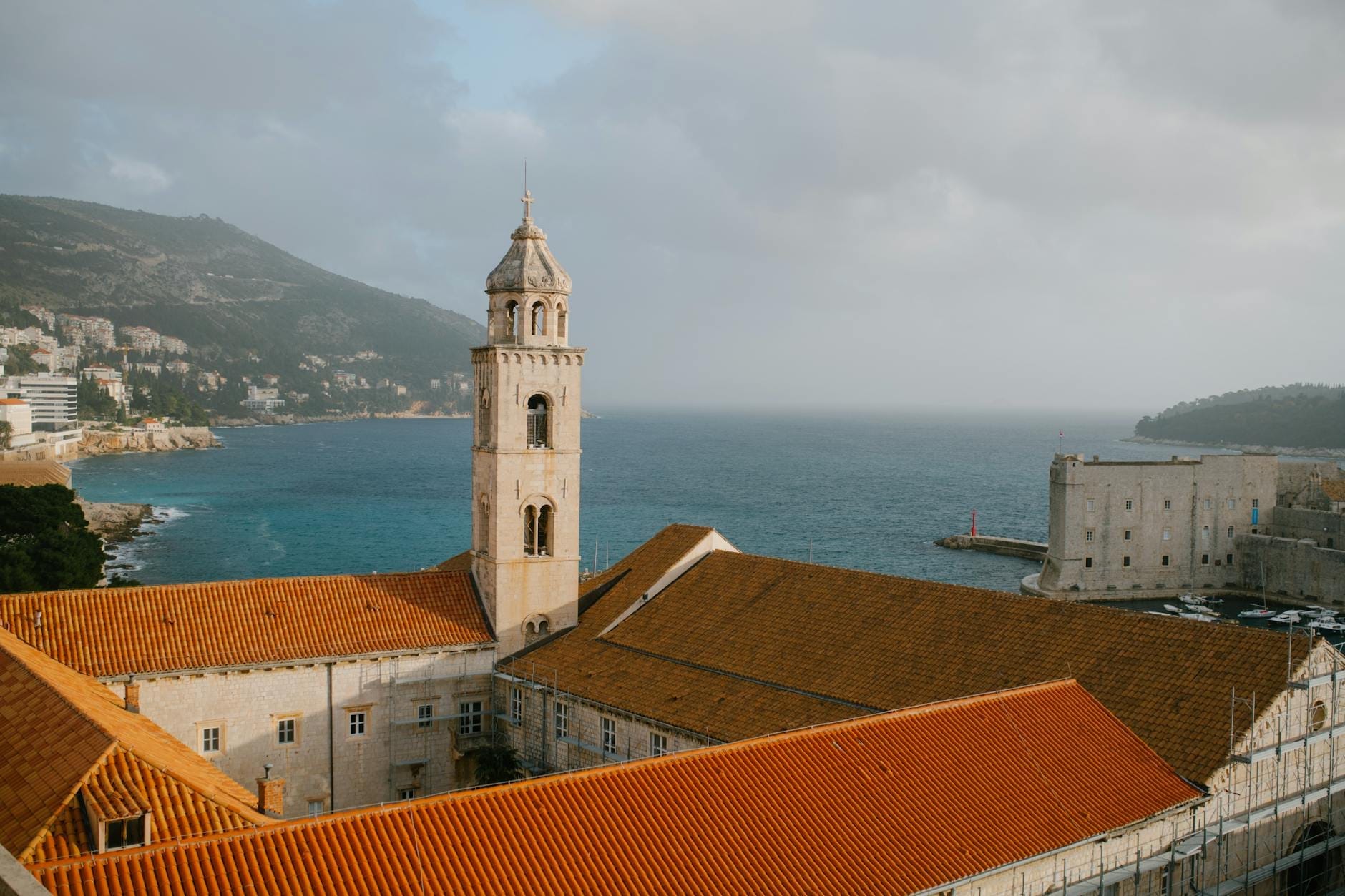
What the Franciscan Monastery Actually Is
The Franciscan Monastery and Museum (Franjevački samostan i muzej) is a working Franciscan friary founded in 1317, located metres from the Pile Gate at the western end of Stradun. It is not a ruin or a reconstructed heritage site. Friars still live and pray here, and the sense of continuity is palpable the moment you step off the limestone-paved main street into the silence of the cloister. That contrast with the noise outside is one of the most striking things about the visit.
The complex contains three distinct things worth your time: the cloister itself, one of the best-preserved examples of late Romanesque architecture in Dalmatia; the Old Pharmacy, which has operated continuously since 1317 and is widely cited as one of the three oldest pharmacies in Europe; and the museum, which holds illuminated manuscripts, medieval relics, liturgical objects, and pharmaceutical equipment spanning seven centuries. None of these elements require more than careful looking to appreciate, even without specialist knowledge.
ℹ️ Good to know
Opening hours are typically 9:00 AM to 5:00 PM daily, though seasonal variations have been reported. Some visitors note shorter hours (closing around 2:00 PM) on certain days. Confirm on arrival or contact the monastery directly before planning a late-morning visit.
The Cloister: Architecture and Atmosphere
The cloister was completed in 1360 by the stonemason Mihoje Brajkov of Bar, and it is the architectural centerpiece of the complex. The design is late Romanesque with Gothic tracery: 60 double columns arranged around a central garden, each capital carved with a different figure — human faces, animals, hybrid creatures, and plant forms. No two capitals are identical, and spending ten minutes working your way around the perimeter examining them closely is time genuinely well spent.
The central garden is planted simply, with low shrubs and a stone wellhead. In the morning, when light enters from the east and rakes across the carved stonework, the detail on the capitals is most legible. By midday, the cloister fills with even light and becomes less dramatic but more comfortable to photograph. Late afternoon, if you visit close to closing time, you are likely to have the space nearly to yourself, and the quality of light on the warm limestone is at its warmest.
One honest note: the 1667 earthquake that destroyed much of Dubrovnik also damaged the monastery church significantly. The church was rebuilt in the Baroque style after the earthquake, so those hoping for a uniformly medieval interior will find the cloister more rewarding than the church itself. The cloister survived largely intact, which is precisely why it draws architects and historians as well as general visitors.
💡 Local tip
Photography inside the cloister is generally permitted. Keep ISO low in the morning light and use the repeating arch pattern as a framing device. Flash is not appropriate in the museum sections.
Tickets & tours
Live prices and dates from our booking partner. If you book, we may earn a commission at no extra cost to you.
Mostar and Kravice Waterfalls excursion from Dubrovnik
From 120 €Instant confirmationFree cancellationDubrovnik Old Town Tour ith Cable Car Ride
From 56 €Instant confirmationFree cancellationMostar and Kravice Waterfalls full-day tour with pickup from Dubrovnik
From 66 €Instant confirmationFree cancellationSea kayaking experience in Dubrovnik
From 46 €Instant confirmationFree cancellation
The Old Pharmacy: Europe's Third-Oldest
The pharmacy attached to the monastery has been in continuous operation since 1317, making it the third-oldest functioning pharmacy in Europe. It still operates as a working pharmacy today, dispensing prescriptions to local residents, which lends it an odd double life: medieval artifact and functional neighborhood chemist simultaneously.
The historic section of the pharmacy, visible through a small adjoining room, displays original ceramic apothecary jars, glass vessels, mortars, pestles, and measuring instruments arranged across wooden shelving. The collection illustrates how medieval pharmacology drew on both Arabic and European medical traditions. There are also documents and recipe books from the monastery's own pharmaceutical practice, some dating to the 14th century.
Visitors sometimes purchase the monastery's own range of herbal cosmetics and tinctures from the pharmacy counter, including lavender-based creams and rose water preparations. These are produced using traditional formulations and are reasonably priced by Dubrovnik standards. Whether or not you buy anything, the pharmacy visit is included in the general admission and adds a dimension to the monastery that most historical sites simply cannot offer.
The Museum Collection
The museum occupies rooms adjacent to the cloister and holds a focused collection: illuminated manuscripts from the 15th and 16th centuries, polyptych altarpieces, gold and silver reliquaries, liturgical vestments, and pharmaceutical equipment. The displays are modest by European museum standards in terms of scale, but the individual objects are exceptional.
Among the highlights is a late Gothic polyptych painting and a set of pharmaceutical manuscripts that document the monastery's role in Ragusan public health during plague outbreaks. The Republic of Ragusa (as Dubrovnik was formerly known) established some of the first quarantine protocols in Europe in the 14th century, and the Franciscans were central to that response. The museum makes this history legible with its documents and objects, even if the labelling is sometimes minimal in English.
⚠️ What to skip
Museum signage is primarily in Croatian with some English. If historical detail matters to you, consider bringing a guidebook or downloading background reading before your visit. Audio guides are not consistently available.
Visiting in Context: Fitting It Into Your Day
The monastery sits directly on Stradun, Dubrovnik's main pedestrian street, which means it is easy to combine with almost any Old Town itinerary. Most visitors walk through Pile Gate, pass directly in front of the monastery entrance, and keep walking without stopping. That makes it one of the more undervisited major sites in the Old Town, despite its central location.
If you are working through the Old Town systematically, the monastery pairs naturally with the Large Fountain of Onofrio directly outside Pile Gate, and with St Saviour Church next door. These three stops together take under two hours and provide a coherent picture of the western end of the Old Town's history.
For those on a tighter budget, the €6 admission is also covered by the Dubrovnik City Pass, which includes the city walls and several other sites. If you plan to visit more than two or three paid attractions, the pass is typically worth calculating.
The monastery is not a long visit, and that is not a criticism. Forty-five minutes is enough to see the cloister properly, browse the museum, and spend a few minutes in the pharmacy. Visitors who rush through in twenty minutes tend to leave feeling underwhelmed; those who slow down and examine the carved capitals or read the pharmaceutical history carefully tend to consider it a highlight.
Who Will Enjoy This Most, and Who Might Not
The Franciscan Monastery rewards a specific kind of visitor: someone who finds meaning in architectural detail, finds medieval history genuinely interesting, or appreciates a moment of quiet inside a city that can feel relentlessly crowded in summer. The cloister is one of the few genuinely peaceful places inside the Old Town walls during peak season.
Visitors traveling primarily for scenery and photography, or those who have already visited several monasteries or cloisters elsewhere in Dalmatia or Italy, may find the museum collection modest by comparison. The site is also not well-suited to families with young children who are not accustomed to museum environments: the spaces are quiet, surfaces are fragile, and there is no interactive element to sustain younger attention.
Wheelchair users and visitors with limited mobility should note that the cloister has uneven stone surfaces and there are steps throughout. The site was built in the 14th century and has not been adapted with ramps. If accessibility is a concern, the family and accessibility guide to Dubrovnik covers other options in the Old Town that may be more practical.
Getting There and Practical Details
The entrance is on Placa (Stradun), set slightly back behind a courtyard called Poljana Paska Miličevića. Walk through Pile Gate and the monastery is on your left within 50 metres. You will see the entrance arch and a small queue or ticket window at the door. There is no dedicated parking for the monastery; visitors arriving by car should use the Pile Gate parking area and walk in.
Libertas city buses serve Pile Bus Terminal, which is immediately outside Pile Gate. This is the main bus hub for routes from Lapad and other neighborhoods. From the bus stop to the monastery entrance is a two-minute walk.
The dress code is not strictly enforced at the time of writing, but covering shoulders and knees is appropriate given that the complex is an active religious site. Loud conversations in the cloister draw looks from monastery residents and other visitors alike. The site functions on two levels simultaneously: heritage attraction and working friary. Treating it with that dual identity in mind makes for a better experience on both counts.
Insider Tips
- Arrive within the first 30 minutes of opening. The cloister is largely empty before 10:00 AM and the morning light on the eastern arcade is the best available for photography.
- Spend time looking at individual column capitals rather than walking through quickly. There are 60 double columns, each with distinct carved decoration. Spotting the more unusual figures (hybrid creatures, grotesque faces) is a genuine pleasure.
- The pharmacy sells herbal cosmetics produced using traditional formulations. Lavender cream and rose water products are among the more affordable quality souvenirs in the Old Town.
- The museum's pharmaceutical manuscripts are particularly significant for understanding Dubrovnik's role in medieval plague quarantine. The Republic of Ragusa established some of the earliest quarantine systems in 14th-century Europe, and the Franciscans were central actors.
- If you have the Dubrovnik City Pass, the monastery is included at no extra cost. Present the pass at the ticket window rather than queuing at the standard admissions desk.
Who Is Franciscan Monastery & Museum For?
- Architecture and history enthusiasts who want to understand medieval Dubrovnik beyond the city walls
- Travelers seeking a quiet, shaded space in the Old Town during the heat of midday
- Those interested in the history of medicine and pharmacy in the medieval Mediterranean
- Visitors combining the Pile Gate area into a single focused walking circuit
- Travelers using the Dubrovnik City Pass who want to maximize included admissions
Nearby Attractions
Other things to see while in Old Town (Stari Grad):
- Banje Beach
Banje Beach is Dubrovnik's closest and most photographed beach, sitting just east of the Old Town walls with direct views of the medieval fortifications and Lokrum Island. It's a pebbly, organized beach with free public access, paid lounger rentals, and a restaurant-bar that runs well into the night. Convenient, yes. Quiet, no.
- Buža Bar
Buža Bar is a no-frills open-air bar carved into a gap in Dubrovnik's ancient city walls, perched directly above the Adriatic Sea. Reached through a low iron-gated hole in the stonework, it offers cold drinks, cliff-jumping, and some of the most dramatic coastal views in the Mediterranean. There is no admission charge, no kitchen, and no pretense.
- Cathedral of the Assumption of the Virgin Mary
Rising from the rubble of a 1667 earthquake, the Cathedral of the Assumption of the Virgin Mary anchors the heart of Dubrovnik's Old Town with its commanding Baroque dome and a treasury that holds relics spanning a millennium. It's quieter than the city walls and more revealing than most visitors expect.
- Dominican Monastery & Museum
Built from 1225 and shaped through the 15th century, the Dominican Monastery in Dubrovnik's eastern Old Town holds one of Dalmatia's finest collections of medieval and Renaissance art. The Gothic-Renaissance cloister, a Titian altarpiece from 1554, and works by the Dubrovnik School of painters make this one of the most intellectually rewarding stops in the city.
Planning a trip? Discover personalized activities with the Nomado app.