St. Saviour Church (Crkva sv. Spasa): Dubrovnik's Quiet Renaissance Survivor
Built as a votive offering after the 1520 earthquake, St. Saviour Church is one of the few structures in Dubrovnik's Old Town to survive the catastrophic 1667 earthquake completely intact. Positioned at the very entrance of the Stradun, it rewards visitors who slow down long enough to look closely.
Quick Facts
- Location
- Poljana Paska Miličevića, Old Town, Dubrovnik — first building on left entering from Pile Gate
- Getting There
- Walk through Pile Gate from bus stops 1A/1B (Libertas); church is immediately inside the gate, no further walking needed
- Time Needed
- 10–20 minutes for the exterior and interior; longer if an exhibition or concert is on
- Cost
- Typically free entry; verify locally as exhibitions may charge a small fee
- Best for
- Architecture lovers, history readers, those wanting a calm first stop before the crowds hit the Stradun
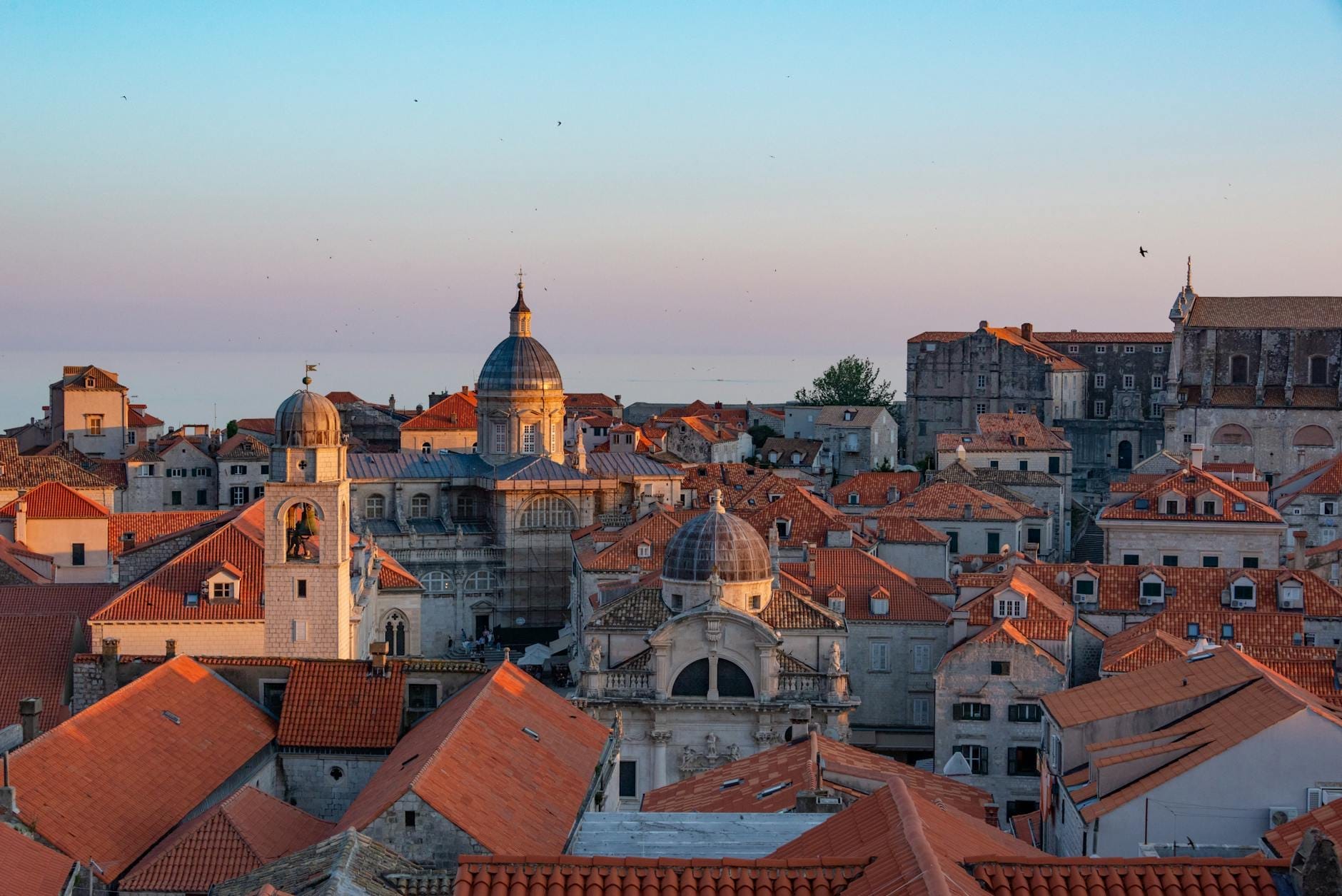
What Is St. Saviour Church?
St. Saviour Church, known in Croatian as Crkva sv. Spasa or Crkva Svetog Spasa, stands at the western mouth of the Stradun, pressed between the Franciscan Monastery complex and the city walls. It is the first church you encounter when you pass through Pile Gate into Dubrovnik's Old Town, and its compact Renaissance facade greets virtually every visitor who has ever walked this route — though most walk straight past it toward the gleaming limestone street ahead.
That is a mistake worth correcting. The church is a Renaissance building of genuine rarity: constructed between 1520 and 1528 as a votive offering to God after a significant earthquake struck on 17 May 1520, it was designed by Petar Andrijić, a master builder from the island of Korčula. When the far more devastating earthquake of 1667 levelled much of Dubrovnik, St. Saviour Church stood untouched. In a city where the 1667 disaster erased generations of architectural heritage, that survival carries real weight.
ℹ️ Good to know
The church sits on the left as you enter through Pile Gate, before you reach the Large Fountain of Onofrio. It takes about 30 seconds to walk past — so make a conscious decision to stop.
Architecture and Interior: What to Actually Look At
The facade is the first thing worth studying. It follows the conventions of Dalmatian Renaissance architecture: a rose window centered above the main portal, flanking pilasters, and a gabled roofline. The stonework is limestone, the same warm cream-grey that dominates the entire Old Town, so the church doesn't visually shout for attention. Look at the proportions instead: the facade is unusually harmonious for a building of its period and budget, achieving a kind of restrained elegance that more elaborate churches sometimes miss.
Step through the door and the interior resolves into a single nave. The structural character shifts here: the nave retains Gothic vaulting, a reminder that Andrijić was working in a transitional period when Gothic forms still governed interior construction even as Renaissance ideas were reshaping exteriors and apses. The apse at the east end is fully Renaissance in its detailing. This blend, Gothic bones with a Renaissance skin, was common in Dalmatian coastal towns during this period and makes Crkva sv. Spasa a small but instructive example of that stylistic overlap.
The interior is modest in scale. There are no overwhelming altarpieces or gilded decorations competing for attention. What the church offers instead is spatial quiet: cool stone underfoot, filtered light, and proportions that feel considered rather than accidental. During summer months the space is sometimes used for small exhibitions or evening concerts; when that happens, the interior takes on a different atmosphere entirely, the stone walls functioning as natural acoustics for chamber music or period performances.
Tickets & tours
Live prices and dates from our booking partner. If you book, we may earn a commission at no extra cost to you.
Mostar and Kravice Waterfalls excursion from Dubrovnik
From 120 €Instant confirmationFree cancellationDubrovnik Old Town Tour ith Cable Car Ride
From 56 €Instant confirmationFree cancellationMostar and Kravice Waterfalls full-day tour with pickup from Dubrovnik
From 66 €Instant confirmationFree cancellationSea kayaking experience in Dubrovnik
From 46 €Instant confirmationFree cancellation
Time of Day and Crowd Behavior
St. Saviour Church benefits enormously from an early morning visit. Between 8 and 9 in the morning, the Pile Gate area is already receiving the first wave of day-trippers and cruise passengers, but the church itself tends to remain quiet because the crowds are moving purposefully toward the city walls or down the Stradun. The low-angle morning light hits the rose window at a favorable angle and picks out the texture of the limestone facade in ways that midday flat light erases.
By 10 am the Stradun outside fills quickly, and the space just inside Pile Gate becomes one of the most congested pinch points in the entire Old Town. The church entrance is literally in that zone. If you are visiting as part of a self-guided Old Town walk, treating the church as your very first stop, before you set foot on the Stradun proper, is the most practical approach.
Late afternoon, especially in summer, produces a second wave of crowds returning from the city walls and heading back toward Pile Gate to leave. The light at 5 to 6 pm is photogenic on the facade but the surrounding space is at its most crowded. Winter visits are a different experience altogether: the Old Town empties significantly between November and March, and the church can be visited in near-complete solitude.
💡 Local tip
If you plan to walk the city walls, enter through Pile Gate, stop at St. Saviour Church first, then buy your wall ticket at the nearby entrance. You avoid retracing steps and the sequence makes historical sense: the church was built partly in gratitude for the city's survival, and the walls represent the physical structure that helped ensure it.
Historical Context: Why a Votive Church?
The Republic of Ragusa, as Dubrovnik was known until the Napoleonic period, operated with an acute awareness of its own vulnerability. A small trading city-state on the Adriatic, it survived for centuries through diplomacy, strategic neutrality, and genuine civic investment in public infrastructure, including its religious buildings. When the 1520 earthquake struck, the city's Senate authorised the construction of a votive church as both a spiritual act of gratitude and a public statement of civic resilience. The choice of Petar Andrijić as architect was deliberate: the Andrijić family were among the most accomplished stonemasons in the region.
The 1667 earthquake, far stronger than the 1520 event, killed thousands and destroyed a significant portion of the medieval city. The fact that St. Saviour Church survived became part of the building's identity in local memory. It was one of the few pre-1667 structures to emerge intact, which gave it a quality that newer reconstruction buildings, however fine, cannot replicate: it connects the modern visitor directly to pre-catastrophe Dubrovnik.
Understanding this history also puts the rest of the Old Town into perspective. Much of what looks medieval is in fact baroque reconstruction from the late 17th and 18th centuries. Buildings like the Franciscan Monastery immediately next door and the Sponza Palace further down the Stradun are genuine survivals from before 1667. St. Saviour Church belongs in that rare company.
Practical Visit Information
The church has no dedicated ticket office and entry is typically free when the interior is open. Opening hours are not formally posted and can vary by season, by whether a service is scheduled, and by whether an event is in use. The most reliable approach is to check at the door; if the main portal is open, you can enter. If it is closed, the exterior is fully viewable and photographable from the public square.
The entrance involves a small step up from street level. The interior is a single compact room, roughly navigable for most visitors, though those with significant mobility limitations should be aware that the Old Town's cobblestone surfaces leading to the door are uneven. There is no audio guide, no gift shop, and no on-site information panels in multiple languages as of the most recent available information. Bringing your own context, whether from this guide or a printed reference, is useful.
St. Saviour Church is included in the coverage area of the Dubrovnik City Pass, which covers various Old Town sites. However, since the church itself is typically free, the pass's value here is indirect; it matters more for the city walls and cable car.
⚠️ What to skip
Do not confuse St. Saviour Church with St. Blaise Church (Crkva sv. Vlaha), which is the large baroque church at the eastern end of the Stradun. They are entirely different buildings in different locations. St. Saviour is at the western Pile Gate end; St. Blaise is near Luža Square.
Photography Tips
The exterior facade is best photographed from directly in front, in the early morning before the crowds fill the square. The rose window benefits from overcast diffuse light, which softens harsh shadows. In full midday sun the facade becomes quite contrasty and the stone washes out. A wide-angle lens at ground level captures both the facade and a slice of the city wall to the right, giving spatial context.
The interior light is low. If the space is being used as a gallery and has temporary lighting installed, you will have better conditions. Without it, a camera with decent low-light performance is helpful; flash photography is typically discouraged in active religious and exhibition spaces. For a broader approach to photographing Dubrovnik's Old Town, the Dubrovnik photography guide covers timing, locations, and techniques across the city.
Who Might Not Find This Worth Their Time
Visitors on a very tight schedule who are prioritising the city walls, beaches, or boat trips may reasonably decide to walk past. The church does not offer the dramatic visual payoff of the walls or the kinetic energy of the Stradun at noon. It is a small, quiet, historically significant building, and if architectural nuance or pre-modern history are not among your interests, 10 minutes here is an opportunity cost measured against a lot of competing attractions.
Families with young children may find the church interior too low-stimulus for a dedicated stop, though it requires no entry fee and takes almost no time to glance through, so it need not be a deliberate detour. The honest summary: this is a reward for people who travel with curiosity about what they are actually looking at, rather than ticking off a highlights list.
Insider Tips
- The church square (Poljana Paska Miličevića) is one of the few open spaces near Pile Gate where you can stop and look at a map without being in the middle of pedestrian traffic. Use it as an orientation point before heading into the Old Town.
- Summer concert listings for St. Saviour Church are sometimes posted on the Dubrovnik Summer Festival programme boards around the Old Town. If you see a chamber music event scheduled here, it is worth attending: the acoustics of the single nave are genuinely good.
- The side view of the church from inside the city wall, looking back toward Pile Gate, gives a better sense of the building's relationship to the defensive structure than the frontal view most visitors take. Walk a few metres up the wall entrance ramp to get this angle.
- If the interior door is closed, the large south-facing window at the side of the building sometimes allows a partial view of the nave from the adjacent walkway. Worth a glance before moving on.
- The Latin inscription above the portal refers directly to the earthquake of 1520 and the act of dedication. A translation is not always available on-site; knowing in advance what it commemorates makes the visit feel less like looking at an old building and more like reading a document.
Who Is St. Saviour Church For?
- Architecture enthusiasts interested in Dalmatian Renaissance construction and the Gothic-to-Renaissance transitional period
- History-focused travellers who want to understand Dubrovnik's pre-1667 urban fabric
- Photographers looking for a quiet, early-morning subject before the Old Town fills
- Concert-goers if visiting during the Dubrovnik Summer Festival season
- Travellers who want a calm, free pause at the very start of an Old Town walk
Nearby Attractions
Other things to see while in Old Town (Stari Grad):
- Banje Beach
Banje Beach is Dubrovnik's closest and most photographed beach, sitting just east of the Old Town walls with direct views of the medieval fortifications and Lokrum Island. It's a pebbly, organized beach with free public access, paid lounger rentals, and a restaurant-bar that runs well into the night. Convenient, yes. Quiet, no.
- Buža Bar
Buža Bar is a no-frills open-air bar carved into a gap in Dubrovnik's ancient city walls, perched directly above the Adriatic Sea. Reached through a low iron-gated hole in the stonework, it offers cold drinks, cliff-jumping, and some of the most dramatic coastal views in the Mediterranean. There is no admission charge, no kitchen, and no pretense.
- Cathedral of the Assumption of the Virgin Mary
Rising from the rubble of a 1667 earthquake, the Cathedral of the Assumption of the Virgin Mary anchors the heart of Dubrovnik's Old Town with its commanding Baroque dome and a treasury that holds relics spanning a millennium. It's quieter than the city walls and more revealing than most visitors expect.
- Dominican Monastery & Museum
Built from 1225 and shaped through the 15th century, the Dominican Monastery in Dubrovnik's eastern Old Town holds one of Dalmatia's finest collections of medieval and Renaissance art. The Gothic-Renaissance cloister, a Titian altarpiece from 1554, and works by the Dubrovnik School of painters make this one of the most intellectually rewarding stops in the city.
Planning a trip? Discover personalized activities with the Nomado app.