Self-Guided Walking Tour of Dubrovnik Old Town: The Complete Route Guide
Walk Dubrovnik's UNESCO-listed Old Town on your own terms. This guide covers the full route from Pile Gate to the Clock Tower, every major stop along the way, the best apps to use, and honest advice on timing, crowds, and what to skip.
Tickets & tours
Live prices and dates from our booking partner. If you book, we may earn a commission at no extra cost to you.
TL;DR
- The core Old Town walk along Stradun runs about 300 metres from Pile Gate to the Clock Tower and takes 45 minutes at pace, or 2-3 hours if you stop properly.
- The self-guided walk is completely free — the City Walls are a separate paid attraction and should not be confused with the street-level tour.
- Start early (before 9am in summer) or after 5pm to avoid cruise ship crowds on the main drag.
- Key stops: Big Onofrio's Fountain, the Franciscan Monastery, Sponza Palace, Rector's Palace, and the Jesuit Staircase. See the full things to do in Dubrovnik guide for context.
- Navigation apps like Questo and GPSmyCity add audio commentary and structured routes if you want more than a map.
Understanding the Old Town Before You Walk It
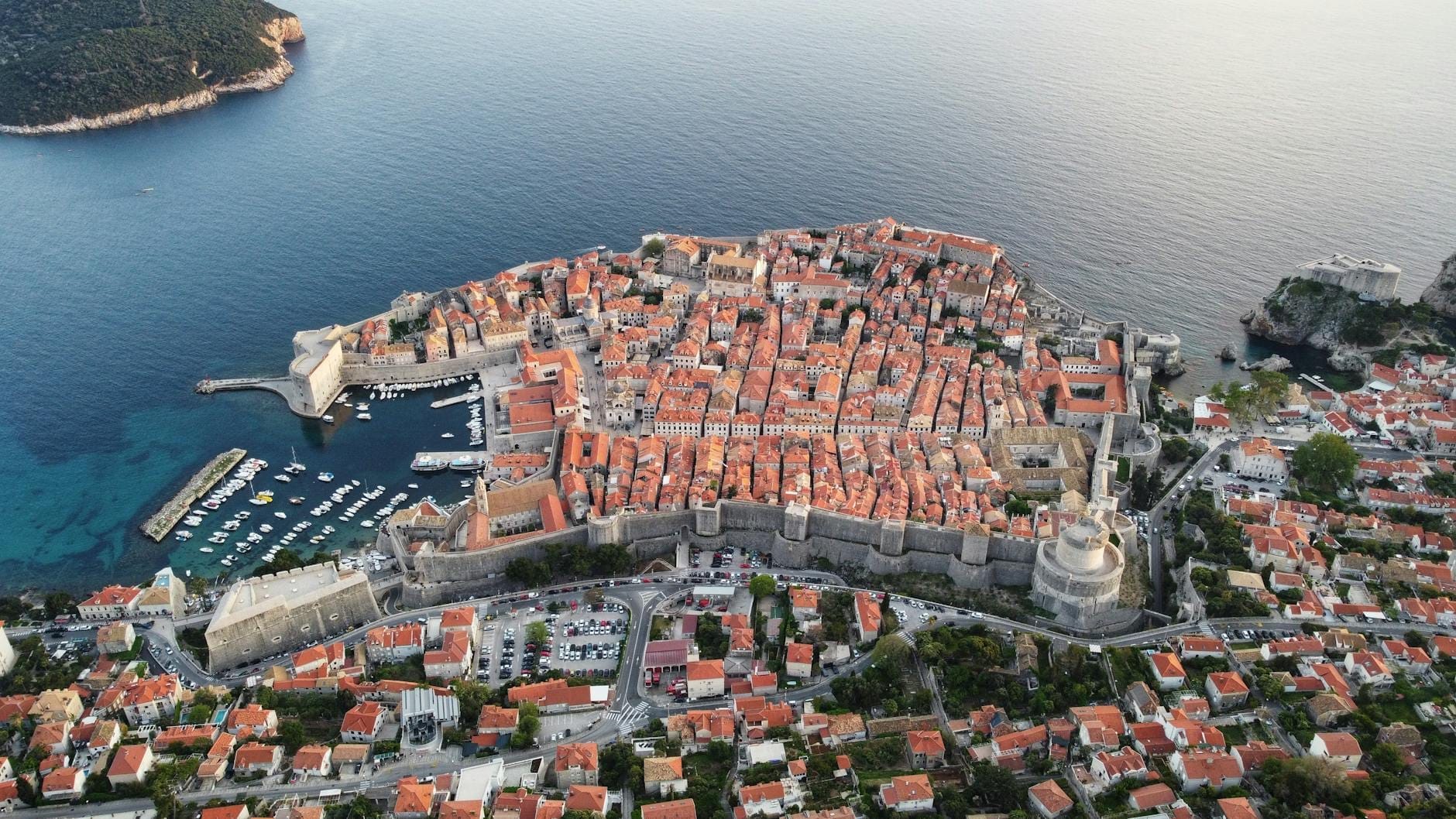
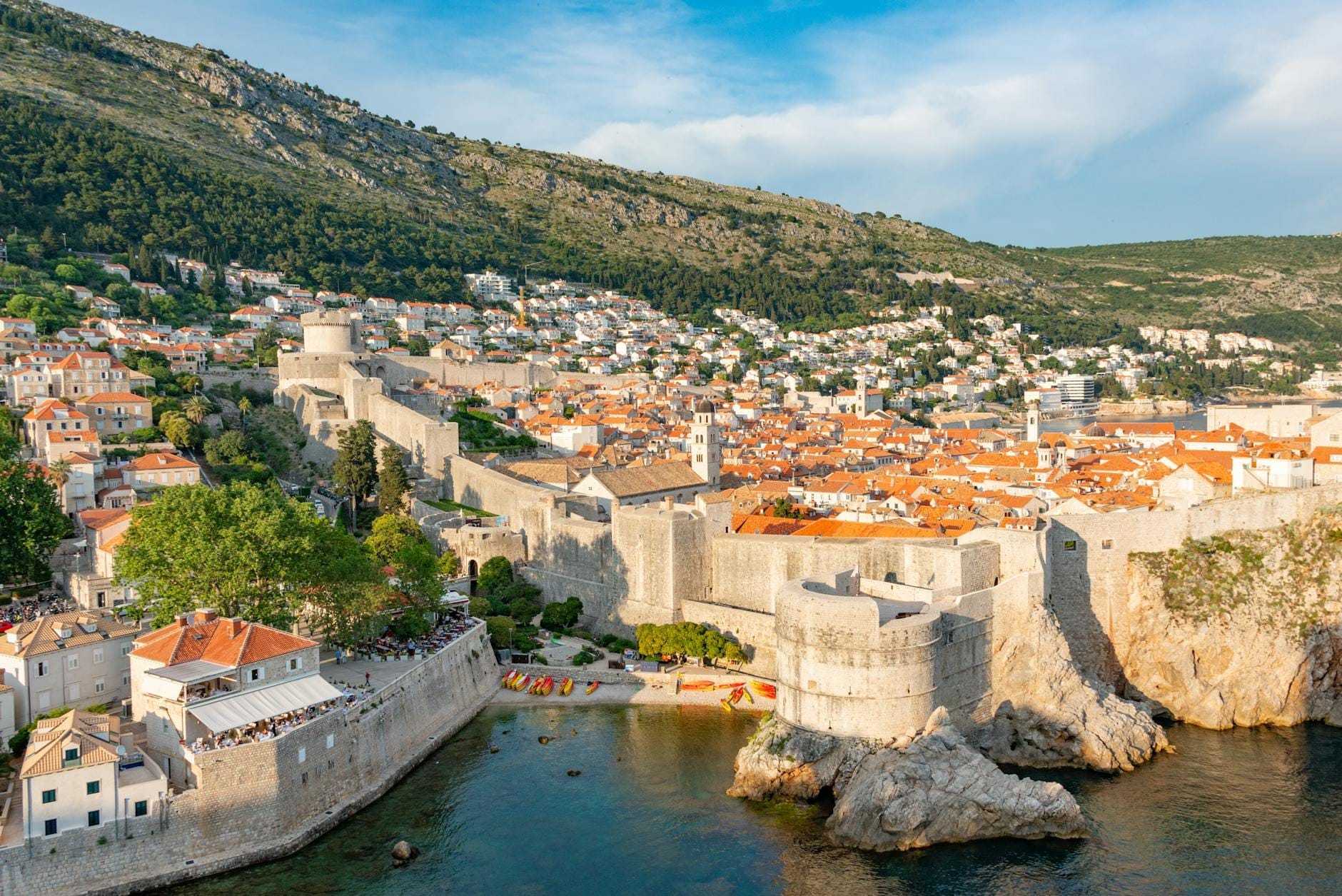
Dubrovnik's Old Town, known locally as Stari Grad, is one of the best-preserved medieval city cores in Europe. The entire settlement is enclosed by 14th and 15th-century limestone walls and sits on a promontory jutting into the Adriatic Sea, with Mount Srđ rising sharply behind it. The UNESCO World Heritage designation (granted in 1979) covers not just the walls but the dense network of streets, churches, palaces, and squares inside them.
What surprises most visitors is how compact it is. The walled area is roughly 1.2 square kilometres, and the main street, Stradun (also called Placa), is only about 300 metres long. You can walk end to end in under five minutes. But the real experience is in the side alleys, the courtyards, the steep stone staircases cutting up to residential terraces, and the quiet squares that open up when you turn off the main drag. This guide takes you through all of it.
ℹ️ Good to know
The Old Town streets are almost entirely pedestrianised. The marble surfaces (Stradun especially) get extremely slippery when wet. Wear shoes with grip — not sandals or smooth-soled footwear, particularly if you plan to explore the upper alleys or climb to any viewpoints.
The Route: Pile Gate to the Clock Tower
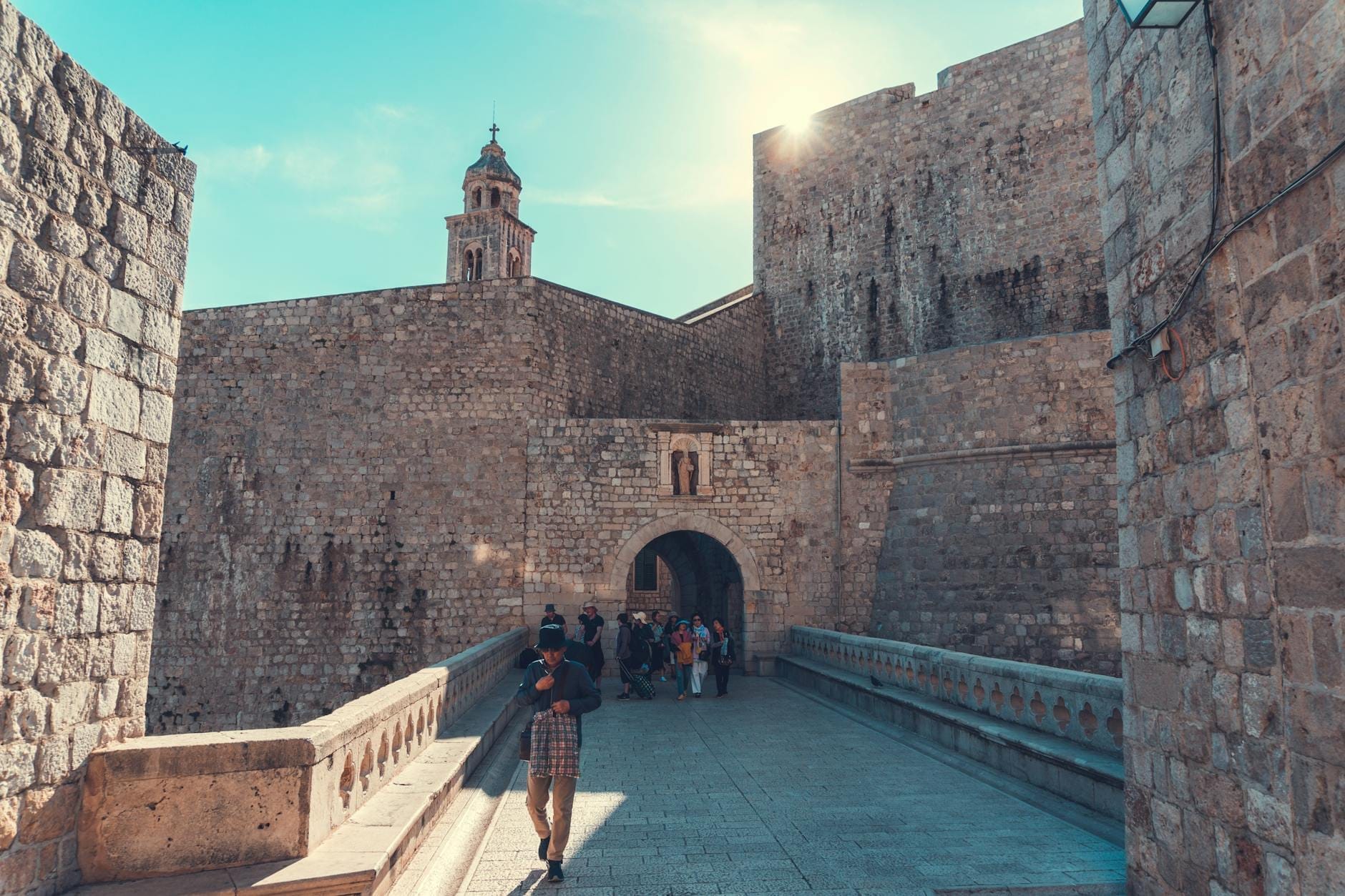
The standard self-guided walking tour of Dubrovnik Old Town begins at Pile Gate, the main western entrance to the walled city. This is where nearly all visitors enter, and it sets the tone immediately. The gate itself is a double-arched structure dating to 1537, decorated with a statue of St. Blaise, the city's patron saint, above the inner arch. There was once a drawbridge here over a moat; today a fixed stone bridge replaces it.
Just inside the gate, you'll encounter the Large Fountain of Onofrio, built in 1438 as the endpoint of a 12-kilometre aqueduct that brought fresh water into the city. It originally had 16 sculpted masks, most still intact, and the water is potable. Locals and informed visitors fill up here rather than buying bottled water. The smaller Onofrio Fountain at the eastern end of Stradun (built 1446) is easy to miss but worth a look.
Walk the length of Stradun toward the Clock Tower at the eastern end. On your left (north side), the Franciscan Monastery contains what is often cited as the third-oldest working pharmacy in Europe, operating since 1317. The cloisters are beautiful and worth the modest entrance fee. On Stradun itself, the uniform baroque facades date largely from the rebuilding effort after the catastrophic 1667 earthquake, which destroyed much of the medieval city.
At the eastern end, the main square, Luža, holds several of the city's most important monuments in close proximity. Sponza Palace (16th century, Gothic-Renaissance) is the one building on Stradun that survived the 1667 earthquake largely intact, which is why it looks architecturally distinct from everything else. Across the square, St. Blaise's Church faces the street with its baroque facade and holds a small silver statue of the saint that provides one of the best medieval representations of what Dubrovnik looked like before the earthquake.
💡 Local tip
Rector's Palace is easy to rush through, but the audio guide (usually included with the ticket) adds significant context. Budget at least 45 minutes if you want to understand what you're looking at. The inner courtyard alone is worth a few minutes of quiet attention.
From Luža Square, head south toward Rector's Palace, the Gothic-Renaissance seat of Dubrovnik's republican government from the 14th century until the Napoleonic abolition of the Republic of Ragusa in 1808. The rector (essentially the head of state) was elected monthly, lived here during his term, and was not permitted to leave the building except for official duties. The palace now houses the Cultural History Museum.
Off Stradun: The Alleys, Staircases, and Squares Worth Exploring
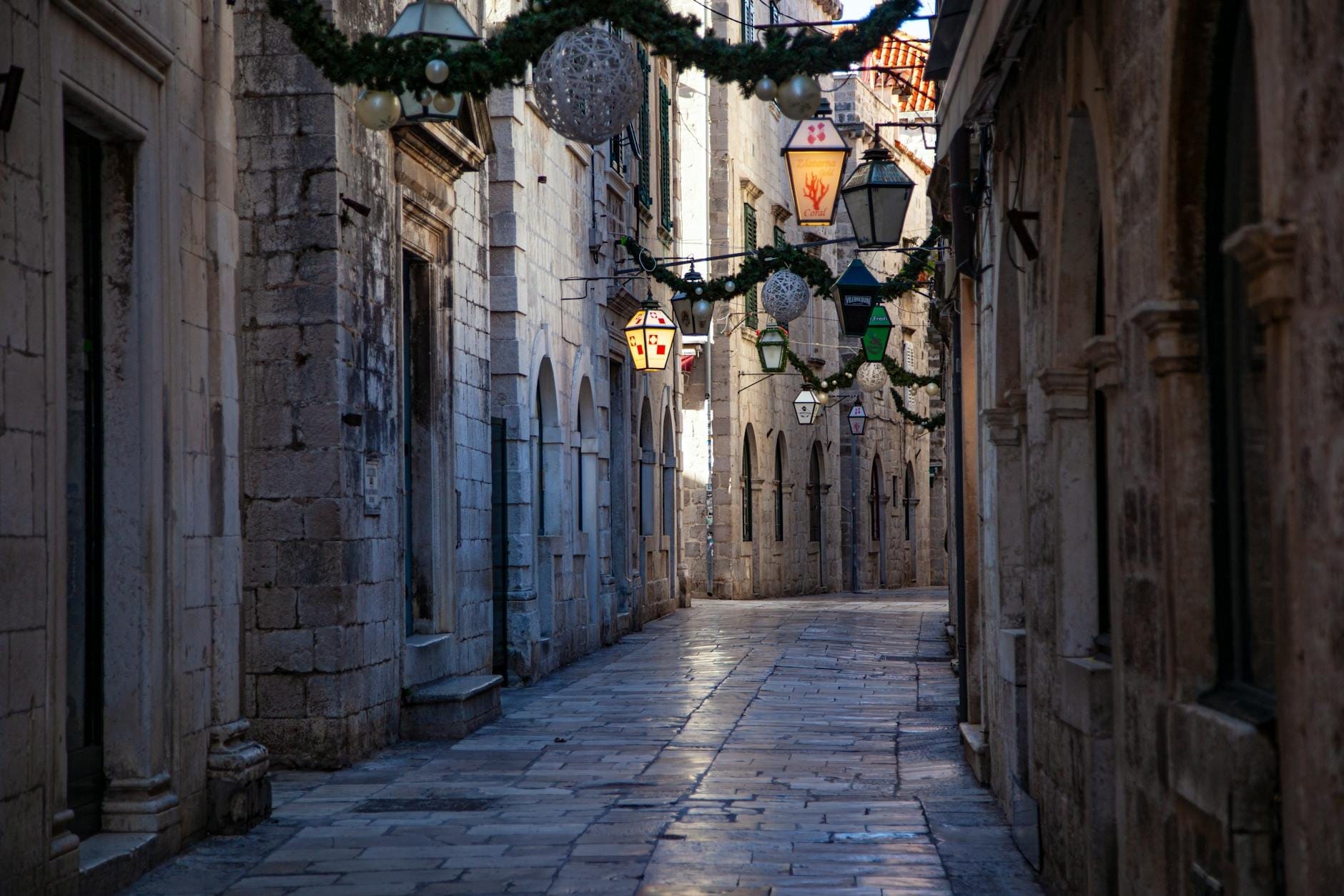
Most visitors stay on Stradun and wonder why the city feels overcrowded. The solution is simple: turn off it. The perpendicular alleys, known as ulice on the north side and the steeper gunduličeva and prijeko streets on the south side, lead into a completely different Dubrovnik. Quieter, more residential, and in many cases architecturally more interesting.
The **Jesuit Staircase**, a wide baroque stairway modelled loosely on the Spanish Steps in Rome, climbs from Gundulićeva Poljana (the morning produce market square) up to the Church of St. Ignatius. It has become well known from its appearance in Game of Thrones, but it predates the show by three centuries and is worth visiting on its own terms. The view back down over the square and toward the sea is one of the better free vantage points in the Old Town.
- Gundulićeva Poljana The main market square, liveliest in the morning. Fresh produce, lavender sachets, local honey. Located just south of Stradun, accessible via Od Puča street.
- Prijeko Street A restaurant-lined parallel street one block north of Stradun. Honest warning: it is one of the most tourist-trap-dense streets in the city. Eat here only if you have no other plan.
- Cathedral of the Assumption A baroque cathedral built after the 1667 earthquake on the site of an earlier Romanesque structure. The treasury holds a remarkable collection of relics and ecclesiastical art.
- Dominican Monastery Located near the eastern Ploče Gate, often overlooked in favour of the Franciscan. The Gothic cloister and the art museum inside are among the quieter highlights of the Old Town.
- Buža Bar Reached through a literal hole in the southern city wall, this cliff-side bar looks directly out to sea. The approach (look for the 'Cold Drinks' signs on the wall) is part of the experience.
⚠️ What to skip
Prijeko Street, running parallel to Stradun on the north side, is lined with restaurants that aggressively tout for business and serve mediocre food at high prices. Skip it for dining. The same food costs less and tastes better one or two streets further in, particularly around Gundulićeva Poljana or toward the Dominican Monastery.
Timing, Crowds, and the Best Hours to Walk
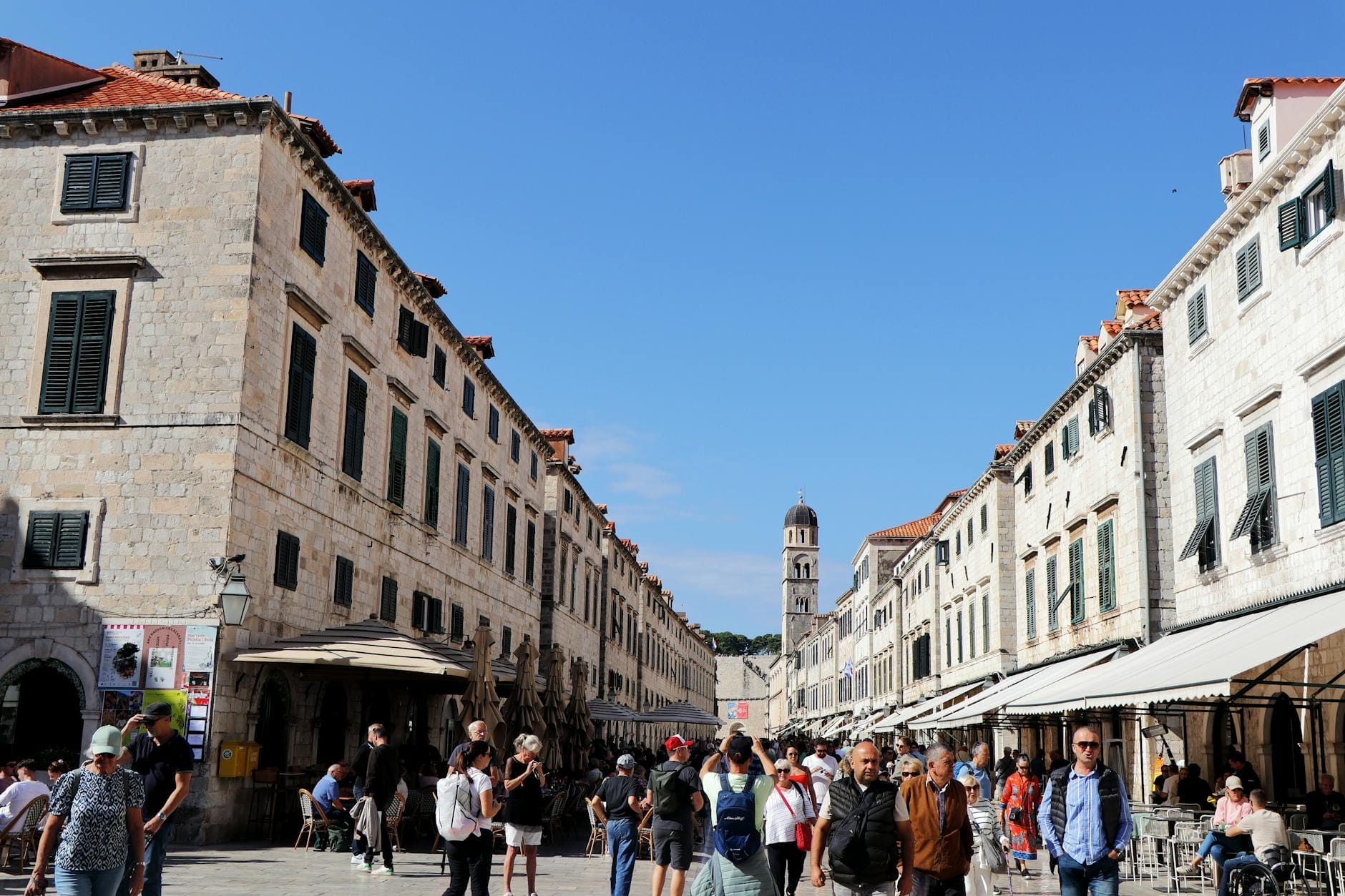
Crowd management is the single most important practical consideration for this walk. In peak summer (July and August), Stradun can feel overwhelmed by 10am. Cruise ships dock at Port Gruž, 3 kilometres west of the Old Town, and their passengers arrive in the Old Town by bus or on foot from roughly 9am to 5pm. On heavy ship days, more than 10,000 day visitors can pass through the gates.
The practical solution: be at Pile Gate by 8am or return after 5pm. Before the cruise crowds arrive, Stradun is largely empty, the light is better for photos, and cafe staff are actually pleased to see you. September and October are substantially calmer than July-August, with temperatures still warm enough for comfortable walking. For a full seasonal breakdown, see the best time to visit Dubrovnik guide.
- July-August: arrive before 9am or after 5pm. Expect heat (28-33°C) and full crowds mid-day.
- May-June: ideal conditions. Crowds present but manageable. Light excellent for photography.
- September-October: the locals' preference. Warm sea, thinner crowds, lower prices.
- November-April: very quiet, some closures, but the Old Town in winter has a completely different character — worth considering if crowds are your main concern.
Navigation Apps and Self-Guided Tour Tools
A printed map from the Tourist Board (available at Pile Gate) is sufficient for the main route, but if you want structured commentary and checkpoint-based navigation, three apps stand out.
Questo offers gamified walking routes in Dubrovnik Old Town covering around 1.2 kilometres and taking 1-3 hours depending on pace. Routes pass the major landmarks with contextual clues and information. Pricing is modest (around 5-10 EUR per route) and the app works offline once downloaded. GPSmyCity provides audio guide-style tours with detailed historical notes; useful if you want the commentary of a guided tour without the group. SelfTour maps a specific route from Pile Gate to the harbour with GPS waypoints. All three are available through standard app stores.
Worth noting: none of these apps include the City Walls circuit, which is a completely separate experience. The walls require a paid ticket (prices vary by season; check the official tourist board site) and take 60-90 minutes to walk the full 2-kilometre perimeter loop. It is elevated, offers sea views in every direction, and is physically demanding in summer heat. For a proper breakdown, see the dedicated Dubrovnik City Walls guide.
Practical Logistics: What to Bring and Know Before You Go
Water is available free from the fountains on Stradun (both Onofrio's Fountain at Pile Gate and the smaller fountain at the eastern end). Tap water throughout the Old Town is safe to drink. Bring a refillable bottle and skip the overpriced bottled water sold along the tourist trail.
The Old Town is largely cashless-friendly, but some smaller churches and market stalls prefer coins. Croatia adopted the Euro (EUR) in January 2023, replacing the Kuna, so Euros are now the standard currency. ATMs are available near Pile Gate and along Stradun. If you're combining this walk with other attractions, the Dubrovnik City Pass bundles wall entry, museum access, and transport and can represent good value depending on your itinerary.
The Old Town has limited accessibility for mobility-impaired visitors. Stradun itself is flat and manageable, but the side streets involve frequent steps and steep inclines. The majority of churches and palaces have steps at entrances. For context on getting around the broader city, including bus routes from the Old Town to Lapad and the harbour, see the guide to getting around Dubrovnik.
✨ Pro tip
The Old Town is deceptively vertical. What looks like a flat medieval city from above is actually built on a series of terraces cut into the limestone. Budget extra time if you plan to explore the upper northern alleys or climb to the residential streets near the walls. Good shoes and sun protection are not optional in July and August.
FAQ
How long does a self-guided walking tour of Dubrovnik Old Town take?
At a brisk pace, walking Stradun end to end takes under 10 minutes. A thorough self-guided tour that includes the main landmarks (Pile Gate, Onofrio's Fountain, Franciscan Monastery, Sponza Palace, Rector's Palace, the Cathedral, and the Jesuit Staircase) typically takes 2-3 hours. Add another 60-90 minutes if you include the City Walls circuit, which is a separate paid experience.
Is the Dubrovnik Old Town walking tour free?
Walking the streets of the Old Town is completely free. Individual attractions inside have their own entry fees: the City Walls, Rector's Palace, the Franciscan Monastery, and the Dominican Monastery all charge for entry. The streets, squares, churches (in some cases), and public spaces are free to explore.
What is the best time of day to walk Dubrovnik Old Town?
Early morning (before 9am) is by far the best time in summer. Stradun is almost empty, the light is excellent, and the temperature is manageable. Cruise ship passengers arrive from around 9-10am and peak between 11am and 3pm. Late afternoon (after 5pm) is the second-best window. In May, June, September, and October, crowds are lighter throughout the day.
Are the City Walls included in a walking tour of the Old Town?
No. The City Walls are a separate, elevated circuit requiring a paid ticket and accessed from specific entry points (near Pile Gate and near the Dominican Monastery). The Old Town self-guided walk covers the street-level attractions inside the walls. Both are worth doing, but they are distinct experiences and should be planned separately.
What walking tour apps work well for Dubrovnik Old Town?
Questo is the most polished option, with structured routes and audio commentary covering around 1.2 km of the Old Town. GPSmyCity offers more detailed historical notes in a traditional audio guide format. SelfTour maps a Pile Gate-to-harbour route with GPS waypoints. All work offline once downloaded. A free printed map from the Dubrovnik Tourist Board at Pile Gate is adequate if you prefer no screen time.
Tickets & tours
Live prices and dates from our booking partner. If you book, we may earn a commission at no extra cost to you.
Planning a trip? Discover personalized activities with the Nomado app.