Dubrovnik City Walls: Tickets, Tips & What to Expect
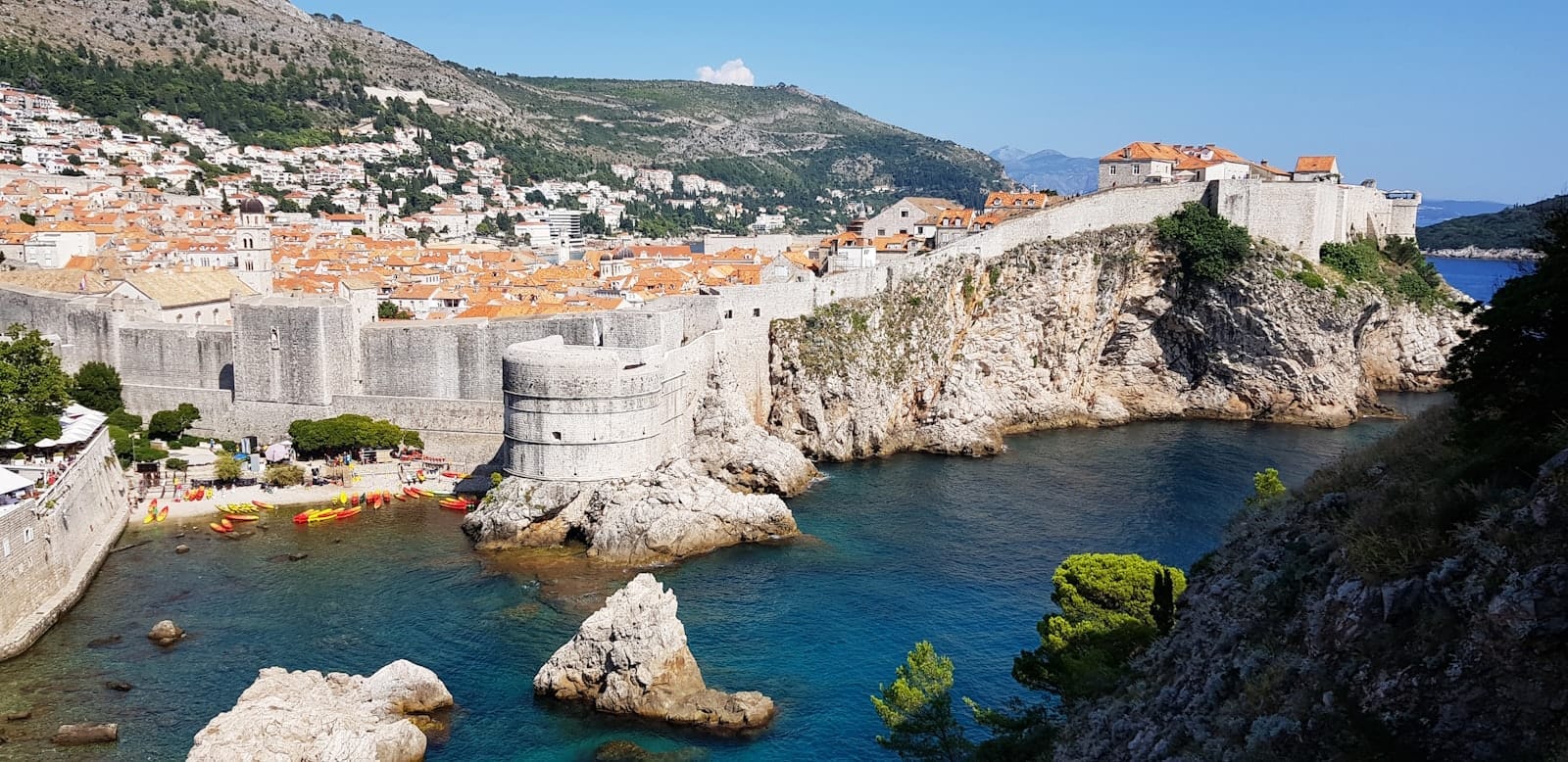
The Dubrovnik City Walls are the single most impressive feature of this UNESCO-listed old city: a nearly 2 km loop of medieval fortifications with uninterrupted views over the Adriatic. This guide covers ticket prices, entry points, the best time to go, and everything the official site doesn't tell you.
Tickets & tours
Live prices and dates from our booking partner. If you book, we may earn a commission at no extra cost to you.
TL;DR
- Adult tickets cost around €35 in peak season; children aged 7–17 pay €15; under 7 free. Winter rates drop significantly (around €15 adult).
- The walls have three entry points: Pile Gate, Ploče Gate, and near Fort St. John. Buy tickets online at the official shop to avoid queuing in summer heat.
- The circuit is roughly 2 km and takes 45 minutes at a fast pace to 3 hours with stops. The Dubrovnik City Pass (from €40/day) includes the walls and several museums — worth it if you plan to visit multiple sites.
- Re-entry is not permitted; walk the full circuit in one go. Ticket also covers same-day entry to Fort Lovrijenac.
- Go at opening time (usually 8am in summer) or within the last 90 minutes before closing. Midday in July and August is genuinely brutal — both the crowds and the heat.
Why the City Walls Are Worth It (and When They're Not)
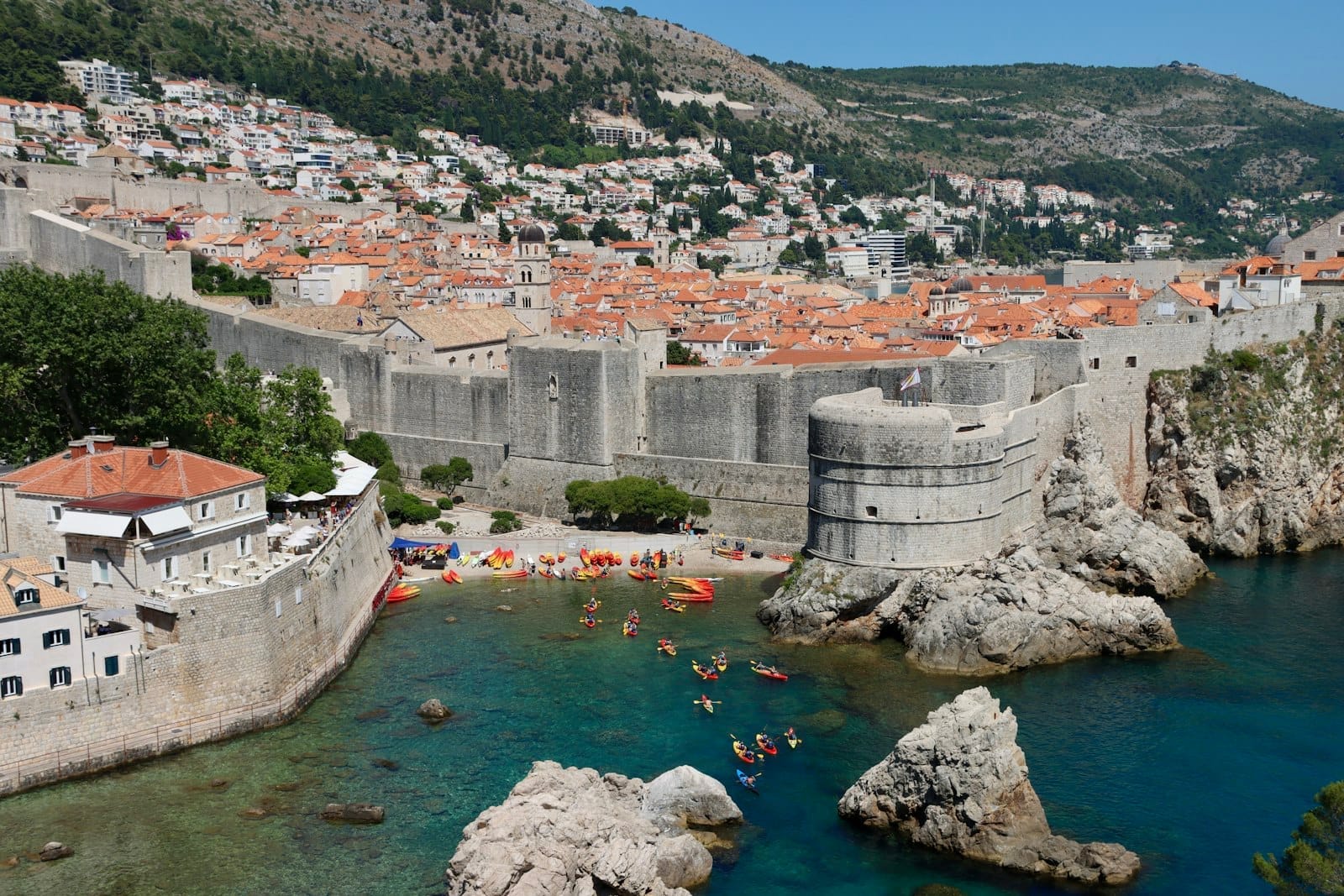
The Dubrovnik City Walls are the most complete and best-preserved medieval fortification system in Europe. That is not marketing copy — it is the consensus of UNESCO, which listed the old city of Dubrovnik as a World Heritage Site in 1979. The walls date largely from the 12th to 17th centuries, with Venetian and local Ragusan architects reinforcing them repeatedly as naval warfare technology evolved. What you walk today is a system designed to withstand Ottoman sieges, and it essentially worked.
The view from the walls is the real product. You see the terracotta rooftops of the Old Town from above, the Adriatic stretching south toward the Elaphiti Islands, and the bare limestone of Mount Srđ rising directly behind the city. There is no other angle in Dubrovnik that gives you this perspective, which is why — despite the price and the crowds — the walls remain worth doing for most visitors.
That said, if you are visiting in peak summer (mid-July to late August), have mobility limitations, or are traveling with young children, the experience can be genuinely uncomfortable. The walkway is almost entirely exposed limestone with minimal shade, temperatures on the walls regularly exceed 35°C by midday, and the path narrows at several points where bottlenecks form. For those groups, going very early, visiting in shoulder season, or skipping the walls entirely is a legitimate choice.
⚠️ What to skip
The walls have no shade along most of the circuit and no exit points mid-way. If you start at 11am in July and run out of water or energy, you have to complete the circuit to exit. Bring at least 1 litre of water per person and wear sun protection.
Ticket Prices and What's Included
Prices have risen steadily over recent years as Dubrovnik's management authority has tried to reduce overcrowding through pricing. Adult tickets are typically around €35 depending on season. Children aged 7–17 pay around €15. Children under 7 enter free. From November through February, rates often drop considerably — around €15 for adults and €5 for children — making winter a financially attractive option for those flexible on timing.
- Adult (peak season) €35–€40 per person for a single, uninterrupted circuit.
- Children aged 7–17 Around €15. Children under 7 enter free. Confirm age brackets at the official ticket shop before purchasing.
- Winter rates (Nov–Feb) Approximately €15 adult / €5 child. Hours are shorter and some sections may be restricted — verify before visiting.
- Fort Lovrijenac inclusion Your walls ticket covers same-day entry to Fort Lovrijenac, the detached fortress west of Pile Gate. Use it — it's a separate structure with excellent harbor views.
- Dubrovnik City Pass A 1-day pass starts around €40 and includes the walls, several museums, and city bus rides. If you plan to visit more than two attractions, the pass typically offers better value.
ℹ️ Good to know
Buying online does not always mean paying less — the headline price is the same whether you book at the booth or through the official shop. The real advantage of online booking is skipping the ticket queue, which in July and August can add 30–45 minutes before you even start walking. Book at shop.citywallsdubrovnik.hr.
One thing that catches visitors off guard: the walls ticket does not include the Dubrovnik cable car up to Mount Srđ, nor any guided tour. Those are entirely separate purchases. If you want historical context as you walk, either bring a guidebook, download an audio guide app, or book a combined guided walk through a local operator.
Entry Points, Route Direction, and Logistics
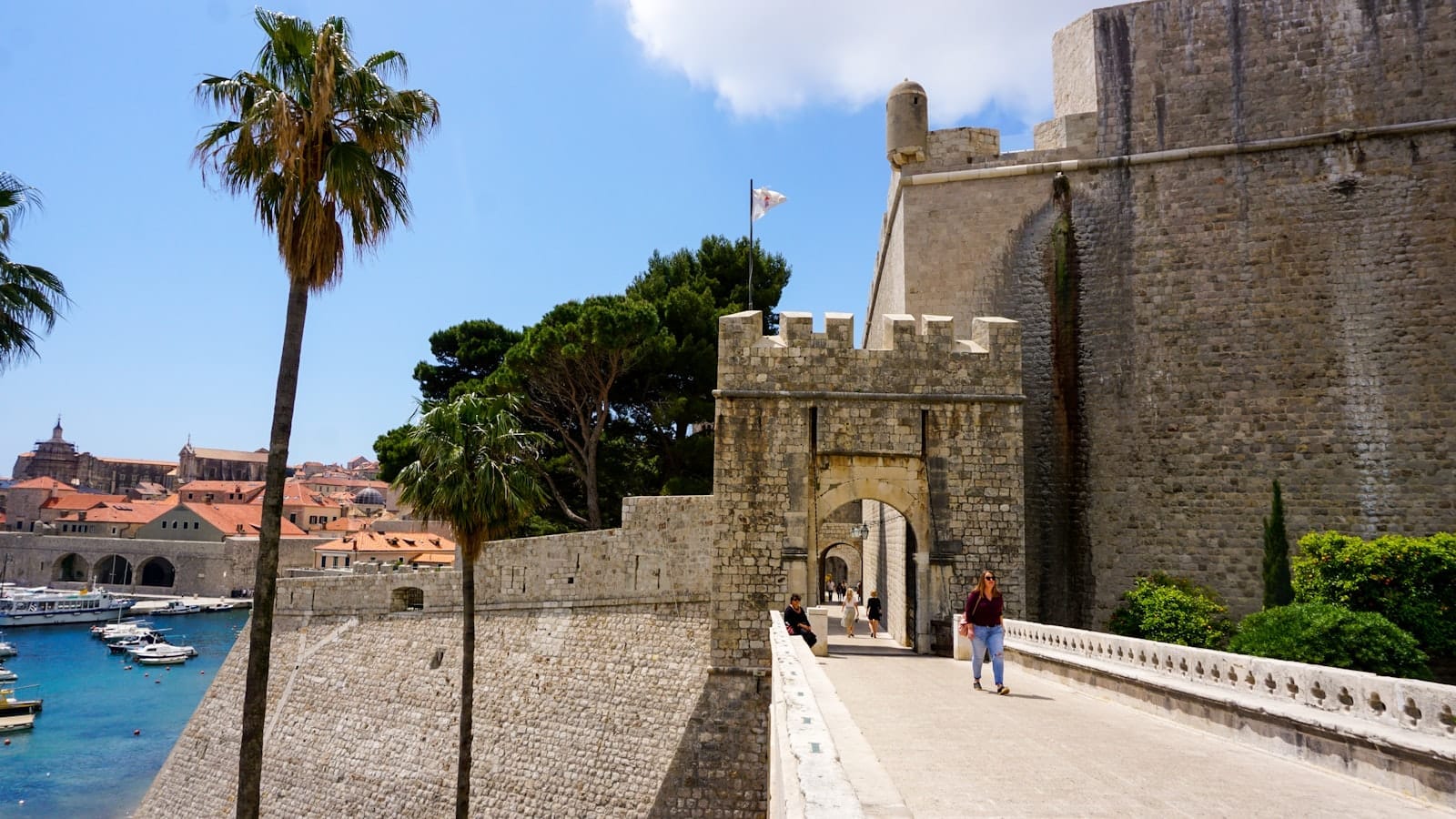
There are three entry points to the walls: Pile Gate (the most popular, on the western end), Ploče Gate (eastern side, near the Dominican Monastery), and a third access point near Fort St. John by the Maritime Museum. Most visitors enter at Pile Gate because it is the main tourist arrival point — which means it is also the most congested.
If you want to start with thinner crowds, enter at Ploče Gate or the Maritime Museum access point. The circuit is one-directional, so regardless of where you start, you will complete the same loop. The standard direction runs counter-clockwise when viewed from above, though the signage at the entry points makes the route clear.
The walk is approximately 1.9–2 km in total. Fit walkers who pause only briefly at viewpoints can complete it in 45 minutes. Most visitors take 1.5 to 2 hours. Photography enthusiasts or those who stop at the cafe on the walls (yes, there is a small cafe with Adriatic views — expect tourist pricing) can easily stretch it to 3 hours. The surface is mostly stone steps and uneven paving, so comfortable closed shoes are strongly recommended. Flip-flops are a bad idea.
✨ Pro tip
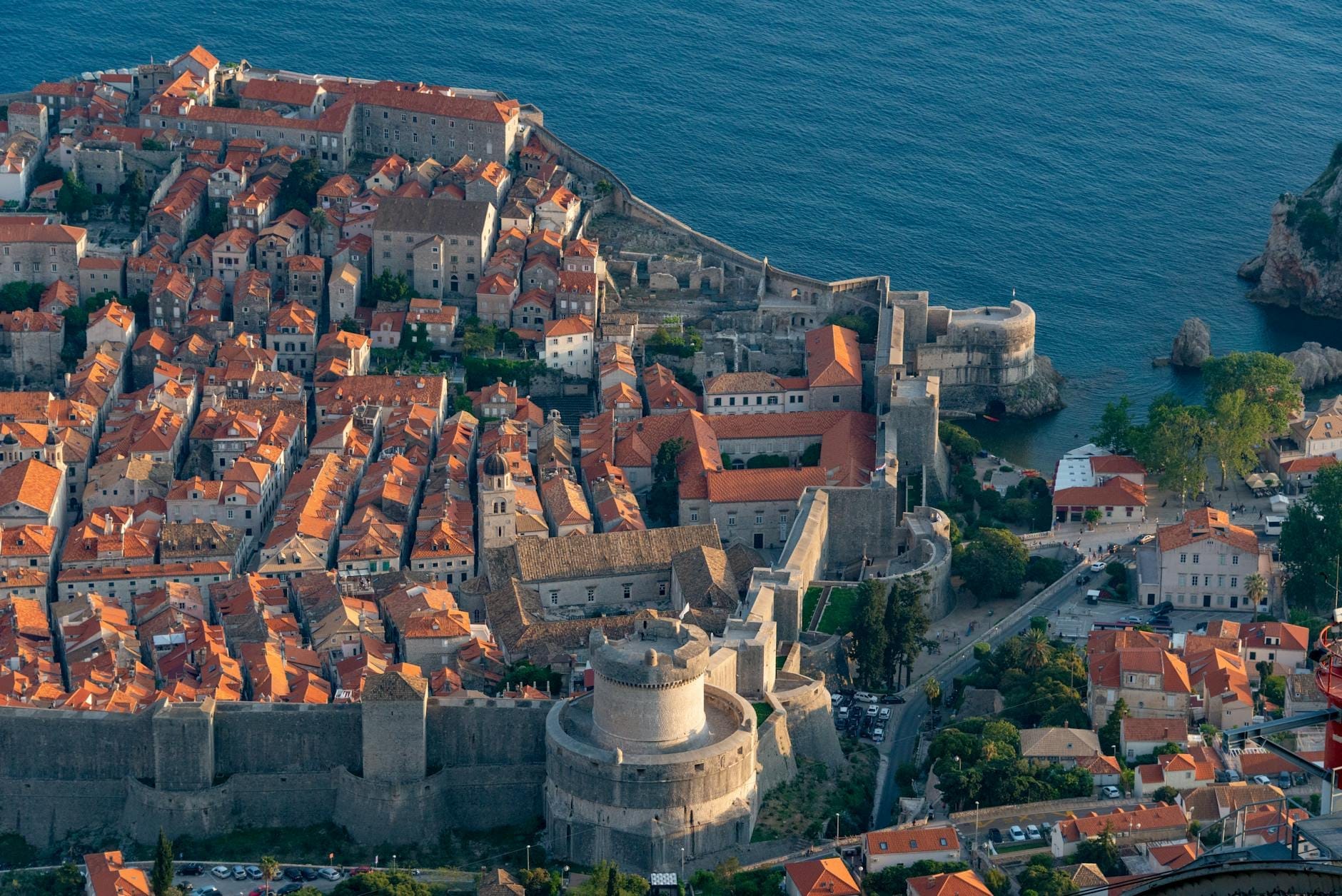
The best single viewpoint on the entire circuit is from the top of Minčeta Tower on the northern wall. It's the highest point of the fortifications and gives a 360-degree view over the old city rooftops and out to sea. Budget extra time here — the tower itself is worth the climb.
Best Time to Visit: Season, Time of Day, and Crowd Patterns
Timing matters more at the Dubrovnik City Walls than at almost any other attraction in Croatia. The combination of a narrow walkway, no shade, and enormous visitor numbers in summer creates conditions that are genuinely unpleasant at peak hours. For detailed seasonal analysis, see the best time to visit Dubrovnik guide, but here is the practical summary for the walls specifically.
- Early morning (8–9:30am) The single best time to walk the walls in any season. Cooler temperatures, dramatically better light for photography, and crowds that are a fraction of what they'll be by 11am.
- Late afternoon (last 90 minutes before closing) A secondary sweet spot. Light turns golden, temperatures ease slightly, and many day-trippers have already left. Check closing times before planning this — they vary by season.
- May, June, September, October Shoulder season is the overall best compromise: full wall access, reasonable temperatures, and crowds that are manageable rather than overwhelming.
- November to February Lowest prices, quietest conditions, and genuine atmosphere without the tourist volume. Shorter daylight hours and occasional closures due to weather are the trade-offs.
- July to August, 10am–4pm The worst window by every metric. Cruise ship passengers flood the old city between 10am and 5pm; the walls are at maximum capacity and temperature. Avoid if possible.
One crowd factor that many visitors overlook: Dubrovnik is a major cruise ship port. On days when two or three large ships dock at the same time, the old city can receive 10,000+ additional visitors within a few hours. Check ship schedules through the Port of Gruž before you commit to a specific day — websites like CruiseMapper show upcoming arrivals. A day with no ships docking is noticeably more enjoyable.
What You'll Actually See: Highlights Along the Route
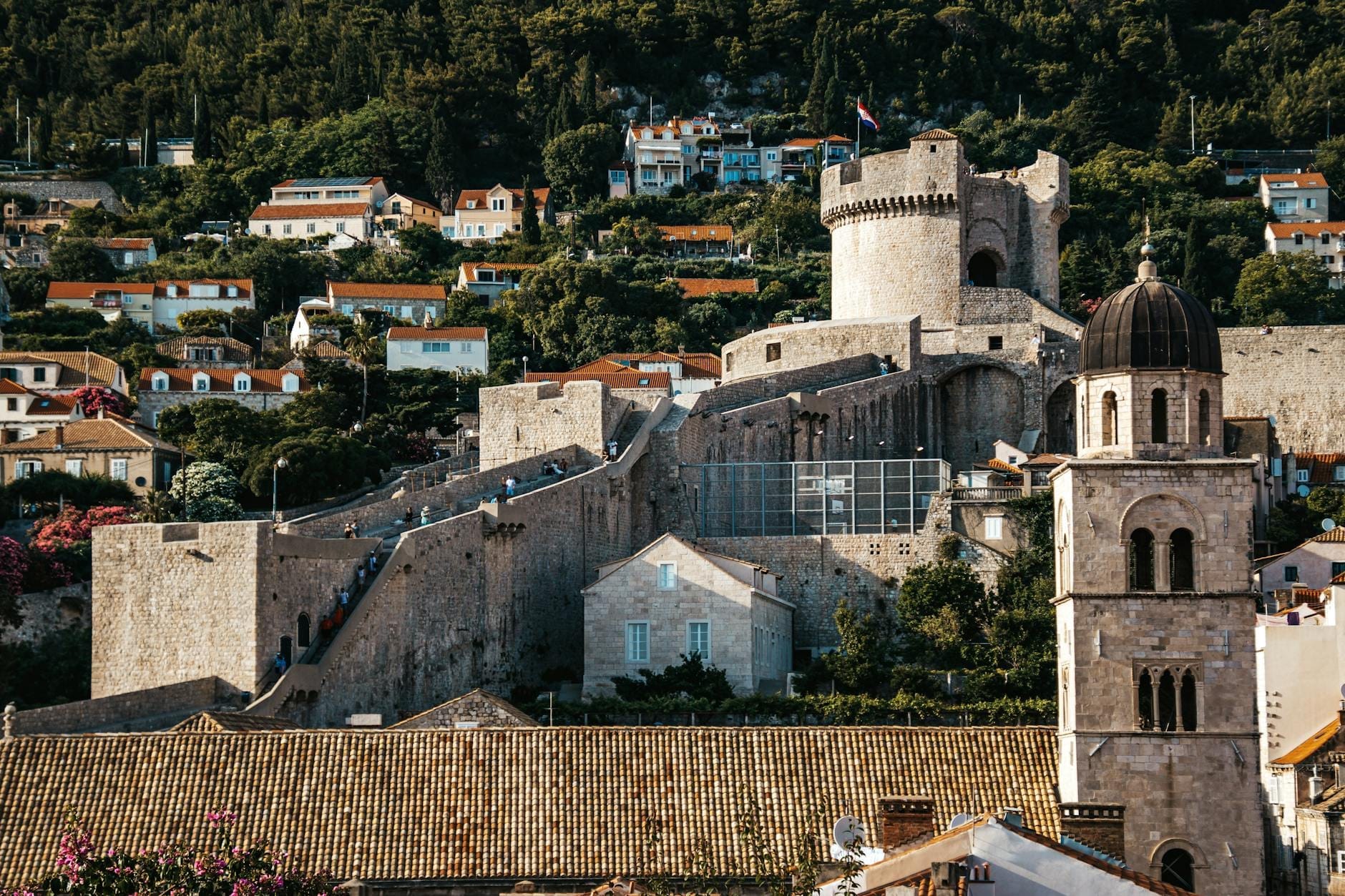
The walls are not just a perimeter walk — they connect several distinct fortifications, each with its own character. Minčeta Tower dominates the northern corner and is the tallest point on the circuit. Fort Lovrijenac, while not technically on the wall circuit, is reached via a short walk after you exit at Pile Gate and is included in your ticket.
The eastern section of the walls runs along the harbor side, giving you close-up views of the fishing boats and water taxis below, and a clear sightline to Lokrum Island about 600 metres offshore. The western section looks down into the residential lanes of the old city — you'll see laundry hanging, cats sleeping on warm stone, and the occasional local who clearly regards the wall-walkers overhead as a background nuisance. It is one of the more honest reminders that people actually live inside these walls.
For photography, the walls are one of the best positions to capture the Stradun (the main limestone boulevard) from above, as well as the dome of the Cathedral of the Assumption and the bell tower of the Franciscan Monastery. See the Dubrovnik photography guide for specific angles and the best light windows by season.
Practical Details: Booking, Access, and Common Mistakes
Tickets can be purchased on-site at any of the three entry points, or online through the official ticket shop at shop.citywallsdubrovnik.hr. The official website is citywallsdubrovnik.hr — do not buy from third-party resellers charging markups. The walls are open daily throughout the year, with hours 10am–5pm April–June, 8am–7:30pm July, 8am–7pm August per current schedule and shorter windows in winter (sometimes closing as early as 3pm in January). Always check the current schedule on the official site before visiting, especially outside peak season.
- Re-entry is not permitted once you exit. Walk the full circuit before leaving.
- There is no luggage storage on the walls. Leave large bags at your accommodation or at the storage facilities near Pile Gate.
- The route is not accessible for wheelchairs or pushchairs. The terrain involves numerous steps and narrow passages.
- There is a small cafe on the walls with seating and Adriatic views. Prices are high, but the location earns it. Bring your own water regardless.
- Your walls ticket is valid for Fort Lovrijenac on the same day. Don't leave Dubrovnik without using this — it's a separate fortress with its own history and view.
- Children under 7 enter free, but verify the age threshold for the child rate (7–17) at the time of purchase, as policies have adjusted in recent years.
💡 Local tip
If you are planning to visit multiple attractions including the walls, compare the Dubrovnik City Pass against individual ticket prices before buying. On a full day with the walls, a museum or two, and bus rides, the pass frequently works out cheaper than paying separately.
FAQ
How much do Dubrovnik City Walls tickets cost?
Adult tickets are approximately €35 in peak season (April to October). Children aged 7–17 pay around €15, and under-7s enter free. From November through February, prices drop to around €15 for adults and €5 for children. Prices can change; confirm the current rate at shop.citywallsdubrovnik.hr before visiting.
Where can I buy official Dubrovnik City Walls tickets?
Buy directly at any of the three entry points (Pile Gate, Ploče Gate, or near Fort St. John by the Maritime Museum), or online at the official ticket shop: shop.citywallsdubrovnik.hr. Avoid third-party resellers. Online booking does not reduce the price but does save you the queue, which in summer can be 30–45 minutes long.
How long does it take to walk the Dubrovnik City Walls?
The circuit is roughly 2 km. Fast walkers with minimal stops can complete it in 45 minutes. Most visitors take 1.5 to 2 hours. Allow up to 3 hours if you plan to linger at viewpoints, visit Minčeta Tower, or stop at the cafe on the walls.
What is the best time of day to visit the Dubrovnik City Walls?
First thing in the morning, ideally at opening (around 8am in summer). The light is better, temperatures are cooler, and the crowds are a fraction of what they become by 10–11am. The last 90 minutes before closing is a reasonable alternative. Avoid 10am–4pm in July and August, especially on days when cruise ships are docked.
Is the Dubrovnik City Pass worth it compared to buying a walls ticket separately?
If you are only doing the walls, the City Pass (from around €40 for one day) offers little extra value over a standalone ticket. But if you plan to visit a museum or two and use city buses, the pass usually works out cheaper. Use the Dubrovnik City Pass guide to compare exactly what is included against your planned itinerary.
Tickets & tours
Live prices and dates from our booking partner. If you book, we may earn a commission at no extra cost to you.
Planning a trip? Discover personalized activities with the Nomado app.