Minčeta Tower: Dubrovnik's Highest Fortress and the Views That Justify the Climb
Minčeta Tower (Tvrdjava Minčeta) stands at the northwestern peak of Dubrovnik's City Walls, offering the highest vantage point in the entire defensive circuit. Built across two centuries by Renaissance masters, it rewards the steep climb with panoramic views over the old town rooftops and open Adriatic. Here's everything you need to visit with confidence.
Quick Facts
- Location
- Northwestern corner of Dubrovnik City Walls, Old Town, Dubrovnik, Croatia
- Getting There
- Walk from Pile Gate (main City Walls entrance); tower is reached mid-circuit on the northern wall route
- Time Needed
- 30–45 min at the tower itself; typically visited as part of the full 2-hour City Walls walk
- Cost
- Included in the Dubrovnik City Walls ticket (no separate admission); verify current prices at citywallsdubrovnik.hr before visiting
- Best for
- History enthusiasts, photographers, architecture lovers, and anyone wanting Dubrovnik's highest panoramic views
- Official website
- www.citywallsdubrovnik.hr
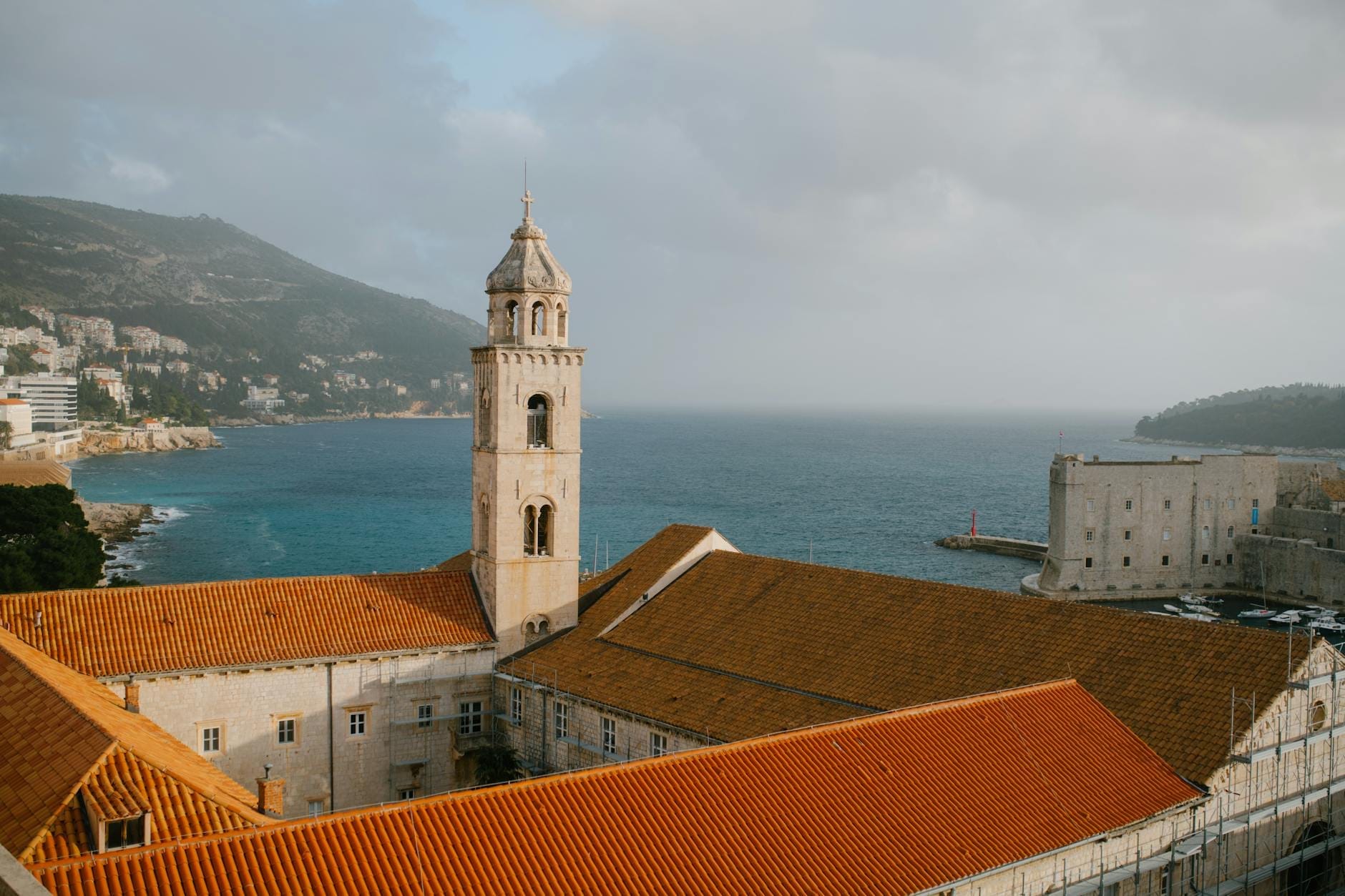
What Is Minčeta Tower?
Minčeta Tower (Tvrdjava Minčeta in Croatian) is the dominant fortress at the northwestern corner of Dubrovnik's medieval walls, and the single highest point in the entire defensive circuit. It rises above the rooftops of the old town, taller than any church steeple or palace roof, with its distinctive circular crown visible from almost every street below. It is not a standalone attraction with its own entrance: you access it as part of walking the City Walls, climbing steadily upward along the northern section until the tower appears above you like a stone crown.
The tower is part of the broader Dubrovnik City Walls, one of the best-preserved medieval fortification systems in Europe and a UNESCO World Heritage Site. If you are walking the full walls circuit, Minčeta is the undisputed highlight of the northern route, and many people consider it the emotional peak of the entire walk.
💡 Local tip
To reach Minčeta Tower with the least possible backtracking, enter the City Walls at Pile Gate and walk clockwise (counterclockwise if you prefer to ascend gradually). The tower appears roughly 20–25 minutes into the northern route. Verify the recommended direction on-site, as signage at the gate makes this clear.
Historical Context: Who Built It and Why
The site dates to 1319, when a quadrilateral fort was first constructed here on land belonging to the Menčetić family — the name Minčeta is a corruption of that family name. At the time, this corner of the wall was the most vulnerable point in Dubrovnik's landward defenses, facing the hills rather than the sea, and thus demanded the strongest fortification.
The tower as it stands today is largely the product of two architectural phases in the mid-15th century. Florentine architect Michelozzo di Bartolomeo redesigned it between 1461 and 1464, transforming the original square structure into a round tower with walls up to six meters thick and carefully positioned gun ports for artillery. Juraj Dalmatinac, the Dalmatian-born master, completed the tower and added the distinctive Gothic crown at the top, giving the tower its crenellated silhouette. The combination of Florentine Renaissance planning and local Gothic craftsmanship makes Minčeta an architectural document in stone.
The six-meter wall thickness was not decorative engineering. At the time of construction, gunpowder artillery was rapidly changing siege warfare across Europe, and the Republic of Ragusa (Dubrovnik's predecessor) was investing heavily in defenses capable of absorbing cannon fire. Minčeta's mass was designed to resist exactly that kind of bombardment, which is part of why the walls survived centuries of geopolitical pressure largely intact.
Tickets & tours
Live prices and dates from our booking partner. If you book, we may earn a commission at no extra cost to you.
Mostar and Kravice Waterfalls excursion from Dubrovnik
From 120 €Instant confirmationFree cancellationDubrovnik Old Town Tour ith Cable Car Ride
From 56 €Instant confirmationFree cancellationMostar and Kravice Waterfalls full-day tour with pickup from Dubrovnik
From 66 €Instant confirmationFree cancellationSea kayaking experience in Dubrovnik
From 46 €Instant confirmationFree cancellation
The Climb: What to Expect on the Way Up
Reaching the summit of Minčeta is a physical commitment. The approach from the City Walls involves roughly 750 steps in total across the northern wall section, with the final ascent to the tower crown being the steepest stretch. The steps are narrow, uneven, and worn smooth in places by centuries of foot traffic. In summer, the stone retains heat through the afternoon, and there is almost no shade on the exposed walkway.
The effort is real, particularly in July and August when midday temperatures regularly exceed 30°C. Wear shoes with grip, not sandals or flip-flops. Bring water, because there are no vendors on the northern wall section between Pile Gate and the tower. If you are visiting with young children or anyone with limited mobility, be honest about the challenge: the steps have no handrail on one side at certain points, and the exposed drops are unguarded in the traditional sense.
⚠️ What to skip
Minčeta Tower is not wheelchair accessible, and the steep, irregular stairs make it genuinely difficult for travelers with knee problems or limited mobility. A basement-level museum area may be accessible at lower levels — verify on-site. If the climb is not realistic for your group, the view from the Pile Gate entrance area still offers a rewarding look up at the tower's profile.
Once you are inside the tower's upper chamber, the noise of the walkway drops away. The thick walls create a cool, slightly echoing interior even in summer. The basement level contains exhibition space that provides historical context for the fortification, worth a few minutes even if you are eager to reach the crown.
The View From the Top: What You Actually See
The circular crown at the summit of Minčeta is one of the most satisfying viewpoints in Dubrovnik, precisely because it is elevated above every other structure in the old town. From here you look down over a sea of orange-red rooftops, the geometry of the streets below visible in a way that is impossible from ground level. You can follow the line of the City Walls in both directions, watch the cable car ascending Mount Srđ to the north, and trace the curve of the coast toward Lapad to the west.
On a clear morning, the view south extends across the Adriatic toward the islands visible on the horizon. The Dubrovnik Cable Car summit on Mount Srđ appears almost level with you from Minčeta's crown, which gives a sense of just how high this corner of the walls actually sits above the rest of the city.
The light changes the experience significantly. At opening time (typically around 8 AM, though check citywallsdubrovnik.hr for current seasonal hours), the old town rooftops catch soft directional light from the east and the crowds are thin. By 10 AM, organized tour groups begin arriving at Pile Gate, and the wall walkway becomes noticeably more congested. Late afternoon light from the west is arguably the most beautiful for photography, but summer heat and crowds are at their worst at that point. Early morning or shortly after opening is the most consistent recommendation for a comfortable visit.
💡 Local tip
For photography, the crown of Minčeta Tower faces mostly west and north. The best natural light for shooting the old town rooftops from above falls in the two hours after sunrise. By 10 AM in summer, strong overhead light flattens the texture of the tiles.
Minčeta and Game of Thrones: A Brief Note
Minčeta Tower appeared as the exterior of the House of the Undying in Game of Thrones, which has made it a notable stop on Game of Thrones filming locations tours in Dubrovnik. If that connection interests you, the exterior view from below (looking up from the wall walkway) replicates the show's establishing shots more closely than the interior. Most visitors on GoT tours note the exterior recognition factor without the interior matching the show's sets — the interior scenes were filmed on a separate stage.
This specific association has drawn a category of visitor who may be slightly disappointed that the experience is primarily architectural and historical rather than immersive in a cinematic sense. If your primary interest is Game of Thrones connection, weigh your expectations accordingly.
Getting There and Practical Logistics
Minčeta Tower is accessed exclusively through the City Walls circuit. The main entry point is Pile Gate, the medieval western entrance to the old town, approximately a 10-minute walk from the main bus stops serving the old town on the Libertas city bus network. Taxis and ride-hailing services (including Uber, where operational) drop off just outside Pile Gate on the road above the old town.
If you are arriving by cruise ship, the port at Gruž connects to the old town via the Libertas bus or a short taxi ride. Cruise passengers typically have 4–6 hours in port, which is enough to walk the full walls circuit including Minčeta and still explore the Stradun below.
The City Walls ticket covers the full circuit including Minčeta Tower and Fort Lovrijenac across the road. If you plan to visit multiple paid attractions, the Dubrovnik City Pass may offer better overall value — check whether the walls are included in the current pass before purchasing.
ℹ️ Good to know
Admission to Minčeta Tower is included in the standard Dubrovnik City Walls ticket. There is no separate or discounted ticket for Minčeta alone. Verify current pricing and opening hours at citywallsdubrovnik.hr before your visit, as seasonal hours and prices change annually.
Who Will Get the Most From This Visit
Minčeta Tower delivers most for people with an interest in medieval military architecture, Renaissance history, or urban panoramas. The combination of two named architects, a documented construction history spanning 150 years, and a physically imposing result makes it unusually rich as a historical site. The view alone would justify the effort in any coastal city, but the architectural story behind it adds real depth.
Travelers short on time who want only a panoramic view might prefer the cable car to Mount Srđ, which delivers higher elevation views with less physical effort. But for anyone walking the City Walls regardless, Minčeta is not a detour — it is simply the highest point along a walk you are already making.
Those who may want to skip the tower specifically: travelers with significant mobility limitations, anyone visiting with very young children who struggle with stairs, or visitors in peak summer heat who are already fatigued from the wall circuit by the time they reach the northern section. On particularly crowded days in July and August, the narrow staircase within the tower itself can create bottlenecks that make the final ascent frustrating rather than rewarding.
Insider Tips
- Arrive at Pile Gate within 30 minutes of opening time. The wall walkway from Pile to Minčeta takes roughly 20–25 minutes and the tower is nearly empty at that hour. By 10 AM, organized groups arrive in waves.
- Look down from Minčeta's crown into the old town streets below: you can see the geometric pattern of Dubrovnik's block layout that is invisible from ground level, and spot the Stradun running in a straight line from one gate to the other.
- The basement level of the tower contains exhibition material that most visitors walk past in a hurry. Spend five minutes here before ascending — the scale models and historical diagrams make the engineering of the walls far easier to understand once you reach the top.
- If you are walking the walls in summer, carry at least 750ml of water per person. The northern section has no reliable water source, and the exposed stone radiates heat substantially by mid-morning.
- For the clearest long-distance views toward the Elaphiti Islands and open Adriatic, come on a morning after overnight rain has cleared the haze. The visibility difference on a clear morning versus a hazy summer afternoon is significant.
Who Is Minčeta Tower For?
- Architecture and history enthusiasts who want to understand the engineering behind medieval fortifications
- Photographers seeking Dubrovnik's highest old-town rooftop panorama with early-morning light
- Game of Thrones fans tracing filming locations across the old town
- Travelers already walking the full City Walls circuit who want to understand its most important point
- Anyone wanting to see Dubrovnik from above without the cable car cost or wait
Nearby Attractions
Other things to see while in Old Town (Stari Grad):
- Banje Beach
Banje Beach is Dubrovnik's closest and most photographed beach, sitting just east of the Old Town walls with direct views of the medieval fortifications and Lokrum Island. It's a pebbly, organized beach with free public access, paid lounger rentals, and a restaurant-bar that runs well into the night. Convenient, yes. Quiet, no.
- Buža Bar
Buža Bar is a no-frills open-air bar carved into a gap in Dubrovnik's ancient city walls, perched directly above the Adriatic Sea. Reached through a low iron-gated hole in the stonework, it offers cold drinks, cliff-jumping, and some of the most dramatic coastal views in the Mediterranean. There is no admission charge, no kitchen, and no pretense.
- Cathedral of the Assumption of the Virgin Mary
Rising from the rubble of a 1667 earthquake, the Cathedral of the Assumption of the Virgin Mary anchors the heart of Dubrovnik's Old Town with its commanding Baroque dome and a treasury that holds relics spanning a millennium. It's quieter than the city walls and more revealing than most visitors expect.
- Dominican Monastery & Museum
Built from 1225 and shaped through the 15th century, the Dominican Monastery in Dubrovnik's eastern Old Town holds one of Dalmatia's finest collections of medieval and Renaissance art. The Gothic-Renaissance cloister, a Titian altarpiece from 1554, and works by the Dubrovnik School of painters make this one of the most intellectually rewarding stops in the city.
Planning a trip? Discover personalized activities with the Nomado app.